Assamese Demonology
 76
76

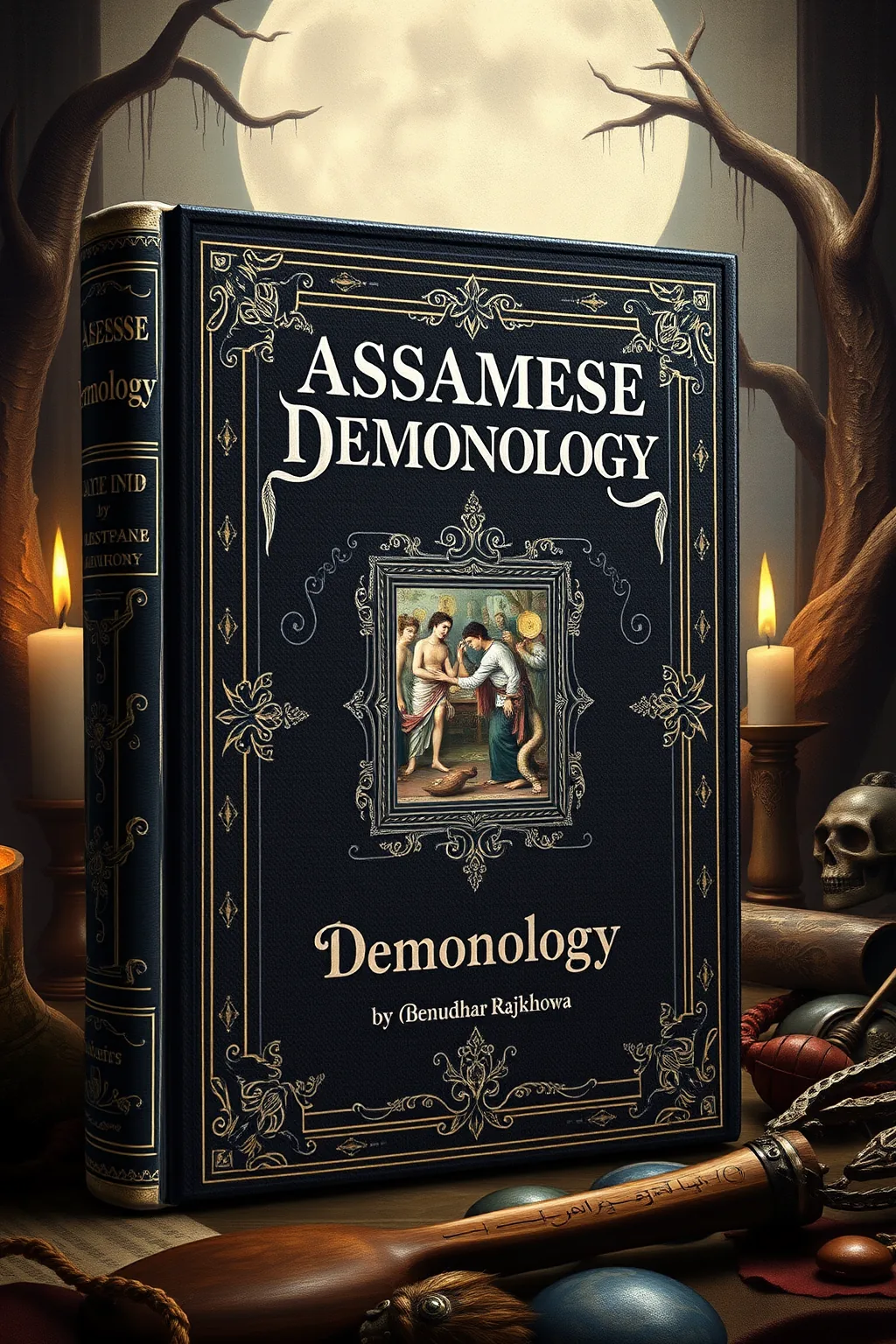
Assamese Demonology


Isolde Whitaker, Sacred Texts Editor: Benudhar Rajkhowa's 'Assamese Demonology' is a cornerstone for anyone seeking to understand the esoteric underpinnings of Assamese culture. Published in 1905, it offers an unparalleled scholarly yet deeply reverent exploration of local spirits, spectral lore, and ancient protective rites. Rajkhowa's meticulous compilation of oral traditions provides invaluable insights into a complex system of belief, revealing the nuanced relationship between humans and the unseen world. This work is not merely ethnographic; it's a gateway to understanding indigenous spiritual practices, exorcism techniques, and the symbolic language of a rich, mystical heritage. Essential reading for scholars of folklore, comparative religion, and practitioners interested in cross-cultural esoteric traditions.
📝 Description
76
Benudhar Rajkhowa's Assamese Demonology, first published in 1905, documents spirits and rituals from Northeast India.
Published in 1905, Benudhar Rajkhowa's Assamese Demonology examines the spirits and supernatural beliefs prevalent in Northeast India. Rajkhowa, drawing on his deep knowledge of Assamese traditions, details various classes of spirits, from malevolent entities to ethereal presences. The book also covers the rituals and incantations used to confront or appease these forces. It provides insight into the cultural significance of these beliefs and their impact on the Assamese worldview. The work is a detailed account of a specific regional folklore and its place within the lives of its people.
This compendium goes beyond simple classification, detailing the practices associated with exorcism and the power attributed to specific chants. It illustrates the belief systems that explain the influence of unseen powers on daily life. The book reveals a cultural perspective that readily incorporated the spectral and supernatural into its understanding of existence. It offers a look into a world of symbols and stories that reflect a culture's engagement with the unknown.
This work belongs to a tradition of regional folklore documentation that seeks to preserve and understand local spiritual and supernatural traditions. It engages with the concept of animism and the belief in spirits that inhabit the natural world, a common theme in many indigenous spiritual systems. The book situates Assamese beliefs within a broader context of human attempts to understand and interact with forces beyond empirical observation. It is part of a larger effort to catalogue the diverse ways cultures perceive and respond to the uncanny.
✍️ Author
Benudhar Rajkhowa
This is a Glossary of the study of the caste system in India. The glossary provides key figures, works, and concepts relevant to the sociology and ethnography of the study of the caste system in India. It includes early colonial administrators, missionarie…
💡 Why Read This Book?
Uncover the hidden spiritual landscape of Assam, a region steeped in ancient mysticism. 'Assamese Demonology' offers direct access to indigenous lore on spirits, exorcisms, and protective rituals, providing unique insights into a less-explored esoteric tradition. Ideal for scholars, practitioners of folk magic, and seekers of unique occult knowledge.
⭐ Reader Reviews
Honest opinions from readers who have explored this book.
❓ Frequently Asked Questions
What is the historical significance of "Assamese Demonology"?
First published in 1905, it is one of the earliest comprehensive scholarly works documenting the supernatural beliefs and practices of Assam, preserving vital oral traditions before they faded.
What types of entities are discussed in the book?
The book details various Assamese spirits, demons, ghosts, and other supernatural beings, exploring their characteristics, influence, and how they were perceived and appeased.
Does the book include practical information on rituals or incantations?
Yes, Rajkhowa compiles traditional Assamese incantations, exorcism rituals, and other practices used to ward off or appease malevolent entities, offering a glimpse into applied folklore.
Who was Benudhar Rajkhowa?
Benudhar Rajkhowa was a scholar and cultural observer from Assam who dedicated himself to documenting and preserving the region's rich folklore and spiritual heritage.
Is this book suitable for beginners in esoteric studies?
While academic, it provides a foundational understanding of a unique regional demonology. Beginners can approach it as an introduction to non-Western esoteric systems and cultural beliefs.
🔮 Key Themes & Symbolism
The Assamese Spirit Pantheon
This theme examines the collection of supernatural beings indigenous to Assam, as meticulously documented by Rajkhowa. It explores the diverse hierarchy of spirits, from benevolent guardians to malevolent demons, detailing their appearances, behaviors, and the specific domains they inhabit within Assamese cosmology. Understanding these entities is crucial for comprehending the Assamese worldview and its intricate relationship with the unseen forces that permeate daily life and spiritual practices.
Rituals of Appeasement and Exorcism
Central to Assamese folk belief is the practice of interacting with the spirit world, a theme thoroughly explored through the book's examination of appeasement rituals and exorcism techniques. Rajkhowa presents ancient incantations, symbolic offerings, and ceremonial procedures believed to protect individuals and communities from spectral interference. These practices reveal a deep-seated understanding of spiritual energies and the meticulous methods employed to maintain balance and harmony between the mundane and the supernatural realms.
The Oral Tradition and Cultural Memory
"Assamese Demonology" stands as a vital repository of Assamese oral tradition, safeguarding narratives and beliefs that might otherwise have been lost. Rajkhowa's work highlights the importance of folklore as a living conduit for cultural memory, transmitting wisdom, cautionary tales, and spiritual knowledge across generations. The book illustrates how these stories are not just myths but integral components of Assamese identity and their enduring connection to their ancestral spiritual landscape.
💬 Memorable Quotes
Direct passages from the work, attributed to the author.
“Whispers from the spectral realm guide the wise.”
— Suggests that understanding and heeding the subtle messages or warnings from spirits is a mark of wisdom and spiritual insight.
“Incantations bind the ethereal.”
— Highlights the power attributed to spoken words and specific magical formulas in influencing or controlling spiritual beings.
“Fear is the gatekeeper of ignorance.”
— Implies that a lack of knowledge about the supernatural leads to irrational fear, whereas understanding brings clarity and control.
“The earth remembers its ancient pacts.”
— Evokes a sense of deep, enduring spiritual connections between the land and its inhabitants, suggesting a continuous, unseen dialogue.
💡 Key Ideas
Editorial paraphrase of the work's core concepts — not direct quotes.
The unseen forces shape our destiny.
This quote expresses the core belief that supernatural entities and energies play a significant role in human life, influencing events and outcomes.
🌙 Esoteric Significance
Tradition
This work is deeply rooted in the indigenous esoteric traditions of Assam, a region influenced by Tantric practices, local animism, and folk shamanism. It represents a unique synthesis of these elements, offering insights into a non-Abrahamic, non-Eastern philosophical framework where the spirit world is an active participant in human affairs, governed by specific laws and accessible through ritual and understanding.
Symbolism
The demonology discussed is rich with symbolism, where each spirit, ritual, and incantation carries layers of meaning. Entities often represent natural forces, human vices, or archetypal fears and desires. Symbols in rituals, such as specific offerings or gestures, act as a language understood by the spiritual realm, facilitating communication and influence, reflecting a worldview where the material and spiritual are intricately intertwined and symbolically connected.
Modern Relevance
In an increasingly secularized world, "Assamese Demonology" offers a compelling counterpoint, highlighting the enduring human need to connect with the transcendent and understand the unseen. For contemporary practitioners and scholars, it provides a valuable case study in indigenous spiritual systems, offering alternative perspectives on consciousness, ritual efficacy, and the complex relationship between humanity and the wider cosmos. It reminds us of the power of localized, ancestral knowledge systems.
👥 Who Should Read This Book
This profound work is an indispensable resource for scholars of folklore, comparative religion, and South Asian studies seeking to understand the esoteric dimensions of Assamese culture. Practitioners of occult arts and comparative ritualism will find invaluable insights into indigenous spirit work, exorcism techniques, and the symbolic language of a unique spiritual tradition. For the curious seeker of hidden knowledge and alternative worldviews, "Assamese Demonology" offers a captivating journey into a less-explored mystical landscape, revealing the universal human engagement with the supernatural.
📜 Historical Context
Published in 1905, "Assamese Demonology" emerges during a period of significant colonial influence in India, yet it stands as a powerful evidence of the resilience and richness of indigenous Assamese culture. At the turn of the 20th century, many local traditions were undergoing scrutiny or facing the risk of being overshadowed by Western scholarship and societal changes. Benudhar Rajkhowa's work represents a crucial effort to document and preserve the intricate cosmology, folklore, and spiritual practices of Assam, particularly its vibrant demonology, which was largely transmitted through oral traditions. This book not only serves as an academic record but also as an act of cultural preservation, offering a vital window into a pre-modern belief system and its enduring impact on the Assamese psyche.
📔 Journal Prompts
Reflect on a personal encounter with the uncanny; how might Assamese beliefs interpret it?
Explore the symbolism of a specific demon or spirit described; what does it represent in human psychology?
Consider the efficacy of ancient rituals in a modern context; what elements remain relevant?
How does the concept of 'appeasement' differ from 'confrontation' in spiritual practices?
Imagine you are an Assamese villager in 1900; how would these beliefs shape your daily life and decisions?
🗂️ Glossary
Asura
In Assamese folklore, often referring to powerful, sometimes malevolent, supernatural beings or demons, distinct from celestial deities.
Bhoot
A general term for ghosts or spirits, often associated with the deceased who linger due to unfulfilled desires or violent ends.
Preta
A class of tormented spirits, often the result of accumulated bad karma, suffering eternal hunger and thirst.
Ojha
A shamanic healer or sorcerer skilled in diagnosing spiritual ailments, performing exorcisms, and mediating with the spirit world.
Mantra
Sacred utterances or incantations believed to possess spiritual power, used for protection, invocation, or manipulation of supernatural forces.
This book appears in 2 collections
🔮 Readers Also Liked
Browse all →








From the “Transcendental Meditation” Collection
View all →








More Free Esoteric History & Biography Books
View all →