55,000+ Esoteric Books Free + Modern Compare Prices
Home Collections Qi Gong
📖

Qi Gong Books: Essential Reading for Practice and Study

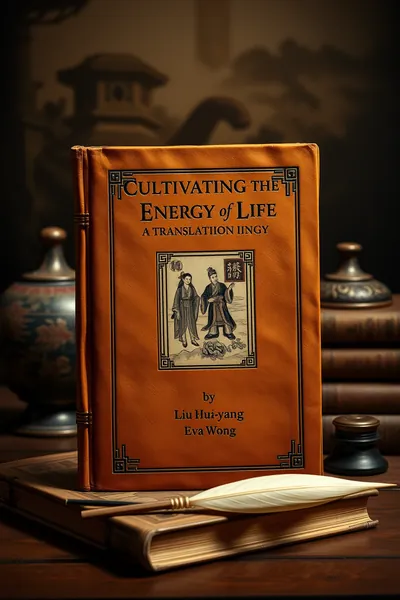
Qi Gong books trace the practice from its ancient roots to contemporary applications, offering insights into energy cultivation and its benefits. Texts such as Liu Hua-Yang's 'Cultivating the Energy of Life' provide classical foundations, while Ken Cohen's 'The Way of Qigong' offers a comprehensive modern perspective. This curated selection guides beginners and serious students through the theory and practice of this internal art. Below, find resources categorized by learning level, key definitions, and recommended reading paths.

Top Qi Gong Books

25 Qi Gong books

What is Qi Gong?

Qi Gong, often translated as 'energy work' or 'energy cultivation,' is a system of coordinated body posture and movement, breathing, and meditation used for health, spirituality, and martial arts training. Originating in ancient China, it involves the deliberate use of breath and movement to manipulate and enhance the body's vital energy, known as Qi. The practice aims to improve physical health, mental clarity, and emotional balance by harmonizing the body's internal systems and its connection to the external environment.

Best Books for Complete Beginners

For those new to Qi Gong, starting with accessible guides is crucial. Ken Cohen's 'Qigong' provides a broad introduction to the practice, covering its history, principles, and basic exercises. 'The Way of Energy' by Kam Chuen Lam offers a clear path to understanding and developing internal energy, with practical techniques. Shou-Yu Liang and Wen-Ching Wu's 'Qigong Empowerment' presents a structured approach to learning fundamental exercises and their benefits, making it ideal for self-study. These books lay a solid groundwork for understanding Qi and its cultivation.

Intermediate Reading

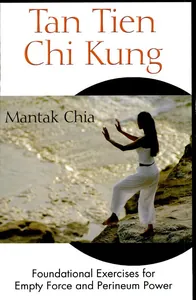
Building on foundational knowledge, intermediate texts delve deeper into specific aspects of Qi Gong. Bruce Frantzis' 'Dragon and Tiger Medical Qigong, Volume 1' focuses on gentle exercises designed for health and longevity, explaining the underlying principles. Mantak Chia's 'Tan Tien Chi Kung' explores the development of the energy center in the lower abdomen, a key concept in many Qi Gong systems. Jwing-Ming Yang's 'The Essence of Tai Chi Chi Kung' bridges the gap between Tai Chi and Qi Gong, offering detailed instruction on energy circulation and form practice.

Classical / Advanced Texts

Serious students and practitioners seeking deeper understanding will find value in classical treatises and advanced compilations. Liu Hua-Yang's 'Cultivating the Energy of Life' offers a translation of the Hui-Ming Ching, a foundational Taoist text on internal alchemy and energy cultivation. Stuart Alve Olson's 'Qigong Teachings of a Taoist Immortal' presents esoteric teachings and practices from a Taoist lineage. Ute Engelhardt's 'Die klassische Tradition der Qi-Übungen (Qigong)' provides scholarly insights into the historical development and traditional forms of Qi Gong practice in China.

Reading Order — Step by Step

Begin your Qi Gong journey with foundational texts. Months 1-2: Start with 'Qigong' by Ken Cohen or 'Qigong Empowerment' by Liang & Wu for core principles and basic exercises. Simultaneously, consult 'The Way of Energy' by Kam Chuen Lam for practical energy development. Month 3: Progress to 'Dragon and Tiger Medical Qigong, Volume 1' by Bruce Frantzis or 'The Essence of Tai Chi Chi Kung' by Jwing-Ming Yang to explore specific health-focused practices or the connection to Tai Chi. Months 4+: For advanced study, engage with 'Cultivating the Energy of Life' by Liu Hua-Yang or 'Qigong Teachings of a Taoist Immortal' by Stuart Alve Olson to explore classical Taoist perspectives.

Frequently Asked Questions

Which Qi Gong book should I read first?

For a complete beginner, 'Qigong' by Ken Cohen offers a broad introduction to the practice's history and principles. Alternatively, 'Qigong Empowerment' by Shou-Yu Liang and Wen-Ching Wu provides structured exercises suitable for self-study.

What is the difference between Qi Gong and Tai Chi?

While related, Qi Gong is a broader term encompassing various energy cultivation practices, often simpler and focused on health. Tai Chi is a specific martial art form that incorporates Qi Gong principles into its movements, emphasizing flow, balance, and martial application.

Do I need a teacher to practice Qi Gong?

While a qualified teacher can greatly enhance understanding and correct technique, many books offer sufficient guidance for beginners to start practicing safely and effectively, especially for health-focused forms.

How long does it take to feel the benefits of Qi Gong?

Benefits can vary. Some individuals report feeling more relaxed or energized after a single session. Consistent daily practice, even for 10-20 minutes, often leads to noticeable improvements in physical well-being and mental clarity within weeks.

Are there different styles of Qi Gong?

Yes, Qi Gong encompasses thousands of styles. They are broadly categorized into medical, martial, and spiritual/Taoist/Buddhist forms, each with different focuses, exercises, and intended outcomes.

What is the significance of the Dantian?

The Dantian, particularly the lower Dantian in the abdomen, is considered a primary reservoir and center for Qi. Cultivating and circulating Qi through the Dantian is fundamental to many advanced Qi Gong and internal alchemy practices.

Can Qi Gong help with stress?

Yes, Qi Gong is widely recognized for its stress-reducing benefits. The combination of gentle movement, focused breathing, and meditation helps to calm the nervous system, release tension, and promote emotional balance.

Why Each Book Matters

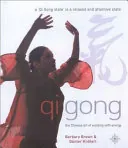
Qi Gong

Qi Gong

This collaborative work by Barbara Brown and Günter Knöferl introduces readers to the fundamentals of Qi Gong, focusing on its health benefits and practical applications. It likely includes various exercises and breathing techniques designed to harmonize the body's energy. The book serves as a straightforward guide for those looking to begin their journey with Qi Gong and experience its therapeutic effects.

Born a Healer

Born a Healer

This book by Chunyi Lin and Gary Rebstock shares the personal journey and healing philosophy of Chunyi Lin, the founder of Spring Forest Qigong. It explores the innate healing capabilities within each individual and provides methods for activating this potential through Qigong practice. The text offers practical guidance for self-healing and helping others by working with life energy.

The Four Dragons

The Four Dragons

Damo Mitchell's "The Four Dragons" likely refers to a specific system or set of practices within Taoist internal arts or Qi Gong, possibly related to energetic pathways or foundational movements. It would typically offer detailed instructions and theoretical explanations for cultivating specific internal energies or developing advanced skills. The book targets practitioners seeking deeper internal work.

Qigong

Qigong

This book offers a practical approach to Qigong, likely emphasizing specific forms and exercises taught by Danny Connor and Michael Tse. It aims to guide readers through the movements and breathing techniques necessary to cultivate internal energy effectively. The text provides step-by-step instructions for improving physical health, mental clarity, and overall vitality through Qigong practice.

Qigong Fever

Qigong Fever

This book by David A. Palmer examines the social and cultural phenomenon of "Qigong Fever" in China during the late 20th century. It provides a sociological analysis of how Qigong became a widespread movement, exploring its popular appeal, organizational structures, and the state's response. The text offers a critical perspective on the modern history and impact of Qigong in society.

Treasures of Tao

Treasures of Tao

by David Twicken

This book by David Twicken explores the profound principles of Taoist medicine and its connection to the body's energetic systems. It offers detailed insights into the five elements, yin and yang, and how these concepts relate to health and healing. The text provides practical applications for understanding and harmonizing one's internal environment, drawing from ancient wisdom to explain complex energetic dynamics relevant to Qi Gong.

ERIC ED417127: The Esalen Catalog, 1993-1997.

ERIC ED417127: The Esalen Catalog, 1993-1997.

by ERIC

This catalog from the Esalen Institute provides a snapshot of the diverse programs and workshops offered between 1993 and 1997. It reflects the institute's pioneering role in human potential, featuring various holistic practices, including early forms of Qi Gong and bodywork. The catalog serves as a historical document showcasing the evolving landscape of mind-body therapies and alternative education.

The Key to Qi

The Key to Qi

Gad Levy-Golan's "The Key to Qi" offers an exploration into the fundamental concept of Qi, the vital life force in Chinese philosophy and medicine. The book likely provides a theoretical framework for understanding how Qi functions within the body and environment, and how it can be cultivated through various practices, including Qi Gong. It aims to demystify this essential energetic principle.

太極功

太極功

This title, translated as "Tai Chi Gong," likely presents a comprehensive guide to Tai Chi, a martial art deeply intertwined with Qi Gong principles. It focuses on the flowing movements and internal energy work characteristic of Tai Chi, designed to improve balance, flexibility, and cultivate internal Qi. The book serves as a practical manual for learning the fundamental forms and applications.

Falun Dafa

Falun Dafa

This book introduces the spiritual practice of Falun Dafa, also known as Falun Gong, which combines meditation, gentle exercises, and a moral philosophy centered on truthfulness, compassion, and forbearance. Authored by Hongzhi Li, it outlines the core teachings and principles of this widely practiced system, emphasizing spiritual cultivation alongside physical well-being.

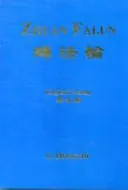
Zhuan Falun

Zhuan Falun

"Zhuan Falun" is the principal text of Falun Dafa, written by Hongzhi Li. It elaborates on the profound principles and teachings of Falun Dafa, offering guidance on spiritual cultivation and understanding the universe. The book delves into the nature of virtue, karma, and the path to enlightenment, serving as a comprehensive guide for practitioners of this specific form of Qi Gong.

The Way of Energy

The Way of Energy

Kam Chuen Lam's "The Way of Energy" is a widely acclaimed introduction to Zhan Zhuang Qi Gong, a standing meditation practice. The book provides clear, practical instructions for cultivating internal energy, improving health, and developing martial power through static postures. It emphasizes the importance of correct body alignment and mental focus for effective Qi flow.

Qigong

Qigong

Ken Cohen's book provides a clear and accessible introduction to the practice of Qigong, outlining its historical background, philosophical foundations, and practical techniques. It covers various forms and offers guidance on how to integrate Qigong into daily life for improved health and well-being. The text is well-regarded for its comprehensive overview and practical advice for beginners.

Tan Tien Chi Kung

Tan Tien Chi Kung

Mantak Chia's "Tan Tien Chi Kung" focuses on the cultivation of energy in the lower Dantian, considered a vital energy center in Taoist practices. The book provides detailed exercises and meditations designed to strengthen this core energy reservoir, promoting vitality, longevity, and internal power. It is a key text for serious practitioners of Taoist Qi Gong.

Breathing Spaces

Breathing Spaces

Nancy N. Chen's "Breathing Spaces" examines the cultural and social aspects of health and healing in contemporary China, particularly focusing on the role of Qigong and other traditional practices. It offers an anthropological perspective on how individuals navigate health systems and incorporate alternative therapies. The book provides insight into the broader societal context of Qigong.

The Tai Chi Space

The Tai Chi Space

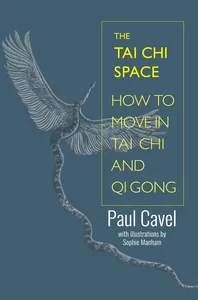
Paul Cavel's "The Tai Chi Space" explores the internal mechanics and energetic principles behind Tai Chi practice. It delves beyond the external movements, guiding practitioners to understand and cultivate the 'space' within and around the body where Qi flows. The book offers advanced insights into developing internal power, balance, and awareness through Tai Chi and Qi Gong.

Chi Gong

Chi Gong

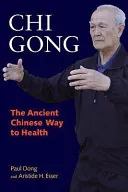
This book by Paul Dong and Aristide H. Esser explores the fascinating and sometimes controversial aspects of Chi Gong, including its healing powers and scientific investigation. It presents accounts of Chi Gong masters and their abilities, offering a unique perspective on the potential of cultivated life energy. The text examines the observable effects of Chi Gong and its broader implications for health.

Tai Chi

Tai Chi

Paul H. Crompton's book delves into the art of Tai Chi, exploring its movements, philosophy, and health benefits. It provides detailed instructions on various forms, emphasizing the slow, deliberate motions that cultivate internal energy and promote relaxation. The text serves as a practical guide for learning Tai Chi, a practice closely related to Qi Gong in its focus on vital energy.

Buddhist Mystic's Magical Tools & Rituals

Buddhist Mystic's Magical Tools & Rituals

by Professor Jerry Alan Johnson

Professor Jerry Alan Johnson presents an in-depth examination of esoteric Buddhist practices, focusing on the use of magical tools and rituals for spiritual development. While not solely a Qi Gong text, it explores various energetic manipulations and meditative techniques that share common ground with advanced Qi cultivation, offering a unique perspective on the mystical applications of internal energy.

Weightlessness

Weightlessness

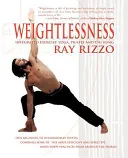
Ray Rizzo's "Weightlessness" likely explores concepts related to physical and energetic lightness, possibly through practices that reduce tension and improve flow. While not explicitly a Qi Gong title, it may touch upon principles of body mechanics, relaxation, and internal cultivation that align with the goal of achieving a sense of effortlessness and improved energy circulation in Qi Gong.

The Basic Principles Of The Fuchiyado Meditation The Samurai Blowgun Martial Art

The Basic Principles Of The Fuchiyado Meditation The Samurai Blowgun Martial Art

by Shri Krishan Puri in

This book combines the disciplines of meditation with the unique martial art of the samurai blowgun. Shri Krishan Puri in details how focused breathing and mental clarity, integral to meditation, enhance precision and control in this specialized martial practice. It highlights the mental and energetic discipline required, which resonates with the internal cultivation aspects found in many Qi Gong systems.

Liu Zi Jue

Liu Zi Jue

"Liu Zi Jue," or the Six Healing Sounds, is a traditional Qi Gong practice focusing on specific vocalizations combined with movements and breathing to harmonize the internal organs. This book likely provides detailed instructions for each of the six sounds, explaining their therapeutic effects on different organ systems. It is a foundational practice for regulating Qi flow and promoting emotional balance.

Leitfaden Qigong

Leitfaden Qigong

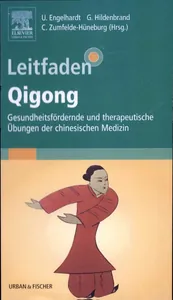
This German title, "Leitfaden Qigong," translates to "Qigong Guide" or "Manual." Authored by Ute Engelhardt, it likely provides a comprehensive instructional guide to Qigong practices, covering various forms, benefits, and foundational theories. The book serves as a practical resource for German-speaking practitioners seeking structured learning in Qigong.

Leitfaden Qigong

Leitfaden Qigong

Another edition or volume of "Leitfaden Qigong" by Ute Engelhardt, this book also functions as a guide to Qigong. It probably offers further exercises, theoretical explanations, or a different focus than its counterpart, providing additional resources for students of Qigong. These guides are essential for understanding the systematic approach to energy cultivation.

Esoteric Library
Browse Esoteric Library
📚 All 55,000+ Books 🜍 Alchemy & Hermeticism 🔮 Magic & Ritual 🌙 Witchcraft & Paganism Astrology & Cosmology 🃏 Divination & Tarot 📜 Occult Philosophy ✡️ Kabbalah & Jewish Mysticism 🕉️ Mysticism & Contemplation 🕊️ Theosophy & Anthroposophy 🏛️ Freemasonry & Secret Societies 👻 Spiritualism & Afterlife 📖 Sacred Texts & Gnosticism 👁️ Supernatural & Occult Fiction 🧘 Spiritual Development 📚 Esoteric History & Biography
Esoteric Library
📑 Collections 📤 Upload Your Book
Account
🔑 Sign In Create Account
Info
About Esoteric Library