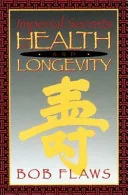
Imperial Secrets of Health and Longevity
 83
83

Imperial Secrets of Health and Longevity
Bob Flaws' "Imperial Secrets of Health and Longevity" offers a fascinating, if somewhat densely packed, look at the purported longevity practices of Emperor Qian Long. The book's strength lies in its detailed exposition of Traditional Chinese Medicine (TCM) principles applied to sustained well-being, moving beyond superficial wellness trends. Flaws effectively translates ancient concepts into accessible advice on diet, exercise, and emotional regulation. However, the sheer volume of information, particularly concerning herbal remedies and specific Qigong forms, can feel overwhelming for the uninitiated. A more focused exploration of perhaps three to five core principles, rather than fourteen distinct "secrets," might have allowed for deeper engagement with each. The section on self-massage, detailing specific acupressure points, provides a concrete and immediately applicable takeaway. Ultimately, the work serves as a valuable, albeit demanding, resource for those serious about integrating classical Chinese health philosophies into their lives.
📝 Description
83
Bob Flaws's book details fourteen health strategies attributed to Emperor Qian Long.
Imperial Secrets of Health and Longevity examines the fourteen "secrets" of health and longevity attributed to Emperor Qian Long of the Qing Dynasty. Bob Flaws presents these principles through the lens of traditional Chinese medical theories. The book covers practical advice on diet, movement, emotional regulation, and environmental awareness. It aims to show how these ancient practices contributed to the emperor's long and reportedly healthy life.
This work is for individuals interested in holistic health and longevity, particularly those looking beyond conventional Western medicine. Readers familiar with Traditional Chinese Medicine, Qigong, or herbalism will find connections to established practices. The book argues for the interconnectedness of mind, body, and spirit in maintaining well-being, drawing from imperial court practices.
This book situates itself within the tradition of Chinese longevity arts, a practice that has historically sought to prolong life through specific physical, dietary, and mental disciplines. It connects the purported methods of Emperor Qian Long to broader concepts within Taoism and Traditional Chinese Medicine, emphasizing the cultivation of vital energy (Qi) and the harmonious interaction between the individual and their environment. The focus is on a holistic approach to health that integrates the physical body, emotional state, and spiritual development, as understood through an 18th-century imperial context.
💡 Why Read This Book?
• Gain practical, actionable insights into achieving longevity by understanding the fourteen "secrets" of Emperor Qian Long, as detailed in the book's practical advice sections. • Explore the profound connection between emotional states and physical health, a core tenet of traditional Chinese medicine presented within the context of Qian Long's reign. • Learn specific self-massage and stretching techniques, as outlined by Bob Flaws, that are designed to cultivate vital energy (Qi) for enhanced well-being and a longer life.
⭐ Reader Reviews
Honest opinions from readers who have explored this book.
❓ Frequently Asked Questions
What historical period does "Imperial Secrets of Health and Longevity" primarily focus on?
The book primarily focuses on the health and longevity practices of Emperor Qian Long, who reigned during the Qing Dynasty in 18th century China.
What is the primary medical system discussed in the book?
The book is grounded in Traditional Chinese Medicine (TCM) theory, explaining how its principles were applied to achieve long life and good health.
Does the book offer practical exercises for readers?
Yes, the book includes practical advice on self-massage, stretching exercises, and Qigong, all derived from traditional Chinese health practices.
What role does diet play in the "secrets" of longevity presented?
Diet is presented as a crucial factor, with the book offering advice on the types of foods and eating habits that contribute to a long and healthy life, according to traditional Chinese medical theory.
Who is Bob Flaws, the author?
Bob Flaws was a prominent author and practitioner in the field of Traditional Chinese Medicine, known for translating and explaining complex TCM concepts for Western audiences.
Are Chinese tonic herbs discussed in the book?
Yes, the book explores how to use specific Chinese tonic herbs as part of a comprehensive strategy for achieving longevity and maintaining good health.
🔮 Key Themes & Symbolism
Holistic Health Cultivation
The book emphasizes that longevity is not achieved through a single method but through a comprehensive, holistic approach that integrates physical, mental, and environmental factors. It highlights how Emperor Qian Long's long life was attributed to a balanced lifestyle encompassing diet, specific exercises like Qigong, emotional regulation, and harmonious living, all viewed through the lens of Traditional Chinese Medicine (TCM). This perspective underscores the interconnectedness of all aspects of life in promoting sustained vitality and well-being, moving beyond symptomatic treatment to foundational health.
Traditional Chinese Medicine Principles
Fundamentally, Imperial Secrets of Health and Longevity draws heavily upon the sophisticated theories of Traditional Chinese Medicine (TCM). It explains concepts such as Qi (vital energy), Yin and Yang balance, and the importance of the Five Elements as they relate to health and aging. Practices like self-massage (Tui Na) and the use of specific tonic herbs are presented not as isolated remedies but as integral components of a TCM-based strategy for cultivating long-term health and preventing disease, reflecting centuries of empirical observation and practice.
Imperial Lifestyle and Longevity
The work provides a unique window into the health and wellness practices adopted by one of history's longest-reigning emperors, Qian Long. It suggests that the disciplined lifestyle and adherence to traditional wisdom contributed significantly to his remarkable lifespan during the 18th century. By examining the "secrets" attributed to his court, the book offers readers a tangible connection to historical practices that prioritized preventative health and vitality, demonstrating how ancient philosophies can offer enduring lessons for modern life.
Mind-Body-Environment Connection
A central theme is the profound interconnectedness of the mind, body, and external environment in achieving lasting health. The book details how emotional states, relaxation techniques, and even the surrounding environment were considered crucial elements in Emperor Qian Long's longevity regimen. This perspective, deeply rooted in TCM, suggests that external influences and internal harmony are inseparable, and that cultivating a balanced inner state while living in accordance with natural principles is fundamental to long life.
💬 Memorable Quotes
Direct passages from the work, attributed to the author.
“The secrets of longevity for Emperor Qian Long spanned diet, exercise, relaxation, emotions, sex, and environment.”
— This statement captures the book's core premise: that achieving a long and healthy life requires a comprehensive and integrated approach, addressing all facets of human existence rather than focusing on isolated aspects.
“Traditional Chinese Medical theory includes self-massage and stretching.”
— This highlights the practical, embodied aspects of TCM presented in the book, emphasizing that physical practices are key components of cultivating vitality and preventing illness, as understood within this ancient medical system.
“Chinese tonic herbs were used to support long life and good health.”
— This points to the pharmacological dimension of traditional Chinese health practices discussed, indicating that specific herbal formulas were employed to strengthen the body's vital essence and promote longevity.
“Qian Long's sage advice covered achieving a long and healthy life.”
— This interpretation emphasizes the wisdom and practical guidance offered by the historical figure, suggesting that the principles he followed are still relevant and beneficial for contemporary readers seeking similar health outcomes.
💡 Key Ideas
Editorial paraphrase of the work's core concepts — not direct quotes.
The book offers insight into achieving longevity through harmonious living.
This paraphrase underscores the book's focus on balance and alignment, implying that living in accordance with natural principles and maintaining internal equilibrium are fundamental to extending one's lifespan.
🌙 Esoteric Significance
Tradition
This work draws heavily from the Taoist and Traditional Chinese Medicine (TCM) traditions, which are deeply rooted in esoteric principles of cultivating vital energy (Qi) and harmonizing with the natural order (the Tao). While not overtly mystical in the Western sense, TCM's focus on unseen forces, energetic meridians, and the profound connection between the microcosm of the human body and the macrocosm of the universe places it within a broad esoteric framework. Flaws' approach aligns with the esoteric goal of understanding and manipulating subtle energies for physical and spiritual well-being.
Symbolism
The book implicitly engages with several symbols inherent in Chinese culture and medicine. The Dragon, often associated with Emperor Qian Long and imperial power, symbolizes transformation, strength, and good fortune – qualities sought in longevity. The concept of Qi itself functions as a primary symbol for vital life force, the invisible current that animates all beings. Furthermore, the balance of Yin and Yang, a fundamental symbolic duality, is central to understanding how harmonious living, as practiced by the Emperor, leads to health and longevity by maintaining equilibrium.
Modern Relevance
Contemporary practitioners of Qigong, Tai Chi, and integrative medicine frequently draw upon the principles articulated in works like Flaws'. Thinkers and wellness advocates focusing on holistic health, preventative care, and the mind-body connection find resonance in the book's emphasis on lifestyle factors. Modern longevity research, while scientifically distinct, often circles back to concepts like stress reduction, mindful eating, and gentle exercise, all of which are foundational elements presented in "Imperial Secrets of Health and Longevity" as ancient wisdom for a longer life.
👥 Who Should Read This Book
• Individuals interested in the historical application of Traditional Chinese Medicine (TCM) for health and longevity, particularly those seeking to understand the practices of historical figures like Emperor Qian Long. • Practitioners of Qigong, self-massage, or herbalism who wish to deepen their understanding of the theoretical underpinnings and historical context of their disciplines. • Readers exploring holistic approaches to well-being who are looking for practical, actionable advice grounded in ancient wisdom, beyond conventional Western medical paradigms.
📜 Historical Context
Published in 1994, Bob Flaws' "Imperial Secrets of Health and Longevity" emerged during a period of growing Western interest in alternative medicine and traditional healing systems, particularly Traditional Chinese Medicine (TCM). The late 20th century saw figures like Flaws and Ted Kaptchuk (author of "The Web That Has No Weaver," 1983) actively bridging the gap between Eastern medical philosophies and Western understanding. This book tapped into the fascination with historical figures like Emperor Qian Long, who lived to 88 in the 18th century, a remarkable feat for the era. While competing schools of thought in Western medicine focused on pharmaceutical interventions and germ theory, Flaws championed a holistic, preventative approach rooted in ancient Chinese empirical observation. The reception of such works often involved a degree of skepticism from the established medical community, yet they found a receptive audience among individuals seeking more integrated and natural pathways to health.
📔 Journal Prompts
Qian Long's dietary principles and their impact on vitality.
The role of specific Qi cultivation exercises in promoting longevity.
Emotional balance as a key factor in achieving a long and healthy life.
Personal reflection on integrating self-massage techniques into daily routines.
Environmental harmony and its connection to personal well-being.
🗂️ Glossary
Qi (or Chi)
In Traditional Chinese Medicine, Qi is the vital life force or energy that flows through the body, animating all living things. Its smooth flow and balance are considered essential for health.
Qing Dynasty
The last imperial dynasty of China, ruling from 1644 to 1912. Emperor Qian Long was one of its most significant rulers, known for his long reign and cultural patronage.
Traditional Chinese Medicine (TCM)
A comprehensive system of medical theory and practice developed over thousands of years in China, encompassing herbal medicine, acupuncture, Qigong, and dietary therapy.
Self-massage (Tui Na)
A form of therapeutic massage in TCM that uses various hand techniques to stimulate acupoints and meridians, aiming to improve circulation and balance Qi.
Tonic Herbs
Herbs in TCM that are used to nourish, strengthen, and build up the body's vital substances and energy, often taken over long periods to promote overall health and longevity.
Meridians
In TCM, these are pathways or channels through which Qi and blood circulate throughout the body, connecting the internal organs with the surface of the body.
Yin and Yang
The fundamental concept of complementary, interconnected opposites in Chinese philosophy and TCM. Health is seen as a balance between these two forces.
This book appears in 1 collection
🔮 Readers Also Liked
Browse all →









From the “Qi Gong” Collection
View all →


More Free Occult Philosophy Books
View all →