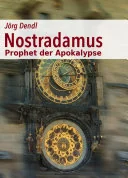
Nostradamus - Prophet der Apokalypse
 73
73

Nostradamus - Prophet der Apokalypse
Jörg Dendl’s "Nostradamus - Prophet der Apokalypse" offers a focused examination of the 16th-century seer's cryptic verses. The book’s strength lies in its methodical approach, tracing the lineage of Nostradamus's visions directly to the Book of Revelation. Dendl persuasively argues that the 'Prophetiés' are not merely random predictions but a deliberate re-casting of biblical apocalyptic scenarios. A particularly compelling section dissects how specific passages from Revelation are mirrored in Nostradamus's quatrains, providing a new lens for understanding their composition. However, the work could benefit from a broader engagement with the diverse interpretations of Nostradamus that have emerged over the past 500 years, beyond the strictly biblical. It remains a valuable contribution for scholars of esoteric history and prophecy, offering a clear, albeit specific, interpretative framework.
📝 Description
73
Jörg Dendl's 2023 book connects Nostradamus's prophecies to the Book of Revelation.
Jörg Dendl's "Nostradamus - Prophet der Apokalypse" analyzes the prophecies of Michel Nostradamus, specifically examining their relationship with the biblical Book of Revelation. Dendl proposes that Nostradamus structured his visions directly from this biblical text, recasting its apocalyptic narratives for his own predictions. The book situates Nostradamus's "Prophetiés," first published in 1555, within the religious ferment of 16th-century France, a time when divination held significant cultural sway.
Dendl's central argument is that the Johannes-Apokalypse provided Nostradamus with both his primary source material and the fundamental structure for his prophecies. The author details how Nostradamus adapted apocalyptic imagery, applying it to events far beyond his immediate era. This recontextualization, Dendl suggests, transformed Nostradamus's work into a predictive system that resonated for centuries.
This work engages with the tradition of prophetic literature and apocalyptic interpretation that has long been a current within Western esotericism. It examines how historical figures like Nostradamus drew upon existing religious frameworks, particularly biblical prophecy, to construct their own systems of foresight. The book investigates the process of reinterpreting sacred texts for predictive purposes, a practice common in esoteric circles seeking to understand or influence future events through divine or hidden knowledge.
💡 Why Read This Book?
• Understand how Jörg Dendl posits the Johannes-Apokalypse was Michel Nostradamus's structural blueprint for his quatrains, offering a unique interpretive lens on the 'Prophetiés'. • Gain insight into the 16th-century fascination with apocalyptic literature and divination, as Dendl situates Nostradamus's work within this specific historical milieu. • Learn to identify specific biblical motifs and imagery within Nostradamus's prophecies, moving beyond general predictions to textual analysis.
⭐ Reader Reviews
Honest opinions from readers who have explored this book.
❓ Frequently Asked Questions
What is the central argument of Jörg Dendl's book about Nostradamus?
Dendl argues that Michel Nostradamus structured his 'Prophetiés' directly after the Book of Revelation (Johannes-Apokalypse), reinterpreting its apocalyptic visions for future events.
When was Nostradamus's 'Prophetiés' first published?
The 'Prophetiés' by Michel Nostradamus were first published in multiple installments, with the earliest known editions appearing in 1555.
Does the book claim Nostradamus predicted specific modern events?
While the book discusses how verses have been historically assigned to later events, its primary focus is on the biblical structure Nostradamus employed, not a direct prediction of modern events.
What biblical text is central to Dendl's analysis of Nostradamus?
The central biblical text is the Book of Revelation, also known as the Johannes-Apokalypse, which Dendl proposes served as Nostradamus's primary source and model.
Is this book a biography of Nostradamus?
No, the book is not a biography. It is an analytical study focusing on the interpretative framework and source material behind Nostradamus's prophetic writings.
What historical period does the book primarily address regarding Nostradamus?
The book primarily addresses the 16th century, the period when Nostradamus lived and composed his prophecies, and the subsequent centuries of interpretation.
🔮 Key Themes & Symbolism
Apocalyptic Framework
The core of Dendl's work is the assertion that Nostradamus consciously adopted the narrative and symbolic structure of the Johannes-Apokalypse. This isn't about simple prediction but about a re-visioning of biblical eschatology. The book details how specific visions of the end times from the New Testament were recontextualized by Nostradamus, creating verses that could be applied to various historical epochs subsequent to his own life.
Prophetic Recurrence
Dendl explores the concept that Nostradamus's prophecies function as a cyclical reinterpretation of apocalyptic events. By aligning his verses with the Book of Revelation, Nostradamus created a template for future interpreters to map onto unfolding historical crises. The work investigates how this cyclical approach allowed the 'Prophetiés' to remain relevant across centuries of upheaval.
Biblical Exegesis as Divination
The book frames Nostradamus's prophetic method as a form of radical biblical exegesis. Rather than seeking divine inspiration directly, Nostradamus is presented as meticulously dissecting and reassembling the imagery and prophecies found within the Johannes-Apokalypse. This approach highlights the intellectual and theological currents of the 16th century, where biblical texts were central to understanding the world.
The Prophet as Re-Visionary
Dendl posits Nostradamus not merely as a forecaster but as a 're-visionary' of existing prophetic traditions. The 'Prophetiés' are understood as a sophisticated act of re-imagining biblical prophecy. The work examines how this re-visioning process inherently lends itself to multiple interpretations, securing the enduring mystique of the seer.
💬 Memorable Quotes
Direct passages from the work, attributed to the author.
“The 'Prophetiés' are not random verses but a plastic re-elaboration of the Johannes-Apokalypse.”
— This expresses Dendl's central thesis: Nostradamus didn't invent new prophecies but vividly reshaped existing biblical apocalyptic narratives, creating a framework for future interpretations.
“Nostradamus mapped the structure of the Apocalypse onto future events.”
— This highlights the methodological aspect of Nostradamus's work as analyzed by Dendl, emphasizing a deliberate structural borrowing from the Book of Revelation.
“Verses were assigned to historical events occurring long after Nostradamus's lifetime.”
— This points to the enduring phenomenon of Nostradamus's prophecies, noting how their application has consistently extended beyond the seer's contemporary period.
“The Johannes-Apokalypse served as a guide for Nostradamus's visions.”
— This directly states the primary source material Dendl identifies, underlining the biblical foundation of Nostradamus's prophetic output.
“He painted the descriptions of the Apocalypse vividly.”
— This interpretation focuses on the stylistic element of Nostradamus's writing, suggesting a deliberate and artistic rendering of biblical apocalyptic imagery.
🌙 Esoteric Significance
Tradition
Nostradamus's work, as analyzed by Dendl, fits within the Western esoteric tradition of biblical interpretation and prophecy, particularly those currents influenced by apocalyptic literature. While not strictly Kabbalistic or Hermetic in its foundational text, it draws heavily on Christian eschatology, specifically the Book of Revelation. It represents a departure from purely devotional or theological exegesis, integrating predictive elements often associated with astrology and other divinatory arts of the era.
Symbolism
Key symbols Dendl identifies stem directly from the Johannes-Apokalypse: the Beast (often interpreted as anti-religious or political forces), the Whore of Babylon (representing corruption or false religion), and the Four Horsemen (signifying war, famine, plague, and death). Nostradamus’s genius, according to this interpretation, lay in his ability to render these potent biblical symbols into verses that could be applied contextually to different historical crises.
Modern Relevance
The study of Nostradamus continues to resonate in contemporary circles interested in conspiracy theories, alternative history, and modern apocalyptic thought. Scholars and enthusiasts alike revisit his quatrains to find parallels with current global events, from political upheavals to natural disasters. Dendl's focus on the biblical framework offers a method for deconstructing these modern interpretations, showing how the enduring power of prophecy lies in its adaptable symbolism.
👥 Who Should Read This Book
• Students of Western Esotericism: Those seeking to understand the historical roots of prophetic traditions and how biblical texts have been reinterpreted for predictive purposes. • Researchers of Apocalyptic Literature: Individuals interested in comparative studies of eschatological narratives, particularly the influence of the Book of Revelation on subsequent literature. • Enthusiasts of Historical Divination: Readers fascinated by the methods and cultural impact of prophecy in the 16th century and its lasting legacy.
📜 Historical Context
Jörg Dendl's analysis of Nostradamus is rooted in the fervent religious and intellectual climate of 16th-century Europe. Michel Nostradamus published the first installment of his 'Prophetiés' in 1555, a period marked by widespread anxiety over religious schisms and eschatological speculation. The Protestant Reformation, initiated by Martin Luther in 1517, had fractured the religious range of Europe, fueling interest in divine pronouncements and end-times prophecies. Competing schools of thought on divination and prophecy were prevalent, ranging from astrological interpretations to more direct forms of spiritual revelation. Nostradamus’s approach, however, stood out for its cryptic, quatrain format and its perceived mapping onto historical events that unfolded centuries later. While figures like Paracelsus were also exploring esoteric knowledge, Nostradamus's work gained a unique cultural traction, influencing popular and scholarly discourse on prophecy for over 400 years.
📔 Journal Prompts
The plastic re-elaboration of the Johannes-Apokalypse: How did Nostradamus transform biblical imagery?
Mapping the Apocalypse: Reflect on the structural parallels Dendl identifies between Revelation and the 'Prophetiés'.
The Prophet as Re-Visionary: Consider the implications of Nostradamus's method for understanding prophecy.
Historical events assigned to verses: How does this interpretive practice sustain the relevance of the 'Prophetiés'?
Nostradamus's vivid descriptions: Analyze a specific quatrain through the lens of its biblical source imagery.
🗂️ Glossary
Prophetiés
The collection of quatrains (four-line poems) written by Michel Nostradamus, first published in 1555, which form his prophecies.
Johannes-Apokalypse
The German title for the Book of Revelation, the final book of the New Testament, detailing apocalyptic visions.
Quatrain
A stanza or poem consisting of four lines, often with a specific rhyme scheme, used by Nostradamus for his prophecies.
Eschatology
The branch of theology concerned with death, judgment, and the final destiny of the soul and of humankind.
Exegesis
Critical explanation or interpretation of a text, especially of scripture.
Divination
The practice of seeking knowledge of the future or the unknown by supernatural means.
Apocalyptic Literature
A genre of prophetic literature that reveals divine mysteries about the end of the world or the transformation of the present age.
This book appears in 1 collection
🔮 Readers Also Liked
Browse all →







From the “Nostradamus” Collection
View all →





More Free Esoteric History & Biography Books
View all →