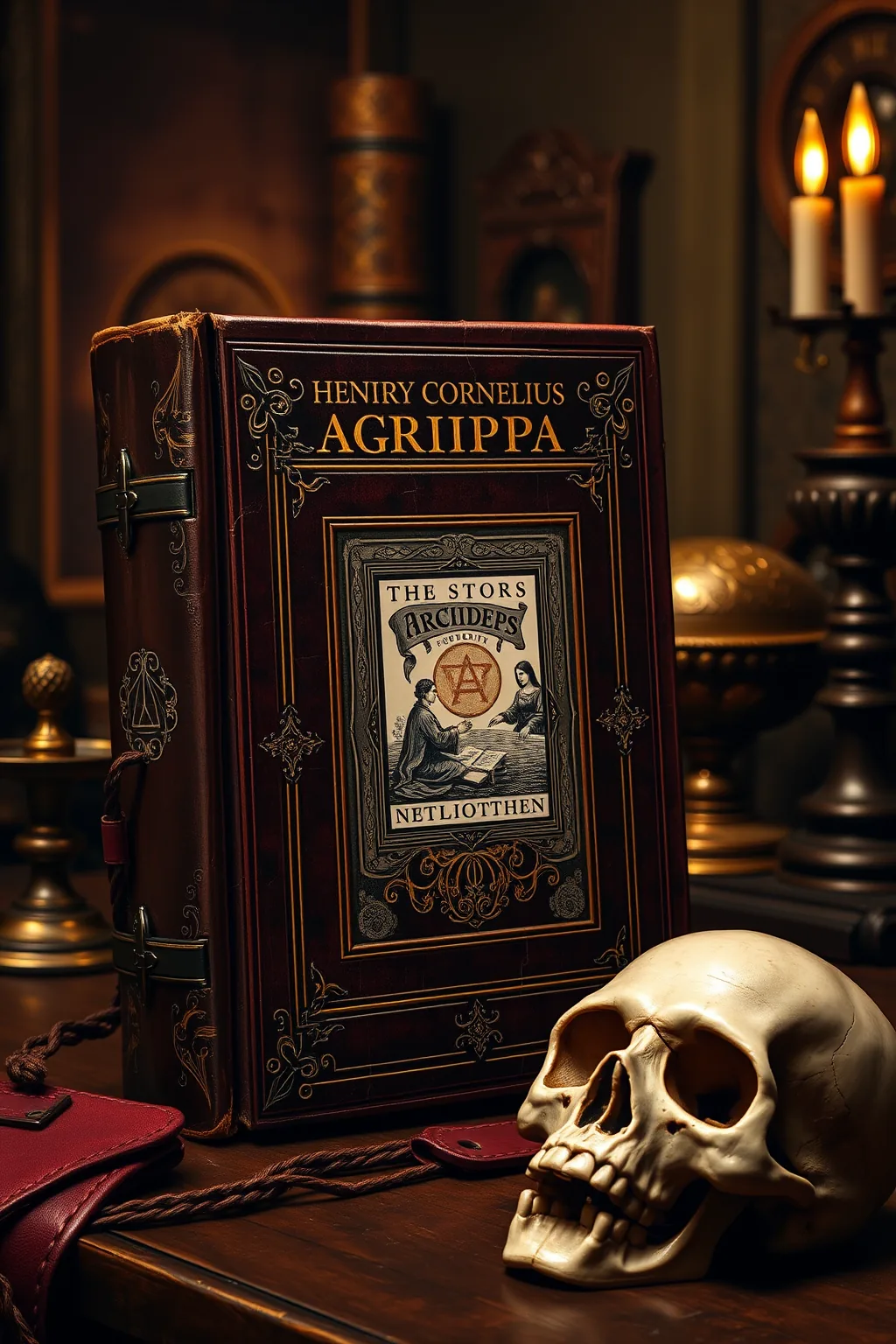
Henry Cornelius Agrippa
 62
62

Henry Cornelius Agrippa



By Evander Ashcroft (Alchemy & Hermeticism Editor) — Heinrich Cornelius Agrippa's magnum opus remains an indispensable cornerstone for anyone serious about the Western esoteric tradition. This work is a meticulously researched compendium, offering unparalleled insights into natural magic, astrology, demonology, and the intricate systems of Kabbalah. Agrippa's genius lies in his ability to synthesize diverse philosophical and magical currents into a coherent, albeit challenging, framework. While its density requires dedicated study, the rewards are immense for the discerning practitioner and scholar seeking to grasp the theoretical underpinnings of occult practice. It is a vital text for understanding the lineage of magical thought.
📝 Description
62
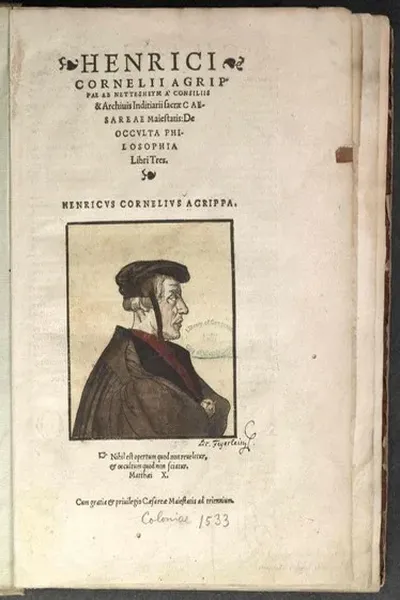
Heinrich Cornelius Agrippa's Three Books of Occult Philosophy was first published in 1531.
Heinrich Cornelius Agrippa's Three Books of Occult Philosophy presents a comprehensive overview of Renaissance magical thought. Agrippa synthesizes Neoplatonic philosophy, Hermeticism, Kabbalah, and natural science to explain the hidden connections within the universe. The work details hierarchies of angels and demons, astrological influences, the properties of plants and stones, and methods for creating magical talismans. Agrippa aims to demonstrate that magic is a legitimate part of natural philosophy, accessible through reason and study.
The book is structured into three parts. The first discusses the natural world and its correspondences, the second focuses on celestial magic and its influence, and the third explores religious magic, divine names, and theurgy. Agrippa's intention was to provide a systematic framework for understanding the forces that govern existence, from the mundane to the divine. This treatise became a cornerstone for later occult traditions, influencing generations of thinkers and practitioners.
This work is a key text within Western esotericism, particularly the Renaissance magical revival. Agrippa sought to reconcile pagan philosophy and magic with Christianity, presenting magic as a natural science rooted in the divine order. His synthesis drew heavily on sources like the Corpus Hermeticum and Kabbalistic texts, making complex ideas accessible to a wider learned audience. The book's systematic approach and detailed classifications of occult phenomena established a new standard for magical literature, influencing subsequent occultists for centuries.
💡 Why Read This Book?
For the serious student of the occult, Agrippa's work is essential. It provides a comprehensive historical and philosophical foundation for many modern magical practices. Whether you are a seasoned practitioner seeking to deepen your understanding or a curious scholar exploring the roots of Western esotericism, this book offers profound wisdom and practical applications for understanding the hidden architecture of the universe.
⭐ Reader Reviews
Honest opinions from readers who have explored this book.
❓ Frequently Asked Questions
What is the primary focus of Agrippa's work?
Agrippa's primary focus is on the 'Occult Philosophy,' a comprehensive system that seeks to understand and harness the hidden forces and correspondences within the universe, encompassing natural, celestial, and divine magic.
Is this book suitable for beginners in occult studies?
While comprehensive and deeply philosophical, Agrippa's work is considered advanced. Beginners may find it beneficial to approach it with guidance or after establishing a foundational understanding of related esoteric concepts.
What are the 'three books' of Agrippa's work?
The 'Three Books of Occult Philosophy' are divided into Book I (Natural Magic), Book II (Celestial Magic), and Book III (Spiritual/Theological Magic), each exploring different facets of occult knowledge.
Does Agrippa discuss demonology?
Yes, Agrippa does discuss various spiritual entities, including those often categorized as demons, within the context of celestial and spiritual magic, aiming to understand their nature and influence.
How influential has Agrippa's work been on later occultists?
Agrippa's influence is immeasurable. His 'Occult Philosophy' served as a primary source and inspiration for countless occultists, magicians, and philosophers throughout history, shaping the trajectory of Western esotericism.
🔮 Key Themes & Symbolism
The Three Worlds and Their Correspondences
Agrippa posits a universe structured into three interconnected realms: the material, the celestial, and the divine. He meticulously details the intricate web of correspondences that bind these worlds, revealing how actions in one sphere can resonate throughout the others. This understanding is crucial for natural magic, where earthly elements are imbued with celestial energies, and for divinatory practices that seek to interpret divine will through earthly signs. The clear insights is that the microcosm mirrors the macrocosm, offering a key to unlocking hidden potentials.
The Power of Sympathetic Magic and Talismans
A core part of Agrippa's natural magic is the principle of sympathy – the idea that like attracts like and that objects sharing qualities or influences can affect one another across distance. He expounds on the creation and use of talismans and images, imbued with planetary or elemental forces, designed to draw down specific virtues and effects. This section studies the practical application of occult principles, demonstrating how to forge potent tools for protection, healing, and influence by aligning with cosmic currents.
Numerology, Kabbalah, and Divine Names
Agrippa combines numerological systems and Kabbalistic principles throughout his work, emphasizing the sacred power of numbers and the profound significance of divine names. He illustrates how the structure of the universe is underpinned by mathematical relationships and how the manipulation of specific Hebrew letters and divine appellations can serve as potent keys for spiritual ascent and magical operation. This theme highlights the intellectual and mystical underpinnings of his occult system, connecting it to ancient wisdom traditions.
💬 Memorable Quotes
Direct passages from the work, attributed to the author.
“For indeed the whole world is but one creature.”
— Agrippa presents a holistic view of existence, suggesting an organic and interconnected cosmos where all parts are intrinsically linked, akin to a single, vast living entity.
“We may understand the hidden virtues of things.”
— This highlights the core purpose of occult philosophy: to unveil the secret powers and properties latent within all aspects of creation, accessible through diligent study and practice.
“Knowledge of the divine names is the highest of all knowledge.”
— This emphasizes the supreme importance of understanding and invoking the sacred names of God and angelic beings as the most potent means of spiritual connection and magical efficacy.
“The world is a book, and those who do not travel read only one page.”
— Though often attributed elsewhere, this sentiment reflects Agrippa's expansive worldview, suggesting that true understanding comes from experiencing and exploring the diverse manifestations of creation.
💡 Key Ideas
Editorial paraphrase of the work's core concepts — not direct quotes.
There is nothing in the world which is not also in man.
This quote captures the Hermetic principle of 'As Above, So Below,' emphasizing the profound connection and mirroring between the macrocosm (the universe) and the microcosm (humanity).
🌙 Esoteric Significance
Tradition
Agrippa's work is a profound synthesis of the Hermetic, Neoplatonic, and Kabbalistic traditions within Western esotericism. He meticulously integrates concepts of divine emanation, the macrocosm/microcosm relationship, and the power of divine names, offering a comprehensive framework for understanding the universe as a divinely ordered and interconnected entity, accessible through magical and philosophical inquiry.
Symbolism
The text is rich with symbolic language, drawing from astrology, alchemy, and numerology. Celestial bodies, geometric figures, elemental forces, and the Hebrew alphabet are all employed as symbolic keys to unlock deeper meanings. Agrippa uses these symbols not merely as decorative elements but as essential components of the magical language, representing hidden virtues and forces that can be invoked and manipulated.
Modern Relevance
Despite its age, Agrippa's work remains remarkably relevant. It provides a foundational understanding of principles that underpin many modern occult practices, from ceremonial magic to divination. The emphasis on correspondences, the interconnectedness of all things, and the pursuit of hidden knowledge continues to resonate with contemporary seekers interested in exploring the deeper dimensions of reality and their own spiritual potential.
👥 Who Should Read This Book
This key work is essential for serious students of Western esotericism, occult history, and comparative religion. Beginners might find it a challenging but rewarding deep dive after some introductory reading. Scholars of philosophy, history, and the history of science will find invaluable insights into Renaissance thought and the intellectual underpinnings of magic. Seekers of hidden knowledge and practitioners of magical arts will discover a comprehensive system for understanding and engaging with the subtle forces of the universe, offering both theoretical depth and practical guidance for their spiritual journey.
📜 Historical Context
Penned during the Renaissance, a period of fervent intellectual rediscovery and burgeoning scientific inquiry, Heinrich Cornelius Agrippa's 'Three Books of Occult Philosophy' emerged as a monumental synthesis of ancient, medieval, and contemporary esoteric thought. The era was characterized by a fascination with Hermeticism, Neoplatonism, Kabbalah, and the rediscovery of classical texts, all of which deeply informed Agrippa's ambitious project. He sought to legitimize magic as a form of divine science, distinct from superstition, by grounding it in philosophical reasoning and natural observation. His work stood as a proof of the intellectual currents of the time, influencing generations of thinkers, occultists, and even early scientists, shaping the very foundations of Western esotericism.
📔 Journal Prompts
Reflect on a personal experience that demonstrates a 'correspondence' between two seemingly unrelated things in your life. How might Agrippa's principles explain this connection?
Consider the concept of 'sympathetic magic.' How can this principle be applied ethically and constructively in modern life, beyond traditional magical practices?
Agrippa emphasizes the power of divine names. What names or archetypes hold significant power for you, and what virtues do they represent?
How does the idea of the 'macrocosm' (universe) and 'microcosm' (humanity) resonate with your understanding of yourself and your place in the world?
If you were to create a talisman based on Agrippa's principles, what intention would you imbue it with, and what symbols would you use to represent that intention?
🗂️ Glossary
Occult Philosophy
A system of knowledge and practice that seeks to understand and utilize the hidden forces and correspondences within the universe, often encompassing natural magic, celestial influences, and spiritual dimensions.
Correspondence
The principle that elements, forces, or entities in one realm (e.g., celestial) have a sympathetic relationship or mirroring effect with those in another realm (e.g., terrestrial or human).
Sympathetic Magic
A form of magic based on the belief that like influences like, and that objects that have been in contact can affect each other across distance, often utilized through talismans and effigies.
Talismans
Objects, often inscribed with symbols or figures, believed to be imbued with specific virtues or powers drawn from celestial influences or divine sources, used for protection, influence, or other magical purposes.
Kabbalah
A complex system of Jewish mysticism and esoteric interpretation that explores the nature of God, the universe, and the divine emanations, often involving numerology, gematria, and symbolic interpretation of sacred texts.
This book appears in 4 collections
🔮 Readers Also Liked
Browse all →





More by Heinrich Cornelius Agrippa von Nettesheim
All books →




From the “Occultism” Collection
View all →






More Free Divination & Tarot Books
View all →