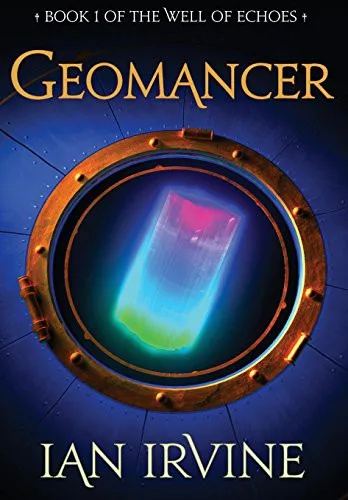
Geomancer
 63
63

Geomancer



Evander Ashcroft (Alchemy & Hermeticism Editor) — Ian Irvine's 'Geomancer' is a monumental contribution to the study of terrestrial divination. This meticulously researched text transcends mere technique, illuminating the deep philosophical underpinnings and potent symbolism inherent in this ancient practice. Irvine's profound understanding of hermetic principles is evident throughout, weaving a narrative that connects geomantic figures to astrological correspondences and alchemical concepts. The strengths of this book lie in its clarity, its comprehensive approach, and its ability to demystify a complex art. It is an indispensable resource for serious practitioners and scholars alike, offering a pathway to understanding the earth's subtle energies and their influence on human affairs. A must-read for anyone seeking to deepen their divinatory practice.
📝 Description
63
Ian Irvine's 'Geomancer' deciphers the symbolic language of earth divination, as practiced since antiquity.
This book examines the practice of geomancy, an ancient form of divination using thrown earth or pebbles. Ian Irvine explains how the patterns formed by these elements create a complex symbolic language. The text guides readers through interpreting these figures and their connection to celestial influences. It discusses the philosophical implications of geomancy, suggesting that earthly patterns can reflect cosmic order and offer insights into fate and destiny.
The work details the specific elements of geomancy, including the interpretation of the 16 figures, the houses, and their relationships. It aims to connect the material world with mystical understanding, presenting the earth itself as a source of knowledge. The book is intended for those interested in esoteric traditions, divination, and practical application of earth divination techniques.
Geomancy is a divinatory art with roots stretching back centuries, often associated with Islamic mysticism and European folk magic. It involves casting marks or patterns on the ground or on paper, which are then interpreted based on established systems. These systems link the patterns to planetary and zodiacal influences, offering answers to questions or insights into future events. Irvine's work situates itself within this long tradition, seeking to clarify its methods and underlying principles for a modern audience.
💡 Why Read This Book?
Uncover the earth's hidden wisdom and unlock the secrets of geomancy. 'Geomancer' provides a comprehensive guide to this ancient divinatory art, offering profound insights into symbolic interpretation and cosmic connections. Ideal for seekers of esoteric knowledge, practitioners of divination, and scholars interested in the history of occult practices. Dive into a world where the patterns of the earth reveal the patterns of destiny.
⭐ Reader Reviews
Honest opinions from readers who have explored this book.
❓ Frequently Asked Questions
What is Geomancy?
Geomancy, meaning 'earth divination,' is an ancient practice of scrying or divining by means of figures or lines drawn or traced on the ground or in the air. It involves casting points or lines and interpreting the resulting figures.
What are the primary tools used in Geomancy?
Traditionally, geomancy uses a handful of earth, pebbles, or even just a stylus to mark points or lines. The focus is on the random patterns created by these elements, which are then interpreted.
What kind of questions can Geomancy answer?
Geomancy can be used to answer a wide range of questions concerning personal matters, relationships, finances, health, and even the outcome of ventures or events. It provides insights into the present and potential future.
Is Geomancy related to Astrology?
Yes, Geomancy has strong ties to Astrology. Each of the 16 geomantic figures corresponds to astrological bodies, houses, and zodiac signs, creating a rich layer of interconnected symbolism.
Can beginners learn Geomancy from this book?
Absolutely. Ian Irvine's 'Geomancer' is structured to guide both novice and experienced practitioners through the intricacies of this art, offering clear explanations and practical advice.
🔮 Key Themes & Symbolism
The Language of the Earth
This theme explores the fundamental concept of Geomancy as a divinatory system that translates the chaotic patterns of the earth into meaningful insights. It studies how the arrangement of points and lines, the very texture of the ground, can be interpreted as a form of celestial communication. The book emphasizes that the earth itself is a living oracle, holding secrets and offering guidance to those who learn to read its silent pronouncements. This understanding fosters a deeper connection to the natural world and its inherent wisdom.
Symbolic Interplay and Cosmic Resonance
Central to 'Geomancer' is the intricate web of symbolism that connects earthly patterns to celestial influences. Irvine meticulously details the 16 geomantic figures, revealing their correspondence with astrological planets, signs, and houses. This theme highlights the hermetic principle of 'as above, so below,' demonstrating how terrestrial events mirror cosmic movements. Readers will discover how these symbolic correspondences unlock layers of meaning, allowing for a nuanced interpretation of divinatory readings and a deeper understanding of the universe's harmonious interconnectedness.
The Art of Interpretation and Practical Application
This theme focuses on the practical application of geomantic knowledge. Irvine guides readers through the process of casting figures, understanding the significance of each house in the geomantic chart, and the art of synthesizing various influences to arrive at a clear interpretation. The book emphasizes that geomancy is not merely a passive act of receiving information but an active engagement with symbolic logic. It empowers the reader to develop their intuitive abilities and apply geomantic insights to real-world questions, fostering personal growth and informed decision-making.
💬 Memorable Quotes
Direct passages from the work, attributed to the author.
“Each figure is a whisper from the cosmos, a reflection of celestial dance.”
— This highlights the profound connection between terrestrial geomantic figures and astrological influences, emphasizing their symbolic resonance.
“To read the earth is to read the unfolding of destiny.”
— This suggests that geomantic readings provide insights into potential futures and the predetermined paths of fate.
“The ground beneath us is a map of the heavens above.”
— A concise expression of the hermetic principle 'as above, so below,' central to understanding geomancy's interpretive framework.
“Wisdom is not found in books alone, but in the silent pronouncements of the land.”
— This emphasizes the experiential and intuitive aspect of geomancy, contrasting it with purely academic knowledge.
💡 Key Ideas
Editorial paraphrase of the work's core concepts — not direct quotes.
The earth speaks in patterns, if only we learn to listen.
This quote expresses the core tenet of geomancy: that the earth's surface, through its random formations, offers a form of divine communication.
🌙 Esoteric Significance
Tradition
Geomancy is deeply embedded within the hermetic and occult traditions, often seen as a sister art to astrology. It aligns with the principle of 'as above, so below,' viewing earthly patterns as direct reflections of celestial influences. Its systematic approach to interpretation, utilizing figures derived from random casting, also connects it to Kabbalistic principles and numerology, offering a structured pathway to divine knowledge and prophecy.
Symbolism
The core of geomantic symbolism lies in the 16 distinct figures, each possessing unique astrological correspondences, elemental associations, and inherent meanings. These figures are not arbitrary; they represent archetypal forces and states of being. The arrangement of these figures within the 12 houses of the geomantic chart further enriches the symbolism, allowing for a nuanced interpretation of questions related to various aspects of life, from personal relationships to worldly affairs.
Modern Relevance
In an era often characterized by rapid technological advancement and a disconnect from the natural world, geomancy offers a powerful antidote. It encourages a return to intuitive perception and a deeper connection with the earth's energies. Modern practitioners find geomancy to be a grounded yet profound divinatory tool, providing clarity, guidance, and a sense of agency in navigating life's complexities. Its symbolic language speaks to those seeking meaning beyond the purely material.
👥 Who Should Read This Book
This definitive guide to geomancy is essential for the dedicated occult scholar seeking to understand a foundational divinatory art. Aspiring practitioners will find it an invaluable resource for learning the techniques and symbolism of earth divination. Seekers of esoteric knowledge will appreciate its philosophical depth and connection to ancient wisdom traditions. Even experienced diviners can deepen their practice by exploring Irvine's comprehensive approach and insightful interpretations, making it a valuable addition to any metaphysical library.
📜 Historical Context
Geomancy, or 'earth divination,' boasts a lineage stretching back to antiquity, with roots often traced to the Arab world during the medieval period, though similar practices likely existed in various forms across ancient cultures. It gained significant traction in Europe during the late Middle Ages and Renaissance, becoming a prominent divinatory art alongside astrology and other esoteric disciplines. Often associated with figures like Cornelius Agrippa and later adopted by various occult orders, geomancy was considered a sophisticated system of knowledge, blending mathematical principles, astrological correlations, and intuitive interpretation. Its popularity ebbed and flowed with the shifting intellectual currents of Europe, but it remained a persistent thread in the range of Western esotericism, influencing practitioners who sought to understand the world through symbolic languages and divine revelation.
📔 Journal Prompts
Reflect on a recent event and consider how its patterns might be mirrored in a geomantic reading.
What personal archetypes do you feel are most strongly represented by the four primary geomantic figures?
How can the practice of geomancy deepen your connection to the natural world around you?
Consider a recurring question in your life and imagine how a geomantic reading might illuminate it.
Explore the relationship between the earth's subtle energies and your own emotional or physical state.
🗂️ Glossary
Geomantic Figure
One of the 16 distinct patterns created by the random casting of points or lines in geomancy, each with its own symbolic meaning and astrological correspondence.
Geomantic House
One of the 12 divisions within a geomantic chart, analogous to the houses in astrology, representing different areas of life or aspects of a question.
The Judge
A specific geomantic figure within a reading that is considered to have particular authority or influence over the interpretation of the question.
The Shield
A geomantic figure that often represents protection, defense, or obstacles within a divinatory reading.
The Witness
A pair of geomantic figures in a reading that provide additional context or corroborate the interpretation of other figures.
This book appears in 3 collections
🔮 Readers Also Liked
Browse all →









More by Ian Irvine
All books →



From the “Geomancy” Collection
View all →








More Free Divination & Tarot Books
View all →