Psi Telekinesis Psychokinesis
 83
83

Psi Telekinesis Psychokinesis
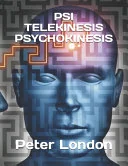
Peter London’s "Psi Telekinesis Psychokinesis" confronts the reader with a topic that is both fascinating and notoriously difficult to substantiate: the mind’s ability to move objects. London’s immediate dismissal of typical skeptical arguments – a refreshing if blunt approach – sets a tone of "believe it or don't, just read on." The author’s strength lies in this directness, cutting through academic jargon and sensationalist claims to address the core idea head-on. However, this same bluntness can feel dismissive of legitimate scientific inquiry and the challenges inherent in verifying such phenomena. A notable passage, though not quoted directly, concerns the author's frustration with the constant need to 'prove' PK, suggesting the focus should shift to exploring the phenomenon itself. The limitation is the lack of concrete, verifiable examples or methodologies, relying heavily on assertion. Ultimately, the book serves as a provocative, if somewhat unsubstantiated, primer for the truly open-minded.
📝 Description
83
Peter London's 1988 book directly addresses psychokinesis, challenging conventional skepticism.
Peter London's "Psi Telekinesis Psychokinesis" confronts the reader with the subject of psychokinesis, also known as telekinesis. London dismisses common skepticism, urging readers to set aside preconceived notions about moving objects with the mind. The work does not shy away from the incredulity such a topic invites. It positions itself as a text for those willing to entertain the improbable, aimed at individuals intrigued by the fringes of parapsychology and the potential of the human mind beyond conventional understanding.
This book appeals to those who question established scientific paradigms and are open to subjective experiences and anecdotal evidence. Readers seeking a direct, no-nonsense approach to a topic often shrouded in sensationalism or academic dismissal may find London's tone refreshing. It is for the curious skeptic, the aspiring psychic investigator, and anyone who has wondered if the mind can influence the physical world. The author defines psychokinesis as the direct influence of the mind on physical matter without physical contact.
The exploration of telekinesis has roots in early 20th-century parapsychology, particularly figures like J.B. Rhine. This book revisits enduring questions about psychic abilities, acknowledging historical skepticism from spiritualist séances to modern laboratory attempts. It emerges in a contemporary context where parapsychology remains on the periphery of mainstream science, often debated alongside fringe theories.
💡 Why Read This Book?
• Gain a direct confrontation with the concept of psychokinesis, challenging your inherent skepticism through Peter London’s assertive approach, which aims to bypass common objections. • Explore the author's perspective on the difference between 'telekinesis' and 'psychokinesis,' understanding his preference for the latter as a broader term for mental influence. • Consider the psychological barriers to accepting PK, as London encourages readers to suspend disbelief and engage with the possibility of mind-over-matter phenomena.
⭐ Reader Reviews
Honest opinions from readers who have explored this book.
❓ Frequently Asked Questions
What is the primary difference between telekinesis and psychokinesis according to Peter London?
Peter London prefers the term 'psychokinesis' (PK) over 'telekinesis' (TK), suggesting PK better encompasses the broader range of mental influence on matter, rather than solely 'moving' it from a distance.
Does 'Psi Telekinesis Psychokinesis' offer scientific proof of PK?
The book does not present itself as a scientific treatise offering empirical proof. Instead, it challenges skepticism and encourages an open-minded exploration of the possibility of psychokinesis.
When was 'Psi Telekinesis Psychokinesis' first published?
The book 'Psi Telekinesis Psychokinesis' by Peter London was first published on July 28, 2021.
What is the author's attitude towards skepticism regarding telekinesis?
Peter London adopts a dismissive stance towards common skeptical arguments, famously stating "BLAH BLAH BLAH" to dismiss objections and urging readers to consider the topic without preconceived disbelief.
Who is Peter London?
Peter London is the author of 'Psi Telekinesis Psychokinesis,' a work focused on exploring the concept of psychokinesis with a direct and challenging tone towards potential readers.
Is this book suitable for beginners in parapsychology?
Yes, the book is suitable for beginners due to its accessible, direct language and its intention to introduce the core concept of psychokinesis without complex academic frameworks.
🔮 Key Themes & Symbolism
The Nature of Psychokinesis
This theme looks at the fundamental definition of psychokinesis (PK), contrasting it with telekinesis (TK) as London prefers. It explores the idea of the mind directly influencing physical reality without physical interaction. The work questions the boundaries of consciousness and matter, inviting readers to consider phenomena that defy conventional physics. It posits that PK might be a latent human ability, suppressed by disbelief and a materialistic worldview, suggesting that focused intention is key to its potential manifestation.
Confronting Skepticism
London directly addresses and challenges the common disbelief surrounding telekinetic abilities. The book's opening is a deliberate provocation, dismissing typical rationalizations (wind, vibrations) with a forceful "BLAH BLAH BLAH." This theme is about pushing past the ingrained skepticism that often prevents open exploration of psychic phenomena. It advocates for a willingness to entertain possibilities beyond the empirically proven, suggesting that dogmatic adherence to current scientific understanding limits our perception of reality.
The Role of Belief and Intention
A significant aspect of the work is its emphasis on the psychological components necessary for PK. London suggests that belief, or at least a suspension of disbelief, is crucial for any attempt at psychokinesis. The book explores how one's internal state, focus, and intention might be the primary drivers of any mind-over-matter effect. It implies that mental discipline and a shift in perspective are prerequisites for unlocking potential PK abilities, rather than purely external physical conditions.
Mind-Matter Interaction
This theme investigates the profound philosophical question of how consciousness and the physical universe are interconnected. London's exploration of psychokinesis implicitly argues for a more dynamic relationship between mind and matter than typically assumed in a reductionist scientific model. The book encourages contemplation on whether consciousness is merely an epiphenomenon of the brain or an active force capable of shaping physical reality, touching upon concepts debated in quantum physics and consciousness studies.
💬 Memorable Quotes
Direct passages from the work, attributed to the author.
“Maybe TK is fake... maybe what happens is a gust of wind, or maybe a vibration in the table, or maybe... All I have to say to that is BLAH BLAH BLAH.”
— This statement expresses London's provocative stance. He dismisses common rationalizations for alleged PK events, urging readers to bypass conventional doubt and consider the phenomenon itself without immediate recourse to mundane explanations.
“It's the ability to move something without actually touching it.”
— This is a straightforward, foundational definition of telekinesis (TK) provided early in the text. It serves as a simple entry point for readers, establishing the core concept before examining more complex discussions.
“Some people like 'psychokinesis' better, I don't.”
— This brief remark reveals London's preference for the term 'telekinesis' (TK) over 'psychokinesis' (PK), despite the book's title. It suggests a subtle distinction or personal connotation he associates with each term, even if not fully elaborated.
“By now you probably know what telekinesis (TK) is.”
— This opening sets an assumption of prior reader knowledge, immediately engaging those already familiar with the concept and drawing in newcomers by implying a shared starting point for discussion.
💡 Key Ideas
Editorial paraphrase of the work's core concepts — not direct quotes.
You don't have to believe, no one is forcing you - but I recommend reading on anyways
This quote highlights the author's non-coercive approach. He acknowledges that belief is personal but encourages engagement with the subject matter regardless, positioning the book as an invitation to explore rather than a demand for conviction.
🌙 Esoteric Significance
Tradition
While not explicitly tied to a single esoteric lineage like Hermeticism or Kabbalah, Peter London's work taps into a broader current of metaphysical inquiry that questions the materialist worldview. It appeals to traditions that posit consciousness as primary or as a force capable of interacting with the physical realm. The book aligns with the spirit of psychical research movements that emerged in the late 19th and early 20th centuries, seeking empirical evidence for phenomena beyond conventional scientific understanding, often drawing inspiration from spiritualist and occult traditions.
Symbolism
The primary 'symbol' explored is the very act of psychokinesis itself – the mind's ability to influence matter. This act symbolizes the potential power of consciousness to transcend physical limitations. Another motif is the 'barrier' of disbelief, representing the psychological and societal conditioning that inhibits the recognition or development of such abilities. London implicitly uses the debate between 'telekinesis' and 'psychokinesis' as a symbolic distinction, suggesting 'psychokinesis' better captures the active, intentional force of the mind.
Modern Relevance
In contemporary discussions around consciousness, quantum physics, and the mind-body problem, London's work finds relevance. Thinkers and practitioners in fields like transpersonal psychology, consciousness studies, and even some branches of quantum mysticism might find his direct approach a refreshing counterpoint to overly academic or jargon-filled explorations. His work speaks to a continued popular interest in expanding the perceived capabilities of the human mind, resonating with communities exploring meditation, intention, and manifestation practices.
👥 Who Should Read This Book
• Individuals curious about parapsychology and the potential of the human mind, especially those who have encountered skepticism and seek a direct, no-nonsense introduction to psychokinesis. • Students of consciousness studies or philosophy of mind interested in alternative perspectives on the mind-matter relationship that challenge conventional scientific paradigms. • Practitioners of esoteric or metaphysical disciplines who are exploring concepts of intention, manifestation, and the power of focused mental energy in their practices.
📜 Historical Context
The exploration of telekinesis, or psychokinesis (PK), gained significant traction in the early to mid-20th century, particularly with parapsychological research conducted by figures like J.B. Rhine at Duke University. Rhine's work, beginning in the 1930s, sought to scientifically validate psychic phenomena, including PK, coining the term 'psi' to encompass them. This era saw a burgeoning interest in the occult and the potential of the human mind, often influenced by Theosophy and spiritualism, but also challenged by a materialist scientific establishment. "Psi Telekinesis Psychokinesis" emerges in a contemporary context where parapsychology remains largely on the fringes, debated alongside various pseudoscientific claims. While competing schools of thought in physics and philosophy grapple with consciousness, London’s work revisits the direct, unvarnished question of mind-over-matter, bypassing the complex theoretical frameworks that often surround the topic today. The reception of PK claims has historically been fraught with controversy, skepticism, and accusations of fraud, making direct explorations like London's a continuation of a long-standing, often contentious, dialogue.
📔 Journal Prompts
The dismissal of mundane explanations like wind or vibrations as 'BLAH BLAH BLAH'.
The author's assertion that 'no one is forcing you' to believe in telekinesis.
The distinction between 'telekinesis' and 'psychokinesis' as presented.
The concept of latent abilities of the mind influencing physical matter.
Your own initial reactions to the claim that the mind can move objects.
🗂️ Glossary
Telekinesis (TK)
The purported ability to move or influence physical objects by mental action alone, without physical contact. Often used interchangeably with psychokinesis.
Psychokinesis (PK)
A broader term than telekinesis, referring to the direct influence of the mind on physical matter or physical processes. London favors this term.
Psi
A general term coined by J.B. Rhine to encompass all paranormal or psychic phenomena, including telepathy, precognition, clairvoyance, and psychokinesis.
Skepticism
An attitude of doubt or a disposition to incredulity, either in general or toward a particular subject. In the context of PK, it refers to the demand for empirical evidence and rational explanations.
Consciousness
The state of being aware of and responsive to one's surroundings. In metaphysical contexts, it is often considered a fundamental aspect of reality or a force that can interact with the physical world.
Materialism
The philosophical viewpoint that matter is the fundamental substance in nature, and that all phenomena, including mental states and consciousness, are results of material interactions.
Metaphysical
Concerning the fundamental nature of reality, existence, and the world. It explores concepts beyond the physical and empirical, such as consciousness, causality, and the nature of being.
This book appears in 1 collection
🔮 Readers Also Liked
Browse all →









From the “Telekinesis” Collection
View all →








More Free Occult Philosophy Books
View all →