Vedanta
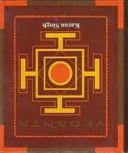
 82
82

Vedanta
Karan Singh's "Vedanta" offers a structured approach to a philosophical tradition that can often appear labyrinthine. The strength of this work lies in its clear articulation of core Vedanta principles, particularly the interconnectedness of Brahman and Atman. Singh presents the material with a commendable academic rigor, avoiding the overly devotional tone that can sometimes obscure the philosophical underpinnings. A particularly effective section discusses the concept of Maya, illustrating how perceived reality can be a form of cosmic illusion. However, the book occasionally feels more like a scholarly exegesis than an invitation to lived experience. While the historical context is present, a deeper engagement with the practical, meditative aspects that often accompany these philosophical explorations could have enhanced its appeal. The 1996 publication date means it doesn't engage with more recent scholarship or contemporary reinterpretations. Nevertheless, for those seeking a solid intellectual foundation in Vedanta, Singh's work provides an accessible entry point.
📝 Description
82
Karan Singh's 1996 book introduces Vedanta, a major Indian philosophical system.
Published in 1996, Karan Singh's Vedanta offers an introduction to a vast Indian philosophical system. It examines the foundational texts and core ideas that have shaped spiritual and intellectual thought for centuries. Singh aims to clarify the central tenets of Vedanta, making its complex concepts understandable for a broader readership. This work is suitable for those interested in comparative religion, spiritual studies, or the history of ideas. Readers who seek a systematic philosophical approach and want to grasp the origins of many Eastern spiritual practices will find it valuable. It is particularly helpful for newcomers to Vedanta desiring a thorough overview.
Vedanta itself arose from the Upanishads, texts seen as the peak of Vedic scriptures. Its philosophical evolution spans many hundreds of years, with figures like Adi Shankara and Ramanuja developing distinct schools. Singh's book enters the conversation at a time when Western interest in Indian philosophy was already established, offering a contemporary view of this ancient tradition.
Vedanta represents the culmination of Indian philosophical inquiry, stemming from the Upanishads, which are considered the final part of the Vedas. Its development involves centuries of commentary and systematization, notably by thinkers such as Adi Shankara, who established the Advaita (non-dual) school, and Ramanuja, who proposed Vishishtadvaita (qualified non-dualism). These traditions grapple with the nature of ultimate reality (Brahman), the self (Atman), and the relationship between them, often within a framework that seeks liberation (Moksha) from the cycle of existence. The study of Vedanta is central to many Hindu traditions and has influenced other spiritual paths.
💡 Why Read This Book?
• Understand the concept of Brahman, the singular, ultimate reality underpinning all existence, as presented in the foundational Upanishads, offering a unique perspective on monism. • Grasp the nature of Atman, the individual self, and its relationship to Brahman, moving beyond simplistic notions of personal identity toward a metaphysical understanding of consciousness. • Explore the doctrine of Maya, as detailed in the text, which explains the illusory nature of the phenomenal world and the obstacles it presents to spiritual realization.
⭐ Reader Reviews
Honest opinions from readers who have explored this book.
❓ Frequently Asked Questions
What are the main schools of Vedanta discussed in Karan Singh's book?
Karan Singh's "Vedanta" primarily focuses on the Advaita Vedanta school, emphasizing the non-dualistic identity of Atman and Brahman. While other schools like Vishishtadvaita and Dvaita exist, the work highlights the philosophical core derived from the Upanishads and their interpretations, particularly within the Advaita framework.
When was Karan Singh's "Vedanta" first published?
The book "Vedanta" by Karan Singh was first published in 1996. This places its commentary and interpretation within a specific period of academic and spiritual discourse concerning Indian philosophy.
What is the significance of the Upanishads in Vedanta as presented by Singh?
Singh presents the Upanishads as the foundational texts of Vedanta, representing the 'high watermark' of Indian philosophy. They are the primary source for concepts like Brahman, Atman, and the ultimate nature of reality, forming the bedrock of the philosophical inquiry.
Does the book explain the concept of Moksha?
Yes, Karan Singh's "Vedanta" explains Moksha as the ultimate goal within the Vedanta philosophy. It represents liberation from the cycle of birth, death, and rebirth (samsara), achieved through the realization of one's true nature and its identity with Brahman.
Is "Vedanta" by Karan Singh suitable for beginners?
While the subject matter is profound, "Vedanta" by Karan Singh is structured to be accessible to those new to Indian philosophy. It aims to elucidate complex ideas systematically, making it a valuable starting point for serious students.
What is Maya in the context of Vedanta as described in the book?
In "Vedanta," Maya refers to the cosmic illusion or principle of phenomenal appearance that conceals the true nature of reality (Brahman). It is what makes the world appear as diverse and separate, leading to ignorance of the underlying unity.
🔮 Key Themes & Symbolism
The Nature of Ultimate Reality (Brahman)
This theme examines the concept of Brahman, the singular, unchanging, and infinite consciousness that is the source and substratum of all existence. Singh elucidates how Vedanta posits Brahman as the only true reality, beyond all attributes and conceptualizations. The exploration moves beyond mere definition, examining the philosophical implications of such an absolute, unconditioned ground of being for understanding the cosmos and individual existence. It highlights the non-dualistic perspective that Brahman is not separate from the universe but is its very essence.
The Self and Its Identity (Atman)
Central to Vedanta is the exploration of Atman, the innermost self or soul. The work meticulously details the concept of Atman as distinct from the body, mind, and ego. A crucial aspect is the identity between Atman and Brahman, a central to Advaita Vedanta. Singh guides the reader through scriptural passages and philosophical arguments that support this profound assertion, suggesting that self-knowledge is ultimately knowledge of the divine. The theme examines the journey of self-discovery as a process of uncovering this inherent, eternal nature.
The World as Illusion (Maya)
The doctrine of Maya is presented as a key element in understanding the perceived world. This theme addresses how Vedanta explains the phenomenal universe not as unreal in an absolute sense, but as a projection or appearance that veils the true reality of Brahman. Singh explains Maya as a cosmic power that creates diversity and multiplicity, leading beings to mistake the ephemeral for the eternal. Understanding Maya is crucial for dispelling ignorance and achieving liberation, as it reveals the limitations of empirical perception.
Path to Liberation (Moksha)
This theme focuses on Moksha, the ultimate spiritual goal in Vedanta: liberation from the cycle of birth and death (samsara). Singh outlines the various means and understandings associated with achieving this state, often emphasizing knowledge (Jnana) as the primary path. The book discusses how the realization of the identity between Atman and Brahman, and the understanding of Maya, are instrumental in attaining Moksha. It explores the transformative outcome of this liberation, which is a state of eternal peace and freedom.
💬 Memorable Quotes
Direct passages from the work, attributed to the author.
“Vedanta represents the high watermark of Indian philosophy, based as it is upon the utterance of a whole galaxy.”
— This statement underscores the profound and comprehensive nature of Vedanta, positioning it as the pinnacle of Indian philosophical development. The 'utterance of a whole galaxy' metaphor suggests that its insights stem from numerous ancient sages and scriptures, forming a unified and vast body of wisdom.
“The Upanishads are the source from which the Vedanta system draws its sustenance.”
— This highlights the foundational role of the Upanishads in the Vedanta tradition. It signifies that the core doctrines, metaphysical principles, and spiritual insights of Vedanta are directly derived from these ancient texts, establishing their authority and importance.
“Brahman is the ultimate reality, the ground of all existence.”
— This concise definition captures the central tenet of Vedanta regarding the absolute. It posits a singular, all-encompassing, and unchanging reality from which everything else originates and upon which it depends, forming the basis for monistic interpretations.
“Atman is the individual consciousness, identical with Brahman.”
— This statement directly addresses the non-dualistic assertion of Advaita Vedanta. It posits that the deepest essence of the individual self (Atman) is not separate from the universal consciousness (Brahman), a concept crucial for spiritual realization and liberation.
“Maya conceals the true nature of reality and projects the world of multiplicity.”
— This explains the function of Maya as a principle of cosmic illusion. It is presented as the force responsible for the apparent diversity and separateness of the world, obscuring the underlying unity of Brahman and leading to misapprehension.
🌙 Esoteric Significance
Tradition
Vedanta, particularly as explored in Singh's work, is a central to Indic spiritual traditions, deeply intertwined with Hinduism. While not strictly falling under Western esoteric classifications like Hermeticism or Kabbalah, its metaphysical depth and focus on consciousness align with universal esoteric aims. Its emphasis on direct experiential realization of ultimate reality positions it within a broader contemplative and mystical heritage that spans global traditions, seeking gnosis of the divine through internal inquiry and scripture.
Symbolism
The concept of Brahman, often described as 'Neti Neti' (not this, not this), symbolizes the ineffable and transcendent nature of the Absolute. Atman represents the divine spark within the individual, the eternal essence obscured by ego and material identification. Maya, the illusory power, symbolizes the veil of ignorance that separates the individual from truth, manifesting as the perceived world of duality and impermanence, which must be pierced to achieve liberation.
Modern Relevance
Contemporary thinkers and practitioners in fields ranging from transpersonal psychology to consciousness studies draw heavily on Vedanta's insights. Modern Advaita teachers and spiritual movements continue to disseminate its core teachings on non-duality and self-realization. Its concepts are also referenced in discussions of quantum physics and the nature of reality, where the idea of an underlying unified consciousness finds resonance with scientific inquiry into the fundamental structure of the universe.
👥 Who Should Read This Book
• Students of comparative religion and philosophy seeking a foundational understanding of one of the world's most influential metaphysical systems. • Individuals interested in the spiritual and philosophical underpinnings of Indic traditions and their core concepts like Brahman, Atman, and Maya. • Seekers of self-knowledge and ultimate truth who are drawn to systematic philosophical inquiry and the goal of spiritual liberation (Moksha).
📜 Historical Context
Karan Singh's "Vedanta," published in 1996, enters a long and intricate philosophical lineage that traces back to the Upanishads, composed roughly between 1500 BCE and 500 BCE. The formal systematization of Vedanta occurred through figures like Adi Shankara (c. 8th century CE), who championed the Advaita (non-dual) school, and later Ramanuja (c. 11th-12th century CE) with his Vishishtadvaita (qualified non-dualism). By the late 20th century, Indian philosophy had a significant global presence, partly due to the efforts of figures like Swami Vivekananda at the Parliament of Religions in Chicago in 1893 and the subsequent growth of Vedanta societies. Singh's work comes at a time when comparative religion and Eastern spirituality were subjects of academic study and popular interest, engaging with intellectual currents that had been shaped by figures like S. Radhakrishnan, whose own "Indian Philosophy" (1923) was a landmark. The book reflects a mature academic understanding of these ancient traditions, presented for a contemporary audience.
📔 Journal Prompts
The concept of Brahman as the singular, unconditioned reality.
The relationship between Atman and Brahman, as explored in the text.
Reflections on Maya and the nature of perceived reality.
The ultimate goal of Moksha and its implications for life.
The significance of the Upanishads as foundational Vedanta texts.
🗂️ Glossary
Brahman
The ultimate, unchanging, absolute reality that is the source and substratum of all existence. It is the supreme consciousness that underlies the universe.
Atman
The individual soul or self; the innermost essence of a being. In Advaita Vedanta, Atman is considered identical to Brahman.
Maya
Cosmic illusion; the power that conceals the true nature of reality (Brahman) and projects the phenomenal world of multiplicity and diversity.
Moksha
Liberation; salvation; freedom from the cycle of birth, death, and rebirth (samsara), achieved through spiritual realization.
Upanishads
Ancient Sanskrit texts that form the theoretical basis of Vedanta philosophy. They are considered the culmination of Vedic scriptures.
Advaita Vedanta
A school of Vedanta philosophy emphasizing non-duality, teaching that Atman and Brahman are ultimately one and the same.
Samsara
The cycle of death and rebirth, a fundamental concept in Indian religions, from which liberation (Moksha) is sought.