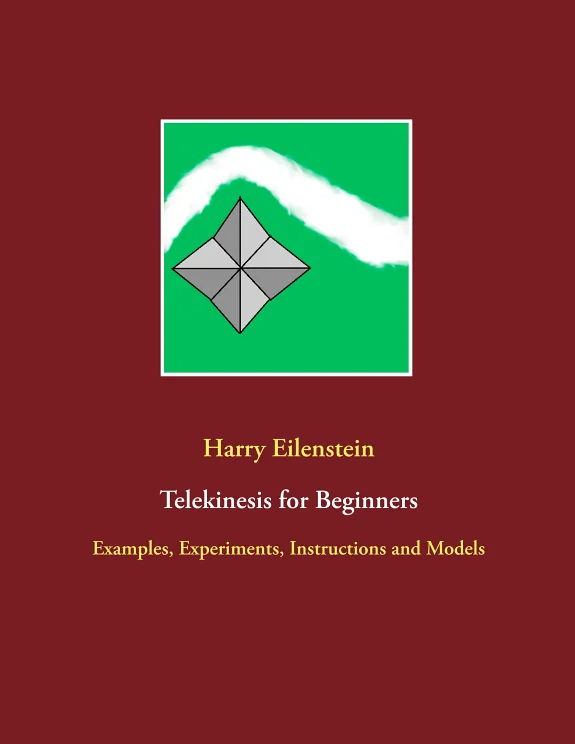
Telekinesis for Beginners
 71
71

Telekinesis for Beginners
Harry Eilenstein’s "Telekinesis for Beginners" approaches the subject of psychokinesis with a refreshing directness. Unlike many texts that overwhelm newcomers with complex theories or dubious claims, Eilenstein opts for a grounded, step-by-step introduction. The book’s strength lies in its accessible language and its attempt to connect abstract concepts to observable, albeit unusual, phenomena like the karate brick break mentioned in the blurb. However, its primary limitation is the inherent difficulty in verifying the efficacy of its proposed exercises. The section discussing "energy alignment" is particularly illustrative of the book's earnest but speculative nature; it proposes a method that is difficult to quantify objectively. Ultimately, "Telekinesis for Beginners" serves as a competent, if cautious, primer for those intrigued by the mind's potential to affect matter.
📝 Description
71
Harry Eilenstein's "Telekinesis for Beginners" (2021) posits that mind power can directly influence the physical world.
This book, published in 2021, addresses the concept of telekinesis, also known as psychokinesis (PK). It defines PK as the ability to move or affect physical objects using only mental power, distinguishing it from telepathy. The author suggests that certain unexplained events, like a martial artist breaking a brick or a person lifting a car in a crisis, could be manifestations of this ability. Eilenstein encourages readers to consider how mental energy might subtly influence their immediate surroundings.
The guide is written for those new to studying telekinesis, requiring no prior knowledge. It is suitable for individuals curious about consciousness's potential beyond current scientific models and for those interested in the metaphysical aspects of mind-over-matter. The book also offers introductory exercises for readers wishing to test their own capacities.
The exploration of telekinesis has a history predating modern parapsychology. While Eilenstein's work is recent, the study of psychical phenomena, including mind-over-matter, has been pursued for centuries. Figures like J.B. Rhine in the early 20th century documented such experiments. Despite facing skepticism from mainstream science, these inquiries continued within dedicated communities, often outside formal academic settings. This book connects to that continuing, though often overlooked, tradition of investigating anomalous mental abilities.
💡 Why Read This Book?
• You will learn foundational techniques for mental focus and visualization, directly applicable to exploring psychokinetic principles, as detailed in the chapters on "energy projection." • You will gain an understanding of how historical figures like J.B. Rhine investigated phenomena related to telekinesis, offering a historical anchor for your own studies beyond 2021. • You will encounter practical, beginner-friendly exercises designed to cultivate sensitivity to subtle energies, moving beyond theoretical discussions of mind-over-matter as presented in the book's introductory sections.
⭐ Reader Reviews
Honest opinions from readers who have explored this book.
❓ Frequently Asked Questions
What is the primary difference between telekinesis and telepathy?
Telekinesis, or psychokinesis, concerns the mind's ability to influence physical objects directly. Telepathy, in contrast, involves the direct transfer of thoughts or feelings between minds without using the known senses.
Is telekinesis a scientifically proven phenomenon?
Currently, telekinesis is not accepted as a scientifically proven phenomenon by mainstream science due to a lack of repeatable, verifiable evidence under controlled conditions. However, research in parapsychology continues to explore such possibilities.
When was 'Telekinesis for Beginners' first published?
The book 'Telekinesis for Beginners' by Harry Eilenstein was first published on May 9, 2021.
What are some common examples of telekinesis cited in popular culture or anecdotal accounts?
Anecdotal accounts and popular culture often cite examples like bending spoons with the mind, moving small objects like pens, or the dramatic feats of a martial artist breaking a brick with their hand.
Does the book offer exercises for developing telekinetic abilities?
Yes, 'Telekinesis for Beginners' is designed to introduce foundational concepts and may include introductory exercises aimed at cultivating mental focus and sensitivity relevant to exploring psychokinetic potential.
Who is Harry Eilenstein?
Harry Eilenstein is the author of 'Telekinesis for Beginners,' a work focused on introducing the principles and potential practice of psychokinesis to a novice audience.
🔮 Key Themes & Symbolism
The Nature of Psychokinesis
This theme examines telekinesis not as magic, but as a potential, albeit subtle, interaction between consciousness and the physical environment. It distinguishes PK from telepathy, highlighting its direct influence on material objects. The work explores how everyday events, like a karate practitioner shattering a brick, might be viewed through the lens of psychokinesis, suggesting that the phenomenon, if real, is woven into existence in ways not always recognized. It aims to clarify PK, presenting it as a natural extension of mental faculty rather than an anomaly.
Foundational Practice Techniques
Central to 'Telekinesis for Beginners' are the practical steps for cultivating PK abilities. This involves exercises focused on developing intense mental concentration and focused intention. The book likely guides readers through techniques such as visualization, where one vividly imagines an object moving, and energy projection, where one attempts to consciously direct mental energy. The emphasis is on gradual development, starting with simple objects and aiming to build sensitivity and control over time, moving from theoretical understanding to practical application.
The Role of Belief and Intention
A recurring theme is the critical importance of the practitioner's mental state. Eilenstein emphasizes that strong belief in the possibility of telekinesis, coupled with unwavering intention, is paramount. Doubt and skepticism are presented as significant obstacles that can inhibit or prevent the manifestation of PK effects. The work explores how a focused, positive, and determined mindset can serve as the primary vehicle for influencing objects, suggesting that the internal field of the practitioner is as crucial as any external technique.
Historical Parallels and Anecdotes
The book contextualizes the study of telekinesis by referencing historical accounts and anecdotal evidence. It touches upon instances, such as individuals lifting cars in moments of distress or people who seem to fill a room with palpable energy, as potential examples of PK in action. By drawing on such narratives, Eilenstein seeks to validate the concept and show its presence throughout human experience, even if not formally recognized. This approach grounds the abstract idea of PK in relatable, albeit extraordinary, human occurrences.
💬 Memorable Quotes
Direct passages from the work, attributed to the author.
“Telekinesis is part of everyday life, even if not immediately recognized.”
— This statement challenges the reader to look beyond extraordinary claims and consider how subtle mental influences might already be at play in mundane or dramatic situations, prompting a re-evaluation of perceived reality.
“When someone in karate smashes a brick with his hand... what is that?”
— This rhetorical question is used to bridge the gap between conventional understanding of physical feats and the potential for psychokinetic influence, suggesting that extreme displays of will might involve more than just physical force.
“There are also people who fill a room as soon as they enter - how do these people do it so that you can almost physically feel it?”
— This highlights the concept of 'aura' or palpable presence, positing that certain individuals exude an energy that affects their environment and those within it, hinting at a form of passive psychokinesis or energy projection.
“Telekinesis is the non-physical movement of objects.”
— A direct and concise definition that sets the stage for the book's exploration, clearly distinguishing telekinesis from physical manipulation and establishing its core premise.
“The movement of objects is at first glance somewhat more unusual than telepathy.”
— This comparative statement acknowledges the perceived strangeness of influencing matter directly, contrasting it with the more commonly accepted (though still debated) concept of mind-to-mind communication.
🌙 Esoteric Significance
Tradition
This work aligns with the broader esoteric tradition exploring the power of consciousness, particularly within modern parapsychology and New Age thought. While not strictly tied to ancient lineages like Hermeticism or Kabbalah, it taps into a perennial interest in mind-over-matter phenomena that echoes through various mystical traditions. Eilenstein’s approach emphasizes practical application and personal development, common in Western esoteric practices seeking to awaken latent human abilities, departing from purely theoretical or divinatory systems.
Symbolism
While "Telekinesis for Beginners" may not overtly focus on complex symbolic systems, the act of moving objects with the mind itself can be seen symbolically. It represents the mastery of the material by the spiritual or mental, a core aspiration in many esoteric paths. The 'object' being moved symbolizes the dense, physical world, while the 'mind' represents the subtle, energetic, and controlling principle. Success in PK is thus a metaphor for the adept's ability to shape their reality through focused will.
Modern Relevance
Eilenstein's book speaks to a contemporary audience interested in personal empowerment and the expansion of consciousness, resonating with practitioners of energy healing, meditation, and manifestational teachings. Its accessible approach makes the concept of psychokinesis relevant to those exploring mindfulness, biofeedback, and quantum consciousness theories, bridging ancient ideas of mental power with modern scientific curiosity and self-help methodologies.
👥 Who Should Read This Book
• Curious individuals new to the study of psychokinesis seeking a gentle introduction to the concept and its potential practical applications. • Students of consciousness and metaphysics interested in exploring phenomena that challenge conventional scientific paradigms and expand their understanding of mind-matter interaction. • Aspiring practitioners looking for foundational guidance on mental focus, visualization, and intention-setting exercises relevant to developing abilities like telekinesis.
📜 Historical Context
Published in 2021, Harry Eilenstein's "Telekinesis for Beginners" emerges in an era where parapsychology, while still largely outside mainstream academia, has seen renewed interest through online communities and popular media. The study of psychokinesis itself has a significant history, notably gaining traction in the mid-20th century with researchers like J.B. Rhine at Duke University, who conducted extensive experiments on ESP and PK. Eilenstein's work implicitly engages with this lineage, offering a modern, accessible entry point. While contemporaries like Rupert Sheldrake explored concepts of morphic resonance, offering a different theoretical framework for interconnectedness, Eilenstein focuses on the direct, actionable potential for individual psychokinetic development. The reception of such works often remains polarized, with proponents seeing them as explorations of untapped human potential and critics demanding rigorous, repeatable scientific validation.
📔 Journal Prompts
The concept of telekinesis as an 'everyday' phenomenon: identify three instances where you might have overlooked its potential influence.
Mental visualization exercises: describe your experience attempting to mentally project energy towards a small object.
The role of intention: how does your personal belief system impact your willingness to explore psychokinesis?
Reflecting on historical examples like the karate brick break, consider the interplay of physical training and mental focus.
The palpable presence of individuals: recall a time you felt a strong 'energy' from someone entering a room and analyze potential explanations.
🗂️ Glossary
Telekinesis
The purported ability to influence or move physical objects using only the power of the mind, without physical contact. Also known as psychokinesis (PK).
Psychokinesis (PK)
An alternative term for telekinesis, emphasizing the 'psyche' (mind) influencing 'kinesis' (motion or movement) of physical matter.
Telepathy
The direct transmission of thoughts, feelings, or information from one mind to another without the use of the known senses or physical communication.
Mind Over Matter
A philosophical concept suggesting that the mind has the power to influence or control the physical body and the external material world.
Energy Projection
A technique often discussed in esoteric contexts, involving the conscious direction of mental or vital energy towards a specific target or goal, potentially including influencing objects.
Energy Alignment
A concept suggesting the harmonization or focusing of one's internal energy (mental, vital, or subtle) to achieve a desired effect, often related to influencing the external environment.
Mental Visualization
The practice of creating vivid mental images, often used in meditation or for specific purposes like skill development or influencing reality, crucial in many psychokinesis exercises.
This book appears in 1 collection
🔮 Readers Also Liked
Browse all →









From the “Telekinesis” Collection
View all →






More Free Sacred Texts & Gnosticism Books
View all →