Plato

 75
75

Plato
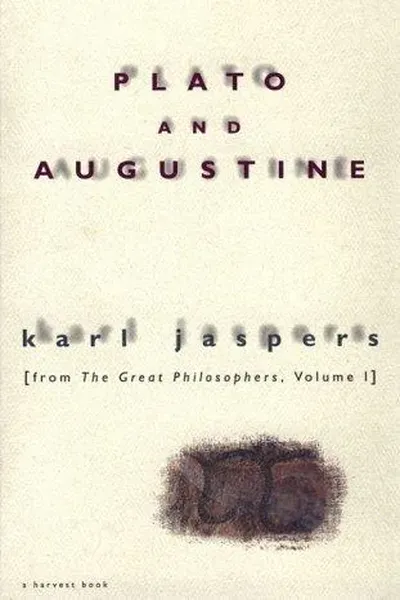
Karl Jaspers' "Plato" presents a rigorous, if somewhat dense, traversal of the Athenian philosopher's intellectual output. Jaspers' strength lies in his ability to connect Plato's dialogues to broader philosophical currents, positioning him as a pivotal figure whose ideas were both a product of his time and a wellspring for future thought. He adeptly unpacks the evolution of Plato's thought, particularly in his treatment of the Theory of Forms and the structure of the ideal state. However, the book's academic rigor can also be its limitation; it demands a pre-existing familiarity with philosophical discourse, sometimes leaving the uninitiated reader adrift in its intricate arguments. The section dissecting the Republic's political philosophy, while thorough, could benefit from more direct engagement with the mystical interpretations that Plato's work has inspired over centuries. Ultimately, Jaspers' "Plato" is a scholarly, valuable resource for those seeking to understand the philosophical architecture that underpins much of Western esoteric thought.
📝 Description
75
Karl Jaspers' 1983 study dissects Plato's thought from early dialogues to metaphysical ideas.
Published in 1983, Karl Jaspers' "Plato" is not a biography but an intellectual examination of the Greek philosopher's writings. Jaspers, a key existentialist thinker, analyzes Plato's development from his initial dialogues to his more complex metaphysical theories. He views Plato as a thinker whose ideas have a lasting impact on Western philosophy and esoteric thought.
The book situates Plato within the mid-20th century intellectual climate, where existentialists reassessed classical philosophy. Jaspers' work engages with Plato's corpus, appearing during a period when other philosophers, like Martin Heidegger, were also interpreting ancient Greek thought. This study contributes to understanding how Plato's philosophical system continues to influence later intellectual currents, including those that explored mystical and metaphysical speculation.
Jaspers' examination of Plato places him within a lineage of thinkers whose ideas have been reinterpreted by esoteric traditions. The book acknowledges how concepts, such as the Theory of Forms and the Allegory of the Cave, have been adopted or adapted by various schools seeking deeper metaphysical or spiritual understanding. It recognizes Plato's enduring presence not just in academic philosophy but also in movements that explore the philosophical underpinnings of mystical experience and non-material realities.
💡 Why Read This Book?
• Understand the philosophical bedrock of Western esoteric thought by examining Jaspers' analysis of Plato's Theory of Forms, the concept of immutable essences. • Grasp the allegorical power of Plato's philosophy, as illustrated by Jaspers' interpretation of the Allegory of the Cave and its depiction of spiritual ascent. • Explore the historical lineage of ideas concerning the soul's immortality, a core Platonic concept critically assessed by Jaspers in the context of ancient Greek philosophy.
⭐ Reader Reviews
Honest opinions from readers who have explored this book.
❓ Frequently Asked Questions
When was Karl Jaspers' "Plato" originally published?
Karl Jaspers' "Plato" was first published in 1983, making it a significant scholarly work from the late 20th century that reassesses the ancient philosopher's contributions.
What is the primary focus of Jaspers' "Plato"?
The book's primary focus is an intellectual examination of Plato's philosophy, tracing the development of his ideas and their impact, rather than a biographical account.
Does Jaspers' "Plato" discuss the Theory of Forms?
Yes, the book extensively discusses Plato's Theory of Forms, analyzing it as a cornerstone of his metaphysics and its influence on subsequent philosophical and esoteric thought.
What is the Allegory of the Cave in the context of Jaspers' analysis?
Jaspers interprets Plato's Allegory of the Cave as a profound metaphor for the human condition and the philosophical journey towards enlightenment, a concept central to many mystical traditions.
Is "Plato" by Karl Jaspers suitable for beginners in philosophy?
While thorough, the book is best suited for readers with some background in philosophy due to its academic rigor and intricate analysis of Platonic concepts.
How does Jaspers connect Plato to esoteric traditions?
Jaspers highlights how core Platonic concepts, such as the soul's immortality and the Theory of Forms, have been foundational for various esoteric schools and mystical philosophies throughout history.
🔮 Key Themes & Symbolism
The Theory of Forms
Jaspers meticulously unpacks Plato's Theory of Forms, presenting it as the philosopher's foundational attempt to delineate a transcendent area of perfect, unchanging essences. This concept, positing that the physical world is merely a shadow of a higher reality, has profoundly influenced Neoplatonism and subsequent mystical philosophies that seek to access divine or ultimate truths beyond sensory perception. The work explores how this dualistic framework provides a metaphysical basis for spiritual seeking and the pursuit of absolute knowledge, a recurring motif in esoteric literature.
Allegory of the Cave
The interpretation of Plato's famous Allegory of the Cave within Jaspers' work emphasizes its metaphorical significance for the spiritual journey. Jaspers frames the cave as representing the limitations of empirical existence and the common human state of illusion, while the ascent out of the cave symbolizes the arduous path towards intellectual and spiritual liberation. This narrative serves as a powerful archetype for the esoteric quest for illumination and the overcoming of ignorance, a theme echoed across diverse mystical traditions seeking to awaken the soul to its true nature.
Plato's Conception of the Soul
Jaspers examines Plato's philosophical arguments for the soul's existence and its immortality, a crucial element for understanding the philosophical underpinnings of many esoteric doctrines. The concept of the soul as an immortal entity, separate from the body and capable of apprehending eternal truths, forms a starting point for traditions that focus on spiritual evolution, reincarnation, and the afterlife. Jaspers' analysis situates these Platonic ideas within their historical context while acknowledging their enduring appeal for those engaged in metaphysical exploration.
The Ideal State and Philosophical Rule
The book also addresses Plato's vision of the ideal state, particularly as outlined in "The Republic," where philosophers, possessing true knowledge, are deemed best suited to rule. Jaspers explores this concept not just as a political theory but as an expression of the philosophical pursuit of wisdom and order. This idea has been interpreted in esoteric circles as a metaphor for the governance of the inner self by the higher intellect or divine spark, advocating for a hierarchical structure of consciousness led by enlightened reason.
💬 Memorable Quotes
Direct passages from the work, attributed to the author.
“The Theory of Forms posits a area of perfect essences.”
— This captures the core of Plato's metaphysical idealism, suggesting that true reality lies not in the changing physical world but in eternal, unchanging concepts.
“The Allegory of the Cave illustrates the ascent from ignorance to knowledge.”
— This highlights the allegorical nature of Plato's thought, portraying the philosopher's journey as a liberation from illusion towards intellectual and spiritual enlightenment.
“Plato's philosophy profoundly shaped Western thought.”
— This acknowledges the foundational role of Platonic ideas, including those related to the soul and metaphysics, in the development of subsequent philosophical and esoteric traditions.
“The work explores the structure of Plato's dialogues.”
— This points to Jaspers' method of analyzing the literary and philosophical form of Plato's writings, understanding how the dialogue format contributes to the unfolding of ideas.
“Jaspers examines Plato's views on the soul's immortality.”
— This emphasizes the book's engagement with a key Platonic doctrine that has been central to many spiritual and mystical belief systems concerning life after death.
🌙 Esoteric Significance
Tradition
Jaspers' "Plato" is instrumental in understanding the philosophical lineage of Western esoteric thought, particularly its Neoplatonic and Gnostic branches. While Jaspers himself is an existentialist philosopher, his rigorous analysis of Plato's core doctrines—the Theory of Forms, the nature of the soul, and the concept of the Good—provides the essential philosophical scaffolding upon which many esoteric systems were built. The work clarifies how Plato's ideas, especially the notion of a transcendent reality, offered a metaphysical framework for spiritual disciplines seeking union with the divine or ultimate truth.
Symbolism
Within Jaspers' examination, the Allegory of the Cave stands out as a potent symbol. It represents the soul's journey from the darkness of material illusion (shadows on the wall) towards the light of true knowledge and spiritual reality (the sun outside). Plato's concept of the Forms themselves can be seen as symbolic, representing perfect archetypes or divine blueprints that govern existence. Jaspers' analysis helps to illuminate these symbolic layers, connecting them to the broader esoteric quest for understanding hidden meanings and achieving spiritual liberation.
Modern Relevance
Contemporary thinkers and practitioners in fields like comparative spirituality, depth psychology, and various schools of Western Esotericism continue to draw upon the philosophical foundations laid by Plato, as illuminated by scholars like Jaspers. The enduring appeal of Plato's ideas concerning the soul, consciousness, and the nature of reality makes his work a perennial source for those exploring metaphysical concepts. Modern interpretations of Platonic thought, often filtered through later esoteric traditions, are still prevalent in discussions about spiritual awakening, the pursuit of wisdom, and the structure of the cosmos.
👥 Who Should Read This Book
• Students of Western Esotericism: Those seeking to understand the philosophical roots of traditions like Hermeticism, Gnosticism, and Theosophy will find Jaspers' clear exposition of Platonic metaphysics invaluable. • Philosophy Enthusiasts: Individuals interested in the foundational texts and thinkers of Western philosophy, particularly those who appreciate critical analysis of complex ideas, will benefit from this scholarly approach. • Comparative Religion Scholars: Researchers exploring the historical development of ideas about the soul, divinity, and transcendent realities will gain insight into Plato's a central role in shaping these concepts across different traditions.
📜 Historical Context
Karl Jaspers' "Plato," published in 1983, arrived during a period of renewed philosophical engagement with classical thinkers. The mid-20th century saw prominent existentialists like Martin Heidegger reinterpreting ancient Greek philosophy, emphasizing its ontological depth. Jaspers' work contributes to this scholarly trend by offering a systematic analysis of Plato's thought, positioning him as an important figure whose ideas continue to resonate. The book emerged in an academic climate where Platonic scholarship was robust, yet Jaspers' existentialist perspective offered a distinct lens. While Plato's influence was undeniable, the era also saw the rise of competing philosophical schools, including various forms of phenomenology and analytic philosophy, which approached classical texts differently. Reception of Jaspers' specific interpretation within the broader Platonic academic discourse would have been shaped by these ongoing intellectual debates.
📔 Journal Prompts
Plato's Theory of Forms as a blueprint for spiritual reality.
The ascent from the Allegory of the Cave as a personal spiritual journey.
The philosopher-king ideal and inner governance.
Plato's conception of the soul's journey.
The enduring influence of Platonic dialogues on Western thought.
🗂️ Glossary
Theory of Forms
Plato's philosophical concept that the physical world is not the 'real' world; instead, ultimate reality exists beyond our physical world in the area of eternal, perfect, unchanging Forms or Ideas.
Allegory of the Cave
A famous analogy from Plato's Republic, depicting prisoners mistaking shadows for reality and illustrating the philosopher's journey towards enlightenment and true knowledge.
The Republic
One of Plato's most influential dialogues, exploring justice, the ideal state, and the role of the philosopher-king, which contains the Allegory of the Cave.
Essences
In Platonic philosophy, the fundamental nature or qualities of a thing; the perfect, unchanging archetypes that exist in the area of Forms.
Transcendence
The state of existing beyond or apart from the material universe; often refers to a divine or spiritual reality that is separate from the physical world.
Metaphysics
A branch of philosophy that examines the fundamental nature of reality, including the relationship between mind and matter, substance, cause, and possibility.
Dialectic
A method of philosophical argument that involves some narrative method of exploring the logic of a belief and concepts. In Plato's work, it's a process of question and answer.
🔮 Readers Also Liked
Browse all →









More by Karl Jaspers
All books →


More Free Occult Philosophy Books
View all →