Greek Philosophy and Mystery Cults
 77
77

Greek Philosophy and Mystery Cults
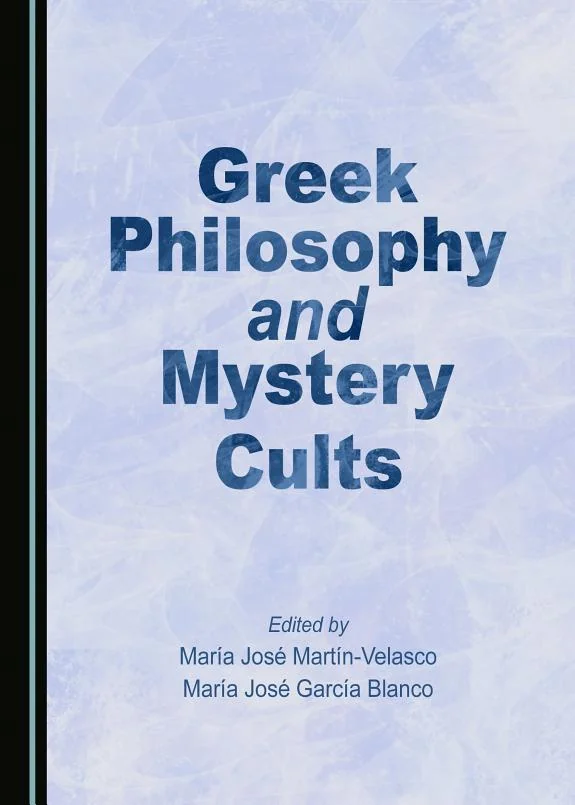
María José García Blanco and María José Martín-Velasco's compilation offers a welcome scholarly rigor to the perennial fascination with Greek philosophy's entanglement with mystery cults. It steers clear of the usual romantic haze, presenting instead a sober analysis of how figures like Plato, Aristotle, and later Neoplatonists both drew from and reacted against the doctrines found within initiatory rites. The strength lies in its detailed examination of specific philosophical texts against the backdrop of cultic practices, revealing a complex intellectual exchange rather than simple borrowing. A minor limitation might be the academic density, which could be challenging for those unfamiliar with primary philosophical sources. The discussion concerning the Stoic adaptation of certain apotropaic concepts from cultic practices, as explored in the text, is particularly illuminating, demonstrating a sophisticated engagement with popular religious forms. This collection provides essential, grounded scholarship for understanding a crucial aspect of ancient thought.
📝 Description
77
Published in 2016, this collection analyzes Greek philosophy's engagement with mystery cults.
This book examines the links between ancient Greek philosophy and the mystery cults of the Hellenistic world. It goes beyond simple comparisons to show how philosophers interacted with, adapted, and sometimes challenged the beliefs and rituals of these initiatory traditions. The essays focus on the intellectual exchange that influenced both philosophical ideas and religious practices, leading to a more complete understanding of ancient spirituality. The work is for academics studying ancient philosophy and religion, including graduate students and advanced undergraduates who want to understand how intellectual and ritualistic traditions in Greece influenced each other. It will also interest those involved in esoteric practices who want to find the historical origins of certain concepts and practices in classical times, especially concerning Platonic, Aristotelian, Stoic, and Neoplatonic thought.
The book places its discussions within the wider intellectual context of ancient Greece, particularly from the Hellenistic period onward. It recognizes the important philosophical ideas from thinkers like Plato and Aristotle, and later Stoic and Neoplatonist schools, all of whom considered existing religious frameworks. The 2016 publication date reflects a current scholarly reassessment of these ancient connections, moving past earlier, often idealized, views of mystery cults and their philosophical followers.
This study connects classical Greek philosophy with the hidden currents of mystery cults, traditions often perceived as separate from mainstream intellectual discourse. It investigates how philosophical concepts, such as the soul's purification and ascent, found resonance or were actively debated within initiatory rites. The book acknowledges a lineage of thought that views these cults not merely as social or religious phenomena but as vehicles for profound spiritual experiences that informed philosophical speculation, particularly within Neoplatonic circles.
💡 Why Read This Book?
• Gain a nuanced understanding of how Plato and Aristotle engaged with mystery cult doctrines, moving beyond simplistic notions of influence to explore critical adaptation and philosophical integration. • Discover the specific ways Stoic and Neoplatonist philosophers incorporated or debated elements from Eleusinian and Dionysian traditions, revealing the practical application of esoteric concepts in their ethical and metaphysical systems. • Appreciate the scholarly re-evaluation of the 2016 publication, which offers a modern, critical lens on the relationship between Greek philosophy and initiatory rites, grounded in textual analysis and historical context.
⭐ Reader Reviews
Honest opinions from readers who have explored this book.
❓ Frequently Asked Questions
What specific Greek philosophers are discussed in relation to mystery cults?
The book centers its attention on Plato, Aristotle, Stoic philosophers, and Neoplatonist thinkers. It examines how these prominent figures engaged with, adapted, and sometimes criticized doctrinal elements drawn from various mystery cults of ancient Greece.
When was 'Greek Philosophy and Mystery Cults' first published?
The original publication date for 'Greek Philosophy and Mystery Cults' was February 29, 2016. This edition reflects contemporary scholarly approaches to the subject matter.
What is the primary focus of the book's contributors?
The contributors focus on the relationships and interactions established between Greek philosophical thought and the various mystery cults. They highlight how philosophers utilized and adapted cultic doctrines within their own philosophical systems.
Are the mystery cults discussed in detail, or is the focus solely on the philosophers?
While the primary lens is philosophical, the book also explores how philosophers used and sometimes criticized doctrinal elements from mystery cults. This implies a necessary engagement with the core tenets and practices of these cults themselves.
What kind of approach does this book offer to ancient Greek philosophers?
The volume provides a new approach by highlighting the influence of mystery cults on some of the most renowned Greek philosophers. It seeks to illuminate how these cultic traditions impacted philosophical thinking and doctrinal development.
Who are the editors or main authors of this compilation?
The book is edited by María José García Blanco and María José Martín-Velasco. Their editorial work guides the collection of essays exploring the philosophical-cultic nexus.
🔮 Key Themes & Symbolism
Philosophical Adaptation of Ritual
The work meticulously details how prominent Greek thinkers, including Plato and Aristotle, did not merely observe but actively integrated elements from mystery cults into their philosophical frameworks. This wasn't passive reception; it involved a process of critical engagement, adaptation, and sometimes even critique. Concepts concerning purification, the soul's journey, and ecstatic experience, often central to cultic initiation rites, were reinterpreted and given systematic philosophical expression, demonstrating a dynamic intellectual exchange.
The Neoplatonic Synthesis
A significant thread running through the collection concerns the Neoplatonists, who represent a later, highly synthesized approach to integrating philosophical and mystical traditions. Their work is examined in light of their engagement with earlier mystery cults, showing how they sought to build a comprehensive metaphysical system that incorporated esoteric knowledge and initiatory practices. The emphasis here is on how Neoplatonism offered a sophisticated philosophical interpretation of the ultimate aims and experiences promised by the cults.
Stoic Ethical Frameworks
The influence of mystery cults on Stoicism is explored, revealing how certain cultic practices and beliefs were adapted to fit the Stoic emphasis on virtue, reason, and living in accordance with nature. The book investigates how Stoic philosophers might have viewed or utilized elements from these traditions to reinforce their ethical teachings, particularly concerning concepts of fate, divine providence, and the disciplined pursuit of wisdom, often drawing parallels with the rigorous training involved in initiation.
Critique and Philosophical Scrutiny
Crucially, the collection does not present an uncritical acceptance of the mystery cults by philosophers. It highlights instances where thinkers like Aristotle or later Stoics engaged in critical scrutiny, questioning or reinterpreting cultic doctrines to align them with their own philosophical tenets. This critical dimension reveals a healthy intellectual tension, where philosophy acted as a refining force upon religious traditions, and vice versa.
💬 Memorable Quotes
Direct passages from the work, attributed to the author.
“Philosophers used – and in some cases criticised – doctrinal elements from Mystery Cults, adapting them to their own thinking.”
— This captures the core argument: the relationship was not one of simple imitation but of active intellectual engagement. Thinkers selectively adopted, modified, and sometimes rejected cultic ideas, demonstrating philosophy's critical role in shaping religious understanding.
“The volume provides a new approach to some of the most renowned Greek philosophers.”
— This suggests the book offers fresh perspectives on familiar figures like Plato and Aristotle by examining them through the less-explored lens of their interaction with esoteric cultic traditions, potentially revealing hidden influences or previously overlooked aspects of their thought.
“The authors centre their attention on such thinkers as Plato, Aristotle, and the Stoic and the Neoplatonist philosophers.”
— This clearly delineates the specific philosophical schools and key figures whose engagement with mystery cults is the primary focus of the collected essays, guiding the reader to the main areas of inquiry within the book.
“The contributions to this book offer a broad vision of the relationships that were established between Greek Philosophy and the Mystery Cults.”
— This statement emphasizes the comprehensive scope of the work, aiming to provide a wide-ranging overview of the complex and complex connections that existed between philosophical inquiry and the practice of ancient mystery religions.
“Highlighting the influence of doctrinal elements from Mystery Cults.”
— This points to a central theme: the significant, though often complex and contested, impact that the teachings and practices of mystery cults had on the development and articulation of Greek philosophical ideas across various schools.
🌙 Esoteric Significance
Tradition
This work sits within the broader tradition of Western Esotericism studies, particularly concerning the Hellenistic and Neoplatonic streams. It explores how philosophical systems sought to rationalize and codify esoteric experiences and beliefs, which are foundational to many later esoteric movements. By examining the roots of mystical union and spiritual ascent in ancient Greek thought and practice, it connects to Hermetic, Gnostic, and later Kabbalistic traditions that also sought hidden knowledge and transformative initiation.
Symbolism
Key symbols explored likely include the Dionysian *thyrsus* and *sparagmos*, representing ecstatic union and sacrifice, and the Eleusinian *kykeon* and the symbolism of Persephone's descent and return, representing death, rebirth, and the soul's journey. These symbols, deeply embedded in cultic ritual, were interpreted philosophically by thinkers seeking to understand cosmic cycles, the nature of the soul, and the path to divine knowledge and immortality.
Modern Relevance
Contemporary practitioners of Western Esotericism, particularly those within Neoplatonic, Hermetic, and ceremonial magic traditions, find resonance in this work. It provides scholarly grounding for understanding the philosophical underpinnings of concepts like initiation, purification, theurgy, and the pursuit of divine knowledge. Modern esotericists can draw upon this research to contextualize their own practices and to appreciate the historical depth of ideas concerning the transformation of consciousness and the ascent of the soul.
👥 Who Should Read This Book
• Students of ancient philosophy: Those studying Plato, Aristotle, Stoicism, or Neoplatonism will gain a vital new perspective on how these thinkers interacted with the religious field of their time. • Researchers in comparative religion: Scholars interested in the evolution of religious thought and practice in the Greco-Roman world will find detailed analysis of the interplay between philosophical ideas and cultic expression. • Practitioners of Western Esotericism: Individuals exploring the historical roots of mystical traditions will discover how ancient Greek philosophical schools engaged with and interpreted esoteric doctrines and initiatory practices.
📜 Historical Context
Published in 2016, 'Greek Philosophy and Mystery Cults' emerges from a contemporary scholarly milieu that increasingly seeks to bridge the perceived divide between rational philosophy and religious experience in antiquity. This work revisits the Hellenistic and Roman periods, eras marked by intense intellectual ferment and the proliferation of diverse spiritualities. It stands in contrast to earlier scholarship that sometimes treated philosophy and mystery cults as entirely separate domains, or conversely, oversimplified their connections. Key contemporaries in the study of ancient religion and philosophy, such as scholars focusing on Gnosticism and Hermeticism, provide implicit context for this reappraisal. The book engages with a long tradition of interpreting figures like Plato and Aristotle, but offers a specific focus on their documented or inferred interactions with initiatory traditions, moving beyond purely textual analysis to consider the lived religious context.
📔 Journal Prompts
The philosophical adaptation of ritual elements by Plato and Aristotle.
Neoplatonic interpretations of mystery cult symbolism.
Stoic engagement with esoteric doctrines and practices.
The critical stance of Greek philosophers towards mystery cults.
The concept of spiritual ascent as explored in both philosophy and cultic rites.
🗂️ Glossary
Mystery Cults
Ancient Greco-Roman religious groups centered on secret initiatory rites, promising adherents a deeper connection to the divine and often offering a more personal path to salvation or spiritual enlightenment than public state religions.
Eleusinian Mysteries
Ancient initiatory rites celebrated annually at Eleusis, near Athens, honoring the goddesses Demeter and Persephone. They were central to Greek religious life and promised benefits for both this life and the afterlife.
Dionysian Mysteries
Cults dedicated to the god Dionysus, characterized by ecstatic rituals, wine, music, and dance, often involving themes of death and rebirth, and aiming for a state of divine possession or union.
Neoplatonism
A philosophical school founded by Plotinus in the 3rd century CE, which synthesized Platonic ideas with other mystical and religious traditions, emphasizing the ascent of the soul towards the divine One through intellectual and spiritual discipline.
Stoicism
A Hellenistic philosophy founded by Zeno of Citium, emphasizing virtue, reason, and living in accordance with nature. Stoics believed in a rational universe and sought inner peace through self-control and acceptance of fate.
Theurgy
A practice, particularly prominent in Neoplatonism, involving rituals intended to invoke divine powers or spirits for the purpose of purification and union with the divine.
Kykeon
A mixed drink, likely consisting of barley and water with herbs, central to the Eleusinian Mysteries. It was consumed by initiates, symbolizing a ritual act of communion and transformation.
This book appears in 1 collection
🔮 Readers Also Liked
Browse all →







From the “Eleusinian Mysteries” Collection
View all →








More Free Occult Philosophy Books
View all →