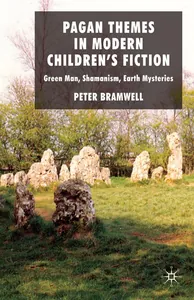
Stonehenge

 78
78

Stonehenge
Burley’s "Stonehenge" presents a lucid, if somewhat cautious, examination of the famed Salisbury Plain landmark. The author commendably avoids sensationalism, instead focusing on synthesizing existing archaeological evidence and historical hypotheses. A particular strength lies in its methodical approach to dissecting various construction theories, offering a balanced view of the immense logistical challenges faced by its builders. However, the work occasionally suffers from a lack of definitive conclusions, which, while academically sound, may leave readers accustomed to more assertive pronouncements wanting. The chapter detailing the proposed astronomical alignments, while thorough, feels like a rehash of well-trodden ground for seasoned enthusiasts. Ultimately, Burley provides a well-researched overview that serves as a solid primer on the enduring enigma of Stonehenge.
📝 Description
78
Published in 2014, Paul D. Burley's "Stonehenge" analyzes the monument's astronomical alignments and ritualistic roles.
Paul D. Burley's "Stonehenge" moves past simple descriptions of the ancient monument to examine its potential astronomical significance and its use in ritual practices. The book investigates various theories about its construction, the purpose of its massive stones, and the people who built it, using archaeological findings and historical interpretations. Burley's work engages with the long history of Stonehenge scholarship, placing his own research within current academic discussions about the site's origins and function. The 2014 publication date reflects modern archaeological methods and interdisciplinary studies, including scientific dating and landscape archaeology.
This book is for readers interested in the mysteries of prehistoric Britain and ancient sacred sites. Those drawn to archaeoastronomy, comparative mythology, and the cultural importance of megalithic structures will find a wealth of material. The author aims to help readers understand Stonehenge not just as a ruin, but as a place with a distinct purpose and meaning in its original context.
Burley's work situates Stonehenge within a long tradition of interpreting ancient sites for their spiritual and cosmological significance. This tradition, which includes figures like William Stukeley who proposed druidic connections, seeks meaning beyond the purely material construction. The book considers Stonehenge as a potential nexus for community gatherings or spiritual ceremonies, aligning with esoteric interests in sacred geography and the symbolic representation of celestial events. It grapples with the idea that such ancient monuments served purposes tied to the observation of the sun and moon, reflecting a worldview where the natural and spiritual realms were deeply connected.
💡 Why Read This Book?
• Gain a comprehensive understanding of the logistical and engineering challenges involved in Stonehenge's construction, as detailed in the sections discussing the transport of sarsen and bluestone. • Explore the potential astronomical functions of the monument, particularly its relationship with solar events, as presented through analysis of its architectural layout. • Evaluate the diverse historical interpretations of Stonehenge, from early druidic theories to modern archaeological perspectives, to form your own informed opinion on its purpose.
⭐ Reader Reviews
Honest opinions from readers who have explored this book.
❓ Frequently Asked Questions
When was Paul D. Burley's book on Stonehenge first published?
Paul D. Burley's "Stonehenge" was first published in 2014, placing its research and interpretations within the context of contemporary archaeological and historical scholarship.
What is the primary focus of Burley's "Stonehenge"?
The book primarily focuses on the historical and archaeological interpretations of Stonehenge, examining its construction, potential astronomical alignments, and ritualistic significance.
Does Burley's book discuss the druidic theories about Stonehenge?
Yes, the work engages with historical interpretations, including the long-standing druidic theories, while situating them within broader archaeological and scientific discourse.
What kind of evidence does "Stonehenge" by Paul D. Burley utilize?
The book draws upon archaeological findings, historical texts, and the results of scientific dating methods to explore various hypotheses about Stonehenge's origins and purpose.
Is "Stonehenge" by Paul D. Burley suitable for beginners interested in the monument?
Yes, it serves as a solid primer, offering a balanced overview of complex theories and evidence for those new to the subject of Stonehenge.
Does the book offer new, unproven theories about Stonehenge?
Burley's approach synthesizes existing knowledge and academic hypotheses rather than presenting radical, unverified theories, focusing on a scholarly overview.
🔮 Key Themes & Symbolism
Construction and Engineering
The book meticulously details the immense effort and ingenuity required to construct Stonehenge. It explores the quarrying, transportation, and erection of both the massive sarsen stones and the smaller bluestones, which originated hundreds of miles away in Wales. Burley examines the organizational capacity and societal structure necessary for such a monumental undertaking, referencing archaeological evidence for quarry sites and transport routes.
Astronomical and Calendrical Functions
A significant portion of the work is dedicated to Stonehenge's potential role as an astronomical observatory and calendar. It analyzes the alignment of the stones with solstices and equinoxes, discussing how these alignments might have been used to track celestial movements and inform agricultural or ritual cycles. The book weighs various theories on the precision and purpose of these alignments.
Ritual and Social Significance
Beyond its physical structure and astronomical purpose, Burley investigates the ritualistic and social dimensions of Stonehenge. The book considers its use as a ceremonial center, a gathering place for ancient communities, and a site for religious or spiritual practices. It explores how the monument likely played a central role in the belief systems and social cohesion of the people who built and used it.
Historiography of Interpretation
The work also provides context by tracing the history of how Stonehenge has been understood over centuries. From early antiquarian theories, such as those proposed by William Stukeley in the 18th century, to modern scientific investigations, Burley examines the evolution of thought surrounding the monument. This allows readers to appreciate the ongoing scholarly debate and the changing perspectives on its meaning.
💬 Memorable Quotes
Direct passages from the work, attributed to the author.
“The transport of the bluestones from the Preseli Hills alone represents a feat of considerable logistical planning and communal effort.”
— This statement highlights the sheer scale of the undertaking, emphasizing that Stonehenge was not a spontaneous creation but the result of organized labor and sophisticated knowledge of resource management by prehistoric societies.
“Alignments with the midsummer sunrise and midwinter sunset are the most commonly cited astronomical connections.”
— This points to the primary astronomical function attributed to Stonehenge, suggesting its design was intrinsically linked to observing key solar events, likely for calendrical or ritualistic purposes.
“Early antiquarians often projected their own cultural biases, such as druidic associations, onto the monument.”
— This interpretation underscores the importance of critical historical analysis, noting how later cultures have interpreted Stonehenge through their own lenses, sometimes inaccurately, influencing its perceived meaning.
“The precise purpose of the Aubrey Holes remains a subject of ongoing academic discussion.”
— This acknowledges a specific feature within the Stonehenge complex (the Aubrey Holes) whose function is not definitively known, illustrating that even well-studied sites retain elements of mystery and require continued research.
“Understanding Stonehenge requires considering the landscape in which it is situated, not just the stones themselves.”
— This emphasizes a holistic approach to studying ancient sites, suggesting that the surrounding environment and its relationship to the monument are crucial for a complete understanding of its significance.
🌙 Esoteric Significance
Tradition
While not strictly within a single esoteric lineage like Hermeticism or Kabbalah, Burley's work touches upon themes common in Western esoteric traditions that focus on ancient wisdom and sacred geometry. The exploration of astronomical alignments and potential ritualistic uses speaks to Neopaganism and earth-based spiritualities that view such megalithic sites as power centers or conduits of celestial energy. It indirectly engages with the historical esoteric interest in Druidry, a tradition often anachronistically associated with Stonehenge.
Symbolism
The primary symbols explored are the stones themselves, representing earth, endurance, and connection to ancestral energies. The circle motif signifies wholeness, the cosmos, and the cyclical nature of time and life, a fundamental concept in many esoteric cosmologies. Solar and lunar alignments are explored as symbols of divine masculine and feminine energies, and the interplay between celestial forces and terrestrial human experience.
Modern Relevance
Contemporary practitioners of earth-based spirituality, Neopaganism, and those interested in archaeoastronomy frequently reference Stonehenge as a prime example of ancient sophisticated understanding of natural cycles and cosmic energies. Modern druidic revivalists and ceremonial magicians continue to draw inspiration from its presumed functions, seeking to connect with the energies of the site or its symbolic representation in their own practices and rituals.
👥 Who Should Read This Book
• Individuals fascinated by prehistoric mysteries and ancient monumental architecture, seeking a grounded overview of Stonehenge's construction and purpose. • Students of archaeoastronomy and comparative religion interested in how ancient cultures aligned structures with celestial events and imbued them with ritualistic meaning. • Readers exploring the historical interpretations of ancient sites, from early antiquarian theories to contemporary archaeological consensus.
📜 Historical Context
Published in 2014, Paul D. Burley's "Stonehenge" emerged during a period of continued intense academic scrutiny and public fascination with the monument. The preceding decades had seen significant advancements in archaeological techniques, including radiocarbon dating, geophysical surveys, and isotopic analysis, which allowed for more precise dating and understanding of the origins of the stones. This era was characterized by interdisciplinary approaches, incorporating geology, archaeoastronomy, and landscape archaeology. Burley's work builds upon this foundation, engaging with a rich body of scholarship that includes figures like Professor Mike Parker Pearson, who has extensively researched the social and ritual landscape surrounding Stonehenge. While earlier theories, such as William Stukeley's druidic interpretations from the 18th century, are acknowledged, the modern discourse, particularly influenced by findings in the late 20th and early 21st centuries, tends to emphasize astronomical observation, ritualistic practices, and the monument's connection to a broader ceremonial landscape, including nearby Durrington Walls.
📔 Journal Prompts
The transport of bluestones from Wales: Envision the logistical challenges and communal organization required.
Stonehenge's solar alignments: Consider the significance of tracking solstices in a prehistoric society.
The purpose of the Aubrey Holes: Speculate on their potential functions based on archaeological context.
Comparing historical interpretations: Reflect on how early antiquarian views differ from modern archaeological understanding.
The concept of a ceremonial landscape: How might Stonehenge have integrated with its surrounding environment?
🗂️ Glossary
Sarsen Stones
The large sandstone blocks forming the outer circle and inner horseshoe of Stonehenge, quarried locally on Salisbury Plain.
Bluestones
Smaller stones used in the inner rings of Stonehenge, notable for their origin in the Preseli Hills of Wales, over 150 miles away.
Archaeoastronomy
The study of how ancient peoples understood astronomical phenomena and how they incorporated these observations into their structures and cultures.
Megalithic
Describes structures built using large, undressed stones, such as Stonehenge, believed to have been erected by prehistoric peoples.
Solstice
The two days of the year (around June 21 and December 21) when the sun reaches its highest or lowest point in the sky, marking the longest and shortest days.
Aubrey Holes
A ring of 56 pits discovered inside the bank at Stonehenge, believed to have held wooden posts or perhaps served a calendrical or ceremonial purpose.
Antiquarian
A person who studies or collects antiques or antiquities; often refers to early historical researchers before the formalization of modern academic disciplines.
🔮 Readers Also Liked
Browse all →









More Free Occult Philosophy Books
View all →