Tai Chi for Everyone
 81
81

Tai Chi for Everyone
Dr. John Yong Man So’s *Tai Chi for Everyone* attempts to distill a profound art form into a digestible format for the uninitiated. Its strength lies in its directness; the step-by-step photographic instructions are clear, and the focus on a short workout is genuinely practical for busy individuals. The inclusion of Chi Gong alongside Tai Chi forms is a welcome addition, acknowledging the interconnectedness of these practices. However, the book’s brevity, while its selling point, also proves to be its limitation. The depth of explanation for each movement, particularly concerning the internal energetic principles and subtle nuances that define advanced practice, is necessarily shallow. For instance, the description of the 'push hands' concept, while present, lacks the detailed guidance needed to truly grasp its application beyond a superficial understanding. The work serves as a functional primer but offers little for those seeking to explore the deeper philosophical or martial aspects. It is a competent, if somewhat superficial, introduction to the physical mechanics of Tai Chi.
📝 Description
81
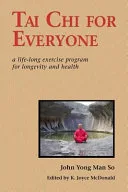
Published in 2008, Tai Chi for Everyone offers a simplified Tai Chi routine for modern practitioners.
Dr. John Yong Man So, a Tai Chi Gold Medalist, authored Tai Chi for Everyone in 2008. The book presents a simplified Tai Chi routine designed for individuals with limited time. It features step-by-step photographic guides and descriptions of fundamental Tai Chi and Chi Gong movements.
This guide is specifically for beginners who may find traditional martial arts training time consuming or complex. It allows for self-instruction, making the practice accessible even without a teacher. The book caters to anyone curious about Tai Chi's physical and energetic benefits but intimidated by lengthy or difficult training.
Tai Chi for Everyone aligns with the 21st-century trend of making ancient Eastern disciplines available to a wider audience. It offers practical applications for everyday wellness, bridging the gap between philosophical concepts and accessible health practices.
Published in 2008, this book emerged as Western interest in mind-body practices grew. Tai Chi's roots are ancient, but its popularization accelerated in the 20th century. Dr. So's work follows a pattern of adapting traditional Eastern disciplines for contemporary life. It focuses on gentle, flowing movements and cultivating internal energy ('Chi') through coordinated motion, breath control, and posture. The inclusion of Chi Gong exercises further supports a holistic approach to health and vitality.
💡 Why Read This Book?
• Learn a concise Tai Chi workout from Dr. John Yong Man So, a Tai Chi Gold Medalist, enabling practice even with limited time. • Understand the foundational movements of both Tai Chi and Chi Gong through clear, step-by-step photographic instructions, perfect for self-study. • Gain a practical entry point into cultivating 'Chi' (vital energy) through gentle, flowing exercises, as detailed in the book's illustrated sequences.
⭐ Reader Reviews
Honest opinions from readers who have explored this book.
❓ Frequently Asked Questions
Is 'Tai Chi for Everyone' suitable for absolute beginners with no prior experience?
Yes, 'Tai Chi for Everyone' is specifically designed for beginners. It provides step-by-step photographic instructions and descriptions to guide individuals with no prior experience through simplified Tai Chi and Chi Gong sequences.
What is Chi Gong, and how is it presented in this book?
Chi Gong, as presented in 'Tai Chi for Everyone,' involves exercises designed to cultivate vital energy ('Chi'). The book includes Chi Gong sequences alongside Tai Chi forms, emphasizing breath control and coordinated motion for health and vitality.
How much time does the recommended Tai Chi workout take?
The book focuses on a short Tai Chi workout intended to be completed in a minimum of time, making it accessible for individuals with busy schedules who wish to practice.
Can I learn Tai Chi from this book without a class or instructor?
Absolutely. 'Tai Chi for Everyone' is written to accommodate self-instruction. The detailed photos and descriptions are intended to allow individuals to learn the routines effectively, with or without formal class guidance.
Who is Dr. John Yong Man So, the author?
Dr. John Yong Man So is a Tai Chi Gold Medalist. His expertise and background inform the practical, accessible approach presented in 'Tai Chi for Everyone,' aimed at making the practice widely available.
What are the main benefits of practicing the routines in 'Tai Chi for Everyone'?
The routines are designed to improve physical coordination, promote relaxation, and cultivate internal energy (Chi). Practicing the sequences from 'Tai Chi for Everyone' can contribute to overall well-being and a sense of centeredness.
🔮 Key Themes & Symbolism
Accessible Movement Cultivation
This work prioritizes making the profound practice of Tai Chi available to everyone, regardless of prior experience or available time. Dr. So, a Tai Chi Gold Medalist, focuses on a short, efficient workout. The book's core strength is its step-by-step photographic guides, explaining complex sequences. This approach removes barriers to entry, allowing individuals to begin cultivating 'Chi' and improving their physical coordination through gentle, flowing movements described in the text.
Integration of Chi Gong
Beyond standard Tai Chi forms, 'Tai Chi for Everyone' thoughtfully incorporates Chi Gong exercises. This integration highlights the interconnectedness of breath, movement, and vital energy ('Chi') central to many Eastern contemplative practices. By presenting both disciplines, the book offers a more holistic path to well-being, suggesting that the cultivation of internal energy is fundamental to both Tai Chi and overall health. The visual instructions clearly delineate these distinct yet related practices.
Self-Instructional Design
A significant theme is the book's suitability for independent learning. Recognizing that not everyone has access to qualified instructors, Dr. So has engineered the content for clarity without direct supervision. The detailed photo sequences and descriptive text are intended to empower the reader to learn effectively on their own. This focus on self-reliance democratizes the practice, making Tai Chi achievable for those who prefer or require solitary study.
Mind-Body Harmony
The underlying principle is the promotion of harmony between the mind and body through deliberate physical practice. The gentle, continuous motions of Tai Chi, coupled with mindful breathing, are presented as a method for reducing stress and enhancing physical vitality. The book implicitly suggests that regular engagement with these practices can lead to a greater sense of internal balance and a more centered state of being.
💬 Memorable Quotes
Direct passages from the work, attributed to the author.
“a short Tai Chi workout in a minimum of time”
— This phrase expresses the book's primary objective: to provide an efficient and accessible routine for busy individuals seeking the benefits of Tai Chi without an overwhelming time commitment.
“with or without class instruction”
— This highlights the book's design for self-learners, emphasizing that the detailed instructions and visual aids are sufficient for acquiring the basic skills independently.
“detailing step-by-step several Tai Chi and Chi Gong sequences”
— This points to the core pedagogical method of the book, relying on clear, sequential visual and textual guidance to break down complex movements into learnable components.
“Written by Tai Chi Gold Medalist Dr. So”
— This establishes the author's credentials, lending authority and credibility to the presented techniques and the overall value of the instruction offered.
“intended for the beginner”
— This clearly defines the target audience, assuring new practitioners that the content is specifically tailored to their level of understanding and skill acquisition.
🌙 Esoteric Significance
Tradition
While primarily presented as a physical fitness and wellness guide, *Tai Chi for Everyone* touches upon Taoist principles central to many esoteric traditions. The cultivation of 'Chi' (vital energy) and the emphasis on flowing, natural movement align with Taoist concepts of wu wei (non-action) and living in harmony with the Tao. Although the book may not explicitly explore complex metaphysical doctrines, its practical application of Chi Gong and Tai Chi serves as an accessible entry point into practices rooted in ancient Chinese esoteric philosophy.
Symbolism
The core symbolism in Tai Chi revolves around balance and the interplay of opposing forces, often represented by Yin and Yang. While not explicitly detailed in this introductory text, the flowing movements themselves embody this principle—softness yielding to hardness, stillness within motion. The sequences depicted symbolize the dynamic equilibrium essential for health and energetic flow, mirroring the broader cosmic balance sought in many esoteric systems.
Modern Relevance
In contemporary wellness culture, practices like Tai Chi and Chi Gong, popularized by accessible guides such as Dr. So's book, continue to thrive. They are integrated into physical therapy, stress management programs, and general fitness routines. Modern thinkers and practitioners in fields ranging from somatic psychology to embodied cognition often reference the principles of mindful movement and energy cultivation found in these arts as vital components of holistic health.
👥 Who Should Read This Book
• Beginners curious about Tai Chi and Chi Gong, seeking a straightforward introduction with clear visual aids and minimal time commitment. • Individuals looking for gentle, low-impact exercises to improve balance, coordination, and relaxation, particularly those new to martial arts or meditative movement. • Self-learners who prefer structured, step-by-step instruction that can be followed independently, even without access to a formal class or teacher.
📜 Historical Context
Published on March 28, 2008, *Tai Chi for Everyone* emerged at a time when Western engagement with Eastern contemplative and physical practices was widespread. The early 21st century saw a surge in interest in mind-body disciplines like yoga, meditation, and various martial arts, driven by a growing awareness of their potential health benefits and stress-reduction capabilities. Dr. John Yong Man So's work tapped into this trend by offering a simplified, accessible version of Tai Chi, a practice with ancient roots in Chinese martial arts and Taoist philosophy. Unlike more traditional, comprehensive schools of Tai Chi that might require years of dedicated study under a master, Dr. So's approach emphasized efficiency and immediate applicability. This contrasted with the more academic or deeply philosophical explorations of Tai Chi prevalent in some circles, such as those influenced by scholars like Benjamin Hoff (author of *The Tao of Pooh*, which popularized Taoist concepts). The book's focus on a short workout for beginners positioned it as a practical tool for modern wellness seekers, aligning with a broader cultural movement towards accessible self-improvement techniques.
📔 Journal Prompts
Reflect on the concept of 'Chi' as presented in the book's description of Tai Chi and Chi Gong.
Consider the 'short Tai Chi workout' format and its implications for consistent practice.
Analyze the role of photographic step-by-step sequences in learning the described movements.
Evaluate the benefit of practicing 'with or without class instruction' for your personal learning style.
How does the author's status as a 'Tai Chi Gold Medalist' influence your perception of the book's content?
🗂️ Glossary
Tai Chi
A traditional Chinese martial art practiced for both its defensive and health benefits. It involves slow, flowing, deliberate movements coordinated with breath and mindfulness.
Chi Gong (Qi Gong)
A practice involving coordinated body posture and movement, breathing, and meditation used for health, spirituality, and martial arts training. It aims to cultivate and balance vital life energy, or 'Chi'.
Chi
In traditional Chinese medicine and philosophy, Chi (or Qi) is considered the vital life force or energy that flows through all living things. Its balance and free flow are essential for health.
Sequences
In Tai Chi and Chi Gong, sequences refer to a series of choreographed movements performed in a continuous, flowing manner. The book details several such series.
Beginner
An individual who is new to a particular activity or skill. This book is specifically tailored for those starting their journey with Tai Chi.
Self-instruction
The process of learning a skill or subject independently, using available resources like books, videos, or online materials, without direct guidance from a teacher.
Gold Medalist
An athlete or competitor who has won a gold medal, typically indicating the highest level of achievement in a competition, such as in Dr. So's case for Tai Chi.