Fables
 79
79

Fables
Lobel's *Fables* operates with a quiet power that belies its seemingly simple structure. The collection’s strength lies in its remarkable conciseness; each story is a perfectly formed miniature, delivering its observation with an economy that few writers achieve. The allegorical resonance is undeniable, inviting contemplation on themes of choice, consequence, and the peculiar logic of existence. A particular strength is the fable concerning the spider and the fly, which subtly reframes a predator-prey dynamic into a commentary on the allure and danger of persuasive rhetoric. However, the book's limitation, from an esoteric perspective, is its lack of explicit metaphysical framework; the reader must actively draw connections to broader symbolic systems. Despite this, the work’s enduring quality is its ability to provoke thought through elegantly crafted, accessible narratives. It offers a profound meditation on life's absurdities and wisdoms, presented with understated brilliance.
📝 Description
79
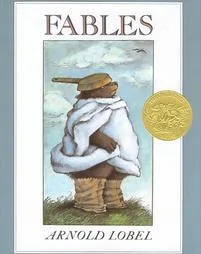
Arnold Lobel's 1984 book *Fables* collects short allegorical tales featuring animals.
Published in 1984, Arnold Lobel's *Fables* is a collection of brief, allegorical stories. These narratives, often featuring animals, approach fundamental aspects of existence and human relationships with great economy. The book is not a single story but a series of independent vignettes, each conveying a distinct moral or observation about life's unexpected turns. Lobel's characteristic illustrations accompany the text, adding visual commentary that deepens the stories' enigmatic quality. The work appears simple, encouraging readers to look past its charming surface.
This collection appeals to readers who value literature with multiple layers of meaning. It suits those interested in the allegorical tradition, philosophical parables, and the subtle examination of human nature through non-human characters. Readers who find value in concise storytelling, where every word and image carries significant weight, will appreciate *Fables*. It also offers a mature perspective within Lobel's wider body of work.
While not explicitly dealing with the occult, Lobel's *Fables* aligns with an esoteric tradition that uses symbolic narratives to convey deeper truths. This approach echoes ancient wisdom literature and philosophical parables that employ allegorical forms to explore existential questions. The collection's focus on concise morals and observations, often through animal characters, mirrors the didactic and symbolic methods found in traditions like Aesop's fables or certain Zen koans, which aim to prompt inner reflection and understanding beyond the literal meaning.
💡 Why Read This Book?
• Gain insight into the nature of choice and consequence as depicted in the fable of the frog and the bear, understanding how simple decisions can lead to unexpected outcomes. • Explore the concept of perception and self-deception through the story of the badger and the bee, learning how our own viewpoints can shape reality. • Appreciate the art of concise allegory, as exemplified in the fable of the owl and the crow, to distill complex truths into memorable, impactful narratives.
⭐ Reader Reviews
Honest opinions from readers who have explored this book.
❓ Frequently Asked Questions
When was Arnold Lobel's Fables first published?
Arnold Lobel's *Fables* was first published in 1984, offering a collection of allegorical tales for readers of all ages.
What kind of stories are in Fables by Arnold Lobel?
The book contains short, allegorical fables, often featuring animals as characters, that explore life's fundamental themes and offer moral observations.
Are there any explicit mystical themes in Fables?
While not overtly mystical, *Fables* uses allegorical storytelling that can be interpreted through esoteric lenses, exploring universal truths and human nature.
Who illustrated Arnold Lobel's Fables?
Arnold Lobel himself provided the distinctive illustrations for *Fables*, complementing the narrative with his unique visual style.
What is the primary appeal of Fables for adult readers?
Adult readers often appreciate *Fables* for its sophisticated allegorical depth, concise storytelling, and timeless observations on life, presented with deceptive simplicity.
Does Fables offer clear-cut morals like traditional fables?
While many fables offer a clear moral, Lobel's work often presents more nuanced observations, inviting deeper contemplation rather than simple pronouncements.
🔮 Key Themes & Symbolism
The Illusion of Control
Many fables within Lobel's collection touch upon the human (or animal) tendency to believe in agency while being subject to larger forces or inherent limitations. Characters often make choices they believe are significant, only to find outcomes dictated by circumstances beyond their influence. This reflects a common theme in esoteric thought, which often explores the interplay between free will and destiny, or the limitations of human perception in understanding the true nature of reality. The spider and the fly fable, for instance, can be read as a commentary on perceived control versus inescapable fate.
Perception and Self-Deception
Lobel frequently illustrates how characters' understanding of their situation is skewed by their own biases or desires. The fable of the badger and the bee, where the badger believes he is receiving gifts rather than being tricked, exemplifies this. This theme aligns with Gnostic ideas about illusion (Maya) and the difficulty of achieving true gnosis (knowledge) when ensnared by sensory deception and ego. The characters' inability to see the plain truth speaks to the esoteric challenge of piercing the veil of mundane reality to perceive deeper, often uncomfortable, truths.
The Nature of Wisdom
Wisdom in *Fables* is rarely presented as grand pronouncements but as quiet, often hard-won, understandings. The characters who learn, adapt, or accept their circumstances with a degree of grace can be seen as embodying a form of practical wisdom. This appeals to certain Hermetic principles that emphasize understanding the ‘as above, so below’ principle – that the mundane interactions and observations hold keys to larger universal laws. The book suggests wisdom is found not in knowing everything, but in understanding one's place and limitations within the grander scheme.
The Absurdity of Existence
Underlying many of the fables is a subtle acknowledgment of life's inherent absurdity. Characters pursue goals that seem futile, engage in elaborate rituals with little effect, or find themselves in predicaments that defy logical explanation. This mirrors existential and absurdist philosophies, but within an esoteric framework, it can also point to the limitations of rational thought when confronting the ineffable or the divine. The universe, as presented in these fables, doesn't always operate according to predictable human logic, hinting at deeper, perhaps chaotic or playful, cosmic forces.
💬 Memorable Quotes
Direct passages from the work, attributed to the author.
“A fly was caught in a spider's web.”
— This simple statement from the spider and fly fable serves as a potent metaphor for entrapment. It can be interpreted esoterically as the soul ensnared by material desires or illusions, unable to escape the consequences of its attachments.
“The owl asked the crow, 'Why do you keep bringing me stones?'”
— This exchange underscores a lack of understanding or purpose. It can symbolize a spiritual seeker performing rituals or actions without grasping their true significance or underlying principles.
“The frog wished he had legs like the bear.”
— This expresses a common human (and in this case, amphibian) desire for what others possess. Esoterically, it speaks to dissatisfaction and the failure to appreciate one's own inherent nature or gifts.
“The rabbit said, 'I am lost.'”
— This simple declaration is a profound statement of existential disorientation. It can represent the spiritual journey of one who has lost their way, seeking guidance or a return to a perceived truth.
💡 Key Ideas
Editorial paraphrase of the work's core concepts — not direct quotes.
The badger thought the bee was giving him honey.
This line from the badger and bee fable highlights the theme of misperception. Esoterically, it represents the danger of interpreting external phenomena through the lens of wishful thinking, leading to a misunderstanding of reality.
🌙 Esoteric Significance
Tradition
While *Fables* does not align strictly with a single esoteric tradition like Kabbalah or Theosophy, its allegorical structure and exploration of universal truths place it within the broader Western esoteric lineage that values symbolic storytelling. It carries the parabolic methods found in Hermeticism and Gnosticism, where simple narratives are used to impart complex spiritual or philosophical insights. Lobel’s work departs from more dogmatic traditions by focusing on observation and questioning rather than prescribed doctrines, offering a more accessible, almost secularized, form of wisdom literature.
Symbolism
Key symbols in *Fables* include animals themselves, which act as archetypes representing human foibles and virtues (e.g., the cunning fox, the patient tortoise). The recurring motif of 'getting lost' or being trapped (like the fly in the web) symbolizes the soul's entanglement in illusion or the mundane world. Furthermore, natural elements like the river or the forest often serve as settings where characters confront their limitations, reflecting the esoteric understanding of the physical world as a place of both challenge and potential revelation.
Modern Relevance
Contemporary thinkers and practitioners interested in minimalist philosophy, existentialism, and the application of wisdom literature to everyday life often draw upon Lobel's *Fables*. Its clean, allegorical style makes it a valuable tool for mindfulness and self-reflection, particularly for those exploring the intersection of psychology and spirituality. The book's enduring appeal lies in its ability to distill complex existential questions into digestible narratives, making it relevant for modern audiences seeking clarity amidst the noise of contemporary life.
👥 Who Should Read This Book
• Students of comparative literature and mythology seeking examples of modern allegory that echo ancient parabolic traditions. • Individuals interested in philosophical explorations of fate, choice, and perception, presented through accessible, character-driven narratives. • Readers who appreciate minimalist art and literature, looking for works that convey profound meaning with remarkable economy and understated wit.
📜 Historical Context
Arnold Lobel's *Fables*, released in 1984, entered a literary landscape where children's literature was increasingly being recognized for its capacity to engage with complex philosophical and psychological themes. While not overtly part of any specific esoteric movement, the allegorical nature of Lobel's work tapped into a long-standing tradition of using symbolic narratives to convey deeper truths, a method central to many esoteric schools. The era saw figures like Ursula K. Le Guin exploring similar mythic and allegorical territories in fantasy literature, though often with more explicit fantastical elements. Lobel's approach was more grounded, focusing on the subtle absurdities and inherent truths of existence. The reception of *Fables* was generally positive, lauded for its artistry and wit, though its esoteric undertones were more likely to be appreciated by adult readers and scholars of comparative literature than by its primary young audience. The book's understated philosophical depth offered a counterpoint to the more overtly didactic or emotionally driven narratives common at the time.
📔 Journal Prompts
The concept of the spider's web and its implications for entrapment.
The badger's misinterpretation of the bee's actions and its lessons.
The owl's questioning of the crow's repetitive actions.
The frog's desire for the bear's legs and its relation to contentment.
The rabbit's simple declaration of being lost and its path forward.
🗂️ Glossary
Allegory
A story, poem, or picture that can be interpreted to reveal a hidden meaning, typically a moral or political one. Lobel uses allegory to explore complex themes through simplified narratives.
Fable
A short story, typically with animals as characters, conveying a moral. Lobel's work modernizes this form, often presenting more nuanced observations than traditional fables.
Archetype
A very typical example of a certain person or thing. In *Fables*, animal characters often function as archetypes representing common human traits or behaviors.
Perception
The ability to see, hear, or become aware of something through the senses. The fables often explore how subjective perception shapes reality and leads to misunderstanding.
Consequence
A result or effect of an action or condition. Many of Lobel's fables illustrate the direct or indirect consequences stemming from characters' choices or circumstances.
Wisdom
The quality of having experience, knowledge, and good judgment. The book subtly explores different forms of wisdom, often found in acceptance or quiet observation.
Absurdity
The quality or state of being ridiculous or wildly unreasonable. Lobel's fables often touch upon the absurdities inherent in life and the universe.
🔮 Readers Also Liked
Browse all →








More by Arnold Lobel
All books →
More Free Occult Philosophy Books
View all →