Inquisitor
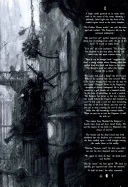
 80
80

Inquisitor
Gavin Thorpe's 'Inquisitor' presents a stark examination of authority and its application, framed within a fantasy role-playing context. The strength of the work lies in its unflinching portrayal of the psychological toll exacted by roles of judgment. Thorpe avoids easy answers, instead focusing on the corrosive nature of absolute power and the self-deception required to wield it. A particular passage describing the Inquisitor's internal rationalizations for their actions is powerfully rendered, showcasing the slippery slope from duty to tyranny. However, the narrative occasionally suffers from a somewhat dense prose style, which can slow the pacing and obscure the emotional impact of certain events. This makes the initial engagement with the text a demanding one. Despite this, 'Inquisitor' offers a compelling, albeit grim, perspective on the burdens of command and the nature of belief.
📝 Description
80
Gavin Thorpe's 2001 novel 'Inquisitor' uses a fantasy role-playing framework to examine judgment and perceived truth.
Published in 2001, 'Inquisitor' by Gavin Thorpe builds a narrative around the role of an inquisitor, a figure tasked with judgment and the pursuit of truth. The book questions how individuals are shaped by such roles and how the systems they operate within can become self-sustaining. It scrutinizes the nature of heresy and the societal construction of those deemed 'other.' The narrative delves into power dynamics and moral ambiguity, moving beyond simple heroic plots to explore more introspective themes. Readers will find a world that encourages contemplation of authority and its consequences.
This work emerged during a period of genre diversification in fantasy fiction. While not directly linked to a specific occult movement, its focus on investigation and the challenging of established beliefs aligns with broader cultural trends of the early 2000s. The rise of complex, morally ambiguous characters in fiction at the time is a trend 'Inquisitor' reflects. It appeals to those who seek fantasy narratives with darker, more thoughtful qualities and intricate character motivations.
While ostensibly a fantasy role-playing game novel, 'Inquisitor' engages with themes common in esoteric thought. The central figure embodies the dual nature of seeking truth and wielding power, a dynamic that can lead to corruption or self-definition. The book's examination of how societies create and enforce notions of heresy and 'otherness' resonates with discussions found in occult traditions regarding established dogma and suppressed knowledge. It prompts reflection on the systems that define belief and the consequences of challenging them, echoing a long-standing interest in hidden truths and the psychology of power.
💡 Why Read This Book?
• Understand the psychological weight of wielding judgment through the specific portrayal of the Inquisitor's internal struggles and justifications. • Explore the construction of 'heresy' and 'otherness' as thematic devices, as seen in the narrative's depiction of societal control mechanisms. • Engage with a fantasy narrative that questions authority, mirroring the intellectual currents of the early 2000s that challenged established norms.
⭐ Reader Reviews
Honest opinions from readers who have explored this book.
❓ Frequently Asked Questions
What is the primary genre of Gavin Thorpe's 'Inquisitor'?
'Inquisitor' is primarily categorized as a fantasy role-playing game narrative. It was first published in 2001 and offers a story-driven experience within this genre.
What are the main themes explored in 'Inquisitor'?
The book explores themes of authority, judgment, power dynamics, moral ambiguity, and the psychological impact of roles of enforcement. It questions the nature of truth and heresy.
Who is the author of 'Inquisitor'?
The author is Gavin Thorpe, with the book first being published in 2001.
Does 'Inquisitor' have any connections to esoteric literature?
While originating as a fantasy role-playing narrative, 'Inquisitor' engages with themes common in esoteric literature, such as the examination of power, belief systems, and the darker aspects of judgment and control.
What is the significance of the 'Inquisitor' concept in the book?
The 'Inquisitor' is depicted not just as a character but as a symbolic figure of judgment and the relentless pursuit of perceived truth, often through interrogation and the exercise of power.
When was 'Inquisitor' first published?
'Inquisitor' was first published in August 2001.
🔮 Key Themes & Symbolism
The Burden of Judgment
The narrative scrutinizes the role of the Inquisitor, presenting it as a position that demands constant vigilance and decisive action, often at a significant personal cost. The work examines how the duty to enforce a particular doctrine or truth can lead to psychological strain and moral compromise. Readers witness the internal conflicts and rationalizations that arise when an individual is tasked with judging others, blurring the lines between justice and oppression within the book's world.
Defining Heresy and Otherness
'Inquisitor' looks at how societies construct and enforce their truths by labeling certain beliefs or individuals as 'heretical.' The book illustrates the process by which deviation from established norms is identified, investigated, and often suppressed by figures like the Inquisitor. This theme prompts reflection on the arbitrary nature of dogma and the mechanisms used to maintain ideological purity, highlighting the construction of an 'other' to solidify an in-group.
Power and Corruption
The work offers a critical perspective on the corrupting influence of power, particularly when wielded in the name of an abstract ideal or authority. The Inquisitor's role, while ostensibly aimed at upholding order, becomes a lens through which to observe how absolute power can erode empathy and distort one's perception of reality. The narrative suggests that the system itself can foster an environment where the enforcer becomes more dangerous than the perceived threat.
The Nature of Truth
Central to 'Inquisitor' is an exploration of subjective versus objective truth. The book questions whether the 'truth' pursued by the Inquisitor is an absolute entity or a construct designed to maintain control. It invites readers to consider the implications of operating within a framework where truth is dictated by authority rather than discovered through genuine inquiry, prompting a critical examination of established belief systems.
💬 Memorable Quotes
Direct passages from the work, attributed to the author.
“The line between the shepherd and the wolf is drawn by the flock.”
— This phrase suggests that perceptions of authority and threat are often defined by those subject to them. It implies that the Inquisitor's role, whether protective or predatory, is ultimately judged by the community they oversee.
“To seek truth is to invite chaos.”
— This highlights a cynical perspective where the pursuit of knowledge or justice is seen as inherently destabilizing to existing order. It implies that established structures prefer ignorance or controlled narratives over genuine investigation.
“Heresy is merely the belief that does not serve.”
— This interpretation posits that what constitutes heresy is not necessarily falsehood, but rather a lack of utility or alignment with the dominant power structure's agenda.
“Judgment is a mirror, reflecting the judge's own soul.”
— This concept suggests that the act of judging others reveals more about the person doing the judging than the one being judged, implying that the Inquisitor's pronouncements are projections of their inner state.
💡 Key Ideas
Editorial paraphrase of the work's core concepts — not direct quotes.
The Inquisitor does not ask questions; they extract answers.
This paraphrased concept emphasizes the coercive nature of the Inquisitor's role, portraying their methods as forceful extraction rather than genuine inquiry, highlighting a power imbalance.
🌙 Esoteric Significance
Tradition
While 'Inquisitor' originates from a fantasy role-playing context, its thematic concerns align with certain Gnostic and Hermetic explorations of oppressive demiurgic systems and the struggle for true knowledge against imposed doctrines. It examines the mechanics of control and the potential for liberation through critical self-awareness, concepts resonant within traditions that critique false realities or illusory knowledge structures.
Symbolism
The figure of the 'Inquisitor' itself serves as a potent symbol of judgment, authority, and the enforcement of dogma. Symbols of interrogation, such as instruments of coercion or confinement, represent the suppression of individual thought. The concept of 'heresy' functions symbolically to denote any deviation from the prescribed path, highlighting the societal construction of acceptable belief and the mechanisms used to maintain it.
Modern Relevance
Contemporary discussions around critical thinking, the nature of truth in the digital age, and the ethics of surveillance and control systems can find parallels in 'Inquisitor'. Thinkers examining authoritarianism, the psychology of power, and the social construction of reality may draw upon the narrative's stark portrayal of judgment and enforced belief. The work remains relevant for understanding how power structures maintain themselves through ideological control.
👥 Who Should Read This Book
• Students of narrative ethics: Those interested in how fictional characters grapple with moral ambiguity and the corrupting nature of authority. • Fans of dark fantasy: Readers who appreciate intricate world-building and challenging themes that explore the psychological impact of power and judgment. • Comparative literature scholars: Individuals examining thematic parallels between fantasy narratives and broader philosophical concepts of truth, dogma, and societal control.
📜 Historical Context
Published in 2001, Gavin Thorpe's 'Inquisitor' emerged in a landscape where fantasy literature was increasingly exploring darker, more morally complex themes. The early 2000s saw a rise in narratives featuring anti-heroes and nuanced explorations of power, moving beyond traditional good-versus-evil paradigms. While not directly aligned with a specific esoteric school, the book's focus on judgment, dogma, and the suppression of dissenting thought echoed broader cultural and intellectual currents questioning established authorities and grand narratives, a trend also visible in post-modern thought and critical theory. This period saw authors like George R.R. Martin achieving widespread acclaim for their intricate, often brutal, world-building, demonstrating an audience appetite for such complexities. Unlike more overtly mystical works of the era, 'Inquisitor' grounds its thematic explorations in the mechanics of power and belief systems within a secularized, albeit fantastical, framework.
📔 Journal Prompts
The Inquisitor's rationalizations for their actions.
The symbolic meaning of 'heresy' within the narrative's societal structure.
The perceived boundary between enforcing truth and imposing dogma.
Personal reflections on the corrupting influence of unchecked authority.
Interrogation techniques and their psychological effects on both parties.
🗂️ Glossary
Inquisitor
A character or role within the narrative tasked with investigating and judging perceived deviations from established doctrine or law, often employing interrogation and enforcement.
Heresy
In the context of the book, this refers to any belief, idea, or action that deviates from or challenges the officially sanctioned doctrine or truth, often leading to persecution.
Dogma
A set of principles or beliefs laid down by an authority as incontrovertibly true, which the narrative explores the enforcement of.
Fantasirollespil
Danish for 'fantasy role-playing game'. This term indicates the genre context from which the narrative originates, suggesting a world designed for interactive storytelling.
Authority
The power or right to give orders, make decisions, and enforce obedience, a central theme explored through the Inquisitor's function.
Judgment
The ability to make considered decisions or come to sensible conclusions, or the act of forming an opinion or estimation of someone or something, central to the Inquisitor's role.
Otherness
The quality or state of being different or alien, often used to define individuals or groups who are marginalized or persecuted by the dominant societal structure.
This book appears in 1 collection
🔮 Readers Also Liked
Browse all →







![Erzählungen [40 stories, 4 poems]](/img/thumb/erzählungen-40-stories-4-poems-edgar-allan-poe-214101.webp)
From the “Telekinesis” Collection
View all →



More Free Occult Philosophy Books
View all →