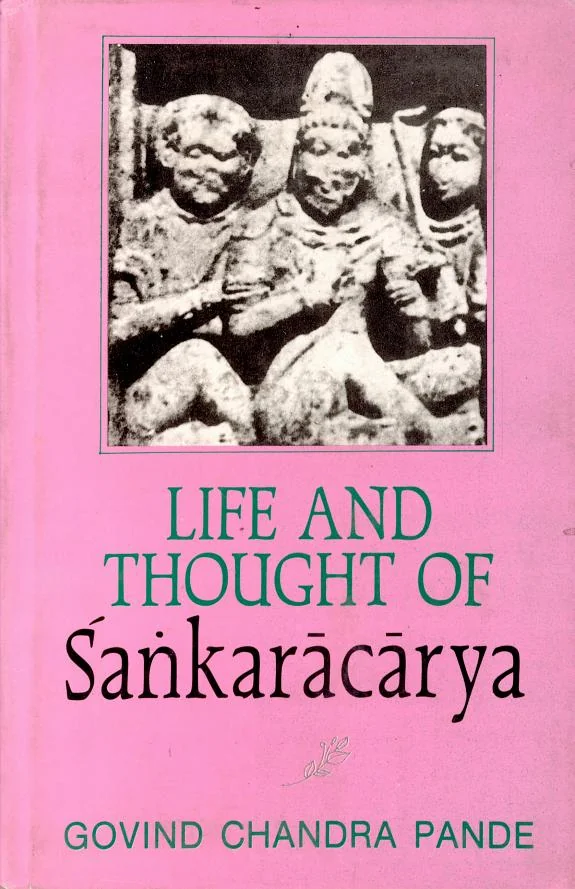
Life and Thought of Śaṅkarācārya
 82
82

Life and Thought of Śaṅkarācārya
Govind Chandra Pande’s *Life and Thought of Śaṅkarācārya* offers a commendably disciplined approach to a figure often obscured by devotional layers. Pande’s strength lies in his commitment to historical reconstruction, diligently examining textual evidence to delineate the philosophical edifice of Śaṅkara from later accretions. The chapter detailing Śaṅkara’s engagement with Buddhist dialectics is particularly illuminating, showcasing Pande’s sharp analytical acumen. However, the work’s academic rigor, while its primary virtue, can sometimes render the prose dense for readers less accustomed to philological debate. A passage exploring the concept of *Māyā* as not mere illusion but a cosmic creative power, rather than simple negation, exemplifies the nuanced interpretations Pande provides. It is an essential, albeit demanding, resource for understanding the historical philosopher.
📝 Description
82
Govind Chandra Pande's 1994 study examines the 8th-century philosopher Śaṅkarācārya.
This scholarly volume provides a detailed historical and philosophical analysis of Adi Śaṅkara, the 8th-century Indian thinker credited with shaping Advaita Vedānta. Govind Chandra Pande's research carefully examines available sources to reconstruct Śaṅkara's life and his significant philosophical contributions. The book is intended for academics of Indian philosophy, students of world religions, and dedicated Vedānta practitioners who desire a thorough, critical understanding of a central figure in the tradition. It will appeal to those who value precise textual analysis and rigorous historical methods.
Pande’s study engages with the history of Indian philosophical thought, a field that continually reassesses its primary texts and key personalities. The work aims to present the historical Śaṅkara, moving beyond devotional accounts. It situates his philosophical debates with traditions such as Mīmāṃsā and Buddhism within a specific historical framework. The book scrutinizes Śaṅkara’s commentaries on major texts, including the Upanishads, the Bhagavad Gītā, and the Brahma Sūtras.
This book engages with the Vedānta tradition, specifically the Advaita school founded by Śaṅkara. Advaita Vedānta is a major philosophical system within Hinduism that posits the non-dual nature of reality, asserting that the individual self (Atman) is identical with the ultimate reality (Brahman). Its teachings are often considered esoteric due to their focus on direct realization of this truth through philosophical inquiry and meditation, aiming for liberation (mokṣa) from the cycle of rebirth. Pande's work places this tradition within its historical and intellectual milieu.
💡 Why Read This Book?
• Gain a historically grounded perspective on Śaṅkara’s life and philosophical system, moving beyond devotional narratives by examining textual evidence from the 8th century. • Understand the dialectical relationship between Advaita Vedānta and contemporary Buddhist schools, as detailed in Pande’s critical analysis of their philosophical exchanges. • Grasp the subtle philosophical distinctions concerning Brahman and Māyā, as presented through Pande’s rigorous interpretation of Śaṅkara's commentaries on foundational texts like the Upanishads.
⭐ Reader Reviews
Honest opinions from readers who have explored this book.
❓ Frequently Asked Questions
What is the primary methodology used in Pande's study of Śaṅkara?
The book employs a critical historical methodology, based on a thorough examination of available original sources to reconstruct Śaṅkara's life and philosophical system accurately.
When was Life and Thought of Śaṅkarācārya first published?
The initial publication date for Govind Chandra Pande's work is January 1, 1994.
What is Advaita Vedānta, and how does this book explain it?
Advaita Vedānta is a non-dualistic school of Hindu philosophy. This book explores its core tenets as consolidated by Śaṅkara, focusing on the oneness of ultimate reality (Brahman).
Does the book discuss Śaṅkara's influence on later Indian thought?
Yes, the work attempts a historical reconstruction of Śaṅkara's life and work, implicitly contextualizing his foundational role for subsequent philosophical developments in India.
Is this book suitable for beginners in Indian philosophy?
While comprehensive, the book's scholarly depth and critical approach make it more suited for advanced students or those with a prior understanding of Indian philosophical traditions.
What key texts are analyzed in relation to Śaṅkara's thought?
Pande's study critically examines Śaṅkara's commentaries on the Upanishads, the Bhagavad Gītā, and the Brahma Sūtras, alongside other available sources.
🔮 Key Themes & Symbolism
Advaita Metaphysics
The book deeply probes Śaṅkara's core doctrine of Advaita, or non-dualism. It meticulously details the concept of Brahman as the sole, undifferentiated reality, contrasting it with the perceived multiplicity of the empirical world. Pande examines how Śaṅkara used logic and scriptural authority to argue for the ultimate identity of the individual soul (Ātman) with Brahman, challenging dualistic interpretations prevalent at the time. This exploration is central to understanding Śaṅkara's radical monism.
Māyā and Illusion
Central to Śaṅkara's philosophy is the concept of Māyā, often translated as illusion. Pande's work clarifies that Māyā is not merely non-existence but a complex cosmic principle of concealment and projection that makes the manifold world appear real, despite Brahman being the only true reality. The book scrutinizes how Śaṅkara explains the power of Māyā to veil the truth and create the illusion of a separate self and world, a key interpretive challenge for Advaita scholars.
Śaṅkara's Dialectical Method
Pande emphasizes Śaṅkara's rigorous dialectical engagement with opposing philosophical schools, particularly Buddhism and Mīmāṃsā. The study reconstructs Śaṅkara's arguments and refutations, highlighting his skill in philosophical debate. This section reveals how Śaṅkara strategically employed logical reasoning and scriptural exegesis to establish the supremacy of the Advaita viewpoint, demonstrating his role as a formidable intellectual force in 8th-century India.
Path to Liberation
The book outlines Śaṅkara's soteriology, the path to liberation (Mokṣa). Pande details how Śaṅkara emphasized the realization of the identity of Ātman and Brahman through discriminative knowledge (Jñāna) as the primary means to transcend suffering and the cycle of rebirth. It examines Śaṅkara's views on the role of ethical conduct and meditation as preparatory stages, but ultimately highlights the transformative power of direct experiential insight into non-duality.
💬 Memorable Quotes
Direct passages from the work, attributed to the author.
“The work attempts a historical reconstruction of Śankara's life and work.”
— This statement underscores the book's primary objective: to establish a factual, historically grounded understanding of the philosopher, separating historical reality from later devotional embellishments and legends.
“Ideas of Sankara have been generally interpreted in the light of later...”
— This implies that previous scholarship may have projected later philosophical developments onto Śaṅkara's original teachings, and Pande aims to correct this by returning to primary sources and historical context.
“Based on a critical study of all available sources in the original.”
— This highlights the scholarly rigor of Pande's research, indicating a commitment to primary textual analysis in Sanskrit, essential for accurate philosophical interpretation.
“Reconstructing Śankara's dialectical engagement with schools like Mīmāṃsā.”
— This points to the book's focus on Śaṅkara not in isolation, but as an active participant in the philosophical debates of his era, demonstrating his critical engagement with contemporary thought.
“The concept of Brahman as the sole, undifferentiated reality.”
— This expresses the central tenet of Advaita Vedānta as expounded by Śaṅkara: the ultimate non-dual nature of existence, where Brahman is the only substantive truth.
🌙 Esoteric Significance
Tradition
While Śaṅkara is a foundational figure in Hindu philosophy, particularly Advaita Vedānta, his non-dualistic teachings have a profound resonance within esoteric traditions. Advaita's emphasis on the identity of the individual consciousness (Ātman) with the universal Absolute (Brahman) aligns with mystical goals found across various esoteric lineages, including certain interpretations within Hermeticism and Gnosticism that seek direct apprehension of the divine ground of being. Pande's work provides the rigorous philosophical grounding for these mystical aspirations.
Symbolism
The concept of Brahman, as the unmanifest, infinite, and undifferentiated Absolute, serves as a potent symbol for the ultimate, ineffable reality sought in many esoteric paths. Māyā, the cosmic illusion, functions as a symbol for the phenomenal world's deceptive appearance and the veiling power that obscures true reality, a motif echoed in traditions that speak of the 'veil of ignorance' or the 'dream-like nature' of existence. The identity of Ātman and Brahman symbolizes the ultimate realization of unity.
Modern Relevance
Contemporary Western esoteric thinkers and practitioners often draw upon Advaita Vedānta for its sophisticated articulation of non-dual consciousness. Modern interpretations of meditation, mindfulness, and consciousness studies frequently engage with Śaṅkara's concepts to explore the nature of self and reality. Scholars and practitioners interested in comparative mysticism and the perennial philosophy find Śaṅkara's non-dualism a crucial reference point for understanding universal spiritual principles.
👥 Who Should Read This Book
• Advanced students of comparative philosophy and religious studies seeking a critical, historically informed understanding of Śaṅkara’s philosophical system. • Scholars specializing in Indian intellectual history who require a detailed analysis of Advaita Vedānta’s foundational texts and arguments from the 8th century. • Practitioners of Vedānta or related contemplative disciplines who wish to deepen their knowledge of the historical figure and philosophical underpinnings of non-dual realization.
📜 Historical Context
Govind Chandra Pande’s *Life and Thought of Śaṅkarācārya*, published in 1994, emerged within a vibrant academic tradition dedicated to the critical study of Indian philosophy. The 8th century, when Śaṅkara is traditionally placed, was a period of intense philosophical ferment in India, marked by sophisticated dialectical exchanges between various schools, most notably the burgeoning Mahāyāna Buddhist philosophies (like Yogācāra and Madhyamaka) and the established Brahmanical systems such as Mīmāṃsā and the nascent Vedānta. Pande’s work consciously sought to work through the complex layers of hagiography and theological interpretation that had accumulated around Śaṅkara over centuries, aiming for a historically verifiable account. Its publication contributed to ongoing scholarly debates about the historical Śaṅkara, building upon earlier critical analyses while offering its own meticulous reconstruction, particularly concerning Śaṅkara's engagement with Buddhist logical frameworks.
📔 Journal Prompts
Śaṅkara's concept of Brahman as the sole reality.
The role of Māyā in obscuring the non-dual truth.
Dialectical refutations of opposing philosophical schools.
The path to liberation through discriminative knowledge (Jñāna).
Reconstructing the historical context of 8th-century Indian philosophical debates.
🗂️ Glossary
Advaita Vedānta
A major school of Hindu philosophy emphasizing non-dualism, asserting that Brahman (ultimate reality) is the only reality, and the world perceived through senses is illusory.
Brahman
In Advaita Vedānta, the supreme, unconditioned, unchanging, infinite reality that is the source and substratum of all existence.
Māyā
A Sanskrit term signifying illusion, magic, or cosmic deception; the power that conceals the true nature of Brahman and projects the appearance of the manifold world.
Ātman
The individual soul or self; in Advaita, it is ultimately identical with Brahman.
Mokṣa
Liberation or release from the cycle of birth, death, and rebirth (saṃsāra); the ultimate goal in Hindu philosophy.
Jñāna
Knowledge, wisdom, or insight, particularly the intuitive realization of the identity of Ātman and Brahman, considered the primary means to Mokṣa in Advaita.
Upanishads
Ancient Sanskrit texts forming the theoretical part of the Vedas, containing philosophical and spiritual teachings that form the basis of Vedānta.
This book appears in 1 collection
🔮 Readers Also Liked
Browse all →







From the “Vedanta” Collection
View all →





More Free Sacred Texts & Gnosticism Books
View all →