Hinduism - Ritual, Reason and Beyond
 82
82

Hinduism - Ritual, Reason and Beyond
Ashok Mishra's study, "Hinduism - Ritual, Reason and Beyond," presents a commendable effort to chart the vast historical currents of Hinduism. The book’s strength lies in its systematic deconstruction of the Vedic canon, laying bare the structure and content of the four Vedas with commendable clarity. Mishra's critical engagement with early Western translations of these sacred texts offers a vital perspective, challenging readers to consider the interpretive frameworks imposed upon them. However, the work sometimes leans heavily on academic exposition, which might leave readers seeking a more experiential or devotional connection wanting. The detailed examination of the Brāhmaṇa texts, for instance, while informative, requires sustained concentration. Despite this, the book provides an invaluable scholarly resource for understanding the foundational layers of Hindu thought. It offers a grounded perspective on a tradition often shrouded in generalization.
📝 Description
82
Ashok Mishra's 2019 book examines five millennia of Hindu tradition.
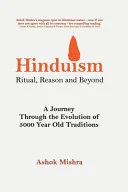
Ashok Mishra's "Hinduism - Ritual, Reason and Beyond" is a detailed study of Hindu traditions, originating from the author's seven-year research period. The book traces the lineage of Hinduism, starting from the pre-Indus Valley civilization, and clarifies distinctions between terms like 'Hindu,' 'Hinduism,' and 'Sanatana Dharma.' It systematically breaks down the four Vedas, explaining their structure and content. Mishra also discusses the history of translating these ancient texts, noting the work and potential biases of early Western Sanskrit scholars.
The book aims to connect the ritualistic and philosophical aspects of Hinduism with its more abstract dimensions. It presents a way to understand how religious thought and practice developed across the Indian subcontinent. This volume is useful for students and academics in comparative religion and Indology, as well as anyone wanting a deeper knowledge of Dharmic traditions. It is especially helpful for those interested in the historical progression of religious texts and the academic study of ancient belief systems.
This work situates itself within the academic study of Dharmic traditions, a field that often intersects with esoteric thought. While not strictly an esoteric text itself, it provides the historical and textual background necessary to understand many esoteric interpretations of Hinduism. By detailing the Vedic corpus and the evolution of philosophical thought, Mishra lays groundwork for appreciating concepts that have been central to various mystical and yogic lineages. The book's focus on ritual and reason, moving 'beyond,' acknowledges the deeper layers of meaning sought in contemplative practices.
💡 Why Read This Book?
• Gain a clear understanding of the distinctions between Hindu, Hinduism, and Sanatana Dharma, as explored through Mishra's chronological tracing from pre-Indus Valley roots. • Grasp the foundational structure of the four Vedas and their constituent parts, a crucial element for any serious study of Hindu scriptures. • Critically assess the historical context of Vedic translations, understanding how early Western scholars interpreted and presented these texts, offering a unique lens on textual reception.
⭐ Reader Reviews
Honest opinions from readers who have explored this book.
❓ Frequently Asked Questions
What is the chronological scope of "Hinduism - Ritual, Reason and Beyond"?
The book covers approximately 5,000 years of Hindu tradition, tracing its origins back to the pre-Indus Valley civilization and examining its evolution through key scriptural periods.
Does the book discuss the Vedas?
Yes, "Hinduism - Ritual, Reason and Beyond" dedicates significant attention to the four Vedas, detailing their structure, components, and contents, providing a foundational understanding of these ancient texts.
What is the author's approach to the study of Hinduism?
Ashok Mishra undertakes a seven-year study, approaching Hinduism as an evolution of ritual, reason, and deeper philosophical concepts, grounded in historical and textual analysis.
How does the book address the translation of Vedic texts?
It critically examines how original Vedic texts were translated by Western Sanskrit scholars, exploring the potential implications and interpretations of their work.
Is "Hinduism - Ritual, Reason and Beyond" suitable for beginners?
While comprehensive, the book offers a structured approach to understanding Hinduism's roots and scriptures, making it valuable for dedicated students and scholars of religion and history.
What is the significance of 'Sanatana Dharma' as discussed in the book?
Mishra clarifies the concept of Sanatana Dharma within the broader context of Hinduism's evolution, positioning it as an enduring, eternal way of life that predates specific historical formations.
🔮 Key Themes & Symbolism
Vedic Scriptural Framework
The book systematically dissects the structure of the four Vedas (Rigveda, Samaveda, Yajurveda, Atharvaveda), detailing their four-part division: Samhita, Brahmana, Aranyaka, and Upanishad. It illuminates the distinct purpose and content of each section, from hymns and rituals to philosophical discourse. This detailed exploration provides a critical understanding of the foundational texts that underpin Hindu thought and practice, moving beyond superficial interpretations to the granular detail of their composition and intended meaning.
Historical Genesis of Hinduism
Mishra traces the historical trajectory of Hinduism from its earliest discernible roots in the pre-Indus Valley period. The work emphasizes the concept of Sanatana Dharma as an overarching, eternal tradition that predates and informs the historical development of what is commonly known as Hinduism. By distinguishing between 'Hindu', 'Hinduism', and 'Sanatana Dharma', the book offers a nuanced perspective on the identity and continuity of Indian spiritual traditions over millennia.
Critical Textual Analysis
A significant aspect of the book involves a critical examination of the history of Vedic textual translation. Mishra highlights the contributions of early Western Sanskrit scholars while also probing the potential biases and interpretive lenses that shaped their renditions of ancient Hindu scriptures. This analytical approach encourages readers to engage critically with existing translations and understand the complexities involved in cross-cultural textual interpretation.
Ritual, Reason, and Transcendence
The title itself captures the book's core exploration: the interplay between observable rituals, the intellectual reasoning derived from philosophical inquiry, and the transcendent experiences that lie beyond conventional understanding. Mishra seeks to integrate these dimensions, showing how they have co-evolved within Hinduism, offering a holistic view of its complex nature.
💬 Memorable Quotes
Direct passages from the work, attributed to the author.
“The work explains Hindu, Hinduism and Sanatana Dharma, before it takes one through Hinduism's oldest scriptures - the four Vedas.”
— This statement highlights the book's structured approach, beginning with fundamental definitions and then exploring the core scriptural tradition, providing a foundational understanding before exploring deeper complexities.
“Original translations of Vedic texts were done by Western Sanskrit scholars, and why their works have limitations.”
— This points to a critical analysis of textual reception, suggesting that early translations might carry inherent biases or misunderstandings due to the translators' cultural and academic backgrounds, prompting a re-evaluation of established interpretations.
“Tracing the genesis of Hinduism to pre-Indus Valley period.”
— This signifies the book's deep historical grounding, asserting that the roots of Hindu traditions extend far beyond commonly accepted timelines, linking it to one of the earliest known civilizations in the Indian subcontinent.
“The book is outcome of seven years of study to understand the roots of Hinduism.”
— This emphasizes the depth and dedication behind the research, indicating a thorough and prolonged investigation into the foundational elements of Hindu philosophy and practice.
“Explains the four Vedas, the four components of each Veda, and what they contain.”
— This highlights the book's systematic and detailed examination of the Vedic corpus, offering readers a clear breakdown of these complex ancient texts and their contents.
🌙 Esoteric Significance
Tradition
While not strictly adhering to a single Western esoteric lineage like Hermeticism or Kabbalah, Mishra's work engages with concepts that resonate with esoteric traditions focused on ancient wisdom and cosmological understanding. It aligns with the broader Theosophical interest in tracing spiritual lineages back to antiquity and uncovering universal truths within diverse religious systems. The book's approach to the Vedas, exploring layers of meaning beyond the literal, echoes esoteric methods of scriptural exegesis.
Symbolism
The book likely explores symbols embedded within Vedic hymns and rituals, such as the concept of 'Rta' (cosmic order), the significance of fire sacrifices ('Yajna'), and the archetypal figures or deities mentioned. In esoteric traditions, these can be interpreted as keys to understanding universal principles of creation, maintenance, and dissolution, or as symbolic representations of inner spiritual states and processes.
Modern Relevance
Contemporary thinkers and practitioners interested in the philosophical underpinnings of yoga and meditation, or those exploring comparative mysticism, can draw from Mishra's foundational analysis. His work provides a scholarly basis for understanding the historical evolution of concepts that remain vital in modern spiritual discourse, offering a grounded perspective for those seeking to connect with the deeper philosophical currents of Hinduism beyond popular New Age interpretations.
👥 Who Should Read This Book
• Students of Indology and Comparative Religion: Those undertaking academic study will find Mishra's detailed analysis of Vedic texts and historical evolution useful for research and understanding. • Seekers of Deeper Religious Understanding: Individuals interested in moving beyond superficial knowledge of Hinduism to explore its ancient roots, scriptural foundations, and philosophical nuances will benefit greatly. • Scholars of Textual Criticism: Researchers focused on the history of religious texts and the impact of translation on cultural understanding will appreciate the critical examination of early Western Vedic scholarship.
📜 Historical Context
Published in 2019, Ashok Mishra's "Hinduism - Ritual, Reason and Beyond" emerges within a contemporary academic field of Indology and religious studies that continues to grapple with the interpretation of ancient Indian texts. The era is marked by a proliferation of scholarly works attempting to reconcile traditional Vedic interpretations with modern critical methodologies. Mishra's focus on the pre-Indus Valley origins and the critical assessment of Western translations positions his work in dialogue with earlier Orientalist scholarship, notably figures like Max Müller, whose translations significantly shaped Western understanding of the Vedas in the 19th century. While the book itself doesn't explicitly engage with a competing school of thought or specific reception event in its blurb, its methodology implicitly challenges approaches that might overlook the deep historical continuity or the specific cultural context of Vedic authorship and transmission. It contributes to an ongoing academic conversation about accurate representation and historical depth in understanding Hinduism.
📔 Journal Prompts
The concept of Sanatana Dharma: How does its eternal nature contrast with historically defined religious movements?
Vedic textual structure: Reflect on the purpose of the four components (Samhita, Brahmana, Aranyaka, Upanishad) in conveying spiritual knowledge.
Pre-Indus Valley origins: Consider the implications of tracing Hindu genesis to such an ancient period.
Western scholars' translations: Analyze potential biases when interpreting ancient texts from different cultural contexts.
The interplay of ritual and reason: How do these elements manifest in your understanding of spiritual practice?
🗂️ Glossary
Sanatana Dharma
Often translated as 'eternal law' or 'eternal way,' this term refers to the timeless, inherent nature of reality and the universal principles that govern it, considered by many to be the foundational concept underlying Hinduism.
Vedas
The oldest and most sacred scriptures of Hinduism, comprising hymns, rituals, and philosophical teachings. They are traditionally divided into four main collections: Rigveda, Samaveda, Yajurveda, and Atharvaveda.
Samhita
The first part of each Veda, consisting primarily of hymns, prayers, and mantras addressed to various deities. It is considered the core textual collection of Vedic knowledge.
Brahmana
The second part of each Veda, providing detailed explanations, commentary, and instructions for performing Vedic rituals and sacrifices. They often include narratives and theological discussions.
Aranyaka
The third part of each Veda, often considered transitional texts between the Brahmanas and Upanishads. They focus on more mystical and symbolic interpretations of rituals and philosophical concepts, often intended for forest dwellers.
Upanishad
The final part of each Veda, containing philosophical dialogues and insights that explore the nature of reality, consciousness, and the self. They form the basis of Vedanta philosophy.
Pre-Indus Valley Period
A historical era in the Indian subcontinent preceding the flourishing of the Indus Valley Civilization (circa 2600-1900 BCE), indicating the deep antiquity of cultural and religious practices discussed in the book.