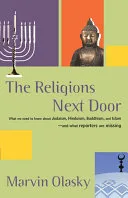
The Religions Next Door
 76
76

The Religions Next Door
Olasky’s "The Religions Next Door" tackles the considerable task of dissecting major world religions for a Western audience, a project particularly relevant in the early 2000s when interfaith understanding was gaining urgency. The book’s strength lies in its direct confrontation of what the author perceives as media misrepresentations, particularly its assertion that Judaism, Hinduism, Buddhism, and Islam are often presented with false equivalences. For instance, the work scrutinizes the distinct soteriological paths within each tradition, moving beyond surface-level comparisons. However, the book’s analytical framework, while aiming for clarity, occasionally simplifies complex theological debates. The discussion on Buddhist concepts, while informative, could benefit from acknowledging a wider range of scholastic interpretations beyond those readily accessible to a general audience. Ultimately, Olasky provides a valuable, if sometimes assertive, primer for those seeking to understand the foundational differences often obscured in popular discourse.
📝 Description
76
Marvin Olasky's 2004 book challenges media's simplified views of Judaism, Hinduism, Buddhism, and Islam.
Published in 2004, "The Religions Next Door" by Marvin Olasky seeks to correct common misrepresentations of major world faiths. Olasky argues that media coverage often oversimplifies complex religious traditions like Judaism, Hinduism, Buddhism, and Islam, focusing on superficial similarities rather than essential differences. The book aims to give readers a more accurate understanding of these religions by detailing their distinct theological tenets and practices. It moves beyond a generalized view of religious diversity, asserting that significant doctrinal and practical variations are crucial for true comprehension. Olasky provides factual grounding to help readers distinguish between these faiths, encouraging informed engagement. The work addresses the growing presence of these religions in Western societies, particularly in American communities, and the need for a more nuanced public perception. Olasky's goal is to bridge the gap between how these religions are lived and how they are perceived by the wider public. He concentrates on core beliefs and observable practices, highlighting what makes each tradition unique. This approach counteracts broad generalizations and fosters a more respectful understanding of different worldviews.
While not strictly an esoteric text in the occult sense, "The Religions Next Door" engages with a form of critical esotericism. It examines the 'inner' theological and practical distinctions of major world religions, which are often obscured by 'exoteric' popular or media representations. Olasky's work encourages a deeper, more informed understanding of these traditions, moving beyond superficial appearances to grasp their substantive differences. This aligns with a broader intellectual tradition of seeking hidden or misunderstood truths beneath common perceptions, applied here to comparative religion.
💡 Why Read This Book?
• Gain clarity on the distinct theological frameworks of Judaism, Hinduism, Buddhism, and Islam, moving beyond generalized media narratives, as presented in the book's analysis of their core tenets. • Understand the specific historical context of religious diversity in America from the early 2000s, as framed by the book's publication date and its concern with public perception. • Develop a more nuanced appreciation for the differences between these faiths, enabling informed dialogue rather than relying on common, potentially inaccurate, media portrayals discussed in the work.
⭐ Reader Reviews
Honest opinions from readers who have explored this book.
❓ Frequently Asked Questions
What specific religions does Marvin Olasky cover in The Religions Next Door?
The book focuses on four major world religions: Judaism, Hinduism, Buddhism, and Islam, aiming to provide readers with a clearer understanding of their distinct beliefs and practices.
When was The Religions Next Door originally published?
The book was first published on November 1, 2004, reflecting the religious landscape and media coverage of that era.
What is the main argument of The Religions Next Door regarding media coverage?
Olasky argues that media outlets often misrepresent or oversimplify world religions, creating false equivalences and obscuring crucial theological and practical differences between traditions.
Who is the intended audience for this book?
The book is aimed at general readers who want to understand the fundamental distinctions between major world religions, particularly those concerned about common media misrepresentations.
What does the book aim to achieve for its readers?
It seeks to educate readers about the truths of Judaism, Hinduism, Buddhism, and Islam, empowering them to discern these faiths accurately and engage in more informed discussions.
Does the book offer a comparative religious study?
Yes, it offers a comparative overview, highlighting the key tenets and practices of each religion to underscore their differences, rather than focusing on shared elements often emphasized by the media.
🔮 Key Themes & Symbolism
Deconstructing Religious Stereotypes
Olasky's work critically examines how media narratives flatten the rich diversity of global faiths into easily digestible, often inaccurate, soundbites. The book insists on presenting the unique doctrines and practices of Judaism, Hinduism, Buddhism, and Islam, challenging the superficial comparisons that obscure profound theological distinctions. It encourages a discerning approach, urging readers to look beyond common assumptions and engage with the specific historical and philosophical underpinnings of each tradition.
Theological Distinctiveness
A central theme is the emphasis on the irreducible differences between these religions. The book highlights how concepts like salvation, enlightenment, or divine law vary significantly across these traditions. By focusing on these specific doctrinal points, Olasky aims to provide readers with a framework for appreciating the unique worldview each religion offers, moving past the 'one-size-fits-all' approach sometimes adopted in popular discourse.
Informed Pluralism
The book advocates for a form of pluralism grounded in accurate knowledge. Rather than assuming all religions lead to the same destination, Olasky posits that true interfaith respect begins with understanding the specific paths each tradition lays out. This perspective is crucial for working through the increasingly diverse religious field of contemporary society, fostering dialogue based on truth rather than assumption.
Media Literacy in Faith
Olasky implicitly critiques the role of journalism in shaping public perception of religion. The work serves as a call for greater media responsibility and encourages readers to develop critical consumption habits when encountering religious topics in news and popular culture. It empowers individuals to seek out more substantive information when understanding faiths different from their own.
💬 Memorable Quotes
Direct passages from the work, attributed to the author.
“Reporters often fail to highlight the profound differences between world religions.”
— This statement expresses Olasky's core critique, suggesting that journalistic coverage tends to smooth over crucial distinctions, leading to public misunderstanding of diverse faith traditions.
💡 Key Ideas
Editorial paraphrase of the work's core concepts — not direct quotes.
Our neighborhoods are full of religious diversity these days, but the media would have us believe they all hold different variations of the same tenets.
This paraphrased concept highlights the book's observation about the growing presence of various faiths in local communities and contrasts it with the media's tendency to present them as more similar than they actually are.
It is in those missed details that serious and grave injustice is done to the American people by the misrepresentation.
This paraphrased concept underscores the author's conviction that the media's failure to accurately portray religious differences constitutes a significant disservice to public understanding and societal discourse.
This isn’t so, and it is in those missed details that serious and grave injustice is done.
This quote emphasizes the author's direct refutation of perceived media oversimplification, arguing that the omission of critical details about different religions causes harm to public comprehension.
What Reporters Are Missing will educate readers as to the truth about world religions that the media often misrepresent.
This paraphrased concept from the original blurb states the book's explicit educational goal: to reveal the accurate nature of world religions often distorted by journalistic accounts.
🌙 Esoteric Significance
Tradition
While Olasky's work is primarily aimed at a general audience and focuses on Abrahamic and Dharmic religions from a socio-historical perspective, its emphasis on discerning the unique truths within each tradition can be seen as aligning with certain esoteric principles. Esoteric traditions often seek hidden or deeper meanings, and understanding the distinct cosmologies and spiritual paths of different religions is a foundational step for those exploring syncretic or comparative spiritualities. It departs from more mystical traditions by focusing on empirical description rather than inner experience.
Symbolism
The book itself doesn't explore esoteric symbolism in a traditional sense. However, by dissecting the core tenets of Judaism (e.g., the Torah, covenant), Hinduism (e.g., dharma, karma, Brahman), Buddhism (e.g., the Eightfold Path, Nirvana), and Islam (e.g., Tawhid, the Five Pillars), it implicitly engages with the symbolic language and conceptual frameworks that underpin these faiths. These are the 'symbols' of belief systems that guide adherents' understanding of reality and their place within it.
Modern Relevance
In an era where interfaith dialogue and the understanding of diverse belief systems are paramount, Olasky's work remains relevant for its clear articulation of religious distinctions. Contemporary thinkers and practitioners engaged in comparative theology, intercultural studies, or those seeking to build bridges between communities can draw upon its foundational clarity. It provides a counterpoint to more universalizing approaches, emphasizing the importance of respecting specific religious identities and doctrines.
👥 Who Should Read This Book
• Individuals seeking to understand the fundamental differences between Judaism, Hinduism, Buddhism, and Islam, moving beyond common media generalizations. • Students of comparative religion or cultural studies who require a clear, fact-based overview of major world faiths as they were commonly understood in the early 2000s. • Journalists, educators, or community leaders aiming to foster more accurate and nuanced discussions about religious diversity in society.
📜 Historical Context
Published in 2004, "The Religions Next Door" emerged during a period of heightened global awareness of religious diversity and interfaith relations, particularly in the wake of the September 11th attacks. The intellectual currents of the time included increased academic interest in comparative religion alongside public anxieties about Islam. Olasky's work positioned itself against a backdrop where media narratives, often simplified for mass consumption, struggled to convey the complexities of traditions like Islam and Hinduism. While scholars like Karen Armstrong were exploring commonalities in religious traditions, Olasky's approach focused intently on divergences. The book's reception was part of a broader conversation about religious literacy in a pluralistic society, aiming to provide a corrective to what the author perceived as journalistic superficiality.
📔 Journal Prompts
The concept of "missed details" in media reporting on religion.
Distinguishing the core tenets of Hinduism from Buddhism.
The author's critique of media narratives about Judaism.
Understanding the unique path presented by Islam.
The role of accurate knowledge in interfaith dialogue, as discussed in the book.
🗂️ Glossary
Judaism
An ancient monotheistic religion originating with the Israelites, characterized by a covenant relationship between God and the Jewish people, and the observance of the Torah.
Hinduism
A major religion originating in the Indian subcontinent, encompassing diverse traditions and philosophies, often characterized by concepts like dharma, karma, reincarnation, and a pantheon of deities.
Buddhism
A religion and philosophy originating in ancient India with Siddhartha Gautama (the Buddha), focusing on the path to enlightenment through practices like meditation, ethical conduct, and wisdom to end suffering.
Islam
A monotheistic Abrahamic religion centered on the Quran, believed by Muslims to be the literal word of God (Allah), and the teachings of the Prophet Muhammad.
Tenets
Fundamental principles or beliefs, especially one of the main principles of a religion or philosophy.
Soteriology
The branch of theology concerned with the doctrine of salvation, exploring how individuals are saved or liberated from sin, suffering, or spiritual bondage within different religious frameworks.
Pluralism
A condition in which numerous distinct ethnic, religious, or cultural groups are present and maintained within a society, fostering coexistence and mutual respect.