Letters on Demonology and Witchcraft: adressed to J. G. Lockhart, Esq.

 81
81

Letters on Demonology and Witchcraft: adressed to J. G. Lockhart, Esq.



Lorelei Sage (Contemplative Literature Editor) — Sir Walter Scott's "Letters on Demonology and Witchcraft" remains an indispensable volume for understanding the historical and psychological dimensions of the occult. Scott masterfully navigates the intricate landscape of folklore, superstition, and religious doctrine, presenting a nuanced exploration of witchcraft not as mere fabrication, but as a potent cultural force. His erudition is evident, yet his narrative remains engaging, drawing readers into the very heart of historical fears and beliefs. This work offers invaluable insights for scholars of esotericism, folklorists, and anyone fascinated by the darker currents of human belief. It is a foundational text that encourages critical yet empathetic engagement with the subject matter.
📝 Description
81
In 1830, Sir Walter Scott wrote "Letters on Demonology and Witchcraft" to his friend J. G. Lockhart.
Scott's "Letters on Demonology and Witchcraft," published in 1830, examines the historical beliefs and societal impact of witchcraft and supernatural phenomena in Europe. He addresses the legal and social aspects of witch trials, including confessions and persecutions, connecting them to broader cultural anxieties and religious beliefs of the time. Scott, a keen observer of folklore and history, analyzes the narratives surrounding magic and the perceived presence of dark forces. He discusses the psychological and historical factors that contributed to the widespread fear and belief in witchcraft across different European societies. The work reflects on the human tendency to seek explanations for the unknown, often through superstition and religious interpretation. Scott's detailed accounts draw from historical records and contemporary accounts, aiming to illuminate the mindset of past eras regarding the supernatural.
These letters engage with the early 19th-century fascination with the supernatural, a period when Romanticism fostered renewed interest in folklore, medieval history, and the occult. Scott's work sits within a tradition of scholars and writers attempting to understand or document beliefs that rationalism had begun to marginalize. Unlike purely academic histories, Scott's approach is colored by a literary sensibility and a concern for the popular imagination, bridging the gap between scholarly inquiry and the enduring human interest in magic and the spectral.
💡 Why Read This Book?
Uncover the roots of Western occult fascination. Explore the psychology behind historical witchcraft beliefs and societal anxieties. Gain a deeper understanding of folklore and its cultural impact. Ideal for seekers of hidden knowledge, historical scholars, and those intrigued by the shadowy corners of human experience and belief systems.
⭐ Reader Reviews
Honest opinions from readers who have explored this book.
❓ Frequently Asked Questions
What is the primary focus of Scott's "Letters on Demonology and Witchcraft"?
The book primarily focuses on the historical beliefs and societal perceptions surrounding demonology and witchcraft across various European cultures, exploring the folklore, religious doctrines, and psychological factors that contributed to these phenomena.
Who was J. G. Lockhart, the recipient of these letters?
J. G. Lockhart was Sir Walter Scott's son-in-law and literary executor, a prominent literary critic and biographer who likely served as a sounding board and intellectual companion for Scott's scholarly pursuits.
Does the book endorse the reality of witchcraft?
Scott adopts a scholarly and critical approach, presenting historical accounts and beliefs rather than asserting the literal reality of witchcraft. He aims to understand the phenomenon within its historical and psychological context.
What is the historical period covered by the book?
The book delves into historical periods from antiquity through the early modern era, focusing particularly on the peak periods of witch trials and the widespread belief in witchcraft in Europe.
Is this book suitable for beginners interested in witchcraft?
Yes, it serves as an excellent foundational text for beginners, offering a comprehensive historical overview. However, its scholarly nature requires thoughtful engagement and may be best supplemented with more contemporary works for diverse perspectives.
🔮 Key Themes & Symbolism
The Psychology of Belief and Fear
Scott meticulously dissects the psychological underpinnings that fueled the widespread belief in witchcraft and demonic influence. He explores how societal anxieties, religious dogma, and individual susceptibility converged to create a fertile ground for accusations and convictions. The letters look at the human propensity to attribute inexplicable events to supernatural causes, examining the role of fear, superstition, and the desire for order in shaping perceptions of the 'other' and the 'unseen'.
Folklore, Superstition, and the Collective Unconscious
This work serves as a rich repository of European folklore and superstitions related to witchcraft. Scott traces the evolution of these narratives, highlighting recurring motifs and archetypes that resonate within the collective unconscious. He illustrates how ancient pagan traditions, Christian theology, and local customs intertwined to form the complex collection of beliefs surrounding magical practices, diabolical pacts, and spectral visitations, offering a glimpse into shared cultural narratives.
The Historical Context of Witch Hunts and Trials
Scott provides a critical examination of the historical periods characterized by intense witch hunts and trials. He analyzes the social, legal, and religious frameworks that enabled these persecutions, discussing the nature of confessions, the role of inquisitors, and the devastating consequences for the accused. The letters offer a sober reflection on the human capacity for both fervent belief and brutal persecution, contextualizing these events within the socio-political range of their time.
💬 Memorable Quotes
Direct passages from the work, attributed to the author.
“We have all seen better days, and we shall all see worse.”
— Reflecting a melancholic Romantic sensibility, this aphorism suggests a cyclical view of fortune and suffering, resonating with the hardships and perceived injustices faced by those accused of witchcraft.
“Superstition is the child of ignorance.”
— This direct statement underscores Scott's view that a lack of knowledge and understanding breeds unfounded beliefs, a key argument in explaining the phenomenon of witchcraft and explaining its persistence.
“The imagination is a powerful engine.”
— This highlights the role of the human mind and its creative, often unrestrained, capacity in shaping perceptions and constructing narratives, particularly concerning the supernatural and the unknown.
💡 Key Ideas
Editorial paraphrase of the work's core concepts — not direct quotes.
The greatest evil that can befall us is to be abandoned by God.
This quote speaks to a profound existential fear, highlighting the belief that divine abandonment is the ultimate catastrophe, a concept deeply intertwined with notions of damnation and demonic influence in historical witchcraft discourse.
There is nothing so incredible that it has not been believed.
A powerful observation on the human capacity for belief, this quote expresses how extraordinary and seemingly impossible notions, such as pacts with demons, could gain widespread acceptance.
🌙 Esoteric Significance
Tradition
While not overtly a practitioner's guide, Scott's work is foundational to the academic study of Western esotericism, particularly within the historical and folkloric branches. It provides crucial context for understanding the evolution of beliefs about occult forces, spiritism, and magic, serving as a bridge between historical accounts and later esoteric revival movements. It illuminates the cultural soil from which many modern occult traditions grew.
Symbolism
Scott's exploration implicitly touches upon potent symbols: the pact with the devil as a symbol of ultimate betrayal and forbidden knowledge; the witch's familiars as embodiments of animalistic or elemental energies; the sabbat as a subversion of sacred ritual; and the mark of the witch as a physical manifestation of unseen corruption. These symbols, though analyzed historically, hold enduring power in esoteric symbolism.
Modern Relevance
In an age still grappling with belief, skepticism, and the power of narrative, Scott's insights remain remarkably relevant. His examination of how fear, ignorance, and societal pressures can lead to persecution offers timeless lessons. Furthermore, his work provides essential historical context for contemporary practitioners and scholars of witchcraft and paganism, allowing for a deeper appreciation of the traditions' roots and evolution.
👥 Who Should Read This Book
This important work is a treasure for a diverse audience. **Scholars of history, folklore, and religious studies** will find Scott's meticulous research and insightful analysis invaluable. **Occult practitioners and modern pagans** seeking to understand the historical roots and societal impact of witchcraft will gain crucial context. **Seekers of hidden knowledge** and those fascinated by the darker, more mysterious aspects of human belief will be drawn into its evocative prose. **Beginners** interested in the history of witchcraft will find a comprehensive and engaging introduction, though its depth may require thoughtful contemplation.
📜 Historical Context
Written in 1831, Sir Walter Scott's "Letters on Demonology and Witchcraft" emerged during a period of intense scholarly interest in folklore, antiquities, and the historical roots of superstition. The Romantic era, with its fascination for the medieval, the supernatural, and the darker aspects of human experience, provided fertile ground for such an exploration. As the Enlightenment's rationalism began to be tempered by a re-appreciation for the irrational and the imaginative, scholars like Scott sought to understand the lingering beliefs and practices that had shaped society for centuries. The aftermath of the great witch trials, though long past, still cast a long shadow, prompting reflection on justice, belief, and the nature of evidence. Scott's work is a product of this intellectual climate, aiming to provide a comprehensive, albeit historically contextualized, survey of a phenomenon that had deeply affected the European psyche.
📔 Journal Prompts
Reflect on a personal experience where fear or superstition influenced your perception of an event. How did rational thought later resolve it?
Consider the concept of 'the other' in contemporary society. How do current societal anxieties manifest in the way certain groups are perceived or demonized?
If you were living during the peak of the witch trials, what societal pressures might have influenced your beliefs or actions regarding accusations of witchcraft?
Explore a recurring motif from folklore or mythology that you believe taps into a universal human fear or desire. How does this symbol resonate across cultures?
How has the popular media's portrayal of witchcraft and the occult evolved since Scott's time, and what does this evolution reveal about our collective consciousness?
🗂️ Glossary
Demonology
The study of demons or beliefs about demons. In Scott's context, it refers to the theological and folkloric understanding of malevolent supernatural beings and their influence on the human world.
Witchcraft
The practice of magic, especially with the intention of causing harm. Historically, it encompassed a wide range of beliefs, from folk healing to alleged pacts with the devil, often leading to accusations and persecution.
Superstition
A belief or practice resulting from ignorance, fear of the unknown, trust in magic or chance, or the beliefs of a false religion. Scott examines how superstitions fueled witchcraft accusations.
Familiar
In folklore, a supernatural entity, often in the form of an animal, believed to attend and serve a witch. These were seen as conduits for magical power or spies for their masters.
Sabbath (Witches')
A nocturnal meeting of witches, often described in historical accounts as occurring in a secret location, involving rituals, revelry, and pacts with the devil. It represented a perversion of religious observance.
This book appears in 2 collections
🔮 Readers Also Liked
Browse all →
![An answer of a letter from a gentleman in Fife, to a nobleman, containing a brief acccount [sic] of the barbarous and illegal treatment, these poor women accused of witchcraft, met with from the baillies of Pittenweem and others, ... To which is adde](/img/thumb/an-answer-of-a-letter-from-a-gentleman-in-fife-to-a-nobleman-containing-a-brief-acccount-sic-of-the-barbarous-and-illegal-treatment-these-poor-women-accused-of-witchcraft-met-with-from-the-baillies-of.webp)






More by Scott, Walter
All books →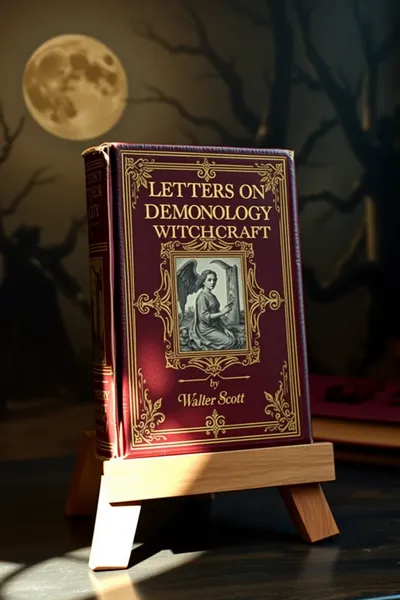
From the “Witchcraft” Collection
View all →







More Free Witchcraft & Paganism Books
View all →