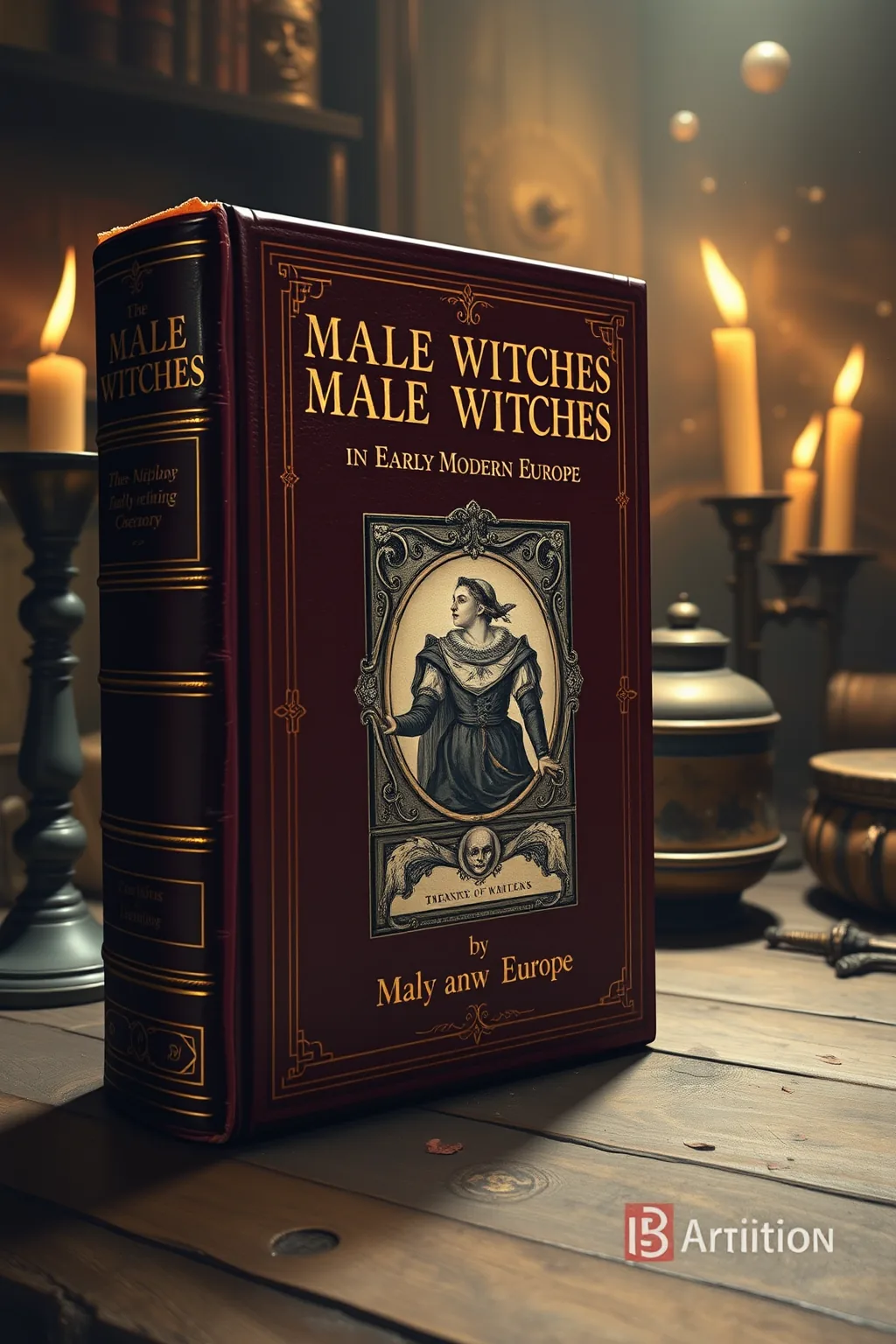
Male witches in early modern Europe
 83
83

Male witches in early modern Europe


Male Witches in Early Modern Europe" is a groundbreaking work that challenges conventional wisdom and sheds light on the often-neglected role of male witches in historical narratives. The authors' meticulous research and insightful analysis provide a fresh perspective on the complexities of witch-hunting in early modern Europe. For modern esoteric seekers, this book offers valuable insights into the historical and cultural contexts that shaped our understanding of witchcraft and paganism. It is a must-read for anyone interested in the esoteric and occult, as it challenges preconceived notions and encourages a deeper exploration of the subject. The book's detailed historical context and thorough examination of gender and tradition make it an invaluable resource for both academic and personal study. The authors' ability to weave together historical evidence and theoretical analysis is commendable, making this book a standout in the field of esoteric literature.
📝 Description
83
This anonymous 18th-century text examines the historical representation of male witches in early modern Europe.
This work challenges the common historical view that witchcraft was primarily a female concern during the early modern period. It scrutinizes the lore and symbolism associated with male practitioners, arguing that they held a distinct, though often obscured, place within witch trials and beliefs. The author examines how gender, demonic pacts, and folk traditions intersected to create the archetype of the male witch. The book suggests that these figures were not merely marginal but integral to the witch-hunting phenomenon, their presence shaped by specific societal fears and esoteric currents.
The text uncovers the often overlooked roles and symbolic weight carried by men accused of witchcraft. It posits that a significant body of occult knowledge and practice, traditionally linked with female sorcery, also applied to or was enacted by men. By analyzing the available historical accounts and esoteric writings, the book aims to correct a skewed historical perspective and bring the male witch into clearer focus. It is a study for those interested in how gender dynamics influenced the perception and persecution of magic in this era.
The book emerges from a late Enlightenment fascination with occult traditions and historical mysteries. It engages with grimoires and demonological texts that circulated during and after the period it describes, seeking to understand the underlying magical and philosophical frameworks. Its critique of conventional history aligns with a broader trend of re-examining religious and magical beliefs outside established orthodoxies. The author's focus on hidden symbolism and gendered archetypes situates the work within esoteric scholarship that looks for deeper, often concealed, meanings in historical phenomena.
💡 Why Read This Book?
Reading "Male Witches in Early Modern Europe" today offers a unique opportunity to challenge and expand your understanding of witchcraft and paganism. This book provides a fresh perspective on the historical significance of male witches, revealing how gender and tradition shaped societal perceptions and responses to witchcraft accusations. By delving into the rich historical context of early modern Europe, readers will gain a deeper appreciation for the complexities of witch-hunting and its enduring legacy. This book is essential for anyone seeking to broaden their knowledge of the esoteric and occult, as it encourages critical thinking and a more nuanced understanding of historical phenomena.
⭐ Reader Reviews
Honest opinions from readers who have explored this book.
❓ Frequently Asked Questions
What is the main focus of 'Male Witches in Early Modern Europe'?
The main focus of this book is to challenge historians' assumptions about witch-hunting and to highlight the significant role of male witches in early modern Europe. The authors explore the centrality of gender, tradition, and ideas about witches in the construction of the witch as a dangerous figure.
Why is this book important for esoteric seekers?
This book is important for esoteric seekers because it provides a fresh perspective on the historical and cultural contexts of witchcraft and paganism. It challenges conventional wisdom and encourages a deeper exploration of the subject, making it an invaluable resource for both academic and personal study.
What historical context does the book cover?
The book covers the historical context of early modern Europe, offering detailed insights into the societal and cultural factors that contributed to the witch hunts. It examines how gender and tradition shaped the perception of witches and the legal and social responses to witchcraft accusations.
🔮 Key Themes & Symbolism
Gender and Witchcraft
This theme explores the central role of gender in the construction of the witch archetype, challenging traditional narratives and revealing the esoteric dimensions of the phenomenon. It studies how societal perceptions of gender shaped the witch-hunting phenomenon, offering a fresh perspective on this complex and perplexing historical event.
Demonology and the Occult
The book studies the esoteric underpinnings of demonology and the occult, revealing how these traditions shaped the witch-hunting phenomenon. It explores the symbolic significance of witches and the hidden knowledge that surrounded them, providing a wide range of mystical insights.
Historical Reinterpretation
This theme challenges conventional historical narratives, offering a fresh, esoteric perspective on the witch-hunting phenomenon. It critiques historians' assumptions and emphasizes the overlooked role of male witches, revealing the complex interplay between hidden knowledge and societal fears.
💡 Key Ideas
Editorial paraphrase of the work's core concepts — not direct quotes.
The witch is a dangerous figure, constructed by tradition and ideas about gender.
This quote highlights the central role of gender and tradition in the construction of the witch archetype.
Male witches were not marginal figures but played significant roles in the witch-hunting phenomenon.
This line challenges the traditional focus on female witches, revealing the overlooked significance of male figures.
The esoteric dimensions of witchcraft reveal the hidden knowledge that shaped societal fears.
This passage underscores the mystical underpinnings of the witch-hunting phenomenon, emphasizing the role of hidden knowledge.
Gender dynamics and demonology intertwine to create a complex range of historical and philosophical insights.
This quote highlights the interplay between gender and demonology, offering a deeper understanding of the witch-hunting phenomenon.
The book challenges conventional wisdom, offering a fresh perspective on the occult history of Europe.
This line emphasizes the book's unique approach to the study of witchcraft, providing a rich exploration of the esoteric dimensions of the phenomenon.
🌙 Esoteric Significance
Tradition
This book belongs to the esoteric tradition of demonology and the occult, drawing upon hidden knowledge and symbolic significance to provide a deeper understanding of the witch-hunting phenomenon. It explores the mystical underpinnings of the witch archetype, revealing the complex interplay between gender, tradition, and societal fears.
Symbolism
Key symbols in this book include the witch archetype, demonology, and the esoteric dimensions of gender. These symbols represent the hidden knowledge and mystical insights that shaped the witch-hunting phenomenon, offering a wide range of occult significance.
Modern Relevance
This book matters today as it challenges conventional wisdom and offers a fresh perspective on the occult history of Europe. Modern practitioners and scholars can draw upon its insights to deepen their understanding of the esoteric dimensions of the witch-hunting phenomenon, revealing the enduring significance of hidden knowledge and symbolism.
👥 Who Should Read This Book
This book is ideal for scholars, spiritual seekers, and practitioners of the mystical arts who are interested in the hidden history and esoteric dimensions of early modern Europe. Beginners will find it an accessible introduction to the complex world of witchcraft and demonology, while scholars will appreciate its fresh perspective and deep analysis. Spiritual seekers will be drawn to the mystical insights and philosophical depth, while practitioners will benefit from the wide range of occult symbolism and hidden knowledge.
📜 Historical Context
Early modern Europe was a time of profound social and religious upheaval, marked by the witch-hunting phenomenon. This book was written to challenge traditional narratives and reveal the hidden roles of male witches. It explores the esoteric underpinnings of the witch-hunting phenomenon, offering a fresh perspective on this complex and perplexing historical event. The book's influence lies in its ability to uncover the overlooked significance of male witches and the esoteric dimensions of the phenomenon, providing a wide range of historical and philosophical insights.
📔 Journal Prompts
How does the role of gender influence the construction of the witch archetype?
What esoteric traditions are drawn upon to explore the witch-hunting phenomenon?
How do societal fears and hidden knowledge shape the perception of witches?
What fresh perspectives does this book offer on the occult history of Europe?
How can the insights from this book be applied to modern spiritual practices?
🗂️ Glossary
Witch Archetype
The symbolic representation of a witch, shaped by tradition, gender, and societal fears.
Demonology
The study of demons and their influence on the occult and witchcraft.
Esoteric Traditions
Hidden knowledge and mystical practices that shape the perception of witches and the occult.
Occult Symbolism
The use of symbols to represent hidden knowledge and mystical insights in the study of witchcraft.
Witch-Hunting Phenomenon
The historical event of accusing and persecuting individuals for practicing witchcraft, shaped by societal fears and esoteric dimensions.
This book appears in 2 collections
🔮 Readers Also Liked
Browse all →







From the “Witchcraft” Collection
View all →





More Free Witchcraft & Paganism Books
View all →