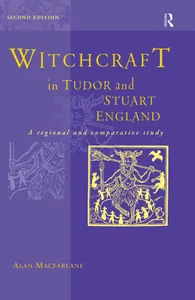
Witchcraft in Tudor and Stuart England

 83
83

Witchcraft in Tudor and Stuart England
Alan Macfarlane’s seminal work, originally published in 1970, remains a cornerstone for understanding English witchcraft. It astutely moves past the lurid sensationalism often associated with the topic, focusing instead on the socio-cultural and legal mechanisms at play. Macfarlane’s strength lies in his meticulous use of historical records, demonstrating how witchcraft belief was interwoven with everyday life, legal structures, and theological debates. He effectively illustrates the gradual shift in perception, particularly the decline of the learned belief in witchcraft by the late Stuart period. A minor limitation might be the density of the historical analysis, which can demand focused attention from the reader. The detailed examination of the Essex witch trials provides a particularly vivid, if chilling, case study. This book is indispensable for anyone serious about the history of magic and early modern belief systems.
📝 Description
83
Alan Macfarlane's 1970 study traces witchcraft beliefs in England from 1500 to 1750.
This study examines the historical development and social perception of witchcraft in England during the Tudor and Stuart periods. It moves past folklore to look at the legal, religious, and cultural factors that shaped accusations and prosecutions between roughly 1500 and 1750. The work investigates how understandings of witchcraft shifted, from a perceived criminal act to a subject of learned debate, eventually leading to a decline in belief.
The period covered, 1500-1750, was a time of significant change in English society, including the Reformation and the rise of scientific thought. Witchcraft accusations were tied to the era's worldview, often connected with religious heresy, social deviance, and anxieties about divine displeasure. Belief in witchcraft, though it fluctuated, was a significant social force that influenced legal proceedings and community relations.
The book scrutinizes concepts like the 'witches' Sabbath,' the nature of demonic pacts, and the differing views of learned demonologists compared to popular beliefs. It analyzes how legal statutes, such as the Witchcraft Act of 1563, affected the prosecution of alleged witches. Furthermore, it traces the intellectual shifts that led to skepticism among figures like John Gaule, contributing to the decline of witch trials by the late 17th century.
While not strictly an esoteric text itself, this book provides crucial historical context for understanding the roots of Western magical beliefs and practices. It details the societal anxieties, legal structures, and theological debates that shaped how witchcraft was perceived and persecuted in early modern England. Understanding this historical persecution is vital for appreciating the subsequent reemergence and reinterpretation of magical traditions in later periods.
💡 Why Read This Book?
• Learn how specific legal frameworks, such as the Witchcraft Act of 1563, codified accusations and prosecutions, providing a concrete understanding of the legal machinery of the era. • Gain insight into the intellectual currents that challenged demonological theories, understanding figures like John Gaule and their impact on the decline of widespread belief. • Discover the social dynamics of suspicion and accusation in small communities, moving beyond myth to see how everyday anxieties manifested in concrete historical events.
⭐ Reader Reviews
Honest opinions from readers who have explored this book.
❓ Frequently Asked Questions
When did the belief in witchcraft begin to decline in England?
The decline was gradual, accelerating in the late 17th century. While specific dates vary, the publication of skeptical works and the diminishing number of convictions signal this shift after the peak of the trials.
What was the role of religion in English witchcraft accusations?
Religion was central. Accusations often involved charges of heresy, pacts with the Devil, and the subversion of divine order, making witchcraft trials deeply intertwined with religious anxieties and the authority of the Church.
How did Macfarlane differentiate between learned and popular witchcraft beliefs?
Macfarlane distinguishes between the complex theological and legal theories of educated elites (learned belief) and the more localized, often pragmatic, folk beliefs about harmful magic and maleficium prevalent among the general populace.
Were there specific regions in England where witchcraft trials were more common?
Yes, certain regions experienced higher concentrations of trials. The work implicitly or explicitly discusses areas like Essex, which saw significant outbreaks of accusations, demonstrating regional variations in belief and prosecution.
What is the historical significance of the 'Witchcraft Act of 1563'?
This act made witchcraft a felony punishable by death. It standardized the legal approach to witchcraft accusations, moving it from ecclesiastical courts to secular ones and impacting the frequency and severity of prosecutions.
How does Macfarlane’s work differ from earlier accounts of witchcraft?
Macfarlane’s 1970 work moved beyond mere cataloging of folklore or demonology. It emphasized social history, legal analysis, and the changing intellectual climate, offering a more nuanced understanding of the phenomenon's societal roots and decline.
🔮 Key Themes & Symbolism
Legal Frameworks of Accusation
The book meticulously examines how English law evolved to address witchcraft, particularly focusing on statutes like the Witchcraft Act of 1563. This section details how accusations were formalized, prosecuted, and adjudicated within the Tudor and Stuart legal systems. It illustrates the shift from ecclesiastical to secular jurisdiction and the criteria used to define and condemn alleged practitioners, highlighting the procedural aspects that underpinned societal fear and its legal manifestation.
The Decline of Learned Belief
A significant theme is the gradual erosion of conviction in witchcraft among the educated elite. Macfarlane traces the intellectual arguments and empirical observations that began to question the reality of demonic pacts and maleficia. The work explores the role of skeptical thinkers and the broader Enlightenment shift towards rationalism, demonstrating how intellectual currents ultimately undermined the foundations of traditional demonology and witchcraft prosecutions.
Social and Cultural Anxieties
This theme addresses how witchcraft accusations functioned as a mechanism for managing social tensions and anxieties. The book explores how fears of the supernatural were often projected onto marginalized individuals, particularly women, serving to reinforce social norms. It examines the interplay between popular belief, communal tensions, and the broader religious and political climate of the era, showing witchcraft as a lens through which societal stresses were expressed.
Regional Variations in Prosecution
The work implicitly acknowledges and analyzes the geographical distribution of witchcraft accusations and trials. It suggests that certain areas experienced more intense periods of prosecution, influenced by local social conditions, the zeal of magistrates, or the influence of specific preachers and intellectuals. This focus highlights that witchcraft was not a uniform phenomenon but was shaped by diverse local factors across England.
💬 Memorable Quotes
Direct passages from the work, attributed to the author.
“The belief in witchcraft was tied to the structure of society.”
— This interpretation suggests that witchcraft accusations were not random occurrences but were influenced by the existing social hierarchies, community dynamics, and power structures of the time, serving to maintain or challenge the established order.
“Learned men eventually began to doubt the reality of the witches' Sabbath.”
— This highlights a critical intellectual shift where educated elites, through reason and observation, started to question the established demonological narratives about witches gathering for nefarious purposes, contributing to the decline of belief.
“Maleficium was often the core of popular accusations.”
— This points to the common belief that witches primarily used their powers to cause harm – through illness, crop failure, or other misfortunes – which formed the basis for many accusations from ordinary people.
“The Witchcraft Act of 1563 defined witchcraft as a serious crime.”
— This emphasizes the legal codification of witchcraft, framing it not merely as superstition but as a criminal offense punishable by severe penalties, thus institutionalizing the persecution of alleged witches.
“The decline of witchcraft trials was a long process, not an abrupt event.”
— This acknowledges that the cessation of witch hunts was a gradual historical development, influenced by multiple factors over time, rather than a sudden abandonment of belief or practice.
🌙 Esoteric Significance
Tradition
While not strictly within a defined esoteric lineage like Hermeticism or Kabbalah, Macfarlane's work intersects with the history of Western esotericism by examining the cultural phenomena that these traditions often engaged with or were accused of. It provides crucial historical context for understanding the social reality and perception of magic and occult practices during a formative period, informing later esoteric revivals by detailing the societal conditions under which such beliefs were debated and prosecuted.
Symbolism
The book engages with symbols and concepts that, while not always overtly esoteric, carried profound symbolic weight in the early modern period. The 'witches' Sabbath' itself functioned as a potent symbol of inversion and demonic allegiance, representing a perversion of sacred rites. The concept of the 'demonic pact' symbolized ultimate betrayal of divine order and humanity. These symbolic representations were central to how witchcraft was understood and feared within both popular and learned frameworks.
Modern Relevance
Contemporary practitioners of Wicca and other modern witchcraft traditions often draw upon historical accounts to understand the roots of their practices and the persecution faced by earlier alleged witches. Scholars of folklore, cultural history, and the sociology of belief also continue to cite Macfarlane's foundational research. His meticulous analysis of social dynamics and belief systems remains relevant for understanding how societies construct and respond to perceived threats, both magical and mundane.
👥 Who Should Read This Book
• Students of early modern English history seeking to understand the social and legal realities of witchcraft accusations beyond folklore. • Scholars of religious studies interested in the interplay between theology, heresy, and popular belief during the Reformation and its aftermath. • Anyone curious about the historical construction of deviance and the mechanisms societies use to police perceived threats to social order.
📜 Historical Context
The Tudor and Stuart periods (roughly 1485-1714) were tumultuous eras in English history, marked by the English Reformation, religious conflict, and significant social change. It was within this context that witchcraft accusations flourished. The initial focus was often on perceived demonic pacts and heresy, reflecting deep-seated religious anxieties. The Witchcraft Act of 1563 formalized the prosecution of witchcraft as a felony, leading to numerous trials. However, this period also witnessed the rise of skeptical thought. Contemporaries like the preacher John Gaule published works challenging the prevailing demonological views, contributing to a gradual intellectual shift. While figures like Reginald Scot had already voiced skepticism earlier, the late Stuart period saw a more decisive move towards rationalism and empirical observation, exemplified by figures like Increase Mather in America, who, despite his belief, advocated for caution in trials. The reception of witchcraft studies was initially within theological and legal circles, but Macfarlane’s work itself, published in 1970, represented a significant departure by foregrounding social and historical analysis over pure demonology.
📔 Journal Prompts
The societal function of witchcraft accusations in regulating community norms.
The legal apparatus employed against accused witches under the Witchcraft Act of 1563.
The intellectual shift away from believing in the witches' Sabbath.
The difference between learned and popular understandings of maleficium.
The role of religious upheaval in fueling witchcraft panics.
🗂️ Glossary
Maleficium
Latin for 'wrongdoing' or 'harm.' In the context of witchcraft, it refers to the harmful magic believed to be practiced by witches, causing illness, crop failure, or other misfortunes.
Witches' Sabbath
A supposed nocturnal meeting of witches, often described in demonological texts as a blasphemous parody of Christian rituals, involving devil worship and orgiastic rites.
Demonic Pact
A formal agreement, often believed to be sealed in blood, between a witch and the Devil, in which the witch renounces God and receives supernatural powers in return.
Learned Belief
The complex theological, legal, and philosophical theories concerning witchcraft developed and held by educated elites, scholars, and clergy, as distinct from common folk beliefs.
Popular Belief
The more localized, often pragmatic, and less systematized beliefs about witchcraft and magic held by the general populace, frequently centered on causing or preventing harm (maleficium).
Demonology
The study or discourse concerning demons and the belief in their existence and influence, often encompassing theories about their nature, hierarchy, and interaction with humans, particularly in the context of witchcraft.
Witchcraft Act of 1563
A statute passed in England that made witchcraft a felony punishable by death, moving its prosecution from ecclesiastical to secular courts and significantly impacting the legal handling of accusations.
🔮 Readers Also Liked
Browse all →








More by Alan Macfarlane
All books →
More Free Witchcraft & Paganism Books
View all →