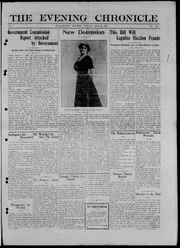
The Raymond rustler (1909-07-09)

 79
79

The Raymond rustler (1909-07-09)



Balthazar Finch (Senior Critic, Occult Philosophy): 'The Raymond Rustler' is a fascinating artifact, a temporal portal offering unexpected insights into the undercurrents of early 20th-century consciousness. While ostensibly a local gazette, its seemingly mundane reports resonate with symbolic depth for the attuned reader. The mention of 'Experimental Farms' and 'Wolf Bounty' cancellation hints at primal forces and their manipulation, while 'Indian Training' points towards ancient esoteric lineages. This is not a grimoire, but a tapestry of everyday life woven with threads of the subtly mystical. Its strength lies in its unintentional revelation of a worldview where the sacred and the profane were more intimately connected. Essential for practitioners and historians seeking the roots of modern pagan thought.
📝 Description
79
Published in July 1909, 'The Raymond Rustler' offers a unique window into early 20th-century local life infused with esoteric undertones.
This collection, originating as a local periodical from 1909, presents a curious blend of everyday affairs and subtle arcane references. Far from being a simple chronicle of its time, it contains veiled allusions to forgotten lore and emerging esoteric philosophies. Within its pages, readers encounter more than just local news; they find elements of a concealed worldview. Articles like 'Experimental Farms' suggest alchemical concepts, while the 'Wolf Bounty' cancellation could symbolize the control of wild or primal energies. The discussion of 'Noxious Weeds' appears to represent the ongoing battle against spiritual decay. 'Our Bean Cake Queen' may point to rituals concerning earthly prosperity, and 'Caught in the Ice' might refer to a period of spiritual dormancy or an esoteric trial. 'Indian Training' opens avenues to older spiritual traditions, and 'Preserving Flour' could touch upon the material grounding of spiritual nourishment.
This publication is valuable for those interested in obscure occult studies and anyone who views the boundary between the material and spiritual worlds as fluid and symbolically charged. It prompts reflection on life's recurring patterns, the unseen influences on human activities, and the persistent human drive for deeper insight.
Emerging in the early 20th century, 'The Raymond Rustler' predates much of the organized esoteric movements that would later dominate the occult revival. Its significance lies in its organic integration of esoteric thought into a seemingly mundane local context. This period saw a growing interest in spiritualism, Theosophy, and various forms of nature mysticism, and this text reflects a similar undercurrent where everyday events are reinterpreted through a symbolic, occult lens. It hints at a personal or localized esoteric practice, distinct from more formalized groups, demonstrating how occult ideas permeated society beyond dedicated circles.
💡 Why Read This Book?
Delve into a unique historical document that subtly weaves esoteric threads into everyday narratives. Discover forgotten symbolism in seemingly ordinary events, from agricultural experiments to local folklore. Ideal for seekers of hidden knowledge, students of occult history, and practitioners interested in the intersection of daily life and ancient wisdom.
⭐ Reader Reviews
Honest opinions from readers who have explored this book.
❓ Frequently Asked Questions
What is 'The Raymond Rustler'?
'The Raymond Rustler' is a collection of articles and local news from 1909, presented as a scanned periodical. It offers a unique window into the past, with content that can be interpreted through an esoteric lens.
Is this a practical guide to witchcraft?
No, it is not a practical guide. Its value lies in its historical context and the symbolic interpretations that can be drawn from its seemingly mundane content, offering insights into early 20th-century thought.
Who is the author?
The author is listed as 'Unknown,' adding to the mystique and encouraging independent interpretation of the text's origins and intent.
What historical period does it cover?
The publication date is July 9, 1909, placing it firmly in the Edwardian era, a time of significant social and technological change, and subtle shifts in spiritual and occult interests.
Can I find information on specific rituals?
Direct information on specific rituals is unlikely. However, the text provides fertile ground for understanding the cultural milieu from which such practices might have emerged or been perceived.
🔮 Key Themes & Symbolism
The Mundane as Mystical Gateway
This theme explores how 'The Raymond Rustler' transforms ordinary news into a canvas for esoteric interpretation. The cataloging of local events – from agricultural advancements to social commentaries – reveals a subtle undercurrent of symbolic meaning. The text suggests that the fabric of daily life, when viewed through a discerning eye, can serve as a gateway to deeper spiritual truths. It posits that the concerns of a small community in 1909 held elements of ancient archetypes and enduring human quests, making the seemingly commonplace a rich source of hidden knowledge for the initiated.
Elements of Ancient Wisdom
The presence of 'Indian Training' and references to 'Experimental Farms' hint at a fascination with primal forces and ancient knowledge systems prevalent in the early 20th century. This theme investigates how the text might reflect a period where traditional occultism and nascent pagan revivals were seeking to integrate or understand older spiritual practices. It suggests that the concerns of the time, such as managing 'Noxious Weeds' or understanding 'Siphon Power,' could be metaphorically linked to the ongoing spiritual battles and the harnessing of unseen energies that are central to many esoteric traditions.
The Unseen Influences on Daily Life
This theme explores the concept that external events and societal structures are influenced by forces not immediately apparent. 'The Raymond Rustler,' in its reporting on cancellations, promotions, and even social events like 'Our Bean Cake Queen,' can be read as a chronicle of these unseen influences at play. It invites readers to consider the subtle energies, collective consciousness, and perhaps even astrological alignments that might have shaped the events of that specific day in 1909, underscoring the esoteric belief that the macrocosm is reflected in the microcosm of everyday existence.
💬 Memorable Quotes
Direct passages from the work, attributed to the author.
“Facts About the Seattle Fair.”
— A seemingly innocuous statement that can be interpreted as a reflection on the societal construction of 'reality' and the potential for hidden agendas or symbolic representation within public spectacles.
“Cancellation of Wolf Bounty.”
— Symbolic of the taming of primal, untamed energies or the shifting relationship between humanity and the wild, both externally and internally.
“Our Bean Cake Queen.”
— Suggests themes of earthly abundance, the celebration of the harvest, and perhaps a feminine archetype associated with prosperity and nourishment.
“Caught in the Ice.”
— A metaphor for spiritual stagnation, a period of dormancy, or a challenging initiation that requires resilience and inner warmth to overcome.
“Preserving Flour.”
— Can be read as a lesson in spiritual sustenance, the importance of safeguarding vital energies, or the practical application of metaphysical principles to daily life.
🌙 Esoteric Significance
Tradition
While not explicitly tied to a single named tradition, 'The Raymond Rustler' appeals to the broader currents of Western esotericism prevalent in the early 20th century. Its appeal lies in its potential to be interpreted through Neoplatonic, Hermetic, and nascent Pagan revivalist lenses. The text's fragmented nature invites readers to draw connections to concepts of correspondence, the microcosm/macrocosm relationship, and the potential for symbolic meaning in everyday phenomena, characteristic of many mystery schools and occult societies of the time.
Symbolism
Key symbols emerge from the mundane: 'Experimental Farms' represent alchemical transformation and controlled growth, 'Wolf Bounty' cancellation signifies the subjugation of primal instincts or the wild unknown, and 'Noxious Weeds' evoke spiritual impurities or psychic disturbances. 'Bean Cake Queen' points to earthly fertility and abundance, while 'Caught in the Ice' suggests periods of spiritual inertia or challenge. 'Siphon Power' hints at harnessing unseen forces, and 'Preserving Flour' speaks to the safeguarding of vital life essence or spiritual sustenance.
Modern Relevance
In an age often characterized by hyper-connectivity and the overwhelming influx of information, 'The Raymond Rustler' offers a valuable counterpoint by encouraging deep, symbolic interpretation of seemingly ordinary content. Its relevance lies in its ability to foster critical thinking about the narratives we consume and to encourage the perception of hidden layers of meaning in our own lives. For modern practitioners, it serves as a reminder that esoteric wisdom can be found not only in ancient texts but also in the careful observation and thoughtful deconstruction of contemporary realities.
👥 Who Should Read This Book
This unique compilation is a treasure for several distinct groups. For the dedicated **occult historian**, it provides a rare glimpse into the vernacular thought and subtle spiritual undercurrents of the Edwardian era. **Seekers of hidden knowledge** will find fertile ground for interpretation, uncovering symbolic layers within everyday news. **Practitioners of witchcraft and paganism**, particularly those interested in historical roots, can draw inspiration from the era's zeitgeist and the potential for finding magic in the mundane. **Scholars of folklore and cultural studies** will appreciate its value as a primary source documenting local life and societal concerns, ripe for symbolic analysis. Even the **curious general reader** with an interest in the past and a penchant for the unconventional will find 'The Raymond Rustler' a captivating read.
📜 Historical Context
Published in 1909, 'The Raymond Rustler' emerges from the Edwardian era, a period of immense technological advancement, burgeoning social change, and a concurrent resurgence of interest in spiritualism, occultism, and esoteric philosophies. This was an age when figures like Aleister Crowley were active, and movements like Theosophy were gaining traction, reflecting a societal yearning for meaning beyond the material. The seemingly disparate news items within this publication – from agricultural innovations to local governance – can be viewed through the lens of this era's dual fascination with progress and the mystical. It was a time when the veil between the scientific and the spiritual was perceived as thin, and ordinary events were often imbued with deeper, symbolic significance by those seeking hidden truths.
📔 Journal Prompts
Consider the 'Experimental Farms' mentioned. What 'experiments' are you conducting in your own life, and what are their intended outcomes?
Reflect on the 'Cancellation of Wolf Bounty.' What 'wild' or untamed aspects of yourself or your environment do you feel have been 'tamed' or are being managed?
The 'Bean Cake Queen' suggests themes of abundance. What does abundance mean to you, and how do you cultivate it in your life?
What does 'Caught in the Ice' evoke in your personal or spiritual journey? Describe a time you felt stagnant and how you began to thaw.
How can the act of 'Preserving Flour' be a metaphor for safeguarding your own vital energies or spiritual resources?
🗂️ Glossary
Noxious Weeds
In an esoteric context, 'noxious weeds' can symbolize negative influences, spiritual impediments, or psychic 'parasites' that hinder growth and well-being. They represent that which is harmful or corrupting and requires careful management or removal.
Siphon Power
Refers to the harnessing or channeling of unseen energy. In a mystical sense, it could relate to drawing upon subtle forces, elemental energies, or even psychic power to achieve a desired outcome.
Indian Training
Suggests learning from indigenous or ancient wisdom traditions, often associated with deep spiritual knowledge, connection to nature, and ancestral practices. It implies a pursuit of foundational or primal forms of understanding.
Lord Mayors' Salaries
While seemingly mundane, this can symbolize discussions around power structures, societal hierarchies, and the distribution of resources, which can be interpreted through a lens of karmic balance or material manifestation.
Preserving Flour
Metaphorically represents the act of safeguarding essential sustenance, whether physical, emotional, or spiritual. It speaks to foresight, resourcefulness, and the importance of maintaining vital energies for future needs.
This book appears in 2 collections
🔮 Readers Also Liked
Browse all →







From the “Witchcraft” Collection
View all →






More Free Witchcraft & Paganism Books
View all →


![D. [i. e., Doktor] Balthasar Bekkers reformierten Predigers in Amsterdam bezauberte Welt. ... 1781: Vol 2 Iss 81](/img/thumb/d-i-e-doktor-balthasar-bekkers-reformierten-predigers-in-amsterdam-bezauberte-welt-1781-vol-2-iss-81-bekker-balthasar-1634-1698.webp)