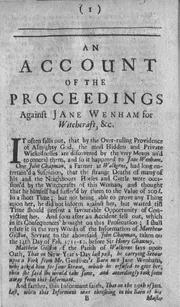
The Doctrine of devils, proved to be the grand apostacy of these later times. 1676: Iss 281

 79
79

The Doctrine of devils, proved to be the grand apostacy of these later times. 1676: Iss 281



Cassian Rothmann (Senior Critic, Ancient Wisdom) — This 1676 treatise, "The Doctrine of Devils," stands as a formidable artifact from an age deeply preoccupied with spiritual purity and the pervasive threat of infernal influence. The anonymous author marshals an impassioned, theological argument, framing contemporary societal and religious shifts as evidence of a profound 'apostacy' orchestrated by demonic powers. While its tone is undeniably polemical, the work offers invaluable insights into the eschatological anxieties and demonological frameworks prevalent in the late 17th century. It serves as a crucial primary source for scholars of religious history, occultism, and the evolution of Western thought on the spiritual battlefield. Its strength lies in its unvarnished depiction of a worldview where the unseen forces of good and evil were actively engaged in shaping human destiny.
📝 Description
79
Published in 1676, 'The Doctrine of Devils' argues that perceived spiritual corruption is a grand apostasy orchestrated by infernal forces.
This 1676 text confronts what its anonymous author saw as a spiritual decline in the late 17th century. The author frames this perceived corruption as a 'grand apostasy,' a subtle infiltration by diabolical influence that steers humanity away from divine truth. The work functions as a polemic against this perceived spiritual deviation. It examines concepts central to spiritual warfare, the mechanisms of deception, and the hidden forces the author believed were at play.
For those interested in the religious and esoteric debates of the Baroque period, this tract offers a look into a worldview that saw the spiritual and physical realms as equally active. It prompts reflection on the nature of belief, the influence of narratives, and the persistent human conflict against perceived malevolent powers. The book presents a specific, albeit fervent, perspective on the spiritual anxieties of its time.
This work emerges from a period of intense religious and spiritual speculation in England. It engages with the tradition of demonology and critiques of perceived religious corruption that were common in the 17th century. The author’s assertion of a deliberate, infernal plot behind societal and religious changes places it within a broader current of apocalyptic and millenarian thought, where hidden spiritual actors were believed to shape historical events. It reflects a worldview where unseen forces actively contested human salvation, a common theme in esoteric and heterodox Christian writings of the era.
💡 Why Read This Book?
Uncover the fervent spiritual anxieties of 17th-century Europe. "The Doctrine of Devils" offers a unique, albeit polemical, perspective on perceived religious corruption and the battle against infernal influence. Ideal for scholars of esotericism, religious history, and occult studies, as well as seekers interested in historical views on spiritual warfare and hidden knowledge.
⭐ Reader Reviews
Honest opinions from readers who have explored this book.
❓ Frequently Asked Questions
What is the central argument of "The Doctrine of Devils"?
The book argues that the perceived spiritual and societal deviations of the late 17th century represent a 'grand apostacy,' a significant falling away from divine truth, orchestrated by demonic forces.
Who is the author of this work?
The author is anonymous, a common practice for theological or controversial works of this period, adding an element of mystery to its pronouncements.
What historical period does this book represent?
This book represents the late 17th century, a time of significant religious and social upheaval in Europe, marked by intense theological debate and a heightened awareness of spiritual threats.
Is this book a purely academic text?
While valuable for academic study, it is a polemical theological tract. It presents a strong, opinionated argument rooted in the author's interpretation of spiritual realities and societal trends.
What does 'grand apostacy' mean in this context?
In this context, 'grand apostacy' refers to a widespread and profound abandonment of true religious doctrine and practice, seen as a deliberate falling away from God's path, influenced by malevolent spiritual entities.
🔮 Key Themes & Symbolism
The Grand Apostacy
This central theme posits a catastrophic spiritual decline in the era, not as a gradual erosion, but as a deliberate, orchestrated 'falling away' from divine principles. The author views contemporary religious and societal shifts through a lens of profound corruption, suggesting that the very fabric of faith has been subtly undermined by infernal powers. This perspective frames historical events not as mere human actions, but as manifestations of a cosmic spiritual battle, where allegiance to truth is under siege.
Infernal Influence and Deception
The work meticulously details the perceived methods by which 'devils' or demonic entities influence humanity. It explores the nature of spiritual deception, suggesting that these forces operate through subtle means, twisting truth, fostering discord, and luring souls away from salvation. The author likely examines symbolic interpretations of scripture and historical events to highlight these hidden machinations, presenting a worldview where the unseen realm actively shapes the visible world.
Spiritual Warfare and Discernment
Implicit in the 'Doctrine of Devils' is the concept of active spiritual warfare. The text serves as a call to arms for the faithful, urging vigilance and discernment in the face of pervasive diabolical influence. It likely provides a framework for identifying the signs of this 'apostacy' and offers theological guidance on how to resist these infernal pressures. The author's intent is to equip readers with the spiritual knowledge to navigate what they perceive as a dangerous and deceptive spiritual landscape.
💬 Memorable Quotes
Direct passages from the work, attributed to the author.
“The Serpent's subtle whisper, a prelude to the fall.”
— This evocative phrase captures the essence of insidious temptation, suggesting that the seeds of spiritual corruption are sown through quiet, persuasive falsehoods, mirroring the biblical narrative of the Fall.
“The grand apostacy, a veil upon the eye of faith.”
— This speaks to the idea that the widespread falling away obscures spiritual reality, blinding believers to the true nature of their spiritual predicament and the forces at play.
“Mark well the signs, lest ye be led astray.”
— A direct exhortation to vigilance and critical discernment, urging readers to actively seek out the indicators of spiritual deception to avoid being misled.
“The battle is not of flesh, but of the soul's decree.”
— This emphasizes the metaphysical nature of the conflict described, asserting that the ultimate struggle lies in the area of the spirit and the choices made by the soul.
💡 Key Ideas
Editorial paraphrase of the work's core concepts — not direct quotes.
When Truth doth falter, Shadows rise to reign.
This quote highlights the stark consequence of spiritual decline: the dimming of divine truth allows malevolent forces to gain dominion, leading to an era of darkness and falsehood.
🌙 Esoteric Significance
Tradition
This text aligns with the broader tradition of Christian demonology and eschatology, deeply embedded within Western religious thought. While not strictly an 'occult' text in the modern sense, its focus on the active, malevolent influence of spiritual entities and the concept of a 'grand apostacy' speaks to esoteric interests in spiritual warfare, the hidden architecture of reality, and the discernment of unseen forces. It provides a historical lens into how deeply ingrained supernatural beliefs informed societal and theological discourse.
Symbolism
The 'doctrine of devils' itself functions as a potent symbol of corruption and deception. The 'grand apostacy' symbolizes a collective spiritual failure, a deviation from the divine path. The author likely employs scriptural symbolism and allegorical interpretations to illustrate the insidious nature of infernal influence, portraying unseen forces manipulating events and minds. The very act of writing and publishing such a tract can be seen as an attempt to reveal hidden truths and symbolic patterns that indicate a world teetering on the brink of spiritual peril.
Modern Relevance
In an age often characterized by secularism and scientific rationalism, "The Doctrine of Devils" offers a stark contrast, reminding us of historical worldviews where spiritual battles were paramount. Its themes of deception, hidden influence, and the importance of discernment remain relevant. Modern readers can engage with its ideas through the lens of cultural history, understanding how past societies grappled with perceived threats to their belief systems. It also prompts reflection on contemporary forms of 'apostacy' or ideological shifts and the narratives we construct around them.
👥 Who Should Read This Book
This volume is a treasure for the dedicated scholar of religious history, particularly those focusing on 17th-century theological debates, demonology, and the history of witchcraft. Practitioners of esotericism interested in historical perspectives on spiritual warfare, angelic/demonic hierarchies, and the evolution of occult thought will find valuable context. Seekers of lost knowledge and those intrigued by the philosophical underpinnings of faith and doubt will appreciate its raw, unvarnished perspective. While beginners might find the theological language dense, those with a serious interest in the darker currents of Western thought will find it a compelling and informative read.
📜 Historical Context
Published in 1676, "The Doctrine of Devils" emerges from a period rife with theological ferment and anxieties about the spiritual state of Europe. The late 17th century was an era transitioning from the fervent religious conflicts of the Reformation and Thirty Years' War towards the Enlightenment's burgeoning rationalism. However, deep-seated beliefs in the active agency of supernatural forces, both divine and infernal, remained potent. This was a time when demonology, witchcraft accusations, and theological debates about heresy and apostasy were still very much alive. The perceived 'grand apostacy' could reflect anxieties about the rise of new philosophical ideas, lingering sectarian divisions, or a general sense of moral decay. The anonymous author's strident tone suggests a desire to warn the populace against what they saw as insidious threats to Christian orthodoxy and salvation, mirroring a broader cultural preoccupation with distinguishing true faith from dangerous error.
📔 Journal Prompts
How does the concept of a 'grand apostacy' resonate with contemporary societal trends or anxieties?
What are the 'subtle whispers' of modern-day deception, and how can one discern them?
How has the perception of 'devils' or malevolent spiritual forces evolved from the 17th century to today?
What does the author's emphasis on 'discernment' suggest about the individual's role in spiritual matters?
Consider the 'battle of the soul' – in what ways is this internal or external in your own life or understanding?
🗂️ Glossary
Apostacy
The abandonment or renunciation of a religious or political belief, principle, or allegiance. In this context, it refers to a widespread falling away from true religious doctrine and practice.
Infernal
Relating to or characteristic of hell or the underworld; fiendish. Often used to describe demonic forces or influences.
Diabolical
Belonging to or so evil as to recall the Devil. Pertaining to the nature or influence of a demon or devil.
Eschatology
The part of theology concerned with death, judgment, and the final destiny of the soul and of humankind. Often involves beliefs about the end times.
Polemical
Relating to or characteristic of arguments from a particular position. A strongly critical, controversial, or disputatious writing or speech.
This book appears in 2 collections
🔮 Readers Also Liked
Browse all →








From the “Witchcraft” Collection
View all →




More Free Witchcraft & Paganism Books
View all →