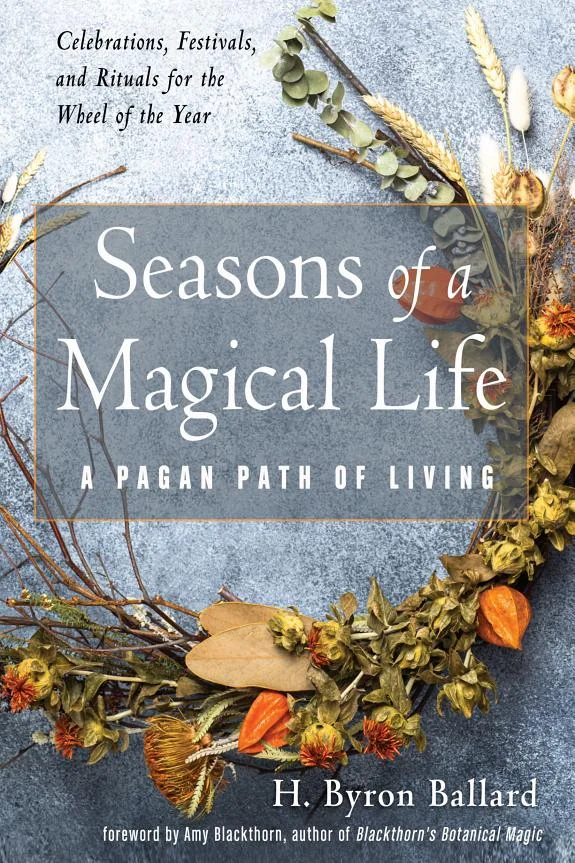
Seasons of a Magical Life
 71
71

Seasons of a Magical Life
H. Byron Ballard's "Seasons of a Magical Life" offers a welcome antidote to the fragmented spiritual landscape of the 21st century. Ballard correctly identifies the agricultural year not merely as a backdrop but as a potent source of spiritual grounding. His strength lies in his ability to present complex ideas about Earth-centered practice with accessible prose, particularly in his discussions of pre-industrial life. The work thoughtfully explores the historical context of seasonal festivals, grounding them in agrarian realities rather than purely abstract esotericism. However, the book occasionally leans into a romanticized view of the past, which, while understandable, could benefit from more direct engagement with the harsher realities of pre-industrial existence. A particularly resonant section discusses the "back stories" of festivals, providing a much-needed historical anchor. Ultimately, "Seasons of a Magical Life" is a valuable resource for anyone seeking to reconnect with natural cycles and imbue their lives with a deeper sense of seasonal meaning.
📝 Description
71
H. Byron Ballard's 2021 book reorients spiritual practice around the agricultural year.
Seasons of a Magical Life connects spiritual practice to the turning of the agricultural year. Ballard uses the cycles of farming and the seasons as the basis for an Earth-centered spirituality. The book aims to bridge the gap between a pre-industrial past and our current, often disconnected, modern world. It offers a way to find peace from the fast pace of contemporary life by building a stronger connection to nature and the traditional festivals that mark its progression.
This work is for people who feel disconnected from nature and seek a more grounded spiritual path. It will appeal to those interested in Earth-based spirituality, paganism, Wicca, or any tradition that respects the cycles of the year. Readers wanting a slower pace, a link to ancestral practices, and a more meaningful engagement with seasonal celebrations will find value here. It is especially suited for those in Western cultures who wish to understand the importance of seasonal observances.
This book emerges from nature-based spiritual movements of the late 20th century, drawing on figures like Gerald Gardner and the rise of Wicca. Ballard's work, however, focuses on the agricultural and folk roots that predate organized witchcraft. He finds parallels in earlier European folk traditions and their connection to the land. The book fits into a current revival of interest in animism and ecological spirituality, providing a practical way to incorporate these ideas into daily life.
💡 Why Read This Book?
• You will learn how to use the agricultural year as a practical framework for spiritual deepening, moving beyond abstract concepts to tangible seasonal observances, as detailed in the book's exploration of "pageantries of the year." • You will gain an understanding of "back stories" to seasonal festivals, enriching your appreciation for their historical roots and connection to agrarian life, offering a unique perspective absent in purely modern spiritual guides. • You will feel a renewed connection to the natural world and the rhythms of the Earth, finding solace from modern stress by engaging with the cyclical celebrations Ballard outlines, directly inspired by the turning of the seasons.
⭐ Reader Reviews
Honest opinions from readers who have explored this book.
❓ Frequently Asked Questions
What is the primary focus of "Seasons of a Magical Life"?
The book focuses on using the agricultural year and seasonal cycles as a starting point for deepening Earth-centered spirituality. It explores how connecting with natural rhythms and traditional festivals can provide a more grounded spiritual practice.
Who is H. Byron Ballard?
H. Byron Ballard is an author whose work centers on Earth-based spirituality and the integration of natural cycles into modern life. "Seasons of a Magical Life" is a key text in his exploration of these themes.
What does Ballard mean by "back stories" for festivals?
Ballard uses "back stories" to refer to the historical, mythological, and agrarian contexts that give seasonal festivals their original meaning. Understanding these narratives helps readers connect more deeply with the purpose behind celebrations.
How does the book address modern stress?
It suggests that by reconnecting with the natural world and participating in seasonal pageantry, individuals can find a counterbalance to the fast-paced, often disconnected nature of modern American life, fostering a sense of calm and presence.
Is this book suitable for beginners in Earth-centered spirituality?
Yes, the book is designed to ease readers into Earth-centered spirituality by providing accessible narratives and practical applications related to the familiar cycle of the year.
When was "Seasons of a Magical Life" first published?
The book was first published in 2021, making it a relatively contemporary exploration of these ancient themes.
🔮 Key Themes & Symbolism
The Agricultural Year
This theme centers on understanding the agricultural calendar not just as a record of farming but as a profound spiritual map. Ballard emphasizes how the cycles of planting, growth, harvest, and dormancy directly mirror and inform human spiritual experience. By aligning personal practice with these natural rhythms, readers are encouraged to find a more grounded and authentic connection to the Earth and its inherent energies. This perspective moves spirituality from an abstract concept to a lived reality tied to the land's cycles.
Earth-Centered Spirituality
Ballard champions a form of spirituality deeply rooted in the Earth and its processes. This approach contrasts with more celestial or disembodied spiritual paths, focusing instead on immanence—the divine present within the natural world. It involves reverencing the elements, the seasons, and the interconnectedness of all living things. The book provides practical ways to cultivate this reverence, moving beyond mere appreciation to active participation in the Earth's cycles and festivals.
Seasonal Festivals and Pageantry
The book explores the "pageantries of the year," highlighting the significance of festivals like solstices, equinoxes, and harvest celebrations. Ballard argues that these events are not just historical relics but vital opportunities for community and personal spiritual expression. By understanding the "back stories" of these festivals, readers can re-engage with them in a meaningful way, fostering a sense of continuity with past traditions and a deeper connection to the present moment's natural unfolding.
Bridging Past and Present
A core concern of the book is bridging the gap between a pre-industrial past, where life was intrinsically tied to natural cycles, and the often disconnected modern era. Ballard seeks to offer a way to integrate the wisdom of older, agrarian societies into contemporary life, providing a framework to counteract the stress and alienation of the 21st century. This involves reinterpreting and reclaiming ancestral connections to the land and seasons.
💬 Memorable Quotes
Direct passages from the work, attributed to the author.
“The agricultural year as a starting point for a deepening of Earth-centered spirituality.”
— This core concept frames the entire book, positioning the farmer's calendar not as a mundane schedule but as a sacred text. It suggests that the practical realities of sowing and reaping hold profound spiritual lessons applicable to all seeking a connection to the Earth.
“A set of back stories to ease the reader into a time between the pre-Industrial Era and the uncertainty of the modern one.”
— Ballard aims to provide historical and cultural context for seasonal observances. These 'back stories' serve as an accessible bridge, helping readers understand the origins and deeper meanings of festivals lost in the transition to industrialized society.
“Into a place where the fast-moving stress of American life can be affected by a better connection to not only the natural world but also the pageantries of the year.”
— This highlights the book's practical application: offering a therapeutic pathway out of modern anxieties. By reconnecting with nature and engaging in seasonal celebrations, the reader can find a more balanced and meaningful existence.
“The pageantries of the year as expressed through seasonal festivals and celebrations.”
— This phrase emphasizes the active, celebratory, and communal aspect of engaging with the seasons. It suggests that spirituality is not just internal but is expressed outwardly through ritual, gathering, and acknowledging the Earth's turning.
“The original publication date of 2021 places this work within contemporary discussions on ecological spirituality.”
— While not a direct quote from the narrative, this factual statement contextualizes the book's release. It situates Ballard's ideas within current conversations about environmentalism, paganism, and the search for meaning in a rapidly changing world.
🌙 Esoteric Significance
Tradition
This work aligns with contemporary Earth-centered and Neopagan traditions, particularly those emphasizing seasonal cycles and animistic worldviews. While not strictly Hermetic, it shares a philosophical kinship in its focus on macrocosm-microcosm correspondences – the idea that the cycles of the Earth (macrocosm) are reflected in human life and spiritual development (microcosm). It departs from more ritualistic or dogmatic systems by grounding spirituality in the tangible, observable processes of the natural world.
Symbolism
Key symbols include the agricultural implements (plow, scythe) representing human interaction with and stewardship of the land, and the celestial markers (sun, moon) governing the agricultural calendar. The turning wheel of the year, representing the solstices and equinoxes, symbolizes cosmic order, cyclical renewal, and the inherent dynamism of life, death, and rebirth within nature.
Modern Relevance
Contemporary thinkers and practitioners focused on ecological spirituality, permaculture ethics, and rewilding movements find resonance in Ballard's work. His emphasis on practical, Earth-bound spirituality offers a counterpoint to technologically mediated experiences and abstract belief systems, providing a framework for those seeking embodied connection and a sense of place in the modern world.
👥 Who Should Read This Book
• Individuals seeking to deepen their connection to nature and the Earth's cycles: This book offers a practical framework for understanding and celebrating the agricultural year, providing tools to move beyond abstract spirituality. • Practitioners of Neopaganism and Wicca looking for historical and agrarian context: Readers interested in the roots of seasonal festivals and their connection to pre-industrial life will find valuable "back stories" and grounding. • Those feeling alienated by modern life and seeking spiritual solace: The book provides a pathway to reconnect with natural rhythms, offering a counter-balance to the stress and pace of contemporary existence through seasonal pageantry.
📜 Historical Context
Published in 2021, "Seasons of a Magical Life" arrives amidst a burgeoning modern interest in Earth-based spiritualities, drawing from traditions that gained prominence in the mid-20th century, such as Wicca and various Neopagan movements. Ballard's work, however, deliberately roots itself in the pre-industrial agricultural cycle, a practice deeply embedded in European folk cultures for millennia. This approach distinguishes it from some contemporary paganism that may focus more on mythological pantheons or ritualistic magic divorced from agrarian realities. The book engages with a lineage that values immanence and the sacredness of the natural world, echoing earlier thinkers who sought to reconnect with nature's cycles. While not directly engaging in public debates or facing censorship, its publication reflects a broader cultural current seeking alternatives to secular materialism and abstract religiosity, aligning with thinkers and practitioners who emphasize ecological consciousness and embodied spiritual experience.
📔 Journal Prompts
The agricultural year's alignment with personal spiritual growth.
Reflections on the "back stories" of a favorite seasonal festival.
Connecting with the natural world through a specific seasonal celebration.
Counterbalancing modern stress with Earth-centered practices.
The symbolism of the turning wheel of the year in daily life.
🗂️ Glossary
Earth-centered spirituality
A spiritual path that emphasizes reverence for the Earth, its natural cycles, and the interconnectedness of all living things, often contrasted with religions focused on a transcendent deity or afterlife.
Agricultural year
The cycle of farming activities, including planting, growing, harvesting, and fallow periods, which dictates the rhythm of life in agrarian societies and serves as a basis for seasonal spiritual practices.
Pre-Industrial Era
The period before the widespread adoption of industrial manufacturing and technology, characterized by agrarian economies where human life was closely tied to natural cycles and seasons.
Pageantries of the year
Refers to the festivals, celebrations, and observances that mark the passage of the seasons throughout the year, emphasizing their communal and performative aspects.
Back stories
The historical, mythological, and cultural narratives that provide context and meaning to seasonal festivals and traditions, helping to connect contemporary practice to its roots.
Seasonal festivals
Celebrations that occur at specific points in the year, such as solstices, equinoxes, and harvest times, often tied to agricultural cycles and natural phenomena.
Modern stress
The psychological and physiological strain resulting from the demands, pace, and disconnect often experienced in contemporary industrialized societies.
This book appears in 1 collection
🔮 Readers Also Liked
Browse all →





From the “Neopaganism” Collection
View all →








More Free Witchcraft & Paganism Books
View all →


![D. [i. e., Doktor] Balthasar Bekkers reformierten Predigers in Amsterdam bezauberte Welt. ... 1781: Vol 2 Iss 81](/img/thumb/d-i-e-doktor-balthasar-bekkers-reformierten-predigers-in-amsterdam-bezauberte-welt-1781-vol-2-iss-81-bekker-balthasar-1634-1698.webp)