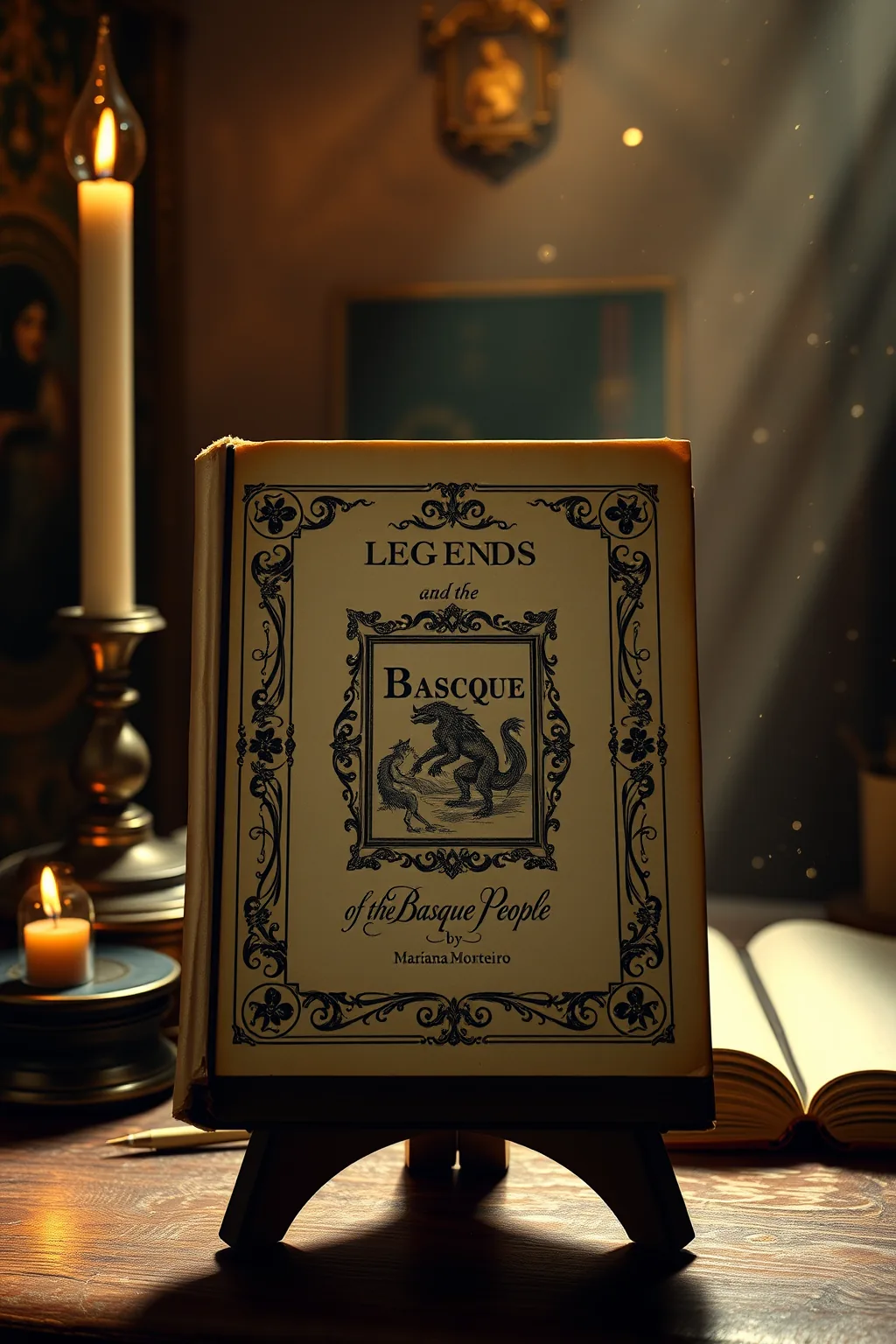
Legends and Popular Tales of the Basque People
 75
75

Legends and Popular Tales of the Basque People


Mariana Monteiro's 'Legends and Popular Tales of the Basque People' is an indispensable grimoire for any serious student of European esoteric traditions. Published in 1887, it offers an unparalleled glimpse into the pre-Christian spiritual cosmology of the Basque people, a culture famously resistant to assimilation. Monteiro masterfully collects tales of witchcraft, elemental beings like the Maitagarri, and ancient prophecies, revealing a complex animistic worldview. The inclusion of chapters like 'Aquelarre' and 'The Song of Lamia' provides invaluable insights into folk magic and the archetypal feminine divine. This is not mere folklore; it is a repository of living myth, vital for understanding the roots of Western occultism and the enduring power of indigenous spiritual practices. An authoritative and essential read.
📝 Description
75
Mariana Monteiro's 1887 collection gathers Basque legends, revealing ancient beliefs and rituals.
Mariana Monteiro's 'Legends and Popular Tales of the Basque People,' first published in 1887, is a compilation of stories from the Basque region. The book collects narratives that touch upon witchcraft, elemental spirits, and heroic sagas. It includes accounts of the Aquelarre, or witch's sabbath, and tales concerning the Lamia, mythical water spirits. Monteiro also records stories related to Roldan's Bugle-Horn, linking them to ancient forces and ancestral knowledge.
The stories in the collection are presented with an emphasis on their atmospheric quality and connection to nature. They draw on archetypes that influence human understanding. The book aims to show a perspective where the separation between the physical and spiritual worlds is less distinct, and where the sacred is present in everyday life.
This 1887 collection falls within the late 19th-century European interest in folklore and comparative mythology. It engages with the idea of preserving supposedly ancient, indigenous spiritual traditions before they were lost to modernization. The focus on witchcraft, elemental spirits, and the perceived thinness of the veil between worlds aligns with broader occult and esoteric currents of the period, which sought hidden knowledge in folk beliefs and marginalized cultures.
✍️ Author
Mariana Monteiro
Porfírio Pardal Monteiro (1897–1957) was a Portuguese architect and university professor, considered one of the most important architects of the first half of the 20th century in Portugal. Along with other architects, who included Cottinelli Telmo, Carlos …
💡 Why Read This Book?
Uncover the deep mystical roots of the Basque culture, a lineage often overlooked in mainstream historical accounts. This book is essential for seekers of esoteric knowledge, folklorists, and practitioners interested in ancient European magic and animistic traditions. Explore tales of witchcraft, elemental spirits, and prophecies that offer profound insights into humanity's connection with the unseen world.
⭐ Reader Reviews
Honest opinions from readers who have explored this book.
❓ Frequently Asked Questions
What is the historical significance of this collection?
Published in 1887, this collection captures a crucial period of ethnographic interest in preserving indigenous traditions before they were fully assimilated. It offers a valuable snapshot of Basque folklore and belief systems at a time when oral traditions were still potent, providing an invaluable historical and cultural record.
Are the tales presented as factual accounts or folklore?
The tales are presented as legends and popular traditions, offering a window into the belief systems, fears, and aspirations of the Basque people. While not presented as historical fact, they hold profound cultural and psychological truths about their worldview.
What is the 'Aquelarre' mentioned in the book?
The Aquelarre refers to the witches' sabbath or gathering, a common theme in folklore and witch trials across Europe. In the context of Basque legends, it often implies secret meetings, potent rituals, and communion with supernatural forces.
Who are the 'Lamia' in Basque mythology?
Lamia are mythical beings, often depicted as female spirits associated with water, fertility, and sometimes seductive danger. Their songs and presence are central to several tales, reflecting ancient beliefs about nature spirits and their influence on human lives.
Is this book suitable for beginners interested in mythology?
Yes, the book serves as an excellent introduction to a less-explored area of European mythology. The narrative style is engaging, making it accessible for those new to folklore and esoteric studies, while still offering depth for experienced researchers.
🔮 Key Themes & Symbolism
The Animistic Worldview of the Basques
This collection deeply explores the Basque people's profound connection to the natural world, revealing an animistic cosmology where spirits inhabit mountains, rivers, and forests. Tales of elemental beings, nature deities, and the sacred power of the land underscore a worldview where the divine is immanent, not transcendent. It highlights the ancient belief that all of existence is interconnected and imbued with sentient energy, a perspective vital for understanding earth-based spiritual practices and the magic inherent in the wild.
Elements of Ancient Witchcraft and Folk Magic
Monteiro's work is a valuable collection for those interested in the history and practice of witchcraft and folk magic. Chapters like 'Aquelarre' offer vivid, albeit folkloric, depictions of ritualistic gatherings, supernatural pacts, and the feared power of sorcery. The book looks at the symbolic language of spells, curses, and protective charms, providing insights into the practical application of esoteric knowledge for influencing the material world and navigating spiritual threats. It illuminates the enduring human fascination with mastering the unseen.
Heroic Sagas and Prophetic Visions
Beyond the mystical, the collection preserves a rich tradition of heroic sagas and prophetic narratives. Tales of figures like Jaun-Zuria, Prince of Erin, and the 'Prophecy of Lara' speak to themes of destiny, leadership, and the cyclical nature of history. These stories often carry layers of symbolic meaning, hinting at cosmic alignments, the influence of celestial events, and the guiding hand of fate. They reveal a culture that looked to its past heroes and seers for wisdom and guidance, understanding the present through the lens of ancient foretellings.
💬 Memorable Quotes
Direct passages from the work, attributed to the author.
“The mountain is alive, and its voice is the wind.”
— This evocative phrase captures the animistic spirit of Basque beliefs, suggesting a world where nature itself possesses consciousness and communicates with humanity through natural phenomena.
“The Aquelarre whispers truths the daylight fears.”
— This suggests that the clandestine gatherings of witches hold a forbidden or suppressed knowledge, often associated with the darker or more primal aspects of existence.
“Roldan's horn sounds not for battle, but for the awakening of the soul.”
— This interpretation imbues a legendary artifact with spiritual significance, implying that its call is not for earthly conflict but for inner transformation and enlightenment.
“The white lily blooms where the veil is thinnest.”
— Symbolizing purity and spiritual attunement, the white lily's appearance signifies places or moments where the boundary between the physical and spiritual realms is permeable.
💡 Key Ideas
Editorial paraphrase of the work's core concepts — not direct quotes.
Where the Lamia sings, the waters remember ancient secrets.
This quote highlights the deep connection between mythical beings, the elemental power of water, and the preservation of hidden, primordial knowledge within the landscape.
🌙 Esoteric Significance
Tradition
This collection deeply appeals to the tradition of European folk magic and animism, predating and often coexisting with more formal magical systems. It offers insights into the 'old ways' – the earth-based spirituality, nature worship, and elemental magic that formed the bedrock of many pre-Christian belief systems. The emphasis on local spirits, sacred landscapes, and the inherent power within natural phenomena connects it to shamanic practices and the veneration of the divine feminine, as exemplified by figures like the Lamia.
Symbolism
The symbolism in these tales is rich and multi-layered. Mountains and rivers often represent primal forces and ancient knowledge, while specific mythical creatures like the Maitagarri symbolize elemental energies or the complex nature of desire and attraction. The Aquelarre, beyond its literal interpretation, symbolizes the hidden, often feared, aspects of the collective unconscious and the power of transformative ritual. The white lily, a recurring motif, represents purity, spiritual awakening, and the liminal spaces between worlds.
Modern Relevance
In an age increasingly disconnected from nature and indigenous wisdom, these tales offer a vital reminder of our interconnectedness with the Earth and the unseen forces that govern it. The exploration of animism and folk magic provides practical frameworks for modern practitioners seeking to reconnect with nature-based spirituality and reclaim ancestral knowledge. The enduring archetypes within these legends also offer profound psychological insights, speaking to timeless human experiences of courage, fear, desire, and the search for meaning.
👥 Who Should Read This Book
This collection is a vital resource for a diverse audience. **Beginners** seeking an accessible yet profound entry into European mythology will find the narrative engaging and informative. **Scholars of folklore, mythology, and comparative religion** will appreciate its ethnographic value and the unique perspective it offers on Basque culture. **Esoteric practitioners and occultists** will discover a rich source of inspiration for understanding ancient magical practices, animistic traditions, and archetypal symbolism. **Spiritual seekers** drawn to earth-based spirituality, the power of nature, and the mysteries of the unseen will find resonance with the deep connection to the land and its inherent magic.
📜 Historical Context
Published in 1887, Mariana Monteiro's 'Legends and Popular Tales of the Basque People' emerged during a period of intense interest in folklore and ethnography across Europe. The late 19th century saw a burgeoning awareness of the value of preserving indigenous cultures and oral traditions, often viewed as remnants of a more authentic, pre-industrial past. This era was also marked by a romantic fascination with the 'primitive' and the 'exotic,' leading scholars and writers to document the myths, beliefs, and customs of societies perceived as untouched by modernity. Monteiro's work aligns with this movement, aiming to safeguard the unique spiritual heritage of the Basque people, a culture known for its distinct language and enduring traditions, against the homogenizing forces of nationalism and industrialization. The book reflects a desire to understand the 'soul' of a nation through its foundational stories, often imbuing these tales with a mystical or esoteric significance.
📔 Journal Prompts
Reflect on a time you felt a strong connection to a natural landscape. What 'voice' did it seem to have?
Consider the concept of a 'Lamia' in your own life or modern society. What does this archetype represent?
If you could attend an 'Aquelarre' (metaphorically), what hidden truths would you hope to uncover?
How does the legend of Roldan's Bugle-Horn inspire you to 'awaken' something within yourself?
Imagine a 'white lily' blooming in your life. What does it signify in terms of spiritual clarity or transition?
🗂️ Glossary
Aquelarre
The Basque term for a witches' sabbath or gathering, often associated with secret rituals, pacts with supernatural entities, and potent magic. It symbolizes clandestine spiritual or magical practices.
Arguiduna
A mythical being or spirit often associated with protection, guidance, or perhaps a specific type of elemental force within Basque folklore, though its exact nature can vary in interpretation.
Maitagarri
A mythical creature in Basque folklore, often depicted as a seductive female spirit associated with water, fertility, and sometimes danger or enchantment. It embodies primal desires and elemental allure.
Lamia
A type of mythical water spirit or creature in Basque and broader Iberian mythology, often possessing enchanting qualities and connected to rivers, springs, and the wilder aspects of nature.
Jaun-Zuria
A significant legendary figure in Basque history, often considered the first Lord of Biscay. His tales typically involve heroic deeds, leadership, and the establishment of Basque identity and sovereignty.
This book appears in 1 collection
🔮 Readers Also Liked
Browse all →









From the “Transcendental Meditation” Collection
View all →







More Free Esoteric History & Biography Books
View all →