Augustine's Theology of Angels
 82
82

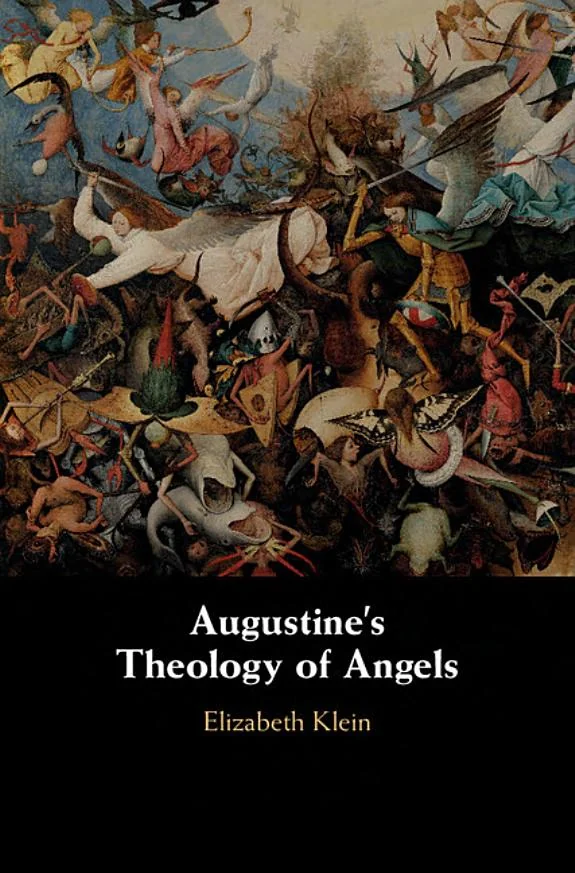
Augustine's Theology of Angels
Elizabeth Klein's Augustine's Theology of Angels provides a much-needed, structured exploration of a crucial, yet often fragmented, aspect of the Hippo bishop's thought. Klein successfully isolates Augustine's doctrines on celestial beings, presenting them with admirable clarity. The strength of the work lies in its methodical dissection of Augustine’s voluminous corpus, allowing readers to grasp his multifaceted view of angels not as isolated theological curiosities, but as integral to his cosmology and soteriology. The chapter on "Angels in salvation history" is particularly well-executed, demonstrating how Augustine saw angelic agency woven throughout divine providence. A minor limitation is that the "spiritual warfare" section, while informative, could benefit from deeper engagement with Augustine's own explicit engagement with Manichaean dualism, a significant influence on his thought. Nonetheless, Klein offers a solid scholarly contribution that illuminates a complex theological landscape. This book is an indispensable resource for anyone studying Patristic angelology.
📝 Description
82
Elizabeth Klein's 2018 book examines Augustine of Hippo's doctrines on celestial beings.
Augustine's Theology of Angels by Elizabeth Klein offers a focused examination of the Angelic Doctor's perspective on celestial beings. Published in 2018, this work distills Augustine of Hippo's extensive writings to present a cohesive understanding of his doctrines concerning angels. It moves beyond simple descriptions to analyze their roles in creation, their communal structures, their involvement in divine history, and their function in spiritual combat. The book clarifies a complex theological subject that has interested thinkers for centuries.
This volume is intended for students of theology, church history, and classical philosophy, particularly those interested in the Patristic era. Scholars and practitioners of esoteric traditions seeking to understand the roots of angelic lore within Western Christianity will find it valuable. Readers who engage with Augustine of Hippo and wish to isolate and analyze his teachings on specific spiritual entities will benefit from Klein's systematic approach. It provides a scholarly, detailed treatment of the subject.
The study of angels has a long history, predating Christianity and evolving through the Patristic period. Augustine of Hippo (354-430 AD) wrote during a time when Neo-Platonism was a strong philosophical influence, shaping early Christian cosmological views. His angelology occurred within the context of classical philosophy and emerging Christian doctrine, reconciling scriptural accounts with philosophical reasoning. Klein situates Augustine's contributions within this intellectual environment, examining how his ideas interacted with contemporary trends.
Augustine's views on angels, shaped by Neo-Platonism and early Christian thought, form a key part of Western esoteric traditions. His integration of philosophical reasoning with scriptural accounts laid groundwork for later mystical and contemplative practices concerning angelic hierarchies and their influence. This book situates those foundational ideas within their historical and intellectual context, making them accessible to those interested in the lineage of angelic lore and its impact on mystical thought.
💡 Why Read This Book?
• Learn how Augustine of Hippo (354-430 AD) integrated Neo-Platonic concepts into his doctrine of angelic creation, a departure from earlier Christian thought. • Understand the Augustinian framework for "Angelic community," exploring his views on their hierarchy and communal existence, a concept distinct from later medieval angelologies. • Grasp Augustine's perspective on "Spiritual warfare," specifically his views on angelic resistance to demonic forces as presented in his extensive theological works.
⭐ Reader Reviews
Honest opinions from readers who have explored this book.
❓ Frequently Asked Questions
What is the primary focus of Augustine's Theology of Angels?
The book focuses on Augustine of Hippo's teachings about angels, examining their creation, community, role in salvation history, and involvement in spiritual warfare, as compiled and analyzed by Elizabeth Klein.
When was Augustine's Theology of Angels first published?
Augustine's Theology of Angels by Elizabeth Klein was first published on April 12, 2018.
Which historical figure's angelology does this book examine?
The book specifically examines the angelology of Augustine of Hippo, a prominent theologian and philosopher of the Patristic era (354-430 AD).
What are some of the key themes covered regarding angels in Augustine's thought?
Key themes include angels' participation in creation, their internal community and hierarchy, their function within salvation history, and their role in the ongoing struggle against demonic forces.
Who would find Augustine's Theology of Angels most useful?
Students of theology, church history, classical philosophy, and esoteric traditions interested in Patristic thought and the development of angel lore will find this book particularly useful.
What is the relationship between Augustine's angelology and Neo-Platonism?
The book explores how Augustine's views on angels were influenced by Neo-Platonism, particularly concerning their spiritual nature and their place in the created order.
🔮 Key Themes & Symbolism
Angelic Creation and Nature
This theme scrutinizes Augustine's foundational doctrines regarding the origin and essence of angels. It posits them as purely spiritual beings, created by God prior to or alongside the material universe. Klein's analysis highlights Augustine's efforts to distinguish angelic existence from both the corporeal realm and the divine essence itself. The work studies how Augustine utilized philosophical concepts, particularly from Neo-Platonism, to articulate the created status of these celestial intelligences, emphasizing their dependence on God and their role as intermediaries in the divine economy.
Angelic Community and Hierarchy
The book examines Augustine's conceptualization of the angelic realm not as solitary entities but as a structured community. It explores his understanding of angelic orders, ranks, and their internal relationships, often drawing parallels to ecclesiastical structures. This section investigates how Augustine perceived the angels' collective worship and service to God, and their interaction within a divinely ordained hierarchy. The work considers the implications of this communal aspect for understanding their function in the cosmic order and their relationship with humanity.
Angels in Salvation History
This theme focuses on the active role Augustine attributed to angels throughout redemptive history. It traces their involvement from the initial angelic rebellion and the Fall of Lucifer to their function as divine messengers, guardians, and agents of God's plan for humanity. Klein's analysis emphasizes how Augustine viewed angels as instrumental in conveying divine will, protecting the faithful, and participating in the unfolding drama of salvation, thereby integrating them into the core narrative of Christian theology.
Augustine and Spiritual Warfare
Here, the book addresses Augustine's robust doctrine of spiritual warfare, detailing the ongoing cosmic conflict between angelic forces and demonic powers. It examines how Augustine understood the angels' role in resisting evil, protecting individuals and the Church from demonic influence, and their participation in the ultimate triumph of God. The work explores Augustine's theological framework for understanding the spiritual battlefield and the enduring relevance of angelic assistance in this struggle.
💬 Memorable Quotes
Direct passages from the work, attributed to the author.
“Angels are spiritual substances, created by God, distinct from His own being.”
— This statement expresses Augustine's fundamental view of angels as created entities, emphasizing their non-material nature and absolute dependence on the Creator, differentiating them from God Himself.
“Angels served as messengers, announcing God's will throughout salvation history.”
— This interpretation reflects Augustine's understanding of angels as key conduits of divine revelation, playing a central role in communicating God's plans and interventions from biblical times onward.
“The struggle against demonic forces involves the active participation of angelic powers.”
— This concept points to Augustine's view of a cosmic spiritual battle where angels are not passive observers but active combatants aligned with God against the forces of evil.
“Augustine differentiated angelic intellects from the created material cosmos.”
— This highlights Augustine's philosophical distinction between the incorporeal, intellectual field of angels and the material world, a key aspect of his metaphysical framework.
💡 Key Ideas
Editorial paraphrase of the work's core concepts — not direct quotes.
The angelic community mirrors divine order and participates in God's ongoing creation.
This paraphrased concept highlights Augustine's belief that the structure and harmony within the angelic realm reflect God's perfect order, and that angels continue to serve God's purposes in the world.
🌙 Esoteric Significance
Tradition
Augustine's theology, while fundamentally orthodox Christian, provides foundational concepts that later Hermetic and esoteric traditions have engaged with and reinterpreted. His hierarchical structuring of the spiritual cosmos and the concept of intelligences mediating between the divine and material realms resonate with Hermetic principles. While not Gnostic, his emphasis on spiritual understanding and the existence of a hidden order aligns with esoteric concerns. His work serves as a critical reference point, offering a classical articulation of angelic existence that esotericists often seek to understand, contextualize, or build upon.
Symbolism
The concept of the "Angelic Hierarchy" is a key symbol, representing a divinely ordained structure of spiritual beings that mirrors cosmic order. Augustine's discussion of angels as "spiritual light" or "rational creatures" further symbolizes their intermediary role, bridging the infinite divine and the finite material. The idea of "Spiritual Warfare" symbolizes the ongoing cosmic conflict between good and evil, where angels embody divine agency and protective forces against demonic influence.
Modern Relevance
Contemporary esoteric practitioners, particularly those within Western Hermeticism, ceremonial magic, and certain New Age spiritualities, often reference Augustinian concepts when discussing angelic correspondences and spiritual hierarchies. Thinkers and authors exploring comparative angelology or seeking to understand the historical roots of Western spiritual traditions frequently cite Augustine. His framework for understanding spiritual beings continues to inform discussions on intercession, angelic guidance, and the structure of unseen realities in modern occult studies.
👥 Who Should Read This Book
• Students of Patristic theology and Church history seeking a scholarly analysis of Augustine's views on celestial beings. • Practitioners of Western esoteric traditions interested in the historical development of angel lore and its theological underpinnings. • Comparative religion scholars examining the evolution of angelology across different philosophical and religious frameworks.
📜 Historical Context
Augustine of Hippo (354-430 AD) wrote during a key era for Christian theology, deeply influenced by the philosophical currents of late antiquity. His angelology emerged within a landscape where Neo-Platonism, particularly the thought of Plotinus, offered sophisticated models of spiritual hierarchies and emanation that Christian thinkers adapted. Augustine engaged with these ideas while formulating doctrines that would shape Western thought for centuries. His work on angels occurred alongside the development of other significant theological systems, such as those of the Cappadocian Fathers in the East, who also explored angelic nature and function. While Augustine's writings became foundational, his nuanced positions sometimes contrasted with simpler, more folkloric understandings of angels prevalent at the time. His intellectual rigor and integration of philosophical reasoning into biblical exegesis solidified his authority, though his comprehensive systematic theology would be more fully realized by later medieval scholastics.
📔 Journal Prompts
Augustine's concept of the "Angelic community" and its implications for understanding divine order.
The function of angels in "Salvation History" according to Augustine's framework.
Augustine's view of "Spiritual warfare" and the role of angelic opposition to demonic forces.
Augustine's philosophical influences on his understanding of angelic nature.
The creation of angels: Augustine's arguments for their temporal existence.
🗂️ Glossary
Patristic Era
The period in Christian history from the 1st to the 8th centuries AD, characterized by the writings and teachings of the early Church Fathers, including Augustine of Hippo.
Neo-Platonism
A philosophical school that flourished in the Roman Empire, particularly influential in the 3rd century AD, emphasizing a hierarchical cosmology stemming from a supreme, ineffable 'One'.
Angelology
The theological study of angels, concerning their nature, origin, function, and place within religious or metaphysical systems.
Soteriology
The branch of Christian theology dealing with the doctrine of salvation, particularly the means by which humans are saved from sin and its consequences.
Corporeal
Relating to or having a physical body; material.
Incorporeal
Not having a physical body; spiritual or abstract.
Demonic Forces
In theological contexts, malevolent spiritual entities or powers, often seen as fallen angels, that oppose divine will and seek to corrupt humanity.
This book appears in 1 collection
🔮 Readers Also Liked
Browse all →








From the “Angelology” Collection
View all →


More Free Esoteric History & Biography Books
View all →