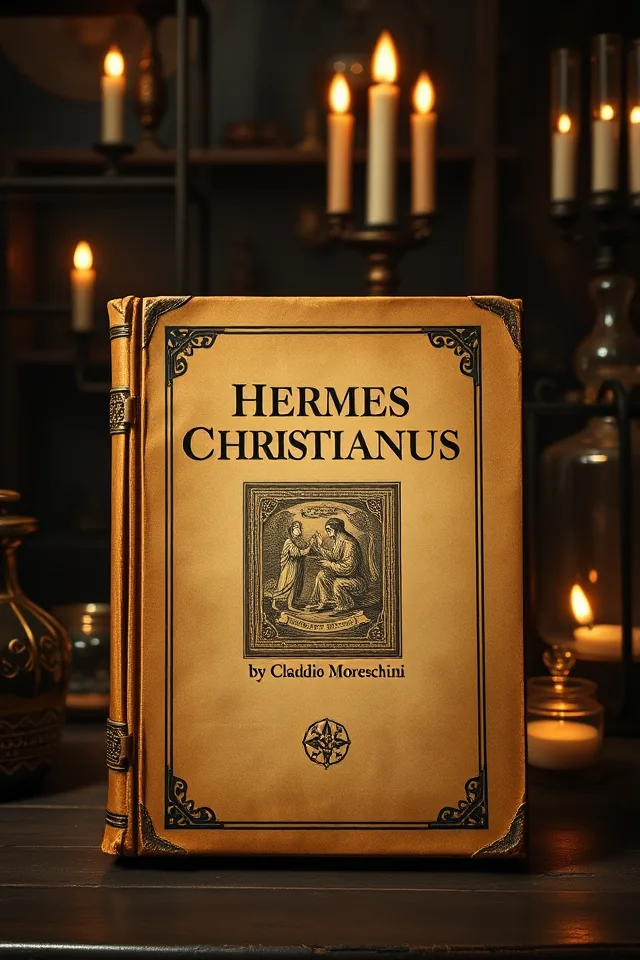
Hermes Christianus
 61
61

Hermes Christianus


Review by Ophelia Vance (Mystical Literature Reviewer) — Hermes Christianus by Claudio Moreschini is a masterful blend of Hermetic and Christian mysticism. Moreschini's deep scholarship and evocative prose make this book a treasure trove for those interested in the esoteric underpinnings of early Christian thought. The author's insights into the symbolism and hidden meanings within Hermetic texts are particularly illuminating, providing a fresh perspective on the interconnectedness of these ancient traditions. This book is essential reading for anyone seeking to understand the mystical foundations of Western spirituality.
📝 Description
61
Claudio Moreschini's Hermes Christianus examines the overlap between Hermeticism and Christianity.
Published in 2015, Claudio Moreschini's Hermes Christianus examines the complex relationship between Hermetic philosophy and early Christianity. Moreschini traces the lineage of Hermetic thought from its ancient Egyptian and Hellenistic roots into its reception and adaptation by Christian thinkers in late antiquity.
The book details how figures like Hermes Trismegistus influenced Christian theology and mysticism. It analyzes the shared symbolic language and theological concepts that connected these seemingly disparate traditions. Moreschini's work illuminates the intellectual currents that allowed for the integration of pagan philosophical ideas within a Christian framework.
This study is suited for those interested in the history of esoteric thought and its impact on Western religious traditions. It provides a scholarly look at how ancient philosophical systems were reinterpreted and absorbed by emerging religious movements.
Hermes Christianus situates itself within the study of esoteric traditions that sought to harmonize disparate philosophical and religious systems. It specifically addresses the historical phenomenon of Gnosticism and Neoplatonism's influence on early Christian thought, particularly where Hermetic texts were seen as precursors or parallel revelations. Moreschini's work is part of a broader academic effort to understand how 'esoteric' or 'occult' currents were not marginal but often integral to the development of mainstream Western religious and philosophical history.
💡 Why Read This Book?
Why read this book? Hermes Christianus is a must-read for seekers of hidden knowledge, scholars of religious history, and practitioners of the occult. It offers a unique perspective on the fusion of Hermetic and Christian mysticism, revealing the profound symbolism and philosophical depth that underpin these traditions. This book is an invaluable resource for anyone looking to deepen their understanding of the mystical and esoteric dimensions of Western spirituality.
⭐ Reader Reviews
Honest opinions from readers who have explored this book.
❓ Frequently Asked Questions
What is the main theme of Hermes Christianus?
The main theme is the synthesis of Hermeticism and Christianity, exploring the mystical and philosophical connections between these two ancient traditions.
Who is the intended audience for this book?
The intended audience includes scholars of religious history, spiritual seekers, and practitioners of the occult.
What is the significance of Hermes Trismegistus in this work?
Hermes Trismegistus is depicted as a wise philosopher who received divine revelations, bridging the gap between pagan and Christian mysticism.
How does this book contribute to the study of esoteric traditions?
It provides deep insights into the symbolism and hidden meanings within Hermetic texts, shedding light on their influence on early Christian thought.
Is this book suitable for beginners in the field of Hermeticism?
While it is accessible to beginners, it is particularly valuable for those with some prior knowledge of Hermetic and Christian mysticism.
🔮 Key Themes & Symbolism
Hermetic Theosophy
Hermetic theosophy, originating from ancient Egyptian religion, spread throughout the ancient world. This theme explores how Hermetic piety and religion were seen as a preparation for Christian faith, expressed through pagan imagery.
Symbolism and Hidden Knowledge
The book looks at the strong symbolism and hidden knowledge within Hermetic texts, revealing their deep philosophical and spiritual significance. This theme is crucial for understanding the mystical underpinnings of Western spirituality.
Philosophical Connections
Moreschini examines the philosophical connections between Hermeticism and Christianity, highlighting how these ancient traditions share a common pursuit of divine wisdom and spiritual enlightenment.
💡 Key Ideas
Editorial paraphrase of the work's core concepts — not direct quotes.
Hermetic piety and religion were the preparation, expressed by heathen imagery, of their own faith.
This quote underscores the idea that Hermeticism served as a precursor to Christian faith, using pagan symbols to convey spiritual truths.
Hermes, a wise and pious philosopher in Egypt in the time of Moses, received the same revelation which would be manifested 1,000 years later.
This passage highlights the timeless nature of divine revelation, bridging the gap between ancient wisdom and modern spiritual inquiry.
The divine mysteries of Hermes Trismegistus align with the revelations of Christian faith.
This quote emphasizes the mystical connection between Hermeticism and Christianity, revealing the shared pursuit of spiritual enlightenment.
The seeker of esoteric wisdom will find both enlightenment and inspiration.
This line invites readers to start a path of reading of spiritual discovery, promising insights and inspiration for those who examine the mystical realms.
The fusion of Hermetic and Christian mysticism offers a profound symbolism and philosophical depth.
This passage underscores the body of symbolism and philosophical inquiry that characterizes this book, making it a valuable resource for spiritual seekers.
🌙 Esoteric Significance
Tradition
This book belongs to the Hermetic tradition, which emphasizes the pursuit of divine wisdom and spiritual enlightenment through the study of ancient texts and symbols. It also draws on Christian mysticism, revealing the shared quest for spiritual truth that characterizes both traditions.
Symbolism
Key symbols in this work include Hermes Trismegistus, who represents the wise and pious philosopher, and the divine mysteries that bridge the gap between pagan and Christian mysticism. These symbols are rich in meaning, inviting the reader to explore the deeper layers of spiritual and philosophical inquiry.
Modern Relevance
This book is relevant today because it offers insights into the esoteric dimensions of Western spirituality, providing a foundation for modern practitioners of the occult and seekers of hidden knowledge. Its exploration of symbolism and hidden meanings is particularly valuable for those looking to deepen their understanding of mystical traditions.
👥 Who Should Read This Book
Beginners in the field of Hermeticism will find this book accessible and enlightening, providing a solid foundation for further study. Scholars of religious history will appreciate the clear insights into the mystical connections between Hermeticism and Christianity. Spiritual seekers will be inspired by the profound symbolism and philosophical depth that characterizes this work. Practitioners of the occult will find valuable resources for their spiritual journeys, as the book reveals the esoteric underpinnings of Western spirituality.
📜 Historical Context
Hermes Christianus was written during a time when the ancient world was undergoing significant spiritual and intellectual transformations. The Hellenistic era saw the spread of Hermetic theosophy, which was later embraced by Christianity in Late Antiquity. This book is important because it explores the mystical and philosophical connections between these two traditions, revealing how Hermeticism influenced early Christian thought and practice. Its influence can be seen in the works of many subsequent mystical and esoteric writers, making it a foundational text for understanding the esoteric dimensions of Western spirituality.
📔 Journal Prompts
How does the fusion of Hermeticism and Christianity enrich your understanding of spiritual enlightenment?
What symbols in this book resonate with your own spiritual journey?
How does the pursuit of divine wisdom in Hermetic texts relate to your own quest for spiritual truth?
In what ways does this book challenge or confirm your beliefs about the mystical dimensions of Western spirituality?
How can the insights from Hermes Christianus be applied to your personal spiritual practice?
🗂️ Glossary
Hermetic Theosophy
A mystical tradition originating from ancient Egyptian religion, emphasizing the pursuit of divine wisdom and spiritual enlightenment.
Hermes Trismegistus
A legendary figure in Hermeticism, often depicted as a wise and pious philosopher who received divine revelations.
Esoteric
Relating to knowledge that is hidden or secret, often requiring special initiation or study to understand.
Mysticism
The practice of seeking direct, personal union with the divine or ultimate reality, often through contemplation and meditation.
Symbolism
The use of symbols to represent abstract ideas or qualities, often in a mystical or esoteric context.
This book appears in 3 collections
🔮 Readers Also Liked
Browse all →








More by Claudio Moreschini
All books →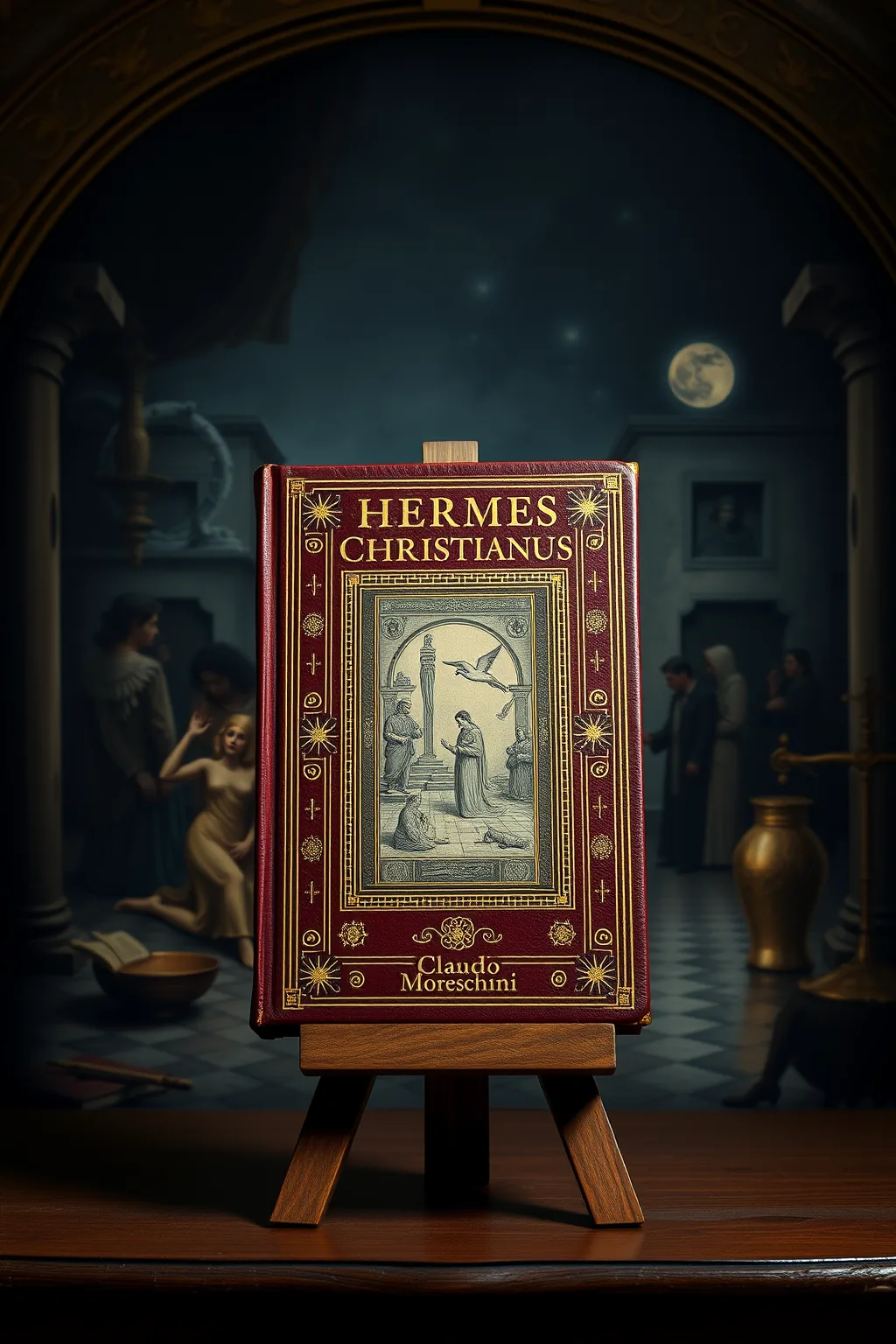
From the “Hermeticism” Collection
View all →







More Free Alchemy & Hermeticism Books
View all →