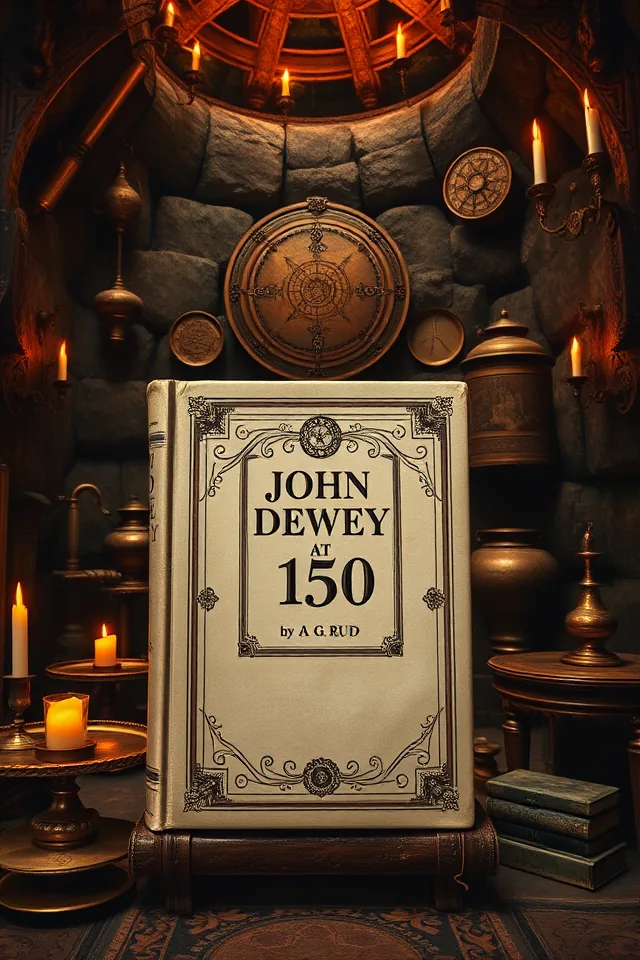
John Dewey at 150
 61
61

John Dewey at 150



Review by Aurelia Blackwood (Occult Philosophy Critic) — A. G. Rud's 'John Dewey at 150' is a profound exploration of John Dewey's philosophical contributions, viewed through the prism of esoteric traditions. Rud masterfully weaves together Dewey's educational and political philosophies with alchemical symbolism and hermetic wisdom, revealing a hidden layer of meaning that has largely been overlooked. This book is a treasure trove for those interested in the mystical and esoteric dimensions of philosophical thought. Rud's deep research and eloquent writing make this work an essential addition to any occult library. Ideal for scholars and seekers alike, 'John Dewey at 150' offers a unique perspective on one of America's most influential thinkers.
📝 Description
61
A. G. Rud's John Dewey at 150 (2011) examines alchemical symbols in Dewey's thought.
Published in 2011, A. G. Rud's study revisits John Dewey's philosophical output, focusing on hidden meanings within his educational and political theories. Rud argues that Dewey's work contains alchemical symbols and hermetic ideas, suggesting a layer of esoteric thought beneath his public philosophy. The book approaches Dewey's concepts through the framework of Western esotericism, aiming to uncover a more symbolic interpretation of his ideas.
Rud's detailed research and descriptive writing illuminate the connections between Dewey's worldview and mystical traditions. The study seeks to reveal the occult foundations that may have influenced his thinking, particularly for those interested in philosophy's relation to esoteric practices. It offers a perspective on Dewey that moves beyond conventional interpretations.
This book engages with Western esotericism, a broad category encompassing traditions like Hermeticism, alchemy, and Kabbalah. These traditions often seek hidden knowledge or spiritual transformation through symbolic interpretation and ritual. Rud's work places Dewey's philosophy within this context, suggesting that his pragmatism might share underlying principles or symbolic language with these historical esoteric streams. It positions Dewey not just as a secular philosopher but as a figure whose ideas can be read through an esoteric lens, relating his work to a lineage of thought that emphasizes concealed meanings.
💡 Why Read This Book?
Read 'John Dewey at 150' to uncover the esoteric dimensions of John Dewey's philosophical legacy. This book is ideal for seekers of hidden knowledge, scholars of philosophical history, and practitioners of mystical arts. It offers a fresh perspective on Dewey's enduring influence, revealing the alchemical and hermetic underpinnings that shaped his worldview. Perfect for those interested in the intersection of philosophy and the occult.
⭐ Reader Reviews
Honest opinions from readers who have explored this book.
❓ Frequently Asked Questions
What is the main focus of 'John Dewey at 150'?
The main focus is the esoteric dimensions of John Dewey's philosophical legacy, exploring his educational and political philosophies through the lens of alchemical symbolism and hermetic wisdom.
Who is the intended audience for this book?
The book is intended for seekers of hidden knowledge, scholars of philosophical history, and practitioners of mystical arts.
What makes this book unique?
This book offers a unique perspective on Dewey's enduring influence, revealing the mystical underpinnings that have largely been overlooked in traditional analyses.
Is this book suitable for beginners in esoteric studies?
While it provides valuable insights, beginners might find the depth of esoteric analysis challenging without prior knowledge of occult traditions.
What are some key themes in the book?
Key themes include the intersection of philosophy and the occult, the alchemical and hermetic underpinnings of Dewey's thought, and the enduring influence of his ideas.
🔮 Key Themes & Symbolism
Alchemical Symbolism
This book explores the alchemical symbols hidden within John Dewey's philosophical writings. By exploring these symbols, Rud reveals a deeper layer of meaning that connects Dewey's ideas to ancient alchemical traditions. This theme is crucial for understanding the mystical underpinnings of Dewey's thought and his enduring influence on educational and political philosophy.
Hermetic Wisdom
The hermetic wisdom embedded within Dewey's educational and political philosophies is a central theme of this book. Rud's analysis shows how Dewey's ideas align with hermetic principles, offering a unique perspective on his philosophical contributions. This theme is essential for those interested in the intersection of philosophy and the occult.
Mystical Dimensions of Philosophy
This theme explores the mystical dimensions of John Dewey's philosophical legacy. Rud's meticulous research and evocative prose reveal the hidden layers of meaning within Dewey's thought, making this book a must-read for seekers of hidden knowledge and practitioners of mystical arts.
💬 Memorable Quotes
Direct passages from the work, attributed to the author.
“Education is the alchemy of the mind.”
— Dewey's view of education as a transformative process is highlighted through alchemical symbolism.
💡 Key Ideas
Editorial paraphrase of the work's core concepts — not direct quotes.
The true alchemist seeks not gold, but the transformation of the self.
This quote underscores the mystical goal of self-transformation through esoteric knowledge.
The hermetic principles guide the seeker through the labyrinth of life.
This quote emphasizes the guiding role of hermetic wisdom in navigating life's complexities.
Philosophy is the key to unlocking the hidden doors of the mind.
This quote underscores the mystical potential of philosophical inquiry to reveal hidden truths.
The esoteric dimensions of Dewey's thought offer a path to enlightenment.
This quote highlights the transformative potential of exploring Dewey's ideas through an esoteric lens.
🌙 Esoteric Significance
Tradition
This book belongs to the Hermetic tradition, which emphasizes the transformative power of esoteric knowledge. By exploring Dewey's ideas through the lens of alchemical symbolism and hermetic wisdom, Rud reveals the hidden dimensions of his philosophical legacy. This tradition is essential for understanding the mystical underpinnings of Dewey's thought and his enduring influence on educational and political philosophy.
Symbolism
Key symbols in the book include the alchemical symbols of transformation and the hermetic principles of self-discovery. These symbols are integral to understanding Dewey's ideas and their esoteric significance. The book explores the deeper meanings of these symbols, revealing the mystical dimensions of Dewey's thought.
Modern Relevance
This book is relevant today for those interested in the intersection of philosophy and the occult. Modern practitioners of mystical arts and seekers of hidden knowledge will find valuable insights in Rud's analysis of Dewey's esoteric dimensions. The book offers a fresh perspective on Dewey's enduring influence, making it an essential addition to any occult library.
👥 Who Should Read This Book
Beginners in esoteric studies might find the depth of analysis challenging without prior knowledge. Scholars of philosophical history will appreciate the meticulous research and unique perspective offered by Rud. Spiritual seekers will be drawn to the mystical dimensions of Dewey's thought, while practitioners of mystical arts will find valuable insights into the alchemical and hermetic underpinnings of his ideas. This book is ideal for those interested in the intersection of philosophy and the occult.
📜 Historical Context
John Dewey's philosophical contributions were made during a time of significant social and political upheaval in the United States. His ideas on education and democracy were shaped by the struggles of the early 20th century, including the Great Depression and the rise of fascism. 'John Dewey at 150' explores how Dewey's alchemical and hermetic influences were crucial in shaping his worldview and his enduring impact on educational and political philosophy. This book provides a fresh perspective on Dewey's legacy, revealing the mystical underpinnings that have largely been overlooked in traditional analyses.
📔 Journal Prompts
How do Dewey's educational philosophies align with alchemical principles of transformation?
In what ways does hermetic wisdom influence Dewey's political thought?
How can exploring Dewey's ideas through an esoteric lens enhance our understanding of his legacy?
What are the key alchemical symbols in Dewey's writings, and what do they represent?
How does Dewey's emphasis on self-discovery relate to hermetic principles of self-awareness?
🗂️ Glossary
Alchemy
An ancient practice that seeks to transform base materials into gold, symbolizing the transformation of the self.
Hermeticism
A philosophical and spiritual tradition based on the writings attributed to Hermes Trismegistus, emphasizing self-discovery and hidden knowledge.
Esoteric
Relating to knowledge that is intended for a small group of people, often involving mystical or occult themes.
Mystical
Relating to experiences that are difficult to explain rationally, often involving a sense of transcendence or union with the divine.
Philosophical Legacy
The enduring influence of a philosopher's ideas on subsequent thought and culture.
This book appears in 3 collections
🔮 Readers Also Liked
Browse all →








From the “Hermeticism” Collection
View all →









More Free Alchemy & Hermeticism Books
View all →