What is Biblical Prophecy?
Biblical prophecy refers to divine communication, often foretelling future events, delivered through chosen individuals. It encompasses pronouncements on history, divine judgment, and messianic expectations. Understanding biblical prophecy involves examining its historical context, literary forms, and theological implications, as well as various methods of interpretation developed throughout centuries.
Best Books for Complete Beginners
For those new to biblical prophecy, starting with accessible overviews is crucial. 'The New Revelation' by Arthur Conan Doyle offers a personal exploration of spiritual insights. 'Old Testament legends' by M. R. James provides narratives from less-known apocryphal books, offering context for prophetic traditions. 'The Gnôsis of the Light' by F. Lamplugh touches on spiritual understanding that can inform prophetic interpretation. 'Poems from the Inner Life' by Lizzie Doten presents devotional verses that may resonate with spiritual themes. 'Living for the Best' by James G. K. McClure offers a moral framework for understanding divine will.
Intermediate Reading
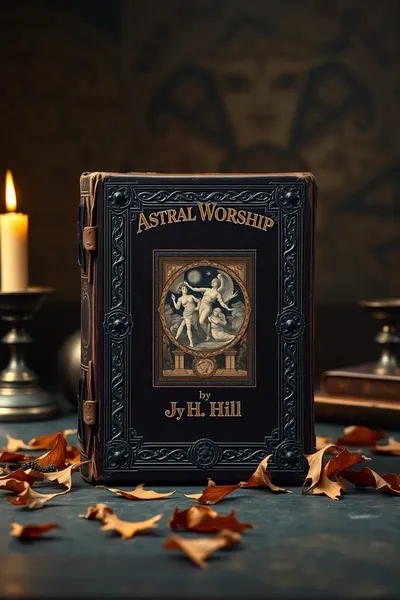
Moving beyond introductory material, intermediate readers can explore deeper dives into specific prophetic traditions and interpretive methods. 'Christianity as Mystical Fact' by Rudolf Steiner examines the spiritual dimensions of Christian prophecy. 'The Story of Anna Kingsford and Edward Maitland' by Edward Maitland details a spiritual interpretation of scripture. 'Astral Worship' by J. H. Hill explores celestial influences on spiritual understanding, relevant to cosmic prophecies. 'Within the Temple of Isis' by Belle M. Wagner explores esoteric symbolism. 'The Marriage of Heaven and Hell' by William Blake offers a unique, visionary perspective on spiritual and prophetic themes.
Classical / Advanced Texts
Advanced students will find value in primary source materials and foundational esoteric texts that influenced prophetic discourse. 'A New Light of Alchymie' by Michal Sedziwój presents alchemical principles with spiritual undertones. 'Matelda and the cloister of Hellfde' by Mechthild of Magdeburg offers mystical insights from a medieval visionary. 'Jacob Behmen: An Appreciation' by Alexander Whyte introduces the work of a significant 17th-century mystic whose writings influenced later prophetic interpretations. 'The Tables of the Law; & The Adoration of the Magi' by W. B. Yeats explores themes of divine manifestation and esoteric traditions.
Reading Order — Step by Step
Begin with accessible narratives and spiritual reflections. Month 1: Start with 'Old Testament legends' by M. R. James for context, followed by Arthur Conan Doyle's 'The New Revelation' for a modern spiritual perspective. Month 2: Engage with Rudolf Steiner's 'Christianity as Mystical Fact' and William Blake's 'The Marriage of Heaven and Hell' to explore deeper theological and visionary interpretations. Month 3: Study more esoteric works like 'A New Light of Alchymie' by Michal Sedziwój and 'Astral Worship' by J. H. Hill to understand historical esoteric frameworks. Continue with advanced texts as interest dictates.
Frequently Asked Questions
Which biblical prophecy book should I read first?
For a gentle introduction, start with 'Old Testament legends' by M. R. James to understand the context of ancient narratives. Alternatively, Arthur Conan Doyle's 'The New Revelation' offers a more personal and modern spiritual perspective on divine communication.
What is the difference between biblical prophecy and general prediction?
Biblical prophecy is understood as divinely inspired communication, often carrying theological weight, moral instruction, or foretelling specific events within a religious framework, rather than mere fortune-telling.
Are there books that connect prophecy with science?
Some works, like those by Arthur Conan Doyle, explore spiritual phenomena that intersect with scientific inquiry. While not direct scientific validation, they represent attempts to reconcile spiritual experiences with a rational worldview.
What are the 'apocryphal books' mentioned?
These are texts related to the Bible that were not included in the official canon of scripture. They often contain narratives, wisdom literature, or prophecies that offer alternative or supplementary perspectives.
How do esoteric interpretations of prophecy differ?
Esoteric interpretations often look for hidden, symbolic, or allegorical meanings within prophetic texts, connecting them to mystical traditions, cosmology, or inner spiritual development, as seen in works by Steiner or Blake.
Is modern spiritualism related to biblical prophecy?
Some authors, like Arthur Conan Doyle, saw modern spiritualism as a continuation or re-emergence of spiritual communication, which they sometimes linked to biblical accounts of prophecy and divine revelation.
Where can I find information on interpreting prophetic symbolism?
Works like 'Within the Temple of Isis' by Belle M. Wagner and 'The Marriage of Heaven and Hell' by William Blake offer insights into symbolic language and esoteric meanings that can be applied to prophetic texts.
Are there books on the end times within biblical prophecy?
While not explicitly listed as solely 'end times' texts, many works dealing with prophecy, such as those exploring apocalyptic literature or divine judgment, touch upon eschatological themes.