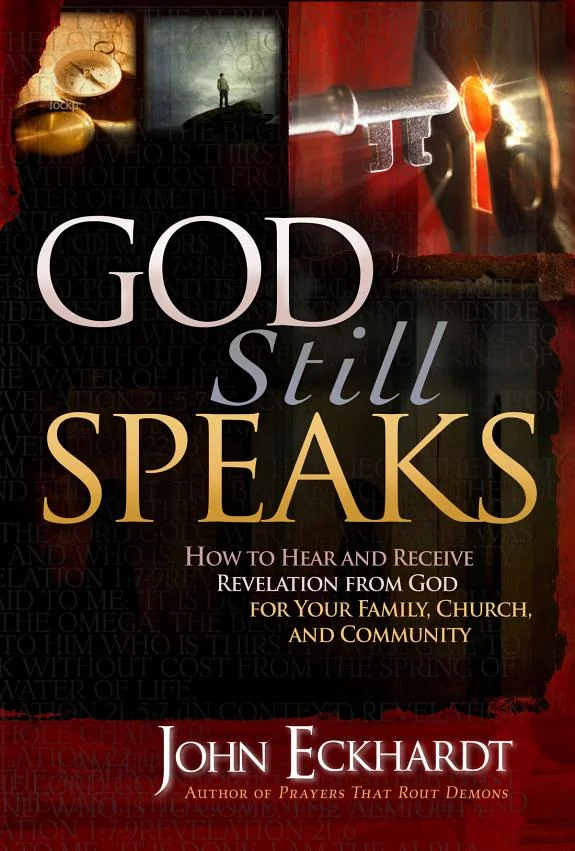
God Still Speaks
 79
79

God Still Speaks
John Eckhardt's 'God Still Speaks' offers a robust, if somewhat unvarnished, exposition on prophecy within a contemporary Christian framework. Eckhardt’s signature authoritative tone, honed through years of ministry and evident in works like 'Prayers That Rout Demons', permeates the text, lending it a sense of conviction. The book excels in its practical instruction, providing clear directives for believers seeking to understand or exercise the gift of prophecy. A notable strength lies in its detailed breakdown of discernment principles, offering a structured approach to evaluating prophetic input. However, the work’s unwavering assertiveness occasionally leaves little room for nuanced theological debate or alternative perspectives, particularly for those outside established charismatic circles. The chapter detailing the 'five-fold ministry' offers a concrete glimpse into Eckhardt's hierarchical view of spiritual function. Ultimately, 'God Still Speaks' serves as a potent manual for those already aligned with its charismatic presuppositions.
📝 Description
79
John Eckhardt's 2009 book, God Still Speaks, offers a theological framework for divine communication.
God Still Speaks, published in 2009, lays out a theological structure for understanding and participating in divine communication within contemporary Christian life. Eckhardt presents prophecy not as a relic of the past but as an active channel for God's will and guidance for both individuals and the church.
The book functions as an instructive manual. Eckhardt, known for his direct teaching, aims to give believers tools and practical methods for recognizing and responding to prophetic messages. He emphasizes the importance of biblical alignment and spiritual maturity in interpreting these divine communications. The work also addresses the potential for prophecy to be misused, stressing the need for responsible handling of this gift within a community setting.
This work engages with the ongoing Pentecostal and Charismatic traditions, which have long highlighted the active presence of the Holy Spirit and the exercise of spiritual gifts since the early 20th century. Eckhardt's 2009 publication reflects a continued discussion within these movements about the relevance and practical application of prophecy in the modern world. It addresses diverse interpretations of scripture concerning divine revelation and the nature of spiritual gifts, a topic of both popular and scholarly debate during that period.
💡 Why Read This Book?
• Gain practical methods for discerning prophetic messages, directly applicable to interpreting guidance received during prayer or communal worship, as detailed in Eckhardt's discussion of the 'prophetic voice'. • Understand the author's perspective on the five-fold ministry, a specific biblical concept he elaborates on, providing insight into church structure and spiritual gifting. • Develop a framework for responsible engagement with divine communication, moving beyond passive reception to active, biblically-grounded interaction with spiritual gifts.
⭐ Reader Reviews
Honest opinions from readers who have explored this book.
❓ Frequently Asked Questions
What is John Eckhardt's primary message in 'God Still Speaks'?
Eckhardt's central message is that God continues to communicate directly with believers through prophecy, and he provides instruction on how to recognize, interpret, and responsibly use this divine guidance.
When was 'God Still Speaks' first published?
The book 'God Still Speaks' by John Eckhardt was first published in 2009.
What is the author's background relevant to this book?
John Eckhardt is a bestselling author known for works like 'Prayers That Rout Demons' and possesses extensive experience in ministry, particularly within charismatic Christian circles where prophecy is a key focus.
Does the book offer practical steps for discernment?
Yes, Eckhardt's work includes instructive sections dedicated to the discernment process, offering believers practical steps and principles for evaluating prophetic utterances.
Who is the intended audience for 'God Still Speaks'?
The book is aimed at Christian believers, particularly those interested in spiritual gifts, prophecy, and seeking a deeper understanding of how God communicates in the present day.
What is the 'five-fold ministry' concept mentioned in the book?
The 'five-fold ministry' refers to specific roles within the church described in Ephesians 4:11 (apostles, prophets, evangelists, pastors, teachers), which Eckhardt discusses in relation to spiritual gifting and church function.
🔮 Key Themes & Symbolism
The Prophetic Voice Today
Eckhardt asserts that the prophetic gift is not confined to biblical times but remains an active mode of divine communication. He argues that God desires to speak to His people, offering guidance, encouragement, and direction through individuals who operate in prophecy. The book aims to explain this gift, presenting it as accessible and vital for contemporary believers seeking to align their lives with divine will. This perspective challenges notions that miraculous spiritual gifts ceased after the apostolic age.
Discernment and Responsibility
A significant portion of the book is dedicated to the critical skill of discernment. Eckhardt outlines principles for evaluating prophetic messages to ensure they align with scripture and possess divine origin. He stresses the importance of spiritual maturity, community accountability, and biblical integrity in the exercise of prophecy, warning against potential deception or misapplication of the gift. This emphasis highlights the author's concern for responsible spiritual practice.
The Five-Fold Ministry
Eckhardt situates the prophetic gift within the broader context of the 'five-fold ministry' as described in Ephesians 4:11. He explains the distinct roles of apostles, prophets, evangelists, pastors, and teachers, detailing how prophecy functions within this divinely ordained structure. The book suggests that understanding these roles is crucial for the effective equipping of the saints and the building up of the body of Christ.
Engaging Divine Communication
Beyond mere understanding, Eckhardt encourages active engagement with God's communication. He provides practical guidance on how believers can cultivate their ability to hear God's voice and respond effectively. This involves spiritual discipline, faith, and a willingness to step out in obedience, transforming the believer's relationship with the divine from passive observation to dynamic interaction.
💬 Memorable Quotes
Direct passages from the work, attributed to the author.
“God still speaks to His people today.”
— This foundational statement underscores Eckhardt's central thesis: divine communication through means such as prophecy is an ongoing reality, not merely a historical phenomenon. It serves as the primary premise for the book's subsequent teachings.
“The prophetic gift must be discerned against the Word of God.”
— This highlights Eckhardt's emphasis on biblical authority as the ultimate standard for validating any prophetic utterance. It serves as a key principle for believers to ensure messages align with established scripture.
“Every believer can potentially operate in the prophetic.”
— Eckhardt extends the possibility of prophetic engagement beyond a select few, suggesting that sensitivity to God's voice is available to many within the Christian community who cultivate it.
“Understanding the five-fold ministry is key to church structure.”
— This points to the author's belief in a specific, divinely appointed order for the church, where different spiritual gifts, including prophecy, play defined roles in its functioning and growth.
“Discernment protects the church from error.”
— This emphasizes the practical importance of discernment, framing it not just as a personal skill but as a communal safeguard against false teachings and spiritual deception.
🌙 Esoteric Significance
Tradition
While rooted in contemporary Charismatic Christianity, Eckhardt's emphasis on direct divine communication and spiritual gifts like prophecy touches upon broader esoteric traditions that explore altered states of consciousness and intuitive revelation. His work can be seen as a modern, biblically-framed expression of the perennial quest for direct mystical experience, albeit within a specific theological dogma that distinguishes it from purely Gnostic or Hermetic paths.
Symbolism
The primary 'symbol' Eckhardt engages with is the concept of the 'prophetic voice' itself, representing direct divine utterance. Another key motif is 'discernment,' symbolizing the filtering process needed to separate authentic divine guidance from human error or deception, akin to alchemical purification or the Gnostic search for true gnosis amidst illusion.
Modern Relevance
Eckhardt's work continues to influence contemporary Charismatic and Pentecostal circles, particularly those focused on spiritual warfare and prophetic ministry. His teachings resonate with modern practitioners seeking structured approaches to spiritual gifts and divine guidance, influencing online ministries, Bible colleges, and church training programs focused on these specific aspects of faith.
👥 Who Should Read This Book
• Charismatic and Pentecostal Christians seeking to deepen their understanding and practice of prophecy, looking for structured guidance on discernment and application. • Believers interested in exploring the concept of ongoing divine communication beyond scriptural texts, wanting to understand how God might speak today. • Ministry leaders and church members aiming to better grasp the role of spiritual gifts within a community context, particularly the function of prophetic ministry.
📜 Historical Context
Published in 2009, 'God Still Speaks' emerged during a period of continued robust growth and theological discourse within Pentecostal and Charismatic Christianity. This era saw these movements solidify their global presence and engage more deeply with academic study, while simultaneously facing scrutiny regarding the manifestation of spiritual gifts. Eckhardt's work aligns with the ongoing Charismatic renewal that began in the early 20th century, emphasizing the active role of the Holy Spirit. While figures like Kenneth E. Hagin and Oral Roberts had previously popularized teachings on divine healing and prophecy, Eckhardt's publication represents a later iteration, potentially engaging with critiques from cessationist theologians who argue spiritual gifts like prophecy ceased with the apostles. The book’s reception likely varied, embraced by those within its tradition and questioned by those outside it, reflecting the persistent denominational divides on spiritual gifts.
📔 Journal Prompts
The prophetic voice: How has my understanding of God's communication evolved since reading this?
Discernment practices: What specific steps can I implement to better discern spiritual input in my life?
Five-fold ministry roles: How does my understanding of these roles align with or challenge Eckhardt's presentation?
Personal prophecy: Reflect on instances where I believe I've received or given prophetic words, and assess them using Eckhardt's criteria.
Community and prophecy: Consider the importance of accountability when exercising spiritual gifts within a group setting.
🗂️ Glossary
Prophecy
In Eckhardt's context, the supernatural utterance or message from God, delivered through a human vessel, intended to edify, exhort, comfort, or reveal divine will.
Discernment
The spiritual ability and process of distinguishing between divine, human, and demonic influences or messages, ensuring accuracy and alignment with biblical truth.
Five-Fold Ministry
A theological concept derived from Ephesians 4:11, referring to five specific spiritual offices within the church: apostle, prophet, evangelist, pastor, and teacher.
Spiritual Gifts
Supernatural abilities empowered by the Holy Spirit, given to believers for the building up of the church and the furtherance of God's kingdom.
Edification
The act of building up, strengthening, or encouraging believers spiritually, a key purpose of prophetic utterances and other spiritual gifts.
Word of God
Refers primarily to the Bible, considered the authoritative and inspired written revelation of God, used as the ultimate standard for testing spiritual manifestations.
Charismatic
Pertaining to a Christian movement emphasizing the direct experience of God through the baptism of the Holy Spirit and the operation of spiritual gifts.
This book appears in 1 collection
🔮 Readers Also Liked
Browse all →







From the “Prophecy” Collection
View all →


More Free Sacred Texts & Gnosticism Books
View all →