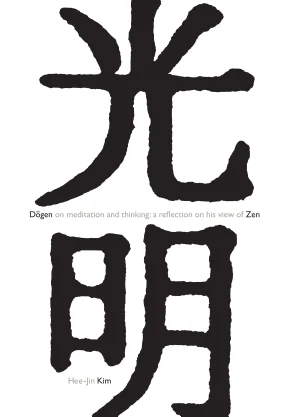
Dōgen on Meditation and Thinking
 83
83

Dōgen on Meditation and Thinking
Hee-Jin Kim’s Dōgen on Meditation and Thinking offers a significant scholarly intervention, moving beyond the hagiography often surrounding the Zen master. Kim’s meticulous textual engagement with Dōgen’s Shōbōgenzō is its greatest strength, particularly in illuminating the subtle ambiguities within Dōgen's discourse on delusion and enlightenment. The work's limitation, however, lies in its density; the prose, while precise, can be demanding for those not deeply steeped in Buddhist philosophy or Kim's previous writings. The explication of 'genjōkōan' (manifesting kōan) as not merely a static insight but a dynamic process of realization is particularly illuminating. Kim demonstrates Dōgen's radical insistence that practice *is* the realization, a point often lost in more generalized accounts of Zen. This is an essential, if challenging, text for serious Dōgen scholars.
📝 Description
83
Hee-Jin Kim's 2010 book examines Dōgen's philosophy and meditative practice.
Hee-Jin Kim's "Dōgen on Meditation and Thinking" reinterprets the teachings of the Zen master Dōgen Kigen. Building on Kim's prior work, the book scrutinizes Dōgen's philosophical and meditative methods, particularly as they appear in the Shōbōgenzō. It moves past simple views of Zen to investigate the connection between cognitive activity and spiritual understanding.
This study is for those deeply interested in Zen Buddhism, especially the philosophical basis of the Sōtō school. It will also interest scholars of East Asian religions and philosophers of mind. A basic understanding of Buddhist concepts is helpful for fully grasping Kim's detailed analysis of meditation and consciousness.
Published in 2010, this book engages with the long history of scholarship on Dōgen Kigen (1200-1253), the founder of Japan's Sōtō Zen school. Kim's work considers decades of critical analysis, proposing a perspective that questions previous interpretations. It places Dōgen's ideas within the larger context of Mahayana Buddhism, addressing questions about reality and perception.
💡 Why Read This Book?
• Understand the dynamic interplay between thought and reality as presented by Dōgen, moving beyond static meditative states, informed by Kim’s analysis of the Shōbōgenzō. • Grasp the intricate nuances of delusion and enlightenment within Dōgen’s framework, challenging simplistic dualities through specific textual interpretations. • Appreciate the philosophical depth of 'shikantaza' as a practice that embodies realization, not just a path to it, drawing from Kim’s re-evaluation of Dōgen’s methodology.
⭐ Reader Reviews
Honest opinions from readers who have explored this book.
❓ Frequently Asked Questions
What is the primary focus of Dōgen on Meditation and Thinking?
The book focuses on Hee-Jin Kim's scholarly reinterpretation of the Zen master Dōgen's meditative and philosophical methods, primarily through analysis of his work the Shōbōgenzō, published in the 13th century.
Who is Dōgen Kigen?
Dōgen Kigen (1200-1253) was a Japanese Buddhist monk who founded the Sōtō school of Zen. He is renowned for his profound writings on practice and enlightenment.
What is the Shōbōgenzō?
The Shōbōgenzō, meaning 'Treasury of the Eye of the True Dharma,' is Dōgen's major philosophical work, containing fascicles on a vast range of Buddhist topics, central to Sōtō Zen.
What does 'shikantaza' mean?
'Shikantaza' is a term in Sōtō Zen, often translated as 'just sitting.' It refers to a form of meditation without objects or conceptualization, emphasizing pure awareness.
Does this book offer practical meditation instructions?
While it analyzes Dōgen's meditative philosophy, the book is primarily a scholarly and interpretive work, not a how-to guide for meditation practice. It requires a strong academic interest.
What is Hee-Jin Kim's contribution to Dōgen studies?
Kim's work, including this 2010 book, is known for its rigorous textual analysis and nuanced philosophical interpretations, offering fresh perspectives on Dōgen's complex thought, building on his 1980s scholarship.
🔮 Key Themes & Symbolism
Ambiguity of Enlightenment
Kim challenges conventional understandings of enlightenment as a final, static state. He explores Dōgen's nuanced perspective, suggesting that enlightenment itself, much like delusion, contains inherent ambiguities and is a dynamic, ongoing process rather than a fixed destination. This reframing invites readers to reconsider the very nature of spiritual attainment and the path toward it within Dōgen's framework, emphasizing the continuous unfolding of the Way.
Dynamic Functions of Emptiness
The book investigates Dōgen's concept of 'mushō' (emptiness or non-being) not as a void or absence, but as a dynamic principle that enables phenomena to arise and function. Kim elucidates how emptiness is integral to the manifestation of reality and the practice of meditation, serving as the very ground for existence and understanding. This active role of emptiness is crucial for grasping Dōgen's non-dualistic philosophy.
Negotiating the Way
Kim examines the intricate process of 'following the Way' as presented by Dōgen. This involves not just intellectual assent but a lived, embodied engagement with Buddhist principles. The work details how practitioners read through the complexities of spiritual practice, emphasizing the importance of direct experience and the integration of thought and action, particularly through the practice of 'shikantaza'.
Dōgen's Zen Methodology
This theme centers on Hee-Jin Kim's detailed analysis of Dōgen's unique approach to Zen Buddhism, differentiating it from other schools. Kim focuses on Dōgen's emphasis on the inseparability of practice and realization, and his philosophical insights derived from rigorous textual study of works like the Shōbōgenzō. The book offers a fresh perspective on Dōgen's intellectual and spiritual legacy.
💬 Memorable Quotes
Direct passages from the work, attributed to the author.
“The ambiguity of delusion and enlightenment.”
— This highlights Kim's central argument that Dōgen viewed both the state of being deluded and the state of awakening not as simple opposites, but as complex, fluid aspects of human experience and practice.
“The dynamic functions of emptiness.”
— This points to Dōgen's understanding of 'mushō' (emptiness) not as a passive void, but as an active principle that makes all phenomena possible and is central to the functioning of reality.
“Intricacies of negotiating the Way.”
— This refers to the complex, non-linear path of spiritual practice, emphasizing the practical, lived experience of engaging with Buddhist teachings and the challenges involved.
“Dōgen's Zen methodology is reframed.”
— This signifies Kim's core scholarly contribution: offering a new lens through which to understand Dōgen's unique approach to Zen, particularly his integration of philosophical rigor and meditative practice.
“Key passages primarily from Dōgen's Shōbōgenzō.”
— This indicates the primary textual source Kim uses for his analysis, underscoring the book's scholarly foundation in Dōgen's most significant written work.
🌙 Esoteric Significance
Tradition
While Dōgen Kigen is a foundational figure in Zen Buddhism, a major school within Mahayana Buddhism, his philosophical depth and emphasis on direct experience resonate with broader esoteric traditions that prioritize inner realization over dogma. His teachings on the nature of mind and reality can be seen as aligning with non-dualistic currents found in various mystical paths, including some Hermetic and Gnostic lineages that explore the inner range of consciousness.
Symbolism
Key motifs in Dōgen's work, and thus in Kim's analysis, include the 'Buddha-nature' inherent in all beings, the practice of 'shikantaza' (just sitting) as a symbol of non-doing and direct realization, and the concept of 'mushō' (emptiness) as the dynamic ground of existence. These symbols are not mere representations but are understood as directly pointing to the nature of reality and the practitioner's own mind.
Modern Relevance
Contemporary thinkers and practitioners in fields ranging from mindfulness studies and contemplative neuroscience to existential philosophy and postmodern thought find Dōgen's emphasis on presence, the nature of consciousness, and the critique of conceptual thinking highly relevant. Kim's scholarly work provides the rigorous philosophical framework that allows these modern disciplines to engage with Dōgen's insights on a deeper level.
👥 Who Should Read This Book
• Advanced students of Zen Buddhism seeking a deeper philosophical understanding of Dōgen's teachings beyond introductory texts, especially those interested in the Sōtō school. • Scholars of comparative religion and East Asian philosophy looking for a critical, textually-based analysis of Buddhist meditative and cognitive practices. • Philosophers of mind and consciousness interested in non-dualistic perspectives and the relationship between mental states and perceived reality, as explored through a historical Buddhist lens.
📜 Historical Context
Dōgen Kigen (1200-1253) founded the Sōtō school of Zen in Japan, introducing a form of practice deeply rooted in Mahayana philosophy. His major work, the Shōbōgenzō, composed over decades, became a core part of Japanese Buddhism. Hee-Jin Kim’s Dōgen on Meditation and Thinking, published in 2010, emerges from a long lineage of scholarship dedicated to interpreting Dōgen’s profound and often challenging texts. The book builds upon decades of critical engagement with Dōgen’s thought, which began in earnest in the 20th century. Kim’s work specifically engages with and offers a counterpoint to earlier interpretations, such as those by scholars like D.T. Suzuki, who popularized Zen in the West but sometimes presented simplified versions. Kim’s approach emphasizes a more philosophically rigorous reading, situating Dōgen within the broader context of East Asian Buddhism and engaging with contemporary philosophical discussions on consciousness and reality.
📔 Journal Prompts
The ambiguity of delusion and enlightenment within Dōgen's framework.
How the dynamic functions of emptiness inform your understanding of existence.
The intricacies of negotiating the Way in daily practice.
Dōgen's methodology as explicated by Hee-Jin Kim.
The role of 'shikantaza' in achieving direct experience.
🗂️ Glossary
Shōbōgenzō
Dōgen's principal work, meaning 'Treasury of the Eye of the True Dharma.' It is a collection of essays and discourses covering a vast range of Buddhist philosophical and practical topics.
Shikantaza
A core practice in Sōtō Zen, often translated as 'just sitting.' It signifies a form of meditation characterized by alert, non-conceptual awareness without attachment to any particular object or thought.
Mushō
A key concept in Mahayana Buddhism, typically translated as 'non-being,' 'emptiness,' or 'nothingness.' In Dōgen's context, it signifies the dynamic, unconditioned nature of reality that underlies all phenomena.
Kōan
A paradoxical anecdote or riddle used in Zen Buddhist practice, particularly in the Rinzai school, to provoke doubt and test a student's progress in Zen training. Kim discusses its subtle presence in Dōgen's work.
Delusion
In Buddhist contexts, delusion refers to ignorance or a misunderstanding of the true nature of reality, leading to suffering. Dōgen's approach complicates this as discussed by Kim.
Enlightenment
The ultimate goal in Buddhism, referring to the state of profound wisdom and liberation from suffering. Dōgen's interpretation of enlightenment is explored as a process rather than a static state.
The Way
Refers to the path of spiritual practice and realization within Buddhism, often understood as the path taught by the Buddha or the inherent nature of reality itself.
This book appears in 1 collection
🔮 Readers Also Liked
Browse all →








From the “Meditation” Collection
View all →









More Free Sacred Texts & Gnosticism Books
View all →