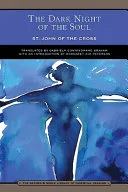
The Dark Night of the Soul
 74
74

The Dark Night of the Soul
St. John of the Cross’s “The Dark Night of the Soul” is a stark, unvarnished account of spiritual progression, eschewing sentimentality for the rigorous path of divine union. Its strength lies in its unflinching honesty regarding the soul’s arduous journey. The text does not promise easy comfort, but rather the profound peace that follows radical surrender. A limitation, however, is the dense theological language which, while precise, can present a barrier for contemporary readers unfamiliar with 16th-century scholasticism. The passage describing the soul’s initial confusion and apprehension during the night of the senses, where familiar spiritual practices become arid, is particularly potent. It captures the disorienting yet vital nature of shedding reliance on perceived divine favors. The verdict: an essential, albeit demanding, guide for the committed spiritual voyager.
📝 Description
74
Published in 1583, St. John of the Cross's The Dark Night outlines a spiritual process of purification.
St. John of the Cross describes the "dark night" as a necessary spiritual process, not a time of despair. This phase of purification helps the soul detach from worldly and even spiritual comforts that can become obstacles in its desire for union with God. The book guides readers through shedding these attachments to achieve deeper communion. The "dark night" is divided into two parts. The first, the night of the senses, involves detaching from physical pleasures and the simple sweetness found in prayer. This moves the soul beyond surface-level spiritual experiences. The second part, the night of the spirit, is a deeper desolation. It requires surrendering intellect and will to God's veiled presence, which cultivates humility and complete trust. This passive infused contemplation leads to a more direct experience of the divine.
St. John of the Cross wrote during the Spanish Counter-Reformation, a period of intense religious scrutiny. His articulation of the "dark night" builds on earlier Christian mystical traditions of spiritual purification. He faced opposition from his own order, highlighting the radical nature of his insights into achieving direct, unmediated experience of God. The text details a specific, challenging path toward divine intimacy within earthly life.
💡 Why Read This Book?
• Gain a conceptual framework for understanding spiritual aridity, as detailed in St. John of the Cross's 16th-century writings, to discern if perceived spiritual dryness is a prelude to deeper union. • Comprehend the distinct stages of the "night of the senses" and the "night of the spirit," offering a roadmap for navigating the soul's purification process beyond mere emotional states. • Appreciate the theological underpinnings of passive contemplation, learning how St. John of the Cross posits it as a direct, unmediated gift from God, distinct from active, disciplined prayer.
⭐ Reader Reviews
Honest opinions from readers who have explored this book.
❓ Frequently Asked Questions
What is the "dark night of the soul" as described by St. John of the Cross?
It refers to a spiritual process of purification where the soul detaches from sensory pleasures and spiritual consolations, moving towards a more profound, direct union with God. St. John of the Cross, a 16th-century mystic, described two phases: the night of the senses and the night of the spirit.
When was St. John of the Cross active?
St. John of the Cross was a Spanish Carmelite friar, mystic, and poet active in the latter half of the 16th century, from roughly 1542 to 1591. The specific edition of this work was published in 2005.
Is "The Dark Night of the Soul" a literal description of depression?
No. While the experience can involve feelings of desolation, it is a theological and spiritual concept describing a divinely guided process of purification. It aims to detach the soul from all imperfections, leading to greater spiritual freedom and union with God.
Who was St. John of the Cross's contemporary in mysticism?
A significant contemporary was Teresa of Ávila, with whom he collaborated on Carmelite reforms. Both mystics experienced profound divine encounters and articulated their spiritual journeys in influential writings.
What is the goal of the dark night?
The ultimate goal is to achieve an intimate, loving union with God. This is facilitated by stripping away all attachments – to created things, self-will, and even spiritual comforts – allowing the soul to be more receptive to God's transformative presence.
Is this book suitable for beginners in spirituality?
While accessible to lay readers seeking deeper intimacy with God, the text's theological depth and introspective nature demand a serious commitment. It is best suited for those prepared for rigorous spiritual discipline and self-examination.
🔮 Key Themes & Symbolism
The Two Nights of Purification
The work meticulously details the 'night of the senses' and the 'night of the spirit.' The former involves detachment from sensory pleasures and even the sweetness found in devotional practices, moving the soul beyond superficial spiritual consolations. The latter, a more profound stage, involves the spirit's surrender to God's hiddenness, characterized by a desolation that purifies the intellect and will. This dual purification is essential for preparing the soul for a direct, loving union with the divine.
Detachment and Divine Union
Central to the text is the concept that true union with God necessitates radical detachment from all created things and self-will. St. John argues that attachments, even to spiritual consolations, can impede the soul's complete surrender. The 'dark night' is the divinely ordained process through which these imperfections are burned away, allowing the soul to be fully receptive to God's transformative presence and love.
Passive Contemplation
The culmination of the dark night is passive infused contemplation, a state where God acts directly upon the soul without the soul's active effort. This is not a state to be sought or achieved through personal striving, but a gift received through profound humility and surrender. The text distinguishes this divine operation from ordinary meditation or discursive prayer, highlighting it as a direct experience of God's loving presence.
The Role of Suffering
Suffering within the context of the dark night is presented not as punishment, but as a necessary crucible for spiritual refinement. The desolation and emptiness experienced are seen as purifying fires that burn away the soul's imperfections and attachments. This process, though arduous, ultimately leads to a profound spiritual freedom and a more authentic, unmediated relationship with the divine.
💬 Memorable Quotes
Direct passages from the work, attributed to the author.
“To guide you in the path of prayer, you must not pull the divine bride toward you, but allow yourself to be drawn.”
— This aphorism captures the essence of passive contemplation. It emphasizes that true spiritual progress is not achieved through forceful human effort or desire, but through a surrender to God's initiative, allowing divine grace to lead the soul.
“The soul that abides in the spiritual darkness is like a person walking through a desert, seeking water.”
— This metaphor illustrates the soul's state during the dark night of the spirit. It conveys a sense of profound longing and existential thirst, a deep yearning for divine presence in a state of perceived absence or desolation.
“The night is not an evil thing, but a good thing that transforms.”
— This interpretation reframes the negative connotations of 'darkness.' It posits that the challenging spiritual process is, in fact, a beneficial and transformative force, essential for spiritual growth and purification.
“What you are seeking is seeking you.”
— This concept, often attributed to Rumi but resonating with St. John's theology, suggests that the divine pursuit is reciprocal. The soul's longing for God is met by God's own active seeking of the soul.
“In the deepening dark, the soul learns to see without eyes.”
— This highlights the shift from sensory or intellectual knowledge to a direct, intuitive apprehension of the divine. It speaks to a spiritual discernment that transcends normal human faculties during the purification process.
🌙 Esoteric Significance
Tradition
While rooted in Catholic mysticism, "The Dark Night of the Soul" has been adopted by various esoteric traditions for its profound exploration of spiritual purification. It aligns with Neoplatonic concepts of the soul's ascent and Gnostic ideas of divine illumination through overcoming material or sensory limitations. Its emphasis on a direct, unmediated experience of the divine appeals to Sufi mystical practices and Western Hermeticism's quest for inner transformation.
Symbolism
The primary symbol is the 'dark night' itself, representing a period of spiritual desolation and purification, not as an absence of God, but as a state where God's presence is felt indirectly, stripping away attachments. Light, often associated with divine revelation, is paradoxically absent or blindingly intense during this process, forcing reliance on faith. The journey through darkness symbolizes the soul's arduous path from the sensory world to the spiritual realm.
Modern Relevance
Contemporary spiritual teachers and psychologists exploring consciousness and the nature of spiritual experience draw heavily from St. John's framework. His concepts are applied in discussions of mindfulness, detachment from outcomes, and the psychological challenges of spiritual growth. Thinkers in Jungian psychology and various contemplative traditions recognize the dark night as a crucial stage in individuation and the development of a mature spiritual life.
👥 Who Should Read This Book
• Advanced students of Christian mysticism seeking to understand the rigorous path to divine union as articulated by a foundational figure. • Practitioners of contemplative prayer and meditation looking for a theological and experiential map of spiritual aridity and desolation. • Scholars of comparative religion and spiritual traditions interested in the universal themes of purification and transcendence across different cultural and historical contexts.
📜 Historical Context
St. John of the Cross penned "The Dark Night of the Soul" in the latter half of the 16th century, a tumultuous period in Spanish religious history marked by the Counter-Reformation and the Inquisition. His mystical theology emerged from a climate of intense spiritual fervor and theological debate. He was a contemporary and collaborator of Teresa of Ávila, another central figure in Carmelite reform, whose own mystical writings explored similar themes of divine union. The work implicitly engaged with the prevailing scholastic theological frameworks, while simultaneously championing direct, experiential knowledge of God. His radical approach and writings led to conflict within his order, resulting in his imprisonment by the Carmelite authorities in Toledo in 1577, a period during which some of his most profound works, including possibly parts of "The Dark Night," were conceived or refined.
📔 Journal Prompts
The "night of the senses" and its potential to obscure divine presence.
The experience of spiritual desolation and its role in fostering trust.
Moments when sensory or spiritual consolations have hindered deeper connection.
The surrender of intellect and will during the "night of the spirit."
Defining "attachment" in the context of spiritual practice.
🗂️ Glossary
Dark Night of the Senses
The initial stage of purification where the soul detaches from worldly pleasures and even the sweetness of spiritual exercises, leading to a feeling of dryness and lack of spiritual consolation.
Dark Night of the Spirit
A more profound stage of purification where the soul experiences desolation in its higher faculties (intellect, memory, will), leading to a complete surrender and detachment from spiritual consolations, preparing it for infused contemplation.
Infused Contemplation
A passive state of prayer where God directly communicates His presence and love to the soul, not through active effort but as a divine gift received in humility and detachment.
Spiritual Desolation
A state of spiritual emptiness or dryness, often accompanied by sadness and a sense of abandonment, which St. John interprets as a necessary part of the purification process.
Attachment
An excessive reliance or clinging to anything, whether material possessions, people, or even spiritual experiences, which hinders the soul's complete surrender to God.
Divine Union
The ultimate goal of the spiritual life, a state of profound and loving communion between the soul and God, characterized by transformation and intimate knowledge.
Mortification
The practice of self-discipline and denial of bodily or spiritual appetites, undertaken to overcome imperfections and grow in virtue and detachment.
![The Byrhtferth's Manuscript (MS 17) † Saint John’s College † Oxford † [1111]](/img/thumb/the-byrhtferth-s-manuscript-ms-17-saint-john-s-college-oxford-1111-the-monk-byrhtferth.webp)