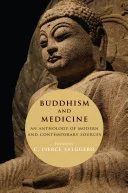
Buddhism and Medicine
 75
75

Buddhism and Medicine
C. Pierce Salguero’s Buddhism and Medicine offers a valuable survey of the evolving dialogue between Buddhist thought and medical practice, moving beyond ancient texts to examine modern and contemporary engagements. The strength of this collection lies in its broad geographical and temporal scope, showcasing the adaptability of Buddhist approaches to health and healing in diverse cultural landscapes. A particularly insightful section discusses the integration of Buddhist meditation techniques into Western clinical settings, highlighting how concepts like mindfulness, originally rooted in monastic traditions, have found new applications in treating mental and physical ailments. However, the book occasionally suffers from a lack of deep engagement with the more esoteric or tantric medical traditions, which remain a significant, albeit less documented, aspect of Buddhist healing. The anthology would benefit from a more robust exploration of these less conventional, yet potent, streams of practice. Despite this limitation, Salguero provides a well-researched and accessible overview that clarifies the complex interplay between spirituality and somatic well-being.
📝 Description
75
C. Pierce Salguero's 2020 book examines modern and contemporary writings on Buddhism and medicine.
Buddhism and Medicine, by C. Pierce Salguero, collects modern and contemporary texts discussing the connections between Buddhist thought and medical practices globally. This book follows an earlier anthology of premodern sources, concentrating on scholarship from the early modern period to the present. It details how Buddhist ideas have influenced and been influenced by various healing traditions, showing a long history of exchange across cultures.
The book is aimed at academics, researchers, and students of Buddhist studies, medical history, comparative religion, and medical anthropology. It also interests Buddhist practitioners curious about the historical and philosophical roots of health and healing in their traditions. Anyone looking for a scholarly look at the meeting of spiritual beliefs and physical health will find this a useful text.
The relationship between Buddhism and medicine began in ancient India with systems like Ayurveda and the development of East Asian medicine. As Buddhism spread, its teachings on suffering, impermanence, and the mind-body link became part of local healing methods. This volume tracks these changes through recent writings, looking at how these traditions adapted to Western medicine and global health issues from the 20th century onward.
This work is situated within the study of mysticism and contemplation by examining how Buddhist philosophical concepts, such as impermanence and the nature of suffering, inform understandings of health and illness. It explores the integration of these contemplative practices and metaphysical ideas into medical systems, revealing a tradition where spiritual development and physical well-being are deeply intertwined. The book traces this dialogue through historical periods, showing how Buddhist cosmology and ethics have shaped approaches to healing and the definition of a healthy life.
💡 Why Read This Book?
• Gain a nuanced understanding of how Buddhist philosophies, such as the Four Noble Truths and the concept of dependent origination, have historically informed diverse medical systems and continue to influence contemporary health practices. • Explore the specific ways Buddhist concepts like mindfulness and compassion have been adapted and integrated into modern therapeutic modalities, as discussed in the contemporary sections of the book. • Understand the historical trajectory of Buddhist medicine from its origins in ancient India to its adaptation and transformation in response to Western scientific medicine and global health challenges in the 20th century.
⭐ Reader Reviews
Honest opinions from readers who have explored this book.
❓ Frequently Asked Questions
What historical periods does Buddhism and Medicine cover?
The book primarily focuses on modern and contemporary texts, tracing the relationship between Buddhism and medicine from the early modern period (roughly 16th century onwards) up to the present day.
Does this book discuss Ayurvedic medicine or Traditional Chinese Medicine specifically?
While the book acknowledges the broader context of traditional Asian medicine and its relationship with Buddhist thought, its main focus is on texts directly engaging Buddhist philosophies and their impact on medical practices across various cultures.
Is this book a primary source collection?
No, this book is a collection of modern and contemporary texts and conversations. It complements a separate anthology of premodern sources compiled by the same author.
Who is the author, C. Pierce Salguero?
C. Pierce Salguero is a scholar specializing in the history of medicine and Buddhism, with a particular interest in their cross-cultural interactions and the development of Buddhist medical traditions.
What is the primary goal of Buddhism and Medicine?
The book aims to illustrate the multifaceted and complex ways Buddhist ideas have influenced medical thought and practice across diverse regions and cultures, particularly from the early modern period to the present.
Can I find information on the use of Buddhist meditation in modern therapy?
Yes, the book includes contemporary texts and discussions that explore the integration of Buddhist contemplative practices, such as mindfulness, into modern therapeutic approaches for physical and mental health.
🔮 Key Themes & Symbolism
Buddhist Healing Philosophies
This theme examines core Buddhist doctrines and how they inform understandings of health, illness, and healing. Concepts like impermanence (anicca), suffering (dukkha), and the interconnectedness of mind and body are explored. The work shows how these philosophical underpinnings lead to unique approaches to patient care, emphasizing mental well-being, ethical conduct, and the cultivation of compassion as integral to physical health. It traces how these ideas have been interpreted and applied across different cultural contexts over centuries.
Mind-Body Integration
A central focus is the Buddhist perspective on the inseparable nature of the mind and body. The book explores how practices such as meditation, mindfulness, and ethical living are viewed not merely as spiritual pursuits but as essential components of holistic health. It details how these contemplative techniques aim to alleviate suffering by addressing the root causes of illness, which are often seen as residing in mental states like ignorance, attachment, and aversion. This integration contrasts with purely biomedical models, offering an alternative framework for well-being.
Cross-Cultural Medical Exchange
This theme investigates the dynamic interplay between Buddhist medical traditions and other healing systems, particularly as Buddhism spread geographically. The book examines how Buddhist ideas were adopted, adapted, and sometimes synthesized with indigenous medical practices in regions like Tibet, China, and Southeast Asia. It also addresses the more recent phenomenon of Buddhist medicine influencing and being influenced by Western scientific medicine and global health initiatives, highlighting ongoing dialogues and transformations.
Modern Contemplative Therapies
The work examines the contemporary application of Buddhist principles and practices in modern healthcare. It showcases how mindfulness-based stress reduction (MBSR), dialectical behavior therapy (DBT), and other evidence-based interventions draw directly from Buddhist contemplative traditions. This theme highlights the increasing recognition within Western medicine of the efficacy of these mind-focused approaches for treating a range of conditions, bridging ancient wisdom with contemporary scientific inquiry.
💬 Memorable Quotes
Direct passages from the work, attributed to the author.
“Buddhist ideas have influenced medical thought and practice in complex and varied ways.”
— This foundational statement underscores the central argument of the book: the relationship between Buddhism and medicine is not monolithic but a dynamic, complex historical and cultural phenomenon deserving of detailed study.
“The work presents a collection of modern and contemporary texts and conversations.”
— This highlights the book's focus on recent scholarship and discourse, positioning it as a guide to current understanding and ongoing debates within the field, rather than solely a historical survey.
“The anthology focuses on the many ways Buddhism a”
— This incomplete phrase suggests the book explores the diverse manifestations of Buddhist influence on medicine, encompassing philosophical, practical, and cultural dimensions across different societies and time periods.
“The relationship between Buddhism and medicine is ancient.”
— This simple declaration sets the stage, acknowledging the deep historical roots of the connection and implying a long, evolving tradition that continues to shape contemporary perspectives on health.
“This work presents a collection of modern and contemporary texts.”
— This points to the book's methodological approach, emphasizing the inclusion of recent dialogues and analyses that build upon, rather than merely reiterate, older traditions and understandings of Buddhist medicine.
🌙 Esoteric Significance
Tradition
While not strictly adhering to a single Western esoteric lineage like Hermeticism or Kabbalah, Buddhism and Medicine engages with traditions that share common ground in exploring consciousness, the nature of reality, and the pursuit of liberation from suffering. Its focus on mind-body integration, subtle energies, and the transformative power of focused awareness aligns with contemplative and yogic practices found in various esoteric schools. The work highlights how Buddhist philosophies offer a sophisticated framework for understanding the psycho-somatic aspects of existence, often explored in esoteric traditions.
Symbolism
Key symbolic motifs often found in Buddhist medical contexts, though not always explicit in this particular text's focus on modern discourse, include the lotus flower (purity arising from mud, representing healing from defilements), the medicinal Buddha (Bhaisajyaguru, symbolizing healing power), and the concept of emptiness (sunyata), which suggests that suffering and illness are not inherent but arise from conditional causes, offering a path to their cessation. The very act of meditation can be seen as a symbolic journey inward.
Modern Relevance
Contemporary thinkers and practitioners in fields such as mindfulness-based stress reduction (MBSR), positive psychology, and integrative medicine frequently draw upon the principles discussed in this book. Schools of psychotherapy, particularly those focusing on trauma and anxiety, are increasingly incorporating Buddhist-derived techniques. Furthermore, researchers exploring consciousness, well-being, and the efficacy of contemplative practices in clinical settings are engaging with the legacy and ongoing evolution of Buddhist medical thought presented here.
👥 Who Should Read This Book
• Researchers in comparative religion and medical history seeking to understand the historical and philosophical links between Buddhism and diverse healing practices. • Students of Buddhist studies interested in the practical applications and cultural expressions of Buddhist principles concerning health and well-being. • Practitioners of mindfulness and contemplative therapies looking to deepen their understanding of the roots and broader context of their practices within Buddhist traditions.
📜 Historical Context
The intersection of Buddhism and medicine boasts an extensive history, with early connections evident in ancient Indian medical traditions and the development of sophisticated healing systems in East Asia. As Buddhism disseminated from India, it carried with it philosophical frameworks that profoundly influenced conceptions of health, suffering, and cure. By the early modern period, these traditions had become deeply embedded in societies across Asia. The 20th century brought significant shifts, including the increasing dominance of Western biomedical models and the global spread of Buddhist teachings. This period saw both challenges to traditional Buddhist medicine and innovative adaptations, including its integration into contemplative psychotherapies. Salguero's work engages with this complex modern reception, a landscape shaped by figures like the Dalai Lama advocating for mind-body integration and Western scholars beginning to systematically study these traditions, a counterpoint to the purely materialist focus prevalent in Western medicine at the time. Reception has largely been academic, with growing interest in comparative studies of religion and health.
📔 Journal Prompts
The complex relationship between Buddhism and medicine.
Buddhist concepts of suffering (dukkha) and their medical implications.
The integration of mindfulness into contemporary therapeutic practices.
Cross-cultural adaptations of Buddhist healing traditions.
The role of compassion in Buddhist approaches to health.
🗂️ Glossary
Dukkha
A fundamental concept in Buddhism, often translated as 'suffering,' 'dissatisfaction,' or 'stress.' It refers to the inherent unsatisfactoriness of conditioned existence and is one of the Four Noble Truths.
Anicca
Meaning 'impermanence' or 'transience.' It is the Buddhist doctrine that all conditioned phenomena are in a constant state of flux, a concept relevant to understanding the changing nature of health and illness.
Mindfulness (Sati)
A mental quality of being aware of and responsive to one's surroundings and the internal state in the present moment. In Buddhism, it is a key component of the path to liberation and is increasingly used in secular therapeutic contexts.
Karma
The principle of cause and effect, where intentional actions (karma) influence future experiences. In a medical context, it can be interpreted as influencing one's predisposition to certain illnesses or the course of recovery.
Compassion (Karuna)
A central Buddhist virtue signifying the wish for all sentient beings to be free from suffering. It is considered a vital element in healing practices, both for the practitioner and the patient.
Dependent Origination (Pratītyasamutpāda)
The Buddhist principle that all phenomena arise in dependence upon other phenomena. This implies that suffering and illness are not fixed states but arise from specific causes and conditions that can be understood and altered.
Ayurveda
The traditional Indian system of medicine, which has historical links and interactions with early Buddhist medical thought, focusing on balancing bodily humors and natural remedies.