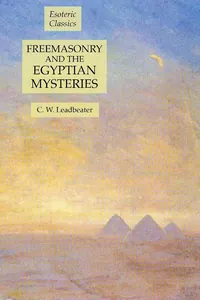
Collected Essays, Volume V: Science and Christian Tradition: Essays

 69
69

Collected Essays, Volume V: Science and Christian Tradition: Essays


Thomas Henry Huxley's 'Collected Essays, Volume V: Science and Christian Tradition' is a seminal work that continues to resonate with modern esoteric seekers. Huxley's essays are a testament to his intellectual courage and his unwavering commitment to the pursuit of truth. The book's exploration of agnosticism, miracles, and the relationship between science and religion is both timely and timeless. For contemporary readers, the value of this text lies in its ability to challenge and expand our understanding of the divine. Huxley's essays encourage us to question our assumptions and to seek a deeper, more authentic spirituality. The book's historical context adds an additional layer of richness, as it provides a window into the intellectual ferment of the Victorian era. Despite being written nearly two centuries ago, Huxley's insights remain relevant and thought-provoking. This book is a must-read for anyone interested in the intersection of science and spirituality.
📝 Description
69
Thomas Henry Huxley published 'Collected Essays, Volume V: Science and Christian Tradition' in 1894.
This collection examines the relationship between scientific understanding and Christian thought at the close of the 19th century. Huxley, a prominent biologist and advocate for scientific reasoning, engaged with theological concepts and their place in a world increasingly shaped by empirical discovery. He sought to reconcile the perceived conflicts between natural science and religious doctrine, questioning traditional interpretations and proposing ways to understand spiritual ideas through a rational lens.
The essays consider how scientific advancements might inform or challenge religious frameworks, and conversely, how religious traditions could be interpreted in light of scientific findings. Huxley's approach was not to dismiss faith but to scrutinize its tenets and symbols critically, seeking a more intellectually honest understanding of both the material universe and humanity's place within it. The volume reflects his commitment to intellectual honesty and his belief in the power of reason to illuminate complex questions.
While not strictly esoteric in the occult sense, Huxley's work touches upon traditions that question established dogma and seek deeper, often symbolic, meanings behind religious narratives. His critical examination of Christian tradition from a scientific viewpoint aligns with broader intellectual currents of the era that sought to demystify religious experience and find universal principles underlying diverse belief systems. This aligns with certain hermetic or philosophical traditions that prioritize rational inquiry and symbolic interpretation over literal adherence to scripture, aiming for a more personal and reasoned spiritual understanding.
✍️ Author
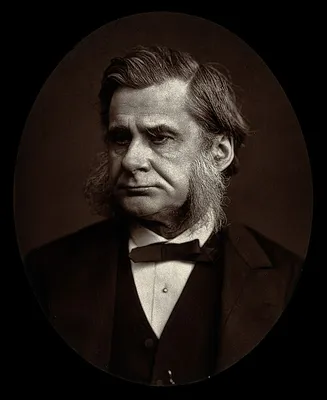
Huxley, Thomas Henry
Thomas Henry Huxley (4 May 1825 – 29 June 1895) was an English biologist and anthropologist who specialised in comparative anatomy. He has become known as "Darwin's Bulldog" for his advocacy of Charles Darwin's theory of evolution.
💡 Why Read This Book?
Reading 'Collected Essays, Volume V: Science and Christian Tradition' today offers a unique opportunity to engage with some of the most pressing questions of our time. Huxley's essays challenge us to think critically about our beliefs and to seek a more integrated understanding of the universe. By exploring the esoteric and occult themes in this book, readers can gain a deeper appreciation for the mystical dimensions of existence. This text is particularly valuable for those interested in the ongoing debate between science and religion, as it provides a historical perspective on this enduring conflict.
⭐ Reader Reviews
Honest opinions from readers who have explored this book.
❓ Frequently Asked Questions
What is the main focus of 'Collected Essays, Volume V'?
The main focus of this book is the intersection of science and Christian tradition, exploring themes such as agnosticism, miracles, and the relationship between faith and reason.
Who should read this book?
This book is ideal for scholars of religious studies, scientists, and anyone interested in the esoteric and occult traditions.
What historical context does the book provide?
The book was written during the Victorian era, a time of significant scientific and religious upheaval, and reflects the intellectual ferment of that period.
🔮 Key Themes & Symbolism
Agnosticism and Hidden Knowledge
Huxley looks at the complexities of agnosticism, exploring the hidden knowledge that lies at the intersection of faith and reason. This theme is crucial for understanding the mystical dimensions of both science and religion.
Miracles and Symbolism
The concept of miracles is examined through a symbolic lens, revealing the deeper, esoteric meanings behind these extraordinary events. Huxley's insights offer a fresh perspective on the divine and the natural world.
Religion and Science: A Mystical Union
This theme explores the profound connections between religion and science, highlighting the mystical and philosophical underpinnings that unite these seemingly disparate fields. Huxley's essays provide a unique viewpoint on the divine and the natural world.
💬 Memorable Quotes
Direct passages from the work, attributed to the author.
“The great tragedy of Science—the slaying of a beautiful hypothesis by an ugly fact.”
— Huxley's words underscore the tension between empirical evidence and spiritual belief, highlighting the mystical quest for hidden knowledge.
“The known is finite, the unknown infinite; intellectually we stand on an islet in the midst of an illimitable ocean of inexplicability.”
— Huxley's reflection on the limits of human knowledge underscores the mystical journey towards understanding the divine and the natural world.
“The question of questions for mankind—the problem which underlies all others, and is more deeply interesting than any other—is the ascertainment of the place which Man occupies in nature and of his relations to the universe of things.”
— Huxley's inquiry into humanity's place in the universe reveals the mystical and philosophical dimensions of our existence, connecting science and spirituality.
💡 Key Ideas
Editorial paraphrase of the work's core concepts — not direct quotes.
Try to learn something about everything and everything about something.
This quote expresses Huxley's approach to bridging the gap between science and spirituality, emphasizing the importance of curiosity and depth.
A man of science has no need to be ashamed to admit that he is often influenced by non-rational factors in his work.
This quote highlights the role of intuition and spiritual insight in scientific inquiry, offering a deeper, esoteric perspective on the process of discovery.
🌙 Esoteric Significance
Tradition
This book belongs to the Hermetic tradition, emphasizing the unity of all knowledge and the mystical connections between science and spirituality. Huxley's essays explore the hidden knowledge that underpins both realms, offering insights valuable for practitioners of the occult.
Symbolism
Key symbols in this volume include the interplay between faith and reason, the nature of miracles, and the search for hidden knowledge. These symbols reveal the deeper, esoteric meanings behind scientific and religious phenomena, connecting the divine and the natural world.
Modern Relevance
This book remains relevant today for its exploration of the mystical and philosophical dimensions of science and religion. Modern practitioners of the occult and seekers of hidden knowledge find valuable insights in Huxley's essays, which continue to influence esoteric studies.
👥 Who Should Read This Book
Beginners interested in the mystical connections between science and religion will find this book an accessible introduction to esoteric themes. Scholars of the occult will appreciate the depth of Huxley's insights, while spiritual seekers will be inspired by the philosophical significance of his essays. Practitioners of the esoteric arts will benefit from the hidden knowledge revealed in these pages, making this volume a valuable resource for all who seek a deeper understanding of the divine and the natural world.
📜 Historical Context
Written in the late 19th century, 'Collected Essays, Volume V: Science and Christian Tradition' reflects the intellectual ferment of the era, marked by rapid advancements in science and a growing interest in spiritual mysticism. Huxley's essays were central in bridging the gap between empirical evidence and religious belief, offering a unique perspective on the divine and the natural world. This volume influenced both scientific and theological thought, shaping the discourse on the interplay between faith and reason.
📔 Journal Prompts
How do Huxley's essays challenge your understanding of the relationship between science and religion?
What hidden knowledge do you uncover in the exploration of agnosticism and miracles?
In what ways do the symbols in this volume connect the divine and the natural world?
How does Huxley's approach to scientific inquiry incorporate spiritual and mystical elements?
What philosophical insights do you gain from Huxley's reflections on humanity's place in the universe?
🗂️ Glossary
Agnosticism
The philosophical view that the existence of God, the divine, or the supernatural is unknown or unknowable.
Hermetic Tradition
A spiritual and philosophical tradition based on the writings of Hermes Trismegistus, emphasizing the unity of all knowledge and the mystical connections between science and spirituality.
Miracles
Extraordinary events that are attributed to divine intervention, often challenging the natural order of things.
Esoteric
Relating to knowledge that is intended for a small group of people with special knowledge or interests.
Symbolism
The use of symbols to represent ideas or qualities, often revealing deeper, mystical meanings behind phenomena.
This book appears in 8 collections
🔮 Readers Also Liked
Browse all →



From the “Transcendental Meditation” Collection
View all →







More Free Sacred Texts & Gnosticism Books
View all →