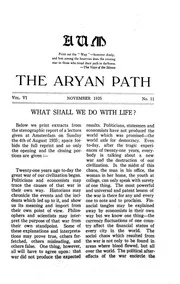
The Aryan Path Vol-II No-9
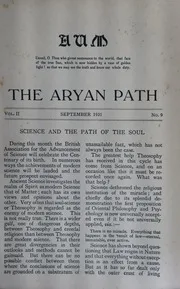
 74
74

The Aryan Path Vol-II No-9



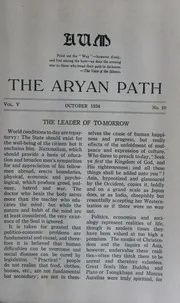
The Aryan Path Vol-II No-9 (1931) stands as a beacon of esoteric wisdom, meticulously curated by Shri B.P. Wadia. This journal is a treasure trove for modern esoteric seekers, offering a blend of Theosophical and Anthroposophical insights that remain relevant nearly a century after its publication. Wadia's editorial vision is clear: to present ancient truths in a manner that resonates with contemporary readers. The contributions from various thinkers, artists, and philosophers add depth and breadth to the journal, making it a comprehensive guide to spiritual philosophy. For those interested in the esoteric, this text provides a rich foundation for further exploration. The Aryan Path Vol-II No-9 is not just a historical artifact but a living document that continues to inspire and enlighten. Its value lies in its ability to bridge the gap between ancient wisdom and modern thought, making it an indispensable resource for anyone on a spiritual journey.
📝 Description
74
The Aryan Path Vol-II No-9 appeared in a period of active Theosophical discourse.
This issue of The Aryan Path, edited by Shri B.P. Wadia, continues the exploration of Theosophical teachings. It presents writings from various contributors, including thinkers, artists, and philosophers, all viewed through the framework of universal Theosophy. The journal aims to uncover hidden knowledge and truths considered to be beyond ordinary perception. Its content is designed for individuals seeking a deeper comprehension of the universe and the human psyche. The goal is to connect these ancient principles with contemporary understanding.
The publication acts as a resource for spiritual seekers. It provides insights and symbolic interpretations within the esoteric tradition. The editorial approach, under Wadia's guidance, reflects a connection to the original Theosophical work of H.P. Blavatsky and William Q. Judge. The material within this volume focuses on aligning modern thought with these established esoteric records.
The Aryan Path journal emerged from the Theosophical movement, initiated by Helena Blavatsky. This specific issue, Vol-II No-9, edited by B.P. Wadia, follows in the lineage of that tradition, connecting with the teachings of Blavatsky and William Q. Judge. Theosophy itself seeks to synthesize ancient religions, philosophies, and sciences, presenting a unified view of universal truth. It addresses concepts like karma, reincarnation, and the evolution of consciousness, aiming to reveal a hidden spiritual dimension to existence.
💡 Why Read This Book?
Reading The Aryan Path Vol-II No-9 (1931) today offers a unique opportunity to engage with ancient spiritual truths in a modern context. This journal provides a deep understanding of Theosophy and Anthroposophy, helping readers to explore the mystical dimensions of existence. It is an essential read for those seeking to enrich their spiritual journey with timeless wisdom. The insights and perspectives offered in this text can inspire personal growth and a deeper appreciation for the interconnectedness of all beings.
⭐ Reader Reviews
Honest opinions from readers who have explored this book.
❓ Frequently Asked Questions
What is the significance of The Aryan Path Vol-II No-9?
The Aryan Path Vol-II No-9 is significant for its commitment to presenting original and unaltered Theosophy, making ancient spiritual truths accessible to modern readers.
Who should read this journal?
This journal is ideal for those interested in esoteric studies, Theosophy, and Anthroposophy, as well as anyone seeking to deepen their spiritual understanding.
What themes are explored in The Aryan Path Vol-II No-9?
The journal explores themes such as spiritual truths, the interconnectedness of all beings, and the pursuit of higher knowledge through the lens of Theosophical philosophy.
🔮 Key Themes & Symbolism
Ancient Wisdom
The Aryan Path Vol-II No-9 looks at the ancient wisdom of Theosophy, offering insights into the hidden knowledge that has been passed down through the ages. This theme explores the esoteric traditions and symbolic interpretations that form the foundation of Theosophical thought.
Universal Perspective
The journal presents a universal perspective on Theosophical philosophy, inviting readers to explore the deeper dimensions of existence. This theme emphasizes the interconnectedness of all things and the quest for spiritual enlightenment.
Modern Interpretation
The contributions to this volume offer a modern interpretation of ancient wisdom, making it relevant for contemporary seekers of spiritual truth. This theme bridges the gap between the past and the present, offering a fresh perspective on timeless teachings.
💬 Memorable Quotes
Direct passages from the work, attributed to the author.
“The great truths of the Ancient Records”
— This phrase underscores the journal's mission to repeat ancient wisdom for modern times.
“Theosophical philosophy”
— The journal explores the depths of Theosophical thought, offering a universal perspective.
“Eminent thinkers, artists, and philosophers”
— The diverse contributions highlight the journal's body of esoteric insights.
“Hidden knowledge and symbolic depth”
— The Aryan Path looks at the mysteries of the occult, inviting readers to explore hidden truths.
“Spiritual enlightenment”
— The ultimate goal of the journal is to guide seekers on their path to spiritual awakening.
🌙 Esoteric Significance
Tradition
The Aryan Path Vol-II No-9 belongs to the Theosophical tradition, which seeks to uncover the hidden knowledge and ancient wisdom of the cosmos. It draws upon Hermetic and Gnostic principles, emphasizing the interconnectedness of all things and the quest for spiritual enlightenment.
Symbolism
Key symbols in this journal include the ancient records, universal perspective, and the quest for hidden knowledge. These symbols represent the deeper dimensions of existence and the mystical path to spiritual awakening.
Modern Relevance
The teachings of The Aryan Path Vol-II No-9 remain relevant today, influencing modern practitioners of Theosophy and Anthroposophy. Its exploration of ancient wisdom and esoteric insights continues to guide seekers on their spiritual journeys.
👥 Who Should Read This Book
Beginners in the field of Theosophy will find this journal an accessible entry point into the mysteries of the occult. Scholars of esoteric traditions will appreciate the depth and breadth of its esoteric insights. Spiritual seekers will be drawn to its exploration of ancient wisdom and the quest for spiritual enlightenment. Practitioners of mystical arts will benefit from its body of symbolic interpretations and philosophical significance.
📜 Historical Context
Published during a time of spiritual renewal and esoteric exploration, The Aryan Path Vol-II No-9 was envisioned to bring ancient wisdom into the modern era. Edited by Shri B.P Wadia, a disciple of H.P. Blavatsky and William Q Judge, this journal aimed to repeat the great truths of the Ancient Records for contemporary seekers. Its influence can be seen in the resurgence of interest in Theosophy and Anthroposophy, as well as in the works of modern esoteric practitioners who continue to draw upon its teachings.
📔 Journal Prompts
Reflect on the ancient wisdom presented in The Aryan Path and how it applies to your spiritual journey?
How does the universal perspective of Theosophy influence your understanding of the cosmos?
Consider the contributions of eminent thinkers, artists, and philosophers in the journal. Which perspectives resonate with you the most?
Explore the hidden knowledge and symbolic depth discussed in the journal. How do these mysteries enrich your spiritual practice?
What steps can you take to align with the ancient records and repeat the great truths for the modern era?
🗂️ Glossary
Theosophy
A spiritual philosophy that seeks to uncover the hidden knowledge and ancient wisdom of the cosmos.
Anthroposophy
A spiritual science that explores the inner dimensions of the human being and the cosmos.
Esoteric
Relating to hidden knowledge or mystical truths that are not widely understood.
Symbolism
The use of symbols to represent deeper meanings and spiritual truths.
Ancient Records
The timeless teachings and wisdom passed down through the ages, forming the foundation of Theosophical thought.
This book appears in 2 collections
🔮 Readers Also Liked
Browse all →







From the “Theosophy” Collection
View all →



More Free Theosophy & Anthroposophy Books
View all →