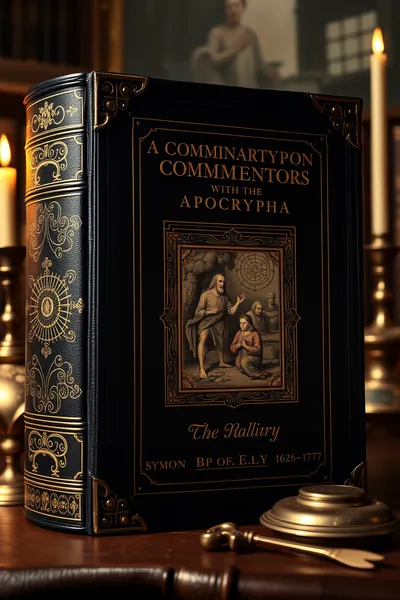
Religion of the Peacock Angel

 74
74

Religion of the Peacock Angel
Victoria Arakelova and Garnik S. Asatrian's "Religion of the Peacock Angel" provides a much-needed scholarly corrective to popular misconceptions surrounding the Yezidi faith. The authors meticulously detail the theological framework and historical trajectory of this ancient religion, offering a perspective grounded in deep research rather than sensationalism. A particular strength lies in their nuanced explanation of Melek Taus, the Peacock Angel, moving beyond facile demonization to illuminate the figure's complex role within Yezidi cosmology. However, the dense academic prose, while precise, may prove challenging for those unfamiliar with religious studies terminology. The work's detailed exploration of Yezidi cosmology, particularly its creation myths and the significance of tawasin, offers invaluable clarity. "Religion of the Peacock Angel" stands as a vital resource for serious scholarship on minority religions and esoteric traditions.
📝 Description
74
Victoria Arakelova and Garnik S. Asatrian's 2017 book examines the Yezidi faith's origins, beliefs, and practices.
This scholarly work by Victoria Arakelova and Garnik S. Asatrian provides a detailed examination of the Yezidi faith. It investigates the theological foundations and historical trajectory of this religion, often subjected to misunderstanding in Western circles. The authors move beyond surface-level accounts to discuss the Yezidi cosmology and ritual life in depth.
The book is primarily for academics, researchers of comparative religion, and students of esoteric traditions. It will also interest those studying minority religions, Middle Eastern cultures, or anyone seeking a thorough, objective perspective on the Yezidi people. This is not a brief introduction but a rigorous academic study.
The Yezidi faith has endured centuries of persecution and misrepresentation, frequently mischaracterized as devil worship due to confusion surrounding Melek Taus, the Peacock Angel. Arakelova and Asatrian situate the religion within its historical setting, tracing its development through periods of conflict and peace in Mesopotamia. The work considers how outside pressures shaped the faith's evolution and its members' self-understanding.
The Yezidi faith is often placed within the broader spectrum of minority religions and esoteric traditions emerging from the Middle East. Its unique cosmology, distinct from Abrahamic faiths, and its reverence for figures like Melek Taus have led to its study in relation to Gnosticism and other pre-Islamic spiritual currents. The book situates these beliefs within their historical context, offering a scholarly perspective on a tradition that has historically been subject to significant external misinterpretation.
💡 Why Read This Book?
• Gain a nuanced understanding of Melek Taus, the central figure of Yezidi worship, moving beyond common misinterpretations that label the faith as devil-worship. • Explore the significance of Lalish, the holiest Yezidi shrine, and its role in the religion's annual pilgrimage cycle, as detailed in the book. • Discover the structure and importance of the Yezidi sacred texts, such as the "Mishafa Res" and "Kitaba Cilwe," and their unique cosmological narratives.
⭐ Reader Reviews
Honest opinions from readers who have explored this book.
❓ Frequently Asked Questions
What is the primary focus of "Religion of the Peacock Angel"?
The book provides a scholarly examination of the Yezidi faith, focusing on its theological principles, historical development, and cultural practices, particularly the reverence for Melek Taus.
Who are the authors, Victoria Arakelova and Garnik S. Asatrian?
Victoria Arakelova and Garnik S. Asatrian are scholars specializing in religious studies and Middle Eastern cultures, bringing academic rigor to their analysis of the Yezidi religion.
What does "Peacock Angel" refer to in the Yezidi religion?
The "Peacock Angel" is the common English translation for Melek Taus, a central figure in Yezidi belief, who is revered as a divine being embodying wisdom and humility, not a demonic entity.
Is this book suitable for beginners interested in esoteric subjects?
While accessible to dedicated students, the book is written with an academic tone and assumes some familiarity with religious studies. It is ideal for researchers and those seeking in-depth knowledge.
What historical periods does the book cover regarding the Yezidi faith?
The work traces the Yezidi faith from its ancient origins through various historical periods, addressing its evolution amidst external pressures and persecutions in the Mesopotamian region.
What are some key concepts discussed in the book besides Melek Taus?
The book delves into concepts such as the Yezidi sacred hymns (tawasin), the importance of the pilgrimage site of Lalish, and unique Yezidi creation narratives and cosmology.
🔮 Key Themes & Symbolism
Melek Taus and Yezidi Theology
The central theme revolves around Melek Taus, the Peacock Angel, and the Yezidi interpretation of this figure. The authors meticulously dismantle the historical mischaracterizations that have led to the faith being labeled as devil-worship. Instead, they present Melek Taus as a divine entity embodying spiritual pride, wisdom, and a unique role in creation and cosmic governance, distinct from Abrahamic conceptions of fallen angels. This section illuminates the theological foundations that underpin Yezidi identity and practice.
Cosmology and Sacred Texts
This theme looks at the intricate cosmology of the Yezidi people, exploring their distinct creation myths and understanding of the universe. The work examines the significance of their sacred writings, including the "Mishafa Res" (Black Book) and the "Kitaba Cilwe" (Book of Revelation), analyzing their content and their role in transmitting religious doctrine. The concept of 'tawasin', sacred hymns, is also explored as a vital component of their spiritual expression and narrative tradition.
Ritual, Pilgrimage, and Identity
The book investigates the ritualistic dimensions of the Yezidi faith, with a particular focus on the sacred site of Lalish. This theme highlights the importance of pilgrimage to Lalish as a central tenet of Yezidi religious life and identity formation. It explores the annual rituals and practices associated with this holy place, examining how they reinforce community bonds, spiritual devotion, and the preservation of their unique cultural heritage amidst external challenges.
Historical Persecution and Resilience
A significant aspect of the work addresses the historical trajectory of the Yezidi people and their faith, marked by periods of intense persecution and misunderstanding. The authors document the external pressures and misrepresentations faced by the Yezidis, often stemming from their distinct religious practices and beliefs regarding Melek Taus. This section underscores the resilience of the Yezidi community in maintaining their traditions and identity through centuries of adversity.
💬 Memorable Quotes
Direct passages from the work, attributed to the author.
“The Yezidi faith is characterized by its reverence for Melek Taus, the Peacock Angel, a figure often misunderstood by outsiders.”
— This highlights the core theological distinction of the Yezidi religion, emphasizing that their central divine figure, the Peacock Angel, is subject to significant misinterpretation, forming the basis for much external prejudice.
“Lalish serves as the spiritual heart of the Yezidi people, a site of profound pilgrimage and ritual significance.”
— This emphasizes the geographical and spiritual centrality of Lalish, underscoring its role not just as a holy place but as a focal point for Yezidi communal identity and religious practice.
“The sacred hymns known as tawsîn are integral to the transmission of Yezidi cosmology and spiritual narratives.”
— This points to the importance of oral and written traditions within the Yezidi faith, specifically the tawsîn, as vehicles for preserving and conveying their unique religious worldview and stories.
“Centuries of external pressures have shaped the historical development and self-perception of the Yezidi community.”
— This acknowledges the long history of conflict and misunderstanding faced by the Yezidis, suggesting that their religion and identity have been forged in response to significant external forces and challenges.
“Yezidi cosmology presents a creation narrative and understanding of divine order distinct from Abrahamic traditions.”
— This directly addresses the unique theological framework of the Yezidi faith, stating that their foundational beliefs about creation and the divine structure of the universe differ markedly from more commonly known religious systems.
🌙 Esoteric Significance
Tradition
The Yezidi faith, as explored in this work, occupies a unique space often considered alongside heterodox or syncretic traditions within the broader spectrum of Middle Eastern religions. While not fitting neatly into established Western esoteric lineages like Hermeticism or Kabbalah, its cosmology, emphasis on divine intermediaries, and esoteric interpretations of scripture align with Gnostic principles of hidden knowledge and distinct creation narratives. The reverence for Melek Taus can be seen as a deviation from Abrahamic orthodoxy, positioning it within a lineage of ancient Mesopotamian and possibly Iranian dualistic or emanationist beliefs.
Symbolism
The primary symbol is Melek Taus, the Peacock Angel, representing divine wisdom, self-sufficiency, and humility – often misinterpreted as pride or rebellion. The peacock itself symbolizes beauty, immortality, and divine radiance. Another significant motif is the serpent, which in Yezidi tradition is often associated with purity and a guardian role, contrasting with its negative connotations in Abrahamic faiths. The number seven also holds importance, reflecting divine completeness and cosmic order within their theological framework.
Modern Relevance
Contemporary scholars and practitioners interested in minority religions, ancient Near Eastern beliefs, and counter-narratives to mainstream religious dogma draw significantly from studies like this. Thinkers exploring Gnosticism, Iranian religions, and the phenomenology of persecution find valuable insights into Yezidi resilience and unique theological positions. The work is essential for understanding the spiritual underpinnings of a community facing modern existential threats, providing context for their cultural survival and the preservation of their distinct esoteric worldview.
👥 Who Should Read This Book
• Researchers of comparative religion and Middle Eastern studies seeking detailed scholarly analysis of minority faiths. • Students of esoteric traditions interested in non-Abrahamic cosmologies and theological divergences. • Individuals focused on cultural preservation and understanding minority religious groups facing historical persecution.
📜 Historical Context
Published in 2014, "Religion of the Peacock Angel" emerged during a period of increased global awareness of the Yezidi people, tragically amplified by the ISIS genocide starting in 2014. The work by Arakelova and Asatrian arrived as a crucial scholarly intervention, countering decades of misrepresentation that often conflated Yezidism with Satanism. In the early 20th century, scholars like Friedrich Martin 1909's "Yezidi und Yezidenthum" began to systematically study the faith, but often through a lens colored by colonial or religious biases. This book builds upon and corrects earlier ethnographies, situating Yezidism within its complex Mesopotamian context and highlighting its ancient roots. It implicitly engages with the ongoing debate among scholars regarding the precise origins and influences on Yezidism, particularly its relationship to ancient Iranian and Mesopotamian religions, while addressing the reception of the faith by majoritarian Islamic societies.
📔 Journal Prompts
Reflect on the Yezidi concept of Melek Taus as embodying wisdom and humility.
Consider the significance of Lalish as a pilgrimage site for Yezidi identity.
Analyze the role of tawsîn in preserving Yezidi cosmology.
Explore the historical context of Yezidi persecution and its impact on their faith.
Compare the Yezidi creation narrative with other cosmological accounts studied.
🗂️ Glossary
Melek Taus
The central figure in Yezidi theology, often translated as the Peacock Angel. Revered as a divine being embodying wisdom, pride, and humility, distinct from demonic interpretations.
Lalish
The holiest temple and pilgrimage site for the Yezidi people, located in the Nineveh Plains region of Iraq. It is central to their religious rituals and identity.
Tawsîn
Sacred hymns or prayers within the Yezidi tradition. These texts are crucial for transmitting their cosmology, theology, and spiritual narratives across generations.
Mishafa Res
Literally 'Black Book,' one of the primary sacred texts of the Yezidi religion. It contains core doctrines, creation myths, and theological principles.
Kitaba Cilwe
The 'Book of Revelation,' another significant Yezidi sacred text. It complements the Mishafa Res by offering further insights into their cosmology and divine laws.
Yezidi
Adherents of the Yezidi religion, an ancient ethno-religious minority indigenous to Mesopotamia. They have a distinct language, culture, and spiritual tradition.
Mesopotamia
The historical region located in the Tigris–Euphrates river system, corresponding to modern-day Iraq and parts of northeastern Syria, Turkey, and Iran, where the Yezidi faith originated and is primarily practiced.
🔮 Readers Also Liked
Browse all →






More Free Sacred Texts & Gnosticism Books
View all →