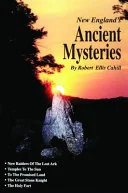
New England's Ancient Mysteries
 78
78

New England's Ancient Mysteries
Robert Ellis Cahill's New England's Ancient Mysteries presents a compelling compendium of enigmas scattered across the northeastern seaboard. The book functions as an excellent primer, meticulously detailing finds that defy easy categorization within conventional American history. Cahill’s strength lies in his thorough cataloging; the sheer volume of described sites—from inscribed rocks to stone dwellings and ritual enclosures—is impressive. One particularly arresting concept is the description of "well-made homes of rock," suggesting a level of architectural sophistication not typically associated with early settlers or indigenous populations. However, the work occasionally suffers from a lack of deeper interpretive frameworks, sometimes presenting intriguing evidence without fully exploring its implications or potential alternative explanations beyond "visitors from other lands." The initial blurb’s comparison to the "Reader's Digest of New England Archaeology" is apt for its breadth, but a more critical engagement with the material would have elevated it further. It remains a valuable resource for those curious about the region's unexplained past.
📝 Description
78
Robert Ellis Cahill's 1993 book, New England's Ancient Mysteries, examines unexplained artifacts and sites.
Published in 1993, Robert Ellis Cahill's New England's Ancient Mysteries details numerous archaeological and historical puzzles found throughout the northeastern United States. The book documents artifacts and locations that suggest visitors or settlers arrived before recorded colonial history. Cahill points to sophisticated building techniques, inscribed stones, and ceremonial sites that question established timelines of human activity in the area.
This volume is for amateur archaeologists, independent researchers, and anyone curious about pre-Columbian history and the mysterious remnants of early North American civilizations. It will interest those drawn to alternative historical accounts, megalithic constructions, and the study of ancient peoples who might have influenced New England. Cahill's work was released during a time of increased fascination with fringe archaeology and ancient puzzles, providing a regional perspective on wider global debates about early migrations and lost populations.
Cahill's research engages with historical narratives that begin with European arrival in the Americas. His work considers the possibility of earlier, non-indigenous presences, drawing comparisons to European megalithic traditions. The book appeared as interest in fringe archaeology and ancient mysteries grew, contributing a local focus to broader discussions about ancient migrations and forgotten civilizations.
💡 Why Read This Book?
• Gain an understanding of the specific types of archaeological anomalies Robert Ellis Cahill documented, such as the "carved faces" and "well-made homes of rock," providing concrete examples of pre-Columbian evidence often overlooked. • Explore the proposed connections between New England's stone structures and potential Celtic ritual sites, offering a tangible link to ancient European traditions that Cahill suggests may have had a presence. • Discover the extent of inscribed stones found in the region, learning about the unique messages and symbols left by unknown ancient settlers as presented in the book's catalog of finds.
⭐ Reader Reviews
Honest opinions from readers who have explored this book.
❓ Frequently Asked Questions
What kind of ancient remnants are discussed in New England's Ancient Mysteries?
The book details various remnants including inscribed stones with messages from unknown settlers, carved faces, rock-built dwellings, Celtic ritual sites, and dolmens scattered throughout New England states.
Who is Robert Ellis Cahill and when was New England's Ancient Mysteries first published?
Robert Ellis Cahill is the author of New England's Ancient Mysteries, which was first published in 1993. He compiled evidence of ancient sites and artifacts in the region.
What makes the "homes of rock" mentioned in the book significant?
These "well-made homes of rock" are significant because they suggest a level of construction and habitation by unknown ancient peoples that predates or exists outside of conventional historical accounts of settlement in New England.
Does the book focus on Native American history?
While acknowledging the presence of indigenous peoples, the book primarily focuses on evidence that suggests visitors or settlers from other lands, distinct from known Native American populations, may have inhabited New England.
What is the "Reader's Digest of New England Archaeology" reference about?
This reference, made by experts, highlights the book's comprehensive nature, suggesting it covers a wide range of finds and artifacts related to ancient history in New England, making it a broad overview.
Are the ancient remnants discussed found only in one New England state?
No, the book indicates that these remnants—including carved faces, rock homes, Celtic ritual sites, and dolmens—are scattered throughout the various New England states, suggesting a widespread ancient presence.
🔮 Key Themes & Symbolism
Megalithic Structures and Enigmatic Dwellings
Cahill meticulously documents a variety of megalithic and stone-built structures found across New England, moving beyond simple formations to describe "well-made homes of rock." These structures, often overlooked or reinterpreted within conventional archaeology, are presented as evidence of sophisticated, possibly pre-Columbian, habitation. The work invites readers to consider these sites not as natural formations but as deliberate constructions by unknown ancient peoples, challenging established narratives of early settlement and architectural development in North America.
Inscribed Stones and Ancient Messages
A significant portion of New England's Ancient Mysteries is dedicated to the study of stones bearing mysterious inscriptions. These are not mere geological curiosities but are presented as deliberate messages or records left by unknown ancient settlers. The book compiles examples of these carved faces and cryptic symbols, suggesting a lost form of communication or a historical record from visitors whose origins remain obscure. The sheer quantity and variety of these inscribed artifacts point to a sustained presence and a culture with a need to record or communicate.
Celtic and Other Transatlantic Connections
The work explores potential links between New England's ancient remnants and Old World traditions, particularly Celtic ritual sites and dolmens. Cahill posits that the presence of such structures suggests visitors from Europe or elsewhere who brought their building practices and ritualistic customs. This theme challenges the notion of isolated development in the Americas, proposing instead a history of transatlantic contact and cultural exchange long before the voyages of Columbus, supported by the physical evidence cataloged in the book.
Challenging Historical Timelines
Fundamentally, New England's Ancient Mysteries functions as a critique of established historical timelines. By presenting evidence of advanced settlements, complex constructions, and symbolic inscriptions, Cahill forces a re-evaluation of who was in North America and when. The book argues that the archaeological record in New England contains undeniable proof of habitation by peoples whose presence has been largely ignored or suppressed by mainstream historical accounts, thereby opening a dialogue about forgotten chapters of human history.
💬 Memorable Quotes
Direct passages from the work, attributed to the author.
“Hundreds of messages were cut into stone by unknown ancient settlers.”
— This statement expresses the book's core mystery: the existence of widespread, inscribed stones that suggest a communication system or historical record from people whose identity and origin are lost to time.
“making it quite apparent that visitors from other lands lived here hundreds of years ago.”
— This interpretation of the scattered remnants suggests a deliberate hypothesis that the book seeks to support: that New England was historically visited and inhabited by people from outside the conventional understanding of its early history.
“Called the "Reader's Digest of New England Archaeology," by experts in the field.”
— This external validation emphasizes the book's comprehensive scope and its role as a foundational text for understanding the breadth of unexplained archaeological findings in the region.
“this book covers all finds and sits by amateur and professional ancient artifact hunters since America was first settled.”
— This highlights the book's dual appeal and its function as a repository of knowledge gathered by both lay enthusiasts and trained professionals, covering a broad spectrum of discoveries.
💡 Key Ideas
Editorial paraphrase of the work's core concepts — not direct quotes.
Carved faces, well-made homes of rock, Celtic ritual sites, dolmens, and other ancient remnants are scattered throughout the New England states.
This quote highlights the diverse and tangible nature of the evidence Cahill presents, indicating that the anomalies are not isolated incidents but a widespread phenomenon across the region.
🌙 Esoteric Significance
Tradition
While not strictly adhering to a single esoteric lineage like Hermeticism or Kabbalah, Cahill's work taps into a vein of esoteric interest that seeks hidden histories and forgotten knowledge. It speaks to traditions that posit ancient, advanced civilizations predating current historical records, such as those influenced by Theosophy or Gnostic ideas of lost wisdom. The book's focus on physical remnants as keys to unlocking these mysteries aligns with a materialist-esoteric approach, where tangible artifacts are seen as evidence of spiritual or advanced cultural presences.
Symbolism
The inscribed stones serve as primary symbols, representing lost languages, forgotten knowledge, and the inherent human drive to communicate and record. "Carved faces" can be interpreted as ancestral markers, deities, or symbolic representations of the unknown peoples themselves. Dolmens and ritual sites, common across various ancient cultures, symbolize sacred spaces, astronomical alignments, or places of power, suggesting a continuity of spiritual practice and cosmic understanding that transcends conventional historical boundaries.
Modern Relevance
Contemporary thinkers and practitioners in fields like archaeoastronomy, fringe archaeology, and even certain New Age spiritual movements continue to draw upon Cahill's work. Researchers investigating ley lines, earth energies, and ancient sites often reference such cataloged anomalies as potential evidence of advanced ancient technologies or spiritual networks. The book's findings are relevant to modern discussions about indigenous rights and historical revisionism, prompting a re-examination of who has the authority to define the past and the potential for suppressed or overlooked histories.
👥 Who Should Read This Book
• Independent historical researchers seeking evidence that challenges established timelines of settlement in North America. • Amateur archaeologists and artifact hunters interested in cataloged anomalies and unexplained sites within the New England region. • Readers fascinated by mysteries, megalithic structures, and the possibility of forgotten civilizations predating known historical records.
📜 Historical Context
Robert Ellis Cahill's New England's Ancient Mysteries emerged in 1993, a time when fringe archaeology and alternative history were gaining traction outside academic circles. The work engaged with a burgeoning interest in pre-Columbian transatlantic contact and the existence of undocumented ancient civilizations in North America. It implicitly challenged the prevailing historical narrative, which largely began with European colonization and acknowledged indigenous populations as the primary inhabitants prior to that era. While mainstream archaeology focused on established timelines and known migrations, Cahill's book presented evidence that suggested a different story, one featuring visitors from "other lands" leaving behind megalithic structures and inscribed stones. This approach aligned with a broader cultural fascination with ancient mysteries, echoing themes found in works by authors like Erich von Däniken, though Cahill focused specifically on the New England landscape. The book's reception likely occurred within communities interested in archaeoastronomy, megalithic studies, and revisionist history, offering a localized exploration of these global curiosities.
📔 Journal Prompts
The "well-made homes of rock" and their implications for early habitation.
Interpreting the "messages cut into stone" by unknown ancient settlers.
The significance of "Celtic ritual sites" found in New England.
Contrasting the book's findings with conventional historical accounts of the region.
Personal reflections on the "carved faces" and their potential meaning.
🗂️ Glossary
Dolmens
Megalithic tombs, typically consisting of three or more upright stones supporting a large flat horizontal capstone. They are found in various parts of the world and are often associated with ancient burial practices or ceremonial sites.
Celtic Ritual Sites
Locations believed to have been used for religious ceremonies or practices by ancient Celtic peoples. These sites can include standing stones, stone circles, or earthworks, and their identification in New England suggests possible transatlantic connections.
Inscribed Stones
Rocks bearing deliberate markings, symbols, or text carved by human hands. In the context of the book, these are presented as potential records or messages from unknown ancient settlers, distinct from natural formations.
Carved Faces
Anthropomorphic representations or depictions of faces found on stones or other natural formations. These are interpreted as potential artifacts or artistic expressions by ancient inhabitants of New England.
Ancient Remnants
Physical evidence or traces left behind by past civilizations or peoples. This term broadly encompasses artifacts, structures, inscriptions, and other archaeological findings from antiquity.
Visitors from other lands
A concept used in the book to refer to peoples who may have arrived in New England from regions outside the known indigenous populations or early European colonists, suggesting pre-Columbian transatlantic contact.
America was first settled
Refers to the historical period of initial human habitation in the Americas. The book challenges the conventional understanding of this period by presenting evidence of potentially earlier, non-indigenous settlers.
This book appears in 1 collection
🔮 Readers Also Liked
Browse all →







From the “Templar Knights” Collection
View all →




![EBOOK COLLECTION ( PART 8) [ CSI][h 33t]](/img/thumb/ebook-collection-part-8-csi-h-33t.webp)
More Free Esoteric History & Biography Books
View all →