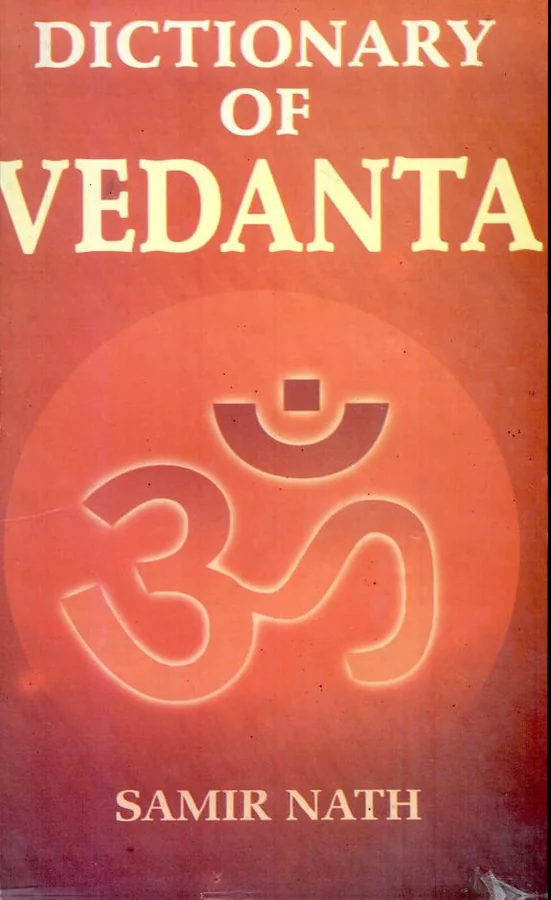
Dictionary of Vedanta
 71
71

Dictionary of Vedanta
Samir Nath’s Dictionary of Vedanta offers a welcome clarity to a philosophical landscape often perceived as impenetrable. Its strength lies in its systematic organization; by treating Vedanta not as a monolithic entity but as a spectrum of thought, Nath allows readers to trace the lineage of ideas from ancient Upanishadic pronouncements to later devotional and monistic elaborations. The entry on Maya, for instance, effectively distinguishes between the illusory nature of empirical reality and the ultimate non-dual reality of Brahman, a distinction crucial for understanding Advaita Vedanta. However, the dictionary’s encyclopedic nature, while its primary virtue, can also be a limitation for those seeking a narrative flow. The entries, though accurate, sometimes feel disconnected, requiring the reader to actively synthesize the information. A more extended discussion on the historical development of the differing sub-schools, perhaps linking them more explicitly to specific philosophical debates of their time, would have enhanced its value. Nevertheless, for a direct, fact-based exploration of Vedanta’s conceptual framework, it is an indispensable resource.
📝 Description
71
Samir Nath's Dictionary of Vedanta, published in 2002, defines key terms and figures in Indian philosophy.
This 2002 reference work by Samir Nath provides a structured guide to the Vedanta tradition. It defines essential concepts, explains philosophical doctrines, and introduces significant figures within this school of Hindu thought. The dictionary aims to make complex ideas accessible to a wider readership, serving as a useful resource for students, scholars, and those interested in the spiritual and philosophical foundations of Hinduism. It covers the tradition's development from its Vedic roots to modern interpretations. The book clarifies terms like Brahman, Atman, Maya, Karma, and Moksha, alongside the distinct views of major Vedanta thinkers and sub-schools. Readers will find explanations of Advaita, Vishishtadvaita, and Dvaita philosophies, offering clarity on differing perspectives on reality and consciousness. This systematic compilation makes ancient teachings available in a contemporary format.
Nath's dictionary is organized alphabetically, allowing for quick lookups of specific terms or concepts. It is designed to be a practical tool for anyone seeking to understand Vedanta's intricate philosophical system. The author bridges the gap between dense textual analysis and a more general audience interested in comparative religion and mysticism. The work is particularly helpful for understanding the commentaries that shaped Vedanta, such as those by Adi Shankara, and how they interpret the Upanishads and other foundational Vedic texts. Its utility extends to those studying comparative religion or seeking a deeper grasp of Hindu philosophical underpinnings.
Vedanta, meaning 'the end of the Vedas,' represents one of the six orthodox schools of Hindu philosophy. Its core aim is to interpret the Upanishads, offering insights into the nature of ultimate reality (Brahman) and the self (Atman). The tradition grapples with questions of consciousness, liberation (Moksha), and the relationship between the individual soul and the divine. Major developments, particularly the Advaita school through Adi Shankara, emphasize non-dualism, positing the identity of Atman and Brahman. Other sub-schools, like Vishishtadvaita and Dvaita, maintain distinctions between God, the soul, and the world. This philosophical system forms a significant part of the contemplative and mystical traditions within Hinduism.
💡 Why Read This Book?
• Gain precise definitions of core Vedanta terms like Brahman and Atman, enabling a deeper comprehension of Advaita Vedanta’s non-dualistic philosophy as presented in the Upanishads. • Understand the distinct historical contributions of key figures such as Adi Shankara, who significantly shaped the Advaita school through his commentaries, offering insight into philosophical evolution. • Clarify the concept of Maya, differentiating its role in various Vedanta sub-schools and understanding its implications for perceived reality and spiritual liberation (Moksha).
⭐ Reader Reviews
Honest opinions from readers who have explored this book.
❓ Frequently Asked Questions
What is the primary focus of Samir Nath's Dictionary of Vedanta?
The book focuses on demystifying the core concepts, philosophical schools, and principal figures of Vedanta, providing a structured and accessible reference for understanding this influential school of Indian philosophy.
When was the Dictionary of Vedanta first published?
Samir Nath's Dictionary of Vedanta was first published in 2002, reflecting a modern effort to collate and explain ancient philosophical traditions.
Which historical periods or texts are most relevant to the concepts in this dictionary?
The dictionary's concepts are rooted in texts like the Upanishads and are developed through the commentaries and philosophies of figures like Adi Shankara, primarily from the Vedic period through to medieval Indian intellectual history.
Does the dictionary explain different schools of Vedanta, like Advaita?
Yes, the work covers major Vedanta sub-schools including Advaita (non-dualism), Vishishtadvaita (qualified non-dualism), and Dvaita (dualism), explaining their unique doctrines and interpretations.
Who would benefit most from using this dictionary?
Students of Indian philosophy, comparative religion scholars, and individuals new to Vedanta seeking a clear, organized reference point for its complex philosophical ideas and terminology.
What key terms can I expect to find defined in the book?
Key terms such as Brahman, Atman, Maya, Karma, and Moksha are thoroughly defined, along with numerous other Sanskrit philosophical and technical terms central to Vedanta.
🔮 Key Themes & Symbolism
The Nature of Ultimate Reality (Brahman)
This theme centers on the Vedanta concept of Brahman, the singular, unchanging, ultimate reality that underlies all existence. The dictionary meticulously defines Brahman, differentiating its attributeless (Nirguna) and attributeful (Saguna) aspects as understood across various schools. It explores how different commentators, notably Adi Shankara, interpret Brahman as the sole true existent, contrasting it with the phenomenal world perceived through Maya. Understanding Brahman is paramount for grasping the monistic or qualified monistic perspectives that define much of Vedanta's metaphysical discourse.
The Self and Liberation (Atman & Moksha)
Central to Vedanta is the exploration of Atman, the individual self or soul, and its relationship to Brahman. The dictionary clarifies the Vedantic assertion that Atman is ultimately identical with Brahman in Advaita, or in some schools, a distinct yet dependent part of it. This leads to the concept of Moksha, liberation from the cycle of birth and death (samsara). The text details how the realization of Atman's true nature, achieved through knowledge and spiritual practice, is the means to attaining this ultimate freedom from suffering and ignorance.
Illusion and the Phenomenal World (Maya)
The concept of Maya, often translated as illusion or cosmic creative power, is extensively covered. The dictionary explains how Maya is responsible for the appearance of multiplicity and individuality in a world that is, ultimately, non-dual Brahman. It distinguishes Maya from outright non-existence, describing it as a power that veils reality and projects the empirical world. Understanding Maya is crucial for comprehending why individuals perceive a world of separate objects and selves, and how this perception obscures the underlying unity.
The Authority of the Vedas
Vedanta, meaning 'the end of the Vedas,' inherently places the Vedic scriptures fundamentally, . This theme examines the foundational authority attributed to the Upanishads, the philosophical portions of the Vedas. The dictionary details how various Vedantic schools interpret these ancient texts, often using commentaries by figures like Adi Shankara to establish their doctrines. The emphasis on Vedic authority distinguishes Vedanta from other Indian philosophical systems and underscores its role as an orthodox (astika) school within Hinduism.
💬 Memorable Quotes
Direct passages from the work, attributed to the author.
“Brahman is the only reality, the world is unreal, and the individual soul is non-different from Brahman.”
— This statement captures the core tenet of Advaita Vedanta, emphasizing the ultimate oneness of all existence and the illusory nature of perceived duality. It's a foundational principle for understanding the non-dualistic worldview promoted by philosophers like Adi Shankara.
“Maya veils Brahman and projects the world.”
— This concise explanation highlights the dual function of Maya: it obscures the true nature of ultimate reality (Brahman) and simultaneously creates the appearance of the diverse, phenomenal universe we experience.
“The goal of Vedanta is Moksha, liberation from samsara.”
— This defines the ultimate aim of Vedantic practice and philosophy, which is freedom from the endless cycle of birth, death, and suffering, achieved through spiritual knowledge and realization.
“Atman is the true self, distinct from the body, mind, and senses.”
— This interpretive quote emphasizes the Vedantic understanding of the self as an eternal, unchanging essence, separate from the transient physical and mental components of an individual.
“The difference between schools lies in their interpretation of the relationship between God, the world, and the soul.”
— This highlights that while Vedanta shares common scriptural roots, its diverse sub-schools (like Advaita, Vishishtadvaita, Dvaita) diverge significantly in their metaphysical explanations of these fundamental relationships.
🌙 Esoteric Significance
Tradition
Vedanta is a central pillar of the Hindu philosophical tradition, recognized as one of its six orthodox (astika) schools. While not typically categorized within Western esoteric lineages like Hermeticism or Kabbalah, its exploration of consciousness, ultimate reality, and liberation holds profound spiritual and metaphysical significance. It directly addresses the fundamental questions of existence, the nature of the self, and the path to spiritual realization, aligning with the core concerns of many esoteric paths seeking direct experience of the divine or absolute.
Symbolism
Key symbols in Vedanta include 'Om' (Aum), the primordial sound representing Brahman and the totality of existence, often depicted visually. The lotus flower symbolizes purity, spiritual awakening, and the unfolding of consciousness, often associated with deities like Brahma or Lakshmi. The concept of the 'Neti Neti' ('not this, not this') from the Brihadaranyaka Upanishad is a symbolic method of negation used to approach the ineffable Brahman, stripping away all conceptual limitations to arrive at pure being.
Modern Relevance
Contemporary thinkers and spiritual practitioners across various disciplines continue to draw from Vedanta. Its concepts of non-duality (Advaita) have influenced modern psychology and consciousness studies, particularly in understanding self-identity and subjective experience. Practices derived from Vedanta, such as meditation and yogic philosophy, are globally popular. Modern gurus and philosophical writers often reinterpret Vedantic principles for contemporary audiences, making concepts like Maya and Brahman relevant to discussions on reality, illusion, and the search for meaning in the 21st century.
👥 Who Should Read This Book
• Students of comparative religion and world philosophies will find a structured overview of a major Eastern tradition, facilitating academic study and cross-cultural understanding. • Aspiring practitioners of meditation and mindfulness seeking to understand the philosophical underpinnings of Eastern contemplative practices will gain clarity on concepts like Atman and the nature of reality. • Individuals interested in the history of ideas and ancient metaphysics will appreciate the detailed definitions and historical context of a philosophical system that has shaped global thought for millennia.
📜 Historical Context
Vedanta, meaning 'the end of the Vedas,' emerged as one of the six orthodox schools of Hindu philosophy, with its foundational texts, the Upanishads, dating back to the late Vedic period (c. 800-200 BCE). Its systematic development, however, is largely attributed to the commentaries of Adi Shankara in the 8th century CE, who revitalized and systematized the Advaita (non-dualism) school. Shankara's prolific writings and establishment of monastic centers profoundly shaped subsequent Vedantic thought. Other significant figures like Ramanujacharya (11th-12th century) and Madhvacharya (13th century) later established competing schools, Vishishtadvaita (qualified non-dualism) and Dvaita (dualism) respectively, presenting differing interpretations of the Vedas and the nature of reality. Samir Nath's Dictionary of Vedanta (2002) arrives in an era where global interest in Indian philosophies has surged, offering a modern compilation that helps to clarify these distinct, often divergent, intellectual traditions for a contemporary audience.
📔 Journal Prompts
Brahman as the sole reality: How does this concept challenge everyday perceptions of the world?
The function of Maya: Reflect on instances where perceived reality may be influenced by illusion.
Atman versus the empirical self: Differentiate your sense of 'I' from the eternal self.
Moksha as liberation: What does freedom from the cycle of existence mean to you?
The authority of the Upanishads: Consider the role of ancient texts in defining spiritual truths.
🗂️ Glossary
Brahman
The ultimate, unchanging, all-pervading reality in Vedanta. It is the supreme cosmic spirit and the source of all existence, often described as both attributeless (Nirguna) and with attributes (Saguna).
Atman
The individual self or soul. In Advaita Vedanta, Atman is identical with Brahman. In other schools, it is considered a part of Brahman or eternally distinct but related.
Maya
Cosmic illusion or the power that conceals the true nature of Brahman and projects the phenomenal world of multiplicity and diversity.
Moksha
Liberation or release from the cycle of birth, death, and rebirth (samsara). It is the ultimate goal of spiritual practice in Vedanta.
Samsara
The continuous cycle of birth, death, and reincarnation, driven by karma. Liberation from samsara is Moksha.
Upanishads
The philosophical and speculative texts forming the concluding part of the Vedas. They are the primary source texts for Vedanta philosophy.
Advaita Vedanta
A prominent school of Vedanta emphasizing non-duality, positing that Brahman is the only reality and the individual soul (Atman) is identical with Brahman.
This book appears in 1 collection
🔮 Readers Also Liked
Browse all →







From the “Vedanta” Collection
View all →






More Free Sacred Texts & Gnosticism Books
View all →