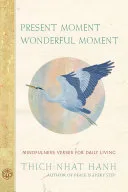
Present Moment Wonderful Moment
 71
71

Present Moment Wonderful Moment
Thich Nhat Hanh’s "Present Moment Wonderful Moment" is not a book one reads cover-to-cover, but rather a companion to be dipped into, a collection of gentle nudges toward awareness. The strength lies in its simplicity; the gathas themselves are elegantly brief, designed for effortless integration into the most mundane moments. For instance, the practice of reciting a verse while washing dishes offers a concrete, actionable path to grounding oneself. However, the book's very accessibility can be its limitation. For those deeply entrenched in complex philosophical inquiry, the straightforward verses might feel insufficient, lacking the depth required to unpack deeper existential concerns. The passage on "coming back to ourselves" during a simple act, like drinking tea, encapsulates the book's essence: finding the extraordinary in the ordinary. Ultimately, it serves as a serene reminder of the power residing in everyday awareness.
📝 Description
71
Published in 2002, "Present Moment Wonderful Moment" contains over 70 poetic meditations, or gathas, for daily mindfulness.
This volume collects over 70 short verses, called gathas, that Thich Nhat Hanh designed to weave mindfulness into everyday actions. First released in December 2002, the book presents these verses as simple, repeatable phrases. Reciting them during routine tasks can shift perception, turning mundane activities into moments of presence. The book aims to make the abstract idea of mindfulness more concrete through these poetic aids. It is for people interested in contemplative practices or those looking to reduce stress and connect with themselves more deeply. Beginners to mindfulness will find the verses an easy way to start, while those already familiar with Zen or Buddhist philosophy can use them to deepen their practice. Anyone feeling overwhelmed by modern life can find calm and self-connection within its pages.
Thich Nhat Hanh, a Vietnamese Zen Buddhist monk, popularized mindfulness and contemplative practices globally. This 2002 collection emerged as mindfulness gained traction in Western secular settings, moving beyond purely religious or academic contexts. His work connected Buddhist psychology and ethics with practical applications for daily life, influencing stress reduction programs and therapeutic interventions.
💡 Why Read This Book?
• You will learn to transform mundane chores into meditative practice by using the specific "gathas" provided, as exemplified by the instruction to recite verses while washing dishes, a core concept from the 2002 publication. • You will discover how to cultivate a sense of peace during everyday transitions, such as waiting in line, by employing the short, poetic mindfulness verses, a key element highlighted in the book's structure. • You will gain a practical method for returning to your own center amidst life's demands, understanding that moments of mindfulness are available even during routine activities like driving, a central tenet of Thich Nhat Hanh's teaching.
⭐ Reader Reviews
Honest opinions from readers who have explored this book.
❓ Frequently Asked Questions
What are 'gathas' as presented in Thich Nhat Hanh's 'Present Moment Wonderful Moment'?
Gathas are short, poetic verses or mindfulness chants intended to be recited during everyday activities. Thich Nhat Hanh uses them in this 2002 book to help readers cultivate present-moment awareness while performing tasks like washing dishes or walking.
How does 'Present Moment Wonderful Moment' differ from other mindfulness books?
This book focuses specifically on 'gathas,' simple verses for daily actions, making mindfulness highly practical and integrated into routine. Published in 2002, it offers over 70 such verses, emphasizing accessibility over complex theory.
Is this book suitable for someone new to Buddhism?
Yes, 'Present Moment Wonderful Moment' is ideal for beginners. Its focus on simple gathas and everyday actions, as presented in the 2002 edition, makes mindfulness accessible without requiring prior knowledge of Buddhist philosophy.
What is the primary benefit of practicing the meditations in this book?
The primary benefit is cultivating present-moment awareness and finding calm within daily routines. By using gathas, as suggested in the book's 2002 publication, readers can transform ordinary moments into opportunities for peace and self-connection.
Who is Thich Nhat Hanh and why is his work significant?
Thich Nhat Hanh was a globally respected Vietnamese Zen Buddhist monk, peace activist, and author. His teachings, widely disseminated since the mid-20th century, have been instrumental in introducing mindfulness and engaged Buddhism to the West.
Can these gathas be used for stress reduction?
Absolutely. The gathas are designed to interrupt cycles of anxious thought by redirecting focus to the present action. Reciting them, as encouraged in the 2002 book, provides a simple yet effective tool for stress reduction.
🔮 Key Themes & Symbolism
Gathas as Mindfulness Anchors
The central theme is the use of 'gathas'—short, poetic verses—as practical tools for cultivating mindfulness. These are not abstract philosophical statements but actionable phrases designed to be recited during everyday activities. The book, first published in 2002, presents over 70 such gathas, illustrating how simple actions like washing dishes or standing in line can become opportunities to return to oneself. This approach democratizes mindfulness, making it accessible without extensive training, by anchoring awareness to the present moment through simple linguistic and somatic engagement.
The Sacredness of the Ordinary
This work posits that the mundane aspects of life are not obstacles to spiritual practice but its very ground. The 'present moment' is inherently 'wonderful' when approached with awareness. By encouraging the recitation of gathas during routine tasks, Thich Nhat Hanh reframes daily existence as a continuous opportunity for awakening. This perspective challenges the common perception that spiritual fulfillment requires grand gestures or isolated retreats, instead finding it in the quiet dignity of everyday actions and experiences.
Returning to Oneself
A recurring concept is the idea of 'coming back to ourselves.' In a world that constantly pulls our attention outward, the gathas serve as gentle invitations to re-center. Whether one is driving, working, or simply breathing, the practice advocated is to use the chosen verse as a way to interrupt distraction and reconnect with one's inner state. This internal re-anchoring is presented as the foundation for clarity, peace, and a more authentic way of living, accessible at any moment.
💬 Memorable Quotes
Direct passages from the work, attributed to the author.
“Even washing the dishes is a wonderful moment.”
— This interpretation highlights the book's core message: that profound peace and awareness are not exclusive to grand events but can be found within the simplest, most routine activities of daily life, transforming the mundane into the sacred.
“When we focus our mind on a gatha, we return to ourselves.”
— This signifies the power of intention and focused attention through simple phrases. It suggests that the act of reciting a gatha acts as a direct pathway to re-establishing a connection with one's inner being, away from external distractions.
“The present moment is the only moment available to us.”
— This statement underscores the impermanence of time and the reality of our lived experience. It serves as a direct encouragement to engage fully with whatever is happening right now, as it is the only true point of contact with life.
“Breathing in, I calm my body. Breathing out, I smile.”
— This is an example of a gatha that links a basic physiological action (breathing) with a mental state (calmness) and an outward expression (a smile), demonstrating the simple, integrated approach to mindfulness taught in the book.
💡 Key Ideas
Editorial paraphrase of the work's core concepts — not direct quotes.
Do anything, but let it produce a good result.
This quote emphasizes the ethical dimension of mindfulness. It suggests that awareness cultivated through practices like using gathas should naturally lead to actions that are beneficial, not just for oneself but for the world around.
🌙 Esoteric Significance
Tradition
While Thich Nhat Hanh's teachings are rooted in Mahayana Buddhism, specifically Zen, this work can be seen as aligning with broader esoteric principles of present-moment awareness and the sacredness of the mundane. Esoteric traditions often emphasize inner transformation and the discovery of hidden potentials within ordinary life. The use of 'gathas' as mnemonic devices or ritualistic phrases echoes practices found in various mystical traditions that utilize focused repetition to alter consciousness and achieve spiritual insight, though Hanh's approach is deliberately non-dogmatic and secular-friendly.
Symbolism
The primary 'symbol' is the 'present moment' itself, representing a gateway to ultimate reality or true self, free from the illusions of past regret or future anxiety. The 'wonderful moment' symbolizes the inherent beauty and peace accessible when one is fully present. Ordinary actions like 'washing dishes' or 'standing in line' function as symbolic crucibles, transforming the mundane into the sacred through mindful engagement, thereby revealing the extraordinary hidden within the commonplace.
Modern Relevance
Thich Nhat Hanh's emphasis on accessible, everyday mindfulness continues to be highly relevant. Contemporary thinkers and practitioners in fields ranging from positive psychology to secular contemplative practices draw inspiration from his methods. His work is foundational for many modern mindfulness apps, corporate wellness programs, and therapeutic approaches that seek to integrate simple, actionable techniques for mental well-being, demonstrating a lasting impact on how mindfulness is understood and applied globally.
👥 Who Should Read This Book
• Individuals new to mindfulness seeking practical, simple techniques to reduce daily stress and cultivate inner calm. • Practitioners of Zen or Buddhist meditation looking for accessible verses to deepen their present-moment awareness during routine activities. • Anyone feeling overwhelmed by modern life and searching for gentle, poetic reminders of how to find peace and appreciation in everyday moments.
📜 Historical Context
Published in December 2002, "Present Moment Wonderful Moment" arrived during a significant period of secularization and popularization of mindfulness practices, largely fueled by figures like Jon Kabat-Zinn and his Mindfulness-Based Stress Reduction (MBSR) program, which gained prominence throughout the 1990s. Thich Nhat Hanh, a Vietnamese Zen master whose exile from Vietnam in 1966 and subsequent activism brought him international attention, was already a prolific author by the early 2000s, bridging Buddhist philosophy with accessible, engaged practice. His work offered a distinct, gentle, and poetically framed approach compared to the more clinical or psychological framing often seen in Western mindfulness research at the time. While Buddhist psychology was increasingly studied, works like Hanh's made its core tenets, particularly the concept of mindful living, readily available to a broad, non-academic audience, contributing to its widespread adoption beyond traditional religious contexts.
📔 Journal Prompts
The practice of reciting a gatha while washing the dishes.
Returning to oneself during mundane activities like driving.
The concept of the 'present moment' as a 'wonderful moment'.
Finding calm and smiling during the simple act of breathing.
Integrating gathas into daily routines for greater peace.
🗂️ Glossary
Gatha
A short verse, poem, or mindfulness chant used as a prompt to cultivate present-moment awareness during everyday activities. Thich Nhat Hanh uses these in "Present Moment Wonderful Moment" to anchor the practitioner to the here and now.
Mindfulness
A state of active, open attention on the present. It involves observing one's thoughts, feelings, bodily sensations, and surrounding environment without judgment. In this book, it's cultivated through gathas.
Present Moment
The current moment in time, considered the only reality we truly experience. The book emphasizes that this moment, however ordinary, holds the potential for wonder and peace when approached with awareness.
Returning to Oneself
The act of bringing one's scattered attention back to one's own body and mind, often through a focal point like a gatha or the breath. It signifies re-establishing inner connection and presence.
Daily Routines
Regularly performed actions or sequences of actions that constitute everyday life, such as eating, bathing, or commuting. The book frames these as prime opportunities for practicing mindfulness.
Poetic Meditations
Short, expressive verses designed not only to calm the mind but also to inspire and evoke a sense of beauty or presence, as seen in the gathas presented in this collection.