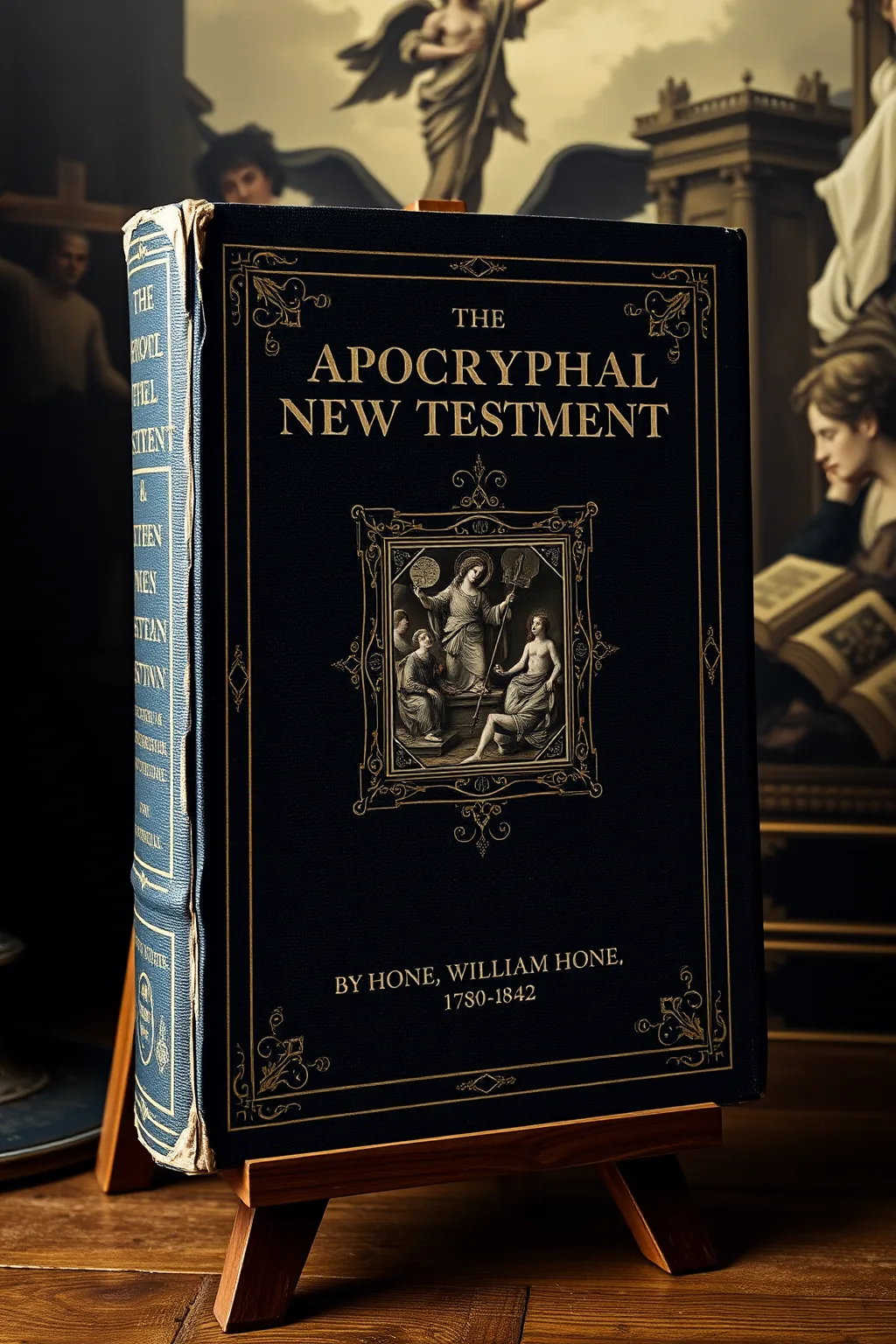
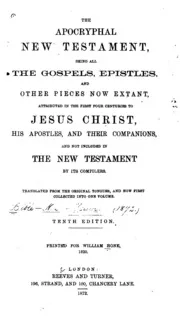
The Apocryphal New Testament, being all the gospels, epistles, and other pieces now extant; attributed in the first four centuries to Jesus Christ, His apostles, and their companions, and not included in the New Testament by its compilers
 74
74

The Apocryphal New Testament, being all the gospels, epistles, and other pieces now extant; attributed in the first four centuries to Jesus Christ, His apostles, and their companions, and not included in the New Testament by its compilers



William Hone's 'The Apocryphal New Testament' is a treasure trove for anyone interested in the esoteric and occult dimensions of early Christianity. This collection of apocryphal texts, excluded from the canonical New Testament, provides a fascinating glimpse into the diverse and often contradictory beliefs that flourished in the first four centuries of the Christian era. For modern esoteric seekers, this book is an invaluable resource, offering a wealth of hidden knowledge and alternative perspectives that challenge conventional religious narratives. The meticulous compilation and presentation of these texts make it an essential read for those interested in Gnosticism, occult studies, and the hidden histories of religion. The Apocryphal New Testament is a must-have for anyone seeking to expand their spiritual and intellectual horizons.
📝 Description
74
William Hone published 'The Apocryphal New Testament' in 1820, gathering texts from Christianity's first four centuries.
This volume collects gospels, epistles, and other writings attributed to Jesus Christ, his apostles, and their associates, dating from the first four centuries of the Common Era. These texts were not included in the standard biblical canon. William Hone's compilation aims to present these often overlooked documents to a wider audience.
The writings contain symbolic language and mystical perspectives that differ from mainstream Christian narratives. They offer insights into a broader range of beliefs and practices present during early Christianity. Readers will find discussions on subjects like the infancy narratives of Jesus, dialogues with apostles, and visions of the afterlife.
This collection serves as a resource for understanding the diverse spiritual currents within early Christianity. It allows for a closer examination of texts that influenced later esoteric traditions and Gnostic thought.
This collection falls within the study of early Christian literature that lies outside the orthodox canon. Such texts often preserve alternative theological interpretations and mystical experiences that were not universally accepted. They connect to traditions that later developed into various Gnostic schools and continuing esoteric Christian movements. The inclusion of these documents allows for a comparative study of early Christian beliefs, highlighting the diversity present in the period before widespread doctrinal standardization.
💡 Why Read This Book?
Reading 'The Apocryphal New Testament' today offers readers a unique opportunity to explore the hidden and often suppressed texts of early Christianity. This book provides a deeper understanding of the spiritual and intellectual landscape of the early Christian era, shedding light on the complex and multifaceted nature of faith and belief. For those interested in Gnosticism, occult studies, and the hidden histories of religion, this collection of esoteric texts is an invaluable resource that can enrich their spiritual journey and expand their knowledge of alternative religious traditions.
⭐ Reader Reviews
Honest opinions from readers who have explored this book.
❓ Frequently Asked Questions
What are the Apocryphal Gospels?
The Apocryphal Gospels are early Christian texts that were not included in the canonical New Testament. They offer alternative narratives and perspectives on the life and teachings of Jesus Christ and His apostles.
Why were these texts excluded from the New Testament?
These texts were excluded for various reasons, including theological differences, political considerations, and efforts to standardize Christian doctrine.
Who should read this book?
This book is ideal for scholars, students, and seekers of esoteric knowledge interested in Gnosticism, occult studies, and the hidden histories of early Christianity.
🔮 Key Themes & Symbolism
Hidden Gospels
The Apocryphal New Testament reveals hidden gospels that were excluded from the canonical New Testament. These texts offer alternative perspectives on the life and teachings of Jesus Christ, providing a rich source of esoteric and mystical insights. They challenge conventional understandings of early Christianity and invite readers to explore the deeper, often overlooked layers of spiritual exploration.
Symbolism and Mysticism
These apocryphal texts are imbued with profound symbolism and mystical insights that have fascinated seekers for centuries. They offer a window into the hidden knowledge that shaped the foundations of Western religious tradition. For those drawn to the mystical and the occult, these texts provide a journey into the philosophical significance of early Christian thought.
Early Christian Diversity
The collection highlights the diversity of early Christian thought, revealing the body of spiritual experiences that emerged in the first four centuries of the Common Era. These texts challenge the notion of a monolithic early Christianity and offer a glimpse into the esoteric traditions that flourished during this time. They are a valuable resource for scholars and seekers of hidden knowledge.
💬 Memorable Quotes
Direct passages from the work, attributed to the author.
“The way of truth is narrow, and few find it.”
— This saying underscores the esoteric nature of spiritual paths, accessible only to those who seek deeply and sincerely.
“Blessed are the meek, for they shall inherit the earth.”
— This phrase suggests that true spiritual power lies in humility and inner strength, rather than external dominance.
💡 Key Ideas
Editorial paraphrase of the work's core concepts — not direct quotes.
The kingdom of heaven is within you and all around you, not in buildings of wood and stone.
This quote emphasizes the inner, mystical nature of spiritual experience, challenging external religious institutions.
Seek and you shall find; knock and it shall be opened unto you.
This passage encourages active spiritual seeking and the pursuit of hidden knowledge, a central theme in Gnostic traditions.
The light that shines in darkness is the true light, which enlightens every man that comes into the world.
This quote highlights the universal nature of spiritual illumination, a key concept in many mystical traditions.
🌙 Esoteric Significance
Tradition
This book belongs to the Gnostic tradition, which emphasizes the pursuit of hidden knowledge and the inner, mystical experience of spiritual enlightenment. Gnosticism often challenges conventional religious doctrines and offers alternative interpretations of sacred texts. These apocryphal writings are a key resource for understanding the diverse and often esoteric spiritual traditions that flourished in the early centuries of the Common Era.
Symbolism
The texts are rich in symbolism, with key symbols such as light, darkness, the kingdom of heaven, and the narrow path representing profound spiritual concepts. Light, for example, symbolizes spiritual illumination and the true nature of reality, while the narrow path signifies the esoteric and challenging nature of the spiritual journey.
Modern Relevance
These texts remain relevant today for modern practitioners of esoteric arts and spiritual seekers. They offer valuable insights into the mystical underpinnings of Western religious traditions and provide a rich source of symbolism and philosophical depth. Many contemporary spiritual movements and practices draw upon these ancient texts, highlighting their enduring significance in the quest for hidden knowledge and spiritual enlightenment.
👥 Who Should Read This Book
This book is ideal for beginners interested in the esoteric dimensions of early Christianity, as well as scholars and spiritual seekers who want to delve deeper into the mystical traditions of the first four centuries. For beginners, it offers an introduction to the diverse and often overlooked spiritual experiences that shaped early Christian thought. Scholars will find a wealth of historical and theological insights, while spiritual seekers will appreciate the strong symbolism and mystical depth of these apocryphal texts. Practitioners of esoteric arts will also benefit from the hidden knowledge and philosophical significance revealed in these ancient writings.
📜 Historical Context
The first four centuries of the Common Era were a time of great spiritual diversity and exploration. During this period, a multitude of early Christian texts emerged, offering a wide range of perspectives on the life and teachings of Jesus Christ. Many of these texts, known as apocryphal writings, were excluded from the canonical New Testament due to their esoteric and mystical content. 'The Apocryphal New Testament' compiled by William Hone, provides a valuable glimpse into this body of spiritual thought. These texts were important because they revealed the diversity of early Christian beliefs and practices, challenging the notion of a monolithic early Christianity. They have had a significant influence on the development of mystical and esoteric traditions, inspiring seekers and scholars alike to explore the hidden knowledge that has been preserved in these ancient writings.
📔 Journal Prompts
How do these apocryphal texts challenge your understanding of early Christianity?
What symbols and themes in these texts resonate most with your spiritual journey?
How might the pursuit of hidden knowledge enrich your spiritual practice?
In what ways do these texts inspire a deeper exploration of mystical traditions?
How do the teachings in these apocryphal writings influence your view of spiritual enlightenment?
🗂️ Glossary
Gnosticism
A mystical and esoteric tradition that emphasizes the pursuit of hidden knowledge and inner spiritual enlightenment. Gnosticism often challenges conventional religious doctrines and offers alternative interpretations of sacred texts.
Apocryphal
Ancient writings that were not included in the canonical New Testament but were attributed to Jesus Christ, His apostles, and their companions. These texts often contain esoteric and mystical insights.
Symbolism
The use of symbols to represent profound spiritual concepts and truths. In these texts, symbols such as light, darkness, and the narrow path convey deep mystical meanings.
Mysticism
The pursuit of a direct, personal experience of the divine or ultimate reality. Mysticism often involves the exploration of hidden knowledge and the inner, spiritual dimensions of religious traditions.
Esoteric
Relating to knowledge that is intended for a small group of people with special knowledge or interests, often involving mystical or occult themes.
This book appears in 6 collections
🔮 Readers Also Liked
Browse all →






More by Hone, William, 1780-1842
All books →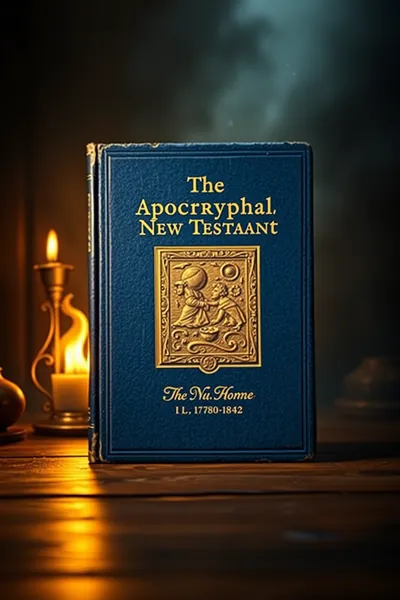
From the “Gnosticism” Collection
View all →






More Free Sacred Texts & Gnosticism Books
View all →