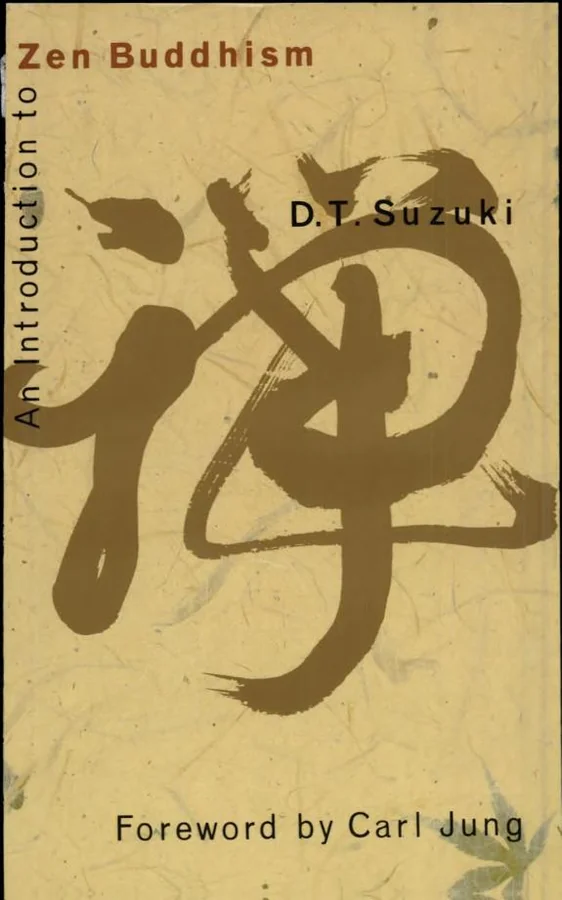
An Introduction to Zen Buddhism
 75
75

An Introduction to Zen Buddhism
Daisetz Teitaro Suzuki’s An Introduction to Zen Buddhism offers a clear, if somewhat academic, exposition of a tradition often shrouded in mystique. Suzuki excels at dissecting the philosophical and psychological dimensions, particularly in his treatment of the koan system, presenting it not as mere trickery but as a vital tool for breaking down conceptual barriers. A notable strength is the systematic approach, making complex ideas accessible. However, the book occasionally feels more like a scholarly treatise than a direct transmission of Zen's experiential core; the emphasis on intellectual dissection might, for some, overshadow the practice itself. The discussion on the Six Perfections (paramitas) provides a solid ethical grounding. Ultimately, Suzuki provides an indispensable intellectual map for navigating the terrain of Zen, even if the actual journey remains a personal endeavor.
📝 Description
75
Daisetz Teitaro Suzuki's An Introduction to Zen Buddhism first appeared in 1991.
This book lays out the fundamental principles and practices of Zen Buddhism. Suzuki details the philosophical basis, psychological aspects, and ethical framework that define this school of Buddhist thought. His aim is to clarify the path toward self-understanding and awakening through Zen's distinct view of existence and awareness.
The work is for those who want a clear grasp of Zen beyond surface-level explanations. It is useful for students of religion, philosophy, and psychology, and for individuals on a personal path to inner calm and self-knowledge. The book suits readers who seek both intellectual rigor and spiritual exploration.
Published when interest in Eastern thought was growing globally, Suzuki's book arrived as Zen, with its focus on direct experience, started to resonate in the West. This contrasted with more academic or ritualistic Buddhist traditions. Suzuki played a key role in bringing Zen to Westerners, building on his earlier writings and talks.
Suzuki's work positions Zen Buddhism within a broader mystical tradition that emphasizes direct, non-intellectual apprehension of reality. It connects Zen's practices, like zazen and koan study, to a goal of awakening that bypasses conventional conceptualization. This approach aligns with esoteric paths across various traditions that seek immediate insight into the nature of consciousness and existence, often distinguishing themselves from exoteric or purely academic religious study.
💡 Why Read This Book?
• Gain a structured understanding of Zen's philosophical framework, including concepts like sunyata and Buddha-nature, as presented by a key early interpreter of the tradition. • Comprehend the function and purpose of koans and zazen, learning how these practices are designed to facilitate self-understanding and enlightenment. • Appreciate the ethical dimensions of Zen through its exploration of the Six Perfections, offering a practical guide to conduct informed by Buddhist principles.
⭐ Reader Reviews
Honest opinions from readers who have explored this book.
❓ Frequently Asked Questions
When was An Introduction to Zen Buddhism first published?
An Introduction to Zen Buddhism by Daisetz Teitaro Suzuki was first published in 1991, making it a significant text for Western understanding of Zen in the late 20th century.
What is the primary goal of Zen Buddhism as described in the book?
The book explains that the primary goal of Zen Buddhism is to achieve self-understanding and enlightenment through a direct, intuitive grasp of reality, often facilitated by specific meditative practices.
Who was Daisetz Teitaro Suzuki?
Daisetz Teitaro Suzuki (1870-1966) was a Japanese author and scholar who played a pivotal role in introducing the concepts of Zen Buddhism to the Western world through his extensive writings.
What is a 'koan' according to this introduction to Zen?
A koan is presented as a paradoxical question or statement used in Zen practice, designed to exhaust the rational mind and provoke a direct, intuitive realization of truth.
Does the book cover Zen's ethical teachings?
Yes, the work explores the ethical systems within Zen Buddhism, focusing on principles that promote self-understanding and contribute to enlightenment, including the Six Perfections.
Is this book suitable for absolute beginners to Buddhism?
While it provides an introduction, the book delves into philosophical and psychological aspects, making it suitable for serious beginners interested in a comprehensive overview rather than a simplified primer.
🔮 Key Themes & Symbolism
The Nature of Enlightenment
Suzuki posits enlightenment not as a mystical attainment but as a fundamental shift in perception, a direct realization of one's true nature. The book details how Zen disciplines, particularly zazen and koan study, are designed to dismantle the ego's illusions and reveal the inherent clarity of consciousness. This understanding moves beyond intellectual belief, emphasizing experiential insight into the interconnectedness of all things and the absence of a fixed, separate self.
Zen Psychology and the Mind
The work dissects the Zen approach to the mind, contrasting it with Western psychological models. It explores how Zen seeks to understand consciousness not as a product of the brain but as a fundamental reality. Concepts like 'no-mind' (mushin) are explained as a state of pure awareness, free from discursive thought and emotional reactivity, enabling a more spontaneous and authentic engagement with the world.
The Role of Practice (Zazen and Koan)
Central to the book is the explanation of core Zen practices. Zazen, or seated meditation, is presented as the primary method for cultivating stillness and insight. The koan system, with its paradoxical riddles, is illustrated as a tool to break down conceptual thinking and force a direct confrontation with reality. Suzuki clarifies how these practices are not mere rituals but active methods for realizing Zen truths.
Ethics and the Path
Beyond meditative techniques, the book outlines the ethical framework supporting the Zen path. It discusses the Six Perfections (paramitas), fundamental Buddhist virtues that guide the practitioner's conduct. These are not presented as moralistic rules but as natural expressions of an enlightened mind, fostering compassion, wisdom, and skillful action in the world.
💬 Memorable Quotes
Direct passages from the work, attributed to the author.
“The aim of Zen is to see into the nature of one's own mind.”
— This statement expresses the core endeavor of Zen Buddhism as presented by Suzuki. It emphasizes introspection and direct self-knowledge over external doctrines or abstract philosophies.
“A koan is an instrument for breaking down the fortress of the rational mind.”
— This highlights the paradoxical nature of koans. They are not meant to be solved logically but to serve as a tool that exhausts intellectual reasoning, paving the way for intuitive understanding.
“Buddha-nature is not something to be acquired, but to be recognized.”
— This emphasizes the inherent, pre-existing potential for awakening within all beings. Zen practice, therefore, is about uncovering what is already present, not about achieving something external.
“Zazen is the practice of sitting in mindful awareness.”
— This straightforward definition underscores the fundamental importance of seated meditation in Zen, framing it as a direct cultivation of present-moment consciousness.
💡 Key Ideas
Editorial paraphrase of the work's core concepts — not direct quotes.
Enlightenment is the realization of the non-duality of subject and object.
This paraphrased concept points to a key Zen insight: the dissolution of the perceived separation between the observer and the observed, leading to a unified experience of reality.
🌙 Esoteric Significance
Tradition
While Zen Buddhism is a distinct school within Mahayana Buddhism, its emphasis on direct, intuitive insight and the realization of ultimate reality aligns with broader esoteric currents seeking transcendent knowledge beyond dogma. Suzuki's work acts as a bridge, translating these principles into a framework understandable to Western esoteric practitioners who might be familiar with concepts like gnosis or mystical union, offering a non-dualistic perspective rooted in Buddhist philosophy.
Symbolism
Key symbols explored include the Bodhi tree, representing enlightenment and the awakening of the Buddha; the empty circle (ensō), symbolizing absolute reality, emptiness, and the mind in its ultimate state; and the lotus flower, signifying purity and spiritual growth emerging from the mud of samsara. These motifs are not merely decorative but are visual representations of core Zen concepts like impermanence, interconnectedness, and the potential for purity within the mundane.
Modern Relevance
Contemporary mindfulness movements, secularized meditation practices, and certain branches of Western psychology (particularly those exploring consciousness and cognitive biases) draw implicitly or explicitly from Zen principles popularized by Suzuki. Thinkers and practitioners in fields ranging from contemplative studies to integral theory continue to engage with Zen's unique approach to awareness, ethics, and the nature of self, finding enduring relevance in its experiential and non-dualistic teachings.
👥 Who Should Read This Book
• Students of comparative religion and philosophy seeking a foundational understanding of a major Mahayana Buddhist school and its intellectual underpinnings. • Individuals interested in contemplative practices and Eastern psychology looking for structured insights into meditation, mind training, and self-realization. • Practitioners of other esoteric traditions who wish to explore non-dualistic philosophies and experiential paths to understanding ultimate reality.
📜 Historical Context
Daisetz Teitaro Suzuki's An Introduction to Zen Buddhism, first published in 1991, arrived during a significant period of Western engagement with Eastern spirituality. Following World War II and through the counter-culture movements of the 1960s, figures like Alan Watts had already popularized Zen concepts, often filtering them through a lens of existentialism or Beat poetry. Suzuki's work, however, offered a more systematic and scholarly exposition, drawing from his lifelong study and introduction of Mahayana Buddhism. It provided a crucial counterpoint to both the simplified popular notions and the more scholastic Buddhist studies prevalent at the time. While Zen gained traction, it often competed with other Eastern traditions like Vedanta and Taoism for attention. Suzuki's meticulous scholarship aimed to present Zen authentically, distinguishing it from other schools of thought and clarifying its unique emphasis on direct experience and the nature of consciousness.
📔 Journal Prompts
The nature of one's own mind as explored through Zen.
The function of koans in challenging rational thought.
Recognizing Buddha-nature within daily experiences.
Cultivating stillness through the practice of zazen.
The ethical implications of understanding non-duality.
🗂️ Glossary
Zen
A school of Mahayana Buddhism that emphasizes meditation and direct experience to achieve enlightenment, often characterized by its focus on intuition over scripture.
Zazen
Seated meditation, the core practice in Zen Buddhism, involving mindful awareness and stillness to cultivate insight into the nature of reality.
Koan
A paradoxical anecdote or riddle used in Zen practice to provoke doubt, break down conceptual thinking, and foster intuitive understanding.
Sunyata
Often translated as 'emptiness,' this concept refers to the absence of inherent existence or self-nature in all phenomena, a key insight in Mahayana Buddhism.
Buddha-nature
The inherent potential for awakening and enlightenment present in all sentient beings, often described as the true, fundamental nature of the mind.
Paramitas
The Six Perfections (generosity, morality, patience, effort, meditation, wisdom) that are cultivated on the Mahayana Buddhist path.
Mushin
Literally 'no-mind,' a state of consciousness in Zen characterized by spontaneity, clarity, and freedom from discursive thought or ego-attachment.
This book appears in 1 collection
🔮 Readers Also Liked
Browse all →









From the “Zen Buddhism” Collection
View all →








More Free Sacred Texts & Gnosticism Books
View all →