55,000+ Esoteric Books Free + Modern Compare Prices
Home Collections Animism
📖

Animism: Foundational Texts and Modern Perspectives

Animism books trace the concept of universal spirit in nature from early anthropological studies to contemporary philosophical inquiries. Edward Burnett Tylor's 'Primitive Culture' and Carveth Read's 'The Origin of Man and of His Superstitions' provide foundational frameworks for understanding these beliefs. This guide highlights key texts for students and researchers, offering a curated path through the literature on animistic worldviews, folklore, and their influence on society and religion.

Top Animism Books

20 Animism books
Bygone Beliefs
📖
Bygone Beliefs
H. Stanley Redgrove
4.1
64

What is Animism?

Animism is the belief that objects, places, and creatures all possess a distinct spiritual essence. This perspective is fundamental to many indigenous cultures and has been a subject of anthropological study for centuries. It posits that the world is inhabited by spirits or souls, which can influence events in the physical world. Understanding animism involves examining how different societies perceive the interconnectedness of the natural and supernatural realms, often attributing agency and consciousness to non-human entities.

Best Books for Complete Beginners

For those new to animism, Edward Burnett Tylor's 'Primitive Culture' offers a foundational overview of early human beliefs, including animistic concepts. Carveth Read's 'The Origin of Man and of His Superstitions' delves into the psychological roots of these beliefs. Joseph Jacobs' 'Indian Fairy Tales' provides accessible examples of animistic narratives from folklore. For a more contemporary, accessible entry point, 'All My Relatives' by David Posthumus explores interconnectedness. 'Fairy dreams : or, Wanderings in Elf-land' by Jane G. Austin offers a glimpse into folkloric interpretations.

Intermediate Reading

Building on foundational knowledge, delve into more nuanced explorations. Charles Godfrey Leland's 'Etruscan Roman Remains in Popular Tradition' (1892) examines animistic survivals in European folklore. Samuel Marinus Zwemer's 'Influence of Animism on Islam' analyzes its impact on a major world religion. 'Peasants, Pilgrims, and Sacred Promises' by Yves Rodrigue (2002) offers a detailed look at supernatural beliefs in a specific cultural context. 'Magic and Masculinity' by Frances Timbers touches on related themes of belief systems.

Classical / Advanced Texts

Serious students will find value in primary sources and detailed analyses. Edward Burnett Tylor's 'Primitive Culture' remains a cornerstone text, presenting his seminal theories. Sigmund Freud's 'Totem et tabou' (though in French) engages with related concepts of early human social structures and beliefs. 'Raymond; or, Life and Death' by Sir Oliver Lodge explores evidence for survival after death, touching upon spiritualist beliefs often intertwined with animistic thought. 'Communicating Christ in Animistic Contexts' by Gailyn Van Rheenen offers a theological and anthropological perspective.

Reading Order — Step by Step

Begin with accessible folklore and foundational anthropology. Weeks 1-2: Start with 'Indian Fairy Tales' by Joseph Jacobs and 'Fairy dreams' by Jane G. Austin to grasp narrative elements. Month 1: Move to Edward Burnett Tylor's 'Primitive Culture' and Carveth Read's 'The Origin of Man and of His Superstitions' for core theories. Month 2: Explore specific cultural impacts with Samuel Marinus Zwemer's 'Influence of Animism on Islam' and Yves Rodrigue's 'Peasants, Pilgrims, and Sacred Promises'. Month 3+: Engage with advanced texts like Sigmund Freud's 'Totem et tabou' and Sir Oliver Lodge's 'Raymond; or, Life and Death' for deeper theoretical engagement and comparative studies.

Frequently Asked Questions

Which animism book should I read first?

Start with Edward Burnett Tylor's 'Primitive Culture' for foundational anthropological concepts or Joseph Jacobs' 'Indian Fairy Tales' for accessible narrative examples of animistic beliefs.

Is animism still practiced today?

Yes, animistic beliefs and practices continue to be integral to many indigenous cultures worldwide and influence various spiritual and philosophical movements.

What is the difference between animism and shamanism?

Animism is the belief in spirits inhabiting objects and nature, while shamanism is a practice where individuals act as intermediaries between the spirit world and the human community.

How does animism relate to other religions?

Animism often forms the basis or a significant component of many indigenous religions and has influenced the development and practices of larger, organized religions.

Are there modern academic studies on animism?

Yes, contemporary scholars like Irene Albers ('Animismus') and Katherine Swancutt ('Animism Beyond the Soul') continue to explore animism from philosophical, anthropological, and ecological perspectives.

Where can I find primary source material on animism?

Look for ethnographic accounts from early anthropologists and missionaries, such as those found in works by Tylor, Read, or Zwemer, which often contain direct observations and translations.

Why Each Book Matters

Peasants, Pilgrims, and Sacred Promises - Ritual and the Supernatural in Orthodox Karelian Folk Religion

Peasants, Pilgrims, and Sacred Promises - Ritual and the Supernatural in Orthodox Karelian Folk Religion

"Peasants, Pilgrims, and Sacred Promises - Ritual and the Supernatural in Orthodox Karelian Folk Religion" by Unknown offers an ethnographic exploration of the unique blend of Orthodox Christianity and ancient folk beliefs in the Karelian region. The book details specific rituals, local superstitions, and the veneration of sacred sites where pre-Christian animistic practices persist. It highlights how the landscape itself is imbued with spiritual significance, with specific trees, rocks, and water bodies considered dwelling places for spirits or imbued with healing powers, illustrating a vibrant syncretic tradition.

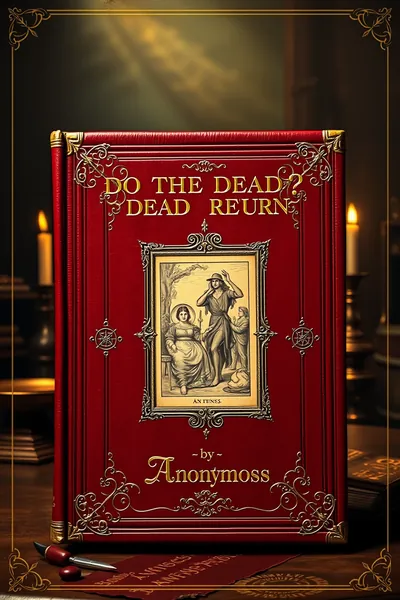
Do the Dead Return? A True Story of Startling Seances in San Francisco

Do the Dead Return? A True Story of Startling Seances in San Francisco

by Anonymous

"Do the Dead Return? A True Story of Startling Seances in San Francisco" by Anonymous chronicles a series of purported spirit communications and paranormal events that captivated San Francisco. This narrative details specific seances, mediums, and the alleged messages received from the deceased, offering a firsthand account of the spiritualist fervor of the era. The book aims to provide compelling evidence for the survival of consciousness after death, reinforcing the animistic belief in discarnate souls and their ability to interact with the living world.

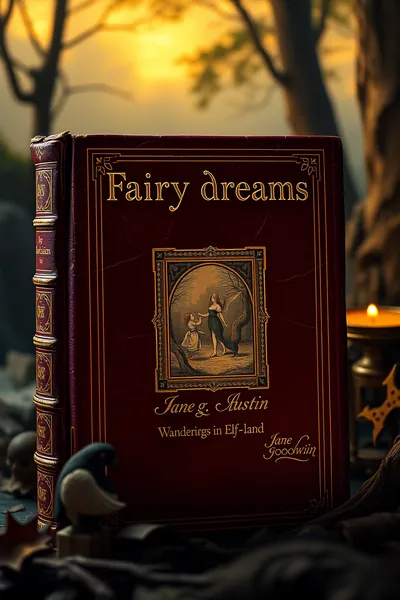
Fairy dreams: or, Wanderings in Elf-land

Fairy dreams: or, Wanderings in Elf-land

by Austin, Jane G. (Jane Goodwin)

"Fairy dreams : $b or, Wanderings in Elf-land" by Austin, Jane G. (Jane Goodwin) invites readers into the enchanting realm of fae folk and their interactions with the human world. This book, typical of Victorian-era fascination with the supernatural, explores the vivid landscapes of dream and imagination where elves and fairies reside. It reflects a cultural understanding deeply rooted in animism, where nature itself is imbued with sentient, often mischievous, spirits, offering a romanticized yet insightful look into the enduring belief in these ethereal beings.

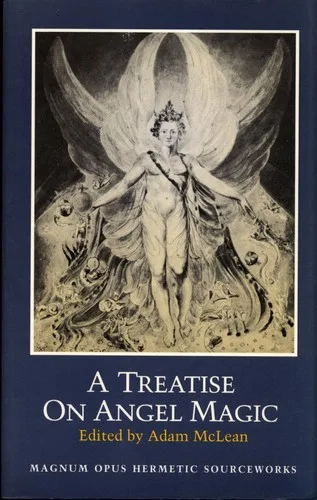
A treatise on angel magic

A treatise on angel magic

by British Library

"A treatise on angel magic" from the British Library offers a rare glimpse into historical practices of angelic invocation and communication. This manuscript, preserved within the esteemed collection, details specific rituals, seals, and prayers used by practitioners to interact with celestial beings. It reveals how the belief in distinct spiritual entities—angels—was systematized into complex magical operations, reflecting a specific form of animism where powerful, non-physical intelligences are believed to influence the material world and can be petitioned for aid or knowledge.

Etruscan Roman Remains in Popular Tradition

Etruscan Roman Remains in Popular Tradition

"Etruscan Roman Remains in Popular Tradition" by Charles Godfrey Leland is a groundbreaking work that uncovers the lingering influence of ancient Etruscan beliefs within Italian folklore. Leland meticulously documents various charms, spells, and superstitions still practiced in the 19th century, tracing their origins back to pre-Roman animistic traditions. He specifically highlights the veneration of household spirits, nature deities, and the belief in the magical properties of specific plants and stones, revealing a rich tapestry of enduring paganism beneath Christianized customs.

Light From the Spirit World

Light From the Spirit World

by Charles Hammond

"Light From the Spirit World" by Charles Hammond presents a compelling collection of communications and experiences from the perspective of a spiritualist medium. Hammond details specific instances of spirit contact, seances, and messages received from the departed, aiming to provide evidence for the existence of an afterlife. This work serves as a primary document for understanding the spiritualist movement's direct engagement with the 'spirit world,' demonstrating a modern manifestation of animistic beliefs in the continued consciousness and agency of discarnate souls.

Vive le Bagatelle

Vive le Bagatelle

"Vive le Bagatelle" by Charlotte Jaekel, an intriguing title, suggests an appreciation for the trivial or playful aspects of existence. While its direct connection to animism might be subtle, it could interpret the 'bagatelle' (a trifle or small thing) as imbued with its own spirit or significance. This work might explore how joy, spontaneity, or minor events hold profound meaning, perhaps hinting at a philosophy where even the smallest elements of life possess a unique vitality, resonating with the animistic reverence for all aspects of being.

ERIC ED129597: Identifying World Views Projected by Science Teaching Materials: A Case Study Using Pepper's WORLD HYPOTHESES to Analyze a Biology Textbook.

ERIC ED129597: Identifying World Views Projected by Science Teaching Materials: A Case Study Using Pepper's WORLD HYPOTHESES to Analyze a Biology Textbook.

by ERIC

"ERIC ED129597: Identifying World Views Projected by Science Teaching Materials: A Case Study Using Pepper's WORLD HYPOTH" by ERIC analyzes how different worldviews, including those with animistic undertones, are implicitly or explicitly conveyed through science education. This study applies Pepper's World Hypotheses to dissect teaching materials, revealing underlying assumptions about reality, causality, and the nature of knowledge. It offers a critical perspective on how scientific discourse can sometimes inadvertently reflect or challenge ancient ways of understanding the world, including the attribution of agency to natural processes.

ERIC EJ1079287: The African Educational Evolution: From Traditional Training to Formal Education

ERIC EJ1079287: The African Educational Evolution: From Traditional Training to Formal Education

by ERIC

"ERIC EJ1079287: The African Educational Evolution: From Traditional Training to Formal Education" by ERIC explores the historical and cultural trajectory of education in Africa. This document specifically highlights the foundational role of traditional training systems, which were often deeply integrated with animistic worldviews. It examines how indigenous knowledge, rites of passage, and community-based learning were shaped by beliefs in ancestral spirits, nature's sentience, and the interconnectedness of all life, providing crucial context for understanding the evolution of African pedagogy.

Magic and Masculinity

Magic and Masculinity

by Frances Timbers

"Magic and Masculinity" by Frances Timbers explores the complex interplay between magical practices and the construction of male identity across different cultures and historical periods. This work investigates how magic, often rooted in animistic understandings of power and agency within the natural world, has been used to define, assert, or challenge masculinity. Timbers provides specific examples of rituals, spells, and beliefs where magical prowess is intrinsically linked to societal expectations and expressions of male power, offering a unique sociological perspective on esoteric traditions.

Bygone Beliefs

Bygone Beliefs

by H. Stanley Redgrove

"Bygone Beliefs" by H. Stanley Redgrove is a fascinating compendium that resurrects a multitude of forgotten and obscure spiritual practices from history. Redgrove, a noted chemist and occultist, meticulously explores a range of topics including alchemy, astrology, witchcraft, and ancient magical systems. The book sheds light on how animistic perceptions of an ensouled world underpinned many of these historical beliefs, demonstrating the enduring human quest to understand and interact with the unseen forces of the cosmos, offering a scholarly yet engaging overview.

Experimental Investigation of the Spirit Manifestations: Demonstrating the existence of spirits and their communion with mortals. Doctrine of the spirit world respecting heaven, hell, morality, and God. Also, the influence of Scripture on the morals of Christians.

Experimental Investigation of the Spirit Manifestations: Demonstrating the existence of spirits and their communion with mortals. Doctrine of the spirit world respecting heaven, hell, morality, and God. Also, the influence of Scripture on the morals of Christians.

by Hare, Robert

"Experimental Investigation of the Spirit Manifestations: Demonstrating the existence of spirits and their communion with" by Hare, Robert, documents a pioneering scientific attempt to verify the phenomena of spiritualism. Robert Hare, a professor of chemistry, describes his meticulous experiments designed to test the claims of mediums and the reality of spirit communication. This work, published in 1855, provides detailed methodologies and observations, reflecting a 19th-century scientific community grappling with the tangible evidence for an invisible spirit world, a concept deeply rooted in animistic thought.

Animismus

Animismus

"Animismus" by Irene Albers likely presents a contemporary academic or philosophical re-evaluation of animism. Given the author and title, this work probably explores animism not merely as a primitive belief system but as a valid epistemological framework or a critical lens through which to understand modern environmentalism, indigenous rights, or even post-humanist thought. It could challenge traditional anthropological definitions, offering new theoretical perspectives on the agency and vitality of the non-human world in contemporary discourse.

The Road to En-Dor: Being an Account of How Two Prisoners of War at Yozgad in Turkey Won Their Way to Freedom

The Road to En-Dor: Being an Account of How Two Prisoners of War at Yozgad in Turkey Won Their Way to Freedom

by Jones, E. H. (Elias Henry)

"The Road to En-Dor: Being an Account of How Two Prisoners of War at Yozgad in Turkey Won Their Way to Freedom" by Jones, E. H. (Elias Henry) recounts the extraordinary true story of two British officers who used spiritualist trickery to escape a Turkish POW camp during WWI. While not directly about animism, the narrative vividly demonstrates how the belief in spirit communication and the unseen world, even when feigned, could profoundly influence human behavior and decision-making during wartime, highlighting the power of such convictions in extreme circumstances.

Raymond; or, Life and Death: With examples of the evidence for survival of memory and affection after death.

Raymond; or, Life and Death: With examples of the evidence for survival of memory and affection after death.

by Lodge, Oliver, Sir

"Raymond; or, Life and Death: With examples of the evidence for survival of memory and affection after death." by Lodge, Oliver, Sir, is a poignant and scientific inquiry into the possibility of life after death. Sir Oliver Lodge, a renowned physicist, shares his personal experiences and investigations into psychical phenomena, particularly after the death of his son, Raymond. The book presents detailed accounts of alleged communications and evidence for the survival of individual consciousness, contributing significantly to the discourse on the soul's persistence, a core concept in animism.

Animism

Animism

"Animism, Or, Thought Currents of Primitive Peoples" by Or, Thought Currents of Primitive Peoples offers a seminal exploration into the foundational beliefs of early human societies. This extensive work meticulously details how primitive cultures perceived the world, attributing souls and spirits to natural phenomena, animals, and objects. It serves as a cornerstone for understanding the origins of spiritual thought, examining the pervasive influence of animism on mythology, ritual, and social structures across diverse ancient civilizations, providing a rich anthropological perspective on humanity's spiritual beginnings.

The Origin of Man and of His Superstitions

The Origin of Man and of His Superstitions

by Read, Carveth

"The Origin of Man and of His Superstitions" by Carveth Read offers a psychological and anthropological examination of how human belief systems developed. Read explores the evolutionary roots of religious and superstitious thought, positing that early animistic perceptions of the world were fundamental to human cognitive development. He specifically discusses how fear, wonder, and the inability to explain natural phenomena led to the attribution of agency to inanimate objects and forces, providing a rational framework for understanding the emergence of spiritual consciousness in humanity.

Secret Enemies of True Republicanism: Most important developments regarding the inner life of man and the spirit world, in order to abolish revolutions and wars and to establish permanent peace on earth, also: the plan for redemption of nations from monarchical and other oppresive [sic] speculations and for the introduction of the promised new era of harmony, truth and righteousness on the whole globe

Secret Enemies of True Republicanism: Most important developments regarding the inner life of man and the spirit world, in order to abolish revolutions and wars and to establish permanent peace on earth, also: the plan for redemption of nations from monarchical and other oppresive [sic] speculations and for the introduction of the promised new era of harmony, truth and righteousness on the whole globe

by Smolnikar, Andrew B. (Andreas Bernardus)

"Secret Enemies of True Republicanism: Most important developments regarding the inner life of man and the spirit world," by Smolnikar, Andrew B. (Andreas Bernardus), offers a unique blend of political critique and spiritual revelation. Smolnikar, a former Catholic priest, weaves together his visions and prophecies with a commentary on societal and political corruption. The book delves into the nature of the spirit world and its perceived influence on human affairs, reflecting a profound belief in unseen forces and their active role in shaping destiny, aligning with broader animistic principles of cosmic interconnectedness.

The Bluestar Pack (Angel Oracle cards; Angels of Love and Healing CD)

The Bluestar Pack (Angel Oracle cards; Angels of Love and Healing CD)

by Sulamith Wulfing (card pack)

"The Bluestar Pack (Angel Oracle cards; Angels of Love and Healing CD)" by Sulamith Wulfing (card pack) combines the artistic vision of Wulfing with a practical tool for spiritual guidance. This oracle card set, accompanied by a healing CD, focuses on connecting users with angelic energies for love and healing. While distinct from traditional animism, it embodies a belief in non-physical entities—angels—who can be invoked for guidance and intervention, reflecting a contemporary spiritual practice that attributes agency and consciousness to unseen forces for personal well-being.

Nat-Pwe

Nat-Pwe

by Yves Rodrigue

"Nat-Pwe" by Yves Rodrigue provides a captivating study of the Nat spirits, central to the animistic folk religion of Myanmar. This book delves into the intricate rituals, offerings, and festivals (pwe) dedicated to these powerful guardian spirits, who are believed to inhabit trees, mountains, and other natural sites. Rodrigue meticulously documents the cultural significance of Nat worship, exploring its historical evolution, social functions, and the ways in which these ancient beliefs continue to shape daily life and spiritual practices in contemporary Myanmar.

Esoteric Library
Browse Esoteric Library
📚 All 55,000+ Books 🜍 Alchemy & Hermeticism 🔮 Magic & Ritual 🌙 Witchcraft & Paganism Astrology & Cosmology 🃏 Divination & Tarot 📜 Occult Philosophy ✡️ Kabbalah & Jewish Mysticism 🕉️ Mysticism & Contemplation 🕊️ Theosophy & Anthroposophy 🏛️ Freemasonry & Secret Societies 👻 Spiritualism & Afterlife 📖 Sacred Texts & Gnosticism 👁️ Supernatural & Occult Fiction 🧘 Spiritual Development 📚 Esoteric History & Biography
Esoteric Library
📑 Collections 📤 Upload Your Book
Account
🔑 Sign In Create Account
Info
About Esoteric Library