Pray Without Ceasing
 71
71

Pray Without Ceasing
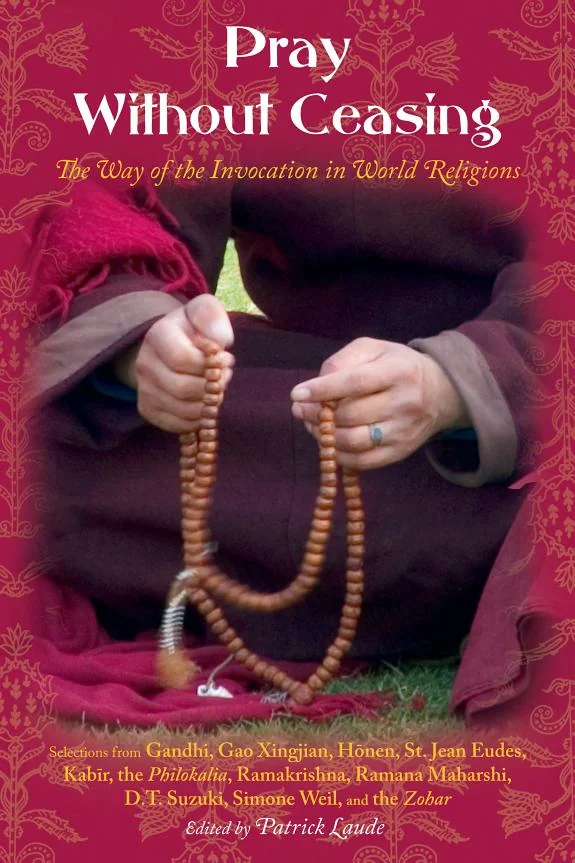
Patrick Laude's "Pray Without Ceasing" offers a scholarly yet accessible exploration of prayer as a foundational human act. Laude moves adeptly through a wide spectrum of global religious expressions, from early Christian contemplation to Eastern asceticism, to identify the common impulse behind prayer. His strength lies in demonstrating how prayer, in its myriad forms, constitutes an essential dimension of human identity. A limitation, however, is the sheer breadth of traditions covered, which at times can feel more like an exhaustive survey than a deep dive into specific lineages. The passage discussing the concept of the 'prayer of the heart' in Eastern Orthodoxy, for instance, is particularly evocative, hinting at the profound inner transformation possible through sustained devotional practice. Ultimately, the book serves as a rigorous, albeit dense, argument for the universality and necessity of prayer.
📝 Description
71
Patrick Laude's 2006 book argues prayer is the fundamental expression of human existence.
Patrick Laude's "Pray Without Ceasing" examines prayer not as a ritual, but as the core expression of being human. Published in 2006, the book travels across different religious traditions to find the common ground in how people petition and connect with the divine. Laude's central idea is that prayer is inherent to our nature, a part of the human experience that goes beyond any single religious belief.
This book is for anyone wanting to understand prayer more deeply, moving past simple religious acts. It will interest those studying world religions, spiritual seekers looking for shared practices in global devotion, and anyone thinking about consciousness and its link to the sacred. Readers who enjoy philosophy of religion will likely find Laude's arguments persuasive. The work engages with a long history of contemplative thought, contrasting with modern, secular mindfulness by anchoring prayer in its historical and theological foundations.
Laude's work sits within the Christian contemplative tradition, particularly referencing figures like Meister Eckhart and John Ruusbroec, while also drawing from Eastern mystical thought. It addresses the perennial philosophy's concern with the unity of religious experience and the inner life. The book's focus on prayer as an inherent human faculty, accessible through various contemplative paths, aligns with esoteric interpretations of spiritual practice that emphasize direct experience over dogma.
💡 Why Read This Book?
• Understand prayer as an ontological necessity: Learn how Laude, drawing on figures from various spiritual traditions, argues prayer is the essence of the human condition, not just a ritual. • Explore the 'prayer of the heart': Discover this specific concept, explored in relation to contemplative practices in traditions like Eastern Orthodoxy, and its potential for inner transformation. • Gain a comparative religious perspective: Benefit from Laude's 2006 work's extensive survey of prayer across diverse cultures, providing a broad foundation for understanding devotional expression.
⭐ Reader Reviews
Honest opinions from readers who have explored this book.
❓ Frequently Asked Questions
What is the central thesis of Patrick Laude's "Pray Without Ceasing"?
The book's central thesis, first published in 2006, is that prayer is not merely a religious practice but the fundamental essence of the human condition, an intrinsic aspect of consciousness reaching beyond itself.
Which religious traditions does "Pray Without Ceasing" draw upon?
Laude's work draws from a wide array of religious traditions, including early Christianity, Eastern Orthodoxy, and various ascetic and contemplative practices found in global religions, to illustrate the universal nature of prayer.
What does the book mean by 'perpetual prayer'?
The concept of 'perpetual prayer' refers to the ideal of maintaining a constant state of inner communion or prayerful orientation, as explored through contemplative traditions across different faiths.
Who is Patrick Laude?
Patrick Laude is an author and scholar known for his work on comparative religion and esoteric philosophy, with "Pray Without Ceasing" being a significant publication from 2006.
Is this book suitable for beginners in comparative religion?
Yes, while scholarly, the book's aim to reveal the universal core of prayer makes it accessible to those new to comparative religion seeking a deeper understanding of devotional practices.
What distinguishes Laude's view of prayer from common modern interpretations?
Laude grounds prayer in its historical and theological roots, contrasting with more secularized, contemporary mindfulness trends, emphasizing its role as an ontological necessity rather than just a psychological technique.
🔮 Key Themes & Symbolism
Prayer as Ontological Necessity
Laude argues forcefully that prayer is not an optional add-on to human life but its very core. He posits that the human being is fundamentally a creature oriented towards transcendence. This perspective, explored through examples from various traditions, suggests that the impulse to pray is as innate as the need to breathe or think, reflecting a deep-seated existential yearning. The work examines how this necessity manifests across different cultures and historical periods, asserting that to be human is, in essence, to pray.
The Universality of Devotional Impulse
The book meticulously traces the common threads connecting seemingly disparate prayer practices found globally. Laude demonstrates that despite cultural and doctrinal differences, a shared human impulse drives individuals to seek connection with something beyond themselves. This exploration spans from ancient rituals to monastic contemplation, highlighting the enduring nature of this universal drive for communion, suggesting a common spiritual anatomy underlying all religious expression.
Contemplative Prayer and Inner Communion
A significant focus is placed on the deeper, contemplative aspects of prayer, moving beyond mere petition. Laude explores practices aimed at achieving a sustained inner state of communion, often termed 'perpetual prayer.' This theme examines how certain traditions cultivate a continuous awareness of the divine, transforming prayer from an occasional act into an ongoing mode of being, a constant orientation of the soul.
Prayer Across Religious Traditions
Laude's methodology involves a comparative analysis of prayer across a vast spectrum of world religions. He meticulously surveys historical and contemporary examples, identifying both unique expressions and underlying commonalities. This approach aims to reveal that the essence of prayer transcends specific theological frameworks, offering a unified perspective on this fundamental human activity as observed from its earliest manifestations to its more sophisticated forms.
💬 Memorable Quotes
Direct passages from the work, attributed to the author.
“Prayer is the essence of the human condition.”
— This central assertion posits that the act of praying, in its broadest sense of reaching beyond the self, is fundamental to what it means to be human, not merely a religious activity.
“The pilgrimage to the heart of prayer.”
— This phrase suggests an inner journey or spiritual quest, implying that understanding prayer involves an inward exploration rather than an external study of doctrines or rituals.
“Revealing why prayer is intrinsic to our being.”
— This highlights the book's objective: to demonstrate that prayer is not learned or adopted but is an inherent part of human nature, a fundamental aspect of existence.
“Drawn from the world's religions.”
— This indicates the broad, comparative scope of the work, suggesting it synthesizes insights from diverse spiritual and religious traditions to form its conclusions about prayer.
💡 Key Ideas
Editorial paraphrase of the work's core concepts — not direct quotes.
The human being is a praying creature.
This paraphrased concept reinforces the thesis that prayer is an essential, defining characteristic of humanity, an impulse woven into our very nature.
🌙 Esoteric Significance
Tradition
While not strictly adhering to a single esoteric lineage like Hermeticism or Kabbalah, Laude's work speaks to Gnostic and mystical traditions that emphasize the direct, interior experience of the divine. It aligns with the perennial philosophy, exploring the common ground of contemplative practices across diverse faiths. The emphasis on inner transformation and the direct apprehension of truth places it within a broader esoteric framework that values subjective spiritual experience.
Symbolism
The book implicitly engages with the symbolism of pilgrimage, representing the soul's journey towards divine union. The concept of the 'heart' as the seat of prayer and inner communion is a potent symbol, drawing from traditions that view the heart not just anatomically but as the spiritual center of being. Furthermore, the idea of 'ceasing' from the ordinary, discursive mind to enter a state of prayerful awareness symbolizes a death and rebirth into a higher consciousness.
Modern Relevance
Contemporary thinkers and practitioners in fields like transpersonal psychology and comparative mysticism find Laude's work valuable for its rigorous defense of prayer's existential importance. It provides a solid foundation for those seeking to integrate contemplative practices from various traditions without resorting to superficial syncretism. The book's emphasis on prayer as an inherent human capacity continues to inform discussions on consciousness, spirituality, and the search for meaning in a post-secular world.
👥 Who Should Read This Book
• Students of comparative religion: Those seeking a scholarly yet profound examination of prayer across diverse global traditions will find Laude's comprehensive survey invaluable. • Spiritual seekers exploring contemplation: Individuals interested in deepening their prayer life beyond rote recitation, particularly those drawn to mystical or ascetic paths, will benefit from the insights into 'perpetual prayer.' • Philosophers of religion: Readers who ponder the fundamental nature of human existence and consciousness will find Laude's argument for prayer as an ontological necessity a significant contribution to the discourse.
📜 Historical Context
Published in 2006, Patrick Laude's "Pray Without Ceasing" emerged in an intellectual climate increasingly fascinated by spirituality, yet often detached from traditional religious forms. While secular mindfulness practices were gaining widespread traction, Laude’s work firmly anchored prayer within its historical, theological, and philosophical roots. It engaged with a long lineage of contemplative thought, implicitly contrasting with the more diffuse spiritual seeking prevalent in New Age circles. Unlike scholars focusing solely on sociological aspects of religion, Laude’s approach was ontological, examining prayer’s fundamental role in human existence. His comprehensive survey, drawing from early Christian ascetics and Eastern traditions, provided a scholarly counterpoint to simplistic or purely therapeutic interpretations of prayer, grounding the discussion in millennia of human spiritual endeavor.
📔 Journal Prompts
The human being as a praying creature: Reflect on this assertion in relation to your own life.
The pilgrimage to the heart of prayer: Chart your personal journey toward deeper devotional understanding.
Prayer as an ontological necessity: How does this concept challenge or affirm your current views on spiritual practice?
The symbolism of the heart in prayer: Explore its significance in your own contemplative experiences.
Contrasting external rituals with inner communion: Consider moments when your prayer felt most authentic.
🗂️ Glossary
Ontological Necessity
The idea that prayer is not merely a practice but an essential characteristic of existence itself, fundamental to the nature of being human.
Perpetual Prayer
A state of continuous inner communion with the divine, extending beyond isolated moments of supplication to an ongoing orientation of the soul.
Contemplative Prayer
A form of prayer focused on inner stillness, direct experience, and union with God, often transcending words and concepts.
Asceticism
A lifestyle characterized by severe self-discipline and abstention from all forms of indulgence, typically for religious reasons.
The Heart (Spiritual)
In many spiritual traditions, the heart is considered the center of consciousness, emotion, and spiritual perception, rather than just a physical organ.
Transcendence
The state or quality of existing above or beyond the limits of material experience or the physical universe.
Petitionary Prayer
A form of prayer that asks for something, whether for oneself or for others, a common and direct mode of religious expression.
This book appears in 1 collection
🔮 Readers Also Liked
Browse all →







From the “Invocation” Collection
View all →





More Free Sacred Texts & Gnosticism Books
View all →