52,000+ Esoteric Books Free + Modern Compare Prices
Home Collections Nag Hammadi
📖

Nag Hammadi Library: Essential Reading List

Nag Hammadi texts offer a unique window into early Christian and Gnostic thought, with key works like the 'Gospel of Philip' and the 'Apocalypse of the Alien God' providing primary source material. These Coptic documents, discovered in 1945, challenge conventional understandings of ancient religious movements. This guide presents a curated selection of books, from foundational introductions to in-depth scholarly analyses, to help you navigate this complex field of study.

Top Nag Hammadi Books

12 Nag Hammadi books

What are the Nag Hammadi Texts?

The Nag Hammadi library is a collection of thirteen ancient books, primarily Gnostic Christian, discovered near the town of Nag Hammadi in Egypt in 1945. Written in Coptic, these texts date from the 2nd to 4th centuries CE and include gospels, revelations, and philosophical treatises. They provide alternative perspectives to the orthodox Christian narratives that eventually dominated, offering insights into diverse spiritual beliefs and practices of the early centuries CE.

Best Books for Complete Beginners

For those new to the Nag Hammadi scriptures, start with overviews that contextualize the discoveries and their significance. 'Gnosticism From Nag Hammadi to the Gospel of Judas' offers a broad introduction to the Gnostic landscape. James McConkey Robinson's 'The Nag Hammadi Story' details the fascinating discovery and publication process. Elaine Pagels' 'Tabernes evangelier' provides accessible interpretations of key texts, making complex ideas understandable for newcomers.

Intermediate Reading

Moving beyond introductory material, delve into more focused studies. Richard Valantasis' 'Third century spiritual guides' examines the teacher-student dynamic across various traditions, including Gnosticism. John Douglas Turner's 'Sethian Gnosticism and the Platonic Tradition' explores the philosophical underpinnings of Sethian Gnosticism. April D. DeConick's 'Practicing Gnosis' investigates ritual and magical practices within Gnostic and related literatures.

Classical / Advanced Texts

For advanced study, engage directly with scholarly analyses of primary texts and related traditions. Dylan M. Burns' 'Apocalypse of the Alien God' offers a detailed examination of a specific Nag Hammadi text. Dina Ripsman Eylon's 'Reincarnation in Jewish mysticism and gnosticism' connects Gnostic ideas to Jewish mystical traditions. G.R.S. Mead's 'Fragments of a Faith Forgotten' (1900) and 'Echoes From the Gnosis' (1906) are older, foundational works offering interpretive perspectives on Gnosis.

Reading Order — Step by Step

Begin your journey with 'The Nag Hammadi Story' (McConkey Robinson) to understand the context of the discovery. Follow with 'Gnosticism From Nag Hammadi to the Gospel of Judas' for a general overview. Then, read Elaine Pagels' 'Tabernes evangelier' for accessible interpretations. For the second month, transition to intermediate works like Valantasis' 'Third century spiritual guides' or Turner's 'Sethian Gnosticism.' In the third month and beyond, tackle advanced texts such as Burns' 'Apocalypse of the Alien God' or DeConick's 'Practicing Gnosis,' and explore primary source translations as available.

Frequently Asked Questions

Which Nag Hammadi book should I read first?

For a first read, begin with 'The Nag Hammadi Story' by James McConkey Robinson to grasp the discovery's context, then move to 'Gnosticism From Nag Hammadi to the Gospel of Judas' for a foundational overview of the texts and their ideas.

What is the difference between Gnosticism and early Christianity?

Gnosticism, as represented in some Nag Hammadi texts, often emphasizes a secret knowledge (gnosis) for salvation, a dualistic worldview, and a different understanding of Jesus's divinity and humanity compared to orthodox Christianity.

Are the Nag Hammadi texts considered canonical?

No, the texts found at Nag Hammadi are considered apocryphal or non-canonical by mainstream Christian traditions. They represent diverse, often heterodox, interpretations prevalent in late antiquity.

What is the significance of the Gospel of Philip?

The 'Gospel of Philip,' found at Nag Hammadi, is significant for its allegorical interpretations of Jesus's life and teachings, its discussion of spiritual union, and its unique theological statements, offering a different perspective than canonical gospels.

How do Neoplatonism and Gnosticism relate?

Neoplatonism and Gnosticism share some philosophical concepts, such as emanations from a divine source and the goal of spiritual ascent. However, Gnosticism often posits a more radical critique of the material world and its creator.

What does 'gnosis' mean in this context?

'Gnosis' is the Greek word for knowledge. In Gnosticism, it refers to a special, intuitive, or revealed knowledge that grants salvation or liberation from the material world.

What is Sethian Gnosticism?

Sethian Gnosticism is a school of Gnosticism that venerates Seth, the third son of Adam and Eve, as a divine revealer and ancestor of a spiritual lineage, distinct from the material creation.

Where can I find translations of the Nag Hammadi texts?

Translations are available in scholarly collections and dedicated editions of the Nag Hammadi library. Works like 'The Nag Hammadi Scriptures' edited by Marvin Meyer are comprehensive resources.

Why Each Book Matters

Gnosticism From Nag Hammadi to the Gospel of Judas

Gnosticism From Nag Hammadi to the Gospel of Judas

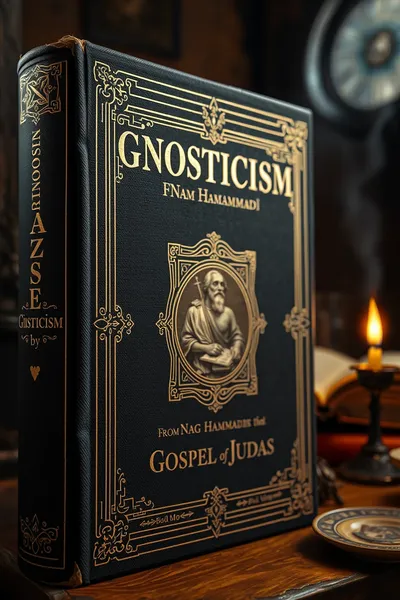
Gnosticism From Nag Hammadi to the Gospel of Judas provides an accessible yet comprehensive overview of Gnosticism, tracing its evolution and understanding from the groundbreaking Nag Hammadi discovery to the later emergence of the Gospel of Judas. This work explores how these various ancient texts have reshaped scholarly and popular perceptions of early Christian diversity and Gnostic beliefs. It serves as an excellent introduction to the historical context, key figures, and enduring mysteries surrounding these once-lost scriptures from Nag Hammadi.

Chapter The Fruit of the Tree of Life - Ritual Interpretation of the Crucifixion in the Gospel of Philip

Chapter The Fruit of the Tree of Life - Ritual Interpretation of the Crucifixion in the Gospel of Philip

The chapter The Fruit of the Tree of Life - Ritual Interpretation of the Crucifixion in the Gospel of Philip offers a focused analysis of the unique perspectives on the crucifixion found within the Gospel of Philip, a pivotal text from the Nag Hammadi library. This study explores how the Gospel of Philip interprets the crucifixion not merely as a historical event, but as a profound ritual or symbolic act with deep esoteric meaning. It sheds light on the sacramental theology and mystical understanding prevalent in certain Gnostic circles revealed by the Nag Hammadi texts.

Echoes From the Gnosis – The Gnosis of the Mind

Echoes From the Gnosis – The Gnosis of the Mind

by All Volumes

Echoes From the Gnosis – The Gnosis of the Mind by All Volumes delves into the profound concept of Gnosis, or direct spiritual knowledge, as expressed across various Gnostic traditions. This collection explores the intricate relationship between mind, spirit, and revelation, often referencing specific Nag Hammadi texts like the Gospel of Truth or the Tripartite Tractate to illustrate key Gnostic insights. It provides a comprehensive exploration of the inner dimensions of Gnostic experience and how the pursuit of wisdom shapes the understanding of divinity and self.

Practicing Gnosis : Ritual, Magic, Theurgy, and Liturgy in Nag Hammadi, Manichaean and Other Ancient Literature

Practicing Gnosis : Ritual, Magic, Theurgy, and Liturgy in Nag Hammadi, Manichaean and Other Ancient Literature

by April D. DeConick

In Practicing Gnosis : Ritual, Magic, Theurgy, and Liturgy in Nag Hammadi, Manichaean and Other Ancient Literature, April D. DeConick investigates the practical dimensions of Gnostic and related esoteric traditions. This scholarly work moves beyond abstract theology to explore how Gnosis was actively pursued through rituals, magical practices, theurgy, and liturgical expressions described in various ancient texts, including those from the Nag Hammadi collection. DeConick's research reveals the lived experience of ancient Gnosticism and its engagement with the sacred through concrete actions.

Reincarnation in Jewish mysticism and gnosticism

Reincarnation in Jewish mysticism and gnosticism

by Dina Ripsman Eylon

Dina Ripsman Eylon's Reincarnation in Jewish mysticism and gnosticism offers a fascinating comparative study of the concept of transmigration of souls within two distinct yet sometimes overlapping traditions. The book meticulously examines how ideas of reincarnation manifest in both Kabbalistic thought and various Gnostic systems, drawing parallels and distinctions that illuminate their shared esoteric concerns. This interdisciplinary approach provides a richer understanding of how such profound beliefs were articulated in ancient texts, including those found in the Nag Hammadi library.

Reincarnation in Jewish Mysticism and Gnosticism (Jewish Studies (Lewiston, N.Y.), V. 25.)

Reincarnation in Jewish Mysticism and Gnosticism (Jewish Studies (Lewiston, N.Y.), V. 25.)

by Dina Ripsman Eylon

Dina Ripsman Eylon's Reincarnation in Jewish Mysticism and Gnosticism (Jewish Studies (Lewiston, N.Y.), V. 25.) is a scholarly contribution to the 'Jewish Studies' series, offering an in-depth examination of the concept of reincarnation across two significant esoteric traditions. This specific edition underscores its academic rigor and its place within contemporary religious studies. It provides a detailed analysis of how the idea of the soul's journey through multiple lives is articulated in Jewish mystical texts and within the diverse Gnostic writings, including those from the Nag Hammadi collection.

Apocalypse of the Alien God

Apocalypse of the Alien God

by Dylan M. Burns

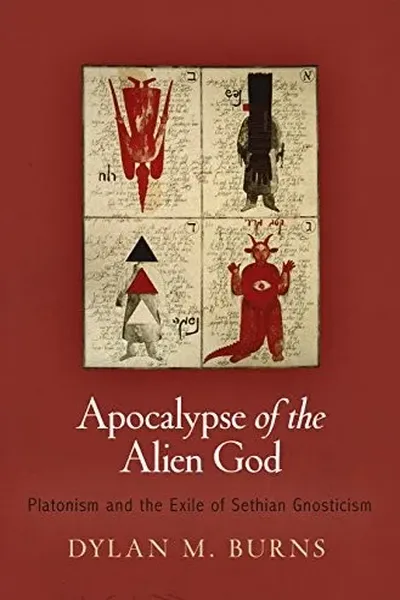
In Apocalypse of the Alien God, Dylan M. Burns offers a meticulous study of a specific text from Codex III of the Nag Hammadi library. This work provides an in-depth analysis of the text's complex cosmology, its portrayal of a transcendent, unknowable God, and its implications for understanding Gnostic theology. Burns explores how this particular apocalypse challenges conventional religious frameworks, presenting a unique perspective on divine creation and human salvation within the broader context of the Nag Hammadi corpus.

Tabernes evangelier

Tabernes evangelier

Tabernes evangelier is the Danish translation of Elaine Pagels' seminal work, The Gnostic Gospels, a landmark book first published in 1979. Pagels' work played a crucial role in popularizing the Nag Hammadi texts for a wider audience, demonstrating how these ancient scriptures offered alternative perspectives on early Christianity. Her accessible yet scholarly approach revealed the profound theological and social implications of the Nag Hammadi discovery, challenging conventional understandings of Christian history and doctrine.

Fragments of a Faith Forgotten

Fragments of a Faith Forgotten

G.R.S. Mead's monumental work, Fragments of a Faith Forgotten, first published in 1906, stands as a pioneering effort to systematically present the teachings of Gnosticism before the monumental Nag Hammadi discovery. Mead meticulously gathered and analyzed references to Gnostic thought from various ancient sources, offering a comprehensive overview of a tradition largely known through its detractors. This book remains an invaluable historical resource, providing essential context for appreciating the Nag Hammadi texts and their revolutionary impact on Gnostic studies.

The Nag Hammadi Story from the Discovery to the Publication

The Nag Hammadi Story from the Discovery to the Publication

The Nag Hammadi Story from the Discovery to the Publication by James McConkey Robinson chronicles the detailed history of the Nag Hammadi library, from its chance discovery by a local farmer near the town of Nag Hammadi in 1945 to its eventual scholarly translation and publication. This book provides an invaluable narrative of the challenges, triumphs, and profound impact of bringing these ancient texts to the modern world. It offers essential context for understanding the significance of the Nag Hammadi collection and the dedicated efforts behind its preservation and study.

Sethian gnosticism and the platonic tradition

Sethian gnosticism and the platonic tradition

by John Douglas Turner

Sethian gnosticism and the platonic tradition by John Douglas Turner is a definitive scholarly work focusing on the Sethian school of Gnosticism, a prominent current within the Nag Hammadi texts. Turner meticulously traces the intricate connections between Sethian cosmology and metaphysics and the philosophical concepts of Platonism and Middle Platonism. This book is essential for understanding the intellectual sophistication of Gnostic thought and how these ancient texts from Nag Hammadi engaged with the dominant philosophical currents of their time.

Third century spiritual guides : a semiotic study of the guide-disciple relationship in Christianity, Neoplatonism, Hermetism and Gnosticism

Third century spiritual guides : a semiotic study of the guide-disciple relationship in Christianity, Neoplatonism, Hermetism and Gnosticism

by Richard Valantasis

Richard Valantasis's Third century spiritual guides : a semiotic study of the guide-disciple relationship in Christianity, Neoplatonism, Herm employs semiotic analysis to examine the dynamics between spiritual guides and their disciples across diverse third-century traditions. While broader in scope, the study draws connections to figures and relationships implied in Nag Hammadi texts, offering insights into the pedagogical and initiatory structures within early Christian, Neoplatonic, and Hermetic contexts. This work illuminates how spiritual authority and transmission of knowledge functioned in the era of the Nag Hammadi writings.

Esoteric Library
Browse Esoteric Library
📚 All 52,000+ Books 🜍 Alchemy & Hermeticism 🔮 Magic & Ritual 🌙 Witchcraft & Paganism Astrology & Cosmology 🃏 Divination & Tarot 📜 Occult Philosophy ✡️ Kabbalah & Jewish Mysticism 🕉️ Mysticism & Contemplation 🕊️ Theosophy & Anthroposophy 🏛️ Freemasonry & Secret Societies 👻 Spiritualism & Afterlife 📖 Sacred Texts & Gnosticism 👁️ Supernatural & Occult Fiction 🧘 Spiritual Development 📚 Esoteric History & Biography
Esoteric Library
📑 Collections 📤 Upload Your Book
Account
🔑 Sign In Create Account
Info
About Esoteric Library