What is Millenarianism?
Millenarianism refers to a set of beliefs centered on a future, fundamental transformation of society and the cosmos, often involving a divine or supernatural intervention. These beliefs typically posit a coming golden age, a period of peace and justice, which may be preceded by a cataclysmic event or a period of tribulation. The concept often includes a messianic figure or a divine agent who inaugurates this new era. While frequently associated with religious eschatology, millenarian ideas also appear in secular political and social movements.
Best Books for Complete Beginners
For those new to millenarianism, starting with accessible introductions is key. 'The Celestine Prophecy - An Adventure' by James Redfield offers a narrative exploration of spiritual awakening and a coming new age, making abstract concepts relatable. Sydney Omarr's 'Sydney Omarr's Day-by-Day Astrological Guide for the New Millennium' provides a popular culture lens on anticipating future shifts, while Shelly Wu's 'Chinese Astrology' connects calendrical systems to cyclical views of time and destiny. These selections offer entry points into understanding future-oriented belief systems without requiring prior academic knowledge.
Intermediate Reading
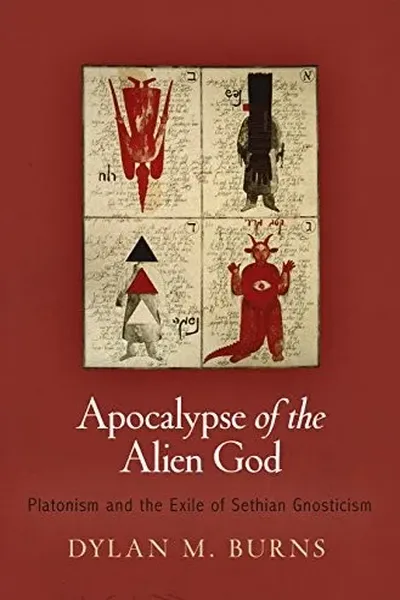
Moving beyond introductory concepts, intermediate texts delve deeper into specific traditions and scholarly analyses. 'Millenarianism and Messianism in Early Modern European Culture' by Matt Goldish, Karl A. Kottman, and Richard Henry Popkin provides a focused study on a critical historical period where such ideas flourished. Dylan M. Burns' 'Apocalypse of the Alien God' examines apocalyptic thought in a specific ancient context, while 'The White Spark' by Orville Livingston Leach offers a philosophical treatise on a new dispensation. These works encourage critical engagement with the historical and intellectual underpinnings of millenarian thought.
Classical / Advanced Texts
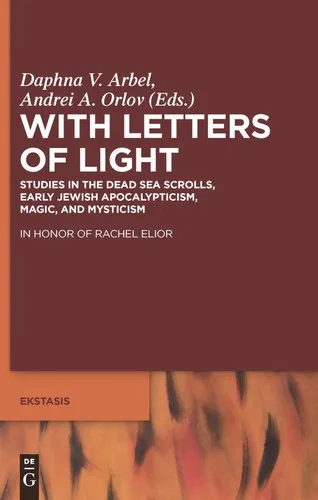
Advanced study requires engaging with primary sources and complex scholarly interpretations. 'The Edda, Volume 1: The Divine Mythology of the North' by Lucy Winifred Faraday presents foundational myths that inform cyclical views of cosmic renewal. 'Some elements of Jewish apocalyptic and mystical tradition' by George W. MacRae and 'With Letters of Light; Studies in the Dead Sea Scrolls, Early Jewish Apocalypticism, Magic, and Mysticism in Honor of Rachel Elior' by Daphna V. Arbel offer deep dives into ancient Jewish texts crucial for understanding the roots of apocalyptic and messianic thought. These texts demand careful reading and contextualization.
Reading Order — Step by Step
Begin your exploration of millenarianism with foundational concepts. Month 1: Start with James Redfield's 'The Celestine Prophecy - An Adventure' for a narrative introduction, followed by Shelly Wu's 'Chinese Astrology' to grasp cyclical time. Month 2: Transition to scholarly overviews with 'Millenarianism and Messianism in Early Modern European Culture' by Goldish et al. and explore ancient roots via George W. MacRae's 'Some elements of Jewish apocalyptic and mystical tradition'. Month 3+: Engage with primary sources like Lucy Winifred Faraday's 'The Edda, Volume 1' and Daphna V. Arbel's 'With Letters of Light' for deeper textual analysis. Conclude with William Morder's 'Harnessing the Apocalyptic Beast' for a modern, critical perspective.
Frequently Asked Questions
Which millenarianism book should I read first?
For a gentle introduction, begin with James Redfield's 'The Celestine Prophecy - An Adventure'. It uses storytelling to explore themes of spiritual transformation and a coming new era, making complex ideas accessible.
What is the difference between millenarianism and apocalypticism?
Millenarianism focuses on the belief in a future golden age or thousand-year reign, often brought about by divine intervention. Apocalypticism deals with revelations about the end times, often involving cataclysmic events and divine judgment, which can be a precursor to a millenarian age.
Are all millenarian beliefs religious?
While many millenarian beliefs are rooted in religious traditions (like Christianity, Judaism, or Islam), similar ideas about radical societal transformation and a future utopia can appear in secular political ideologies, social movements, and even some philosophical systems.
How does the concept of a 'New Millennium' relate to millenarianism?
The 'New Millennium' (the year 2000) tapped into existing millenarian sentiments, associating the turn of the century with significant change, renewal, or the beginning of a new era. Books like Sydney Omarr's guide reflect this cultural moment.
Where can I find primary sources on early Jewish millenarianism?
Scholarly works like George W. MacRae's 'Some elements of Jewish apocalyptic and mystical tradition' and Daphna V. Arbel's edited volume 'With Letters of Light' provide access to and analysis of key early Jewish texts relevant to apocalyptic and mystical traditions.
What is the significance of the 'thousand-year reign'?
The 'thousand-year reign' (or millennium) originates from the Book of Revelation in the Christian New Testament. It symbolizes a period of peace, justice, and divine rule on Earth, often interpreted literally or metaphorically as a future golden age.







![ERIC ED476541: Animals of the Chinese Zodiac. [Lesson Plan].](/img/thumb/eric-ed476541-animals-of-the-chinese-zodiac-lesson-plan-eric.webp)