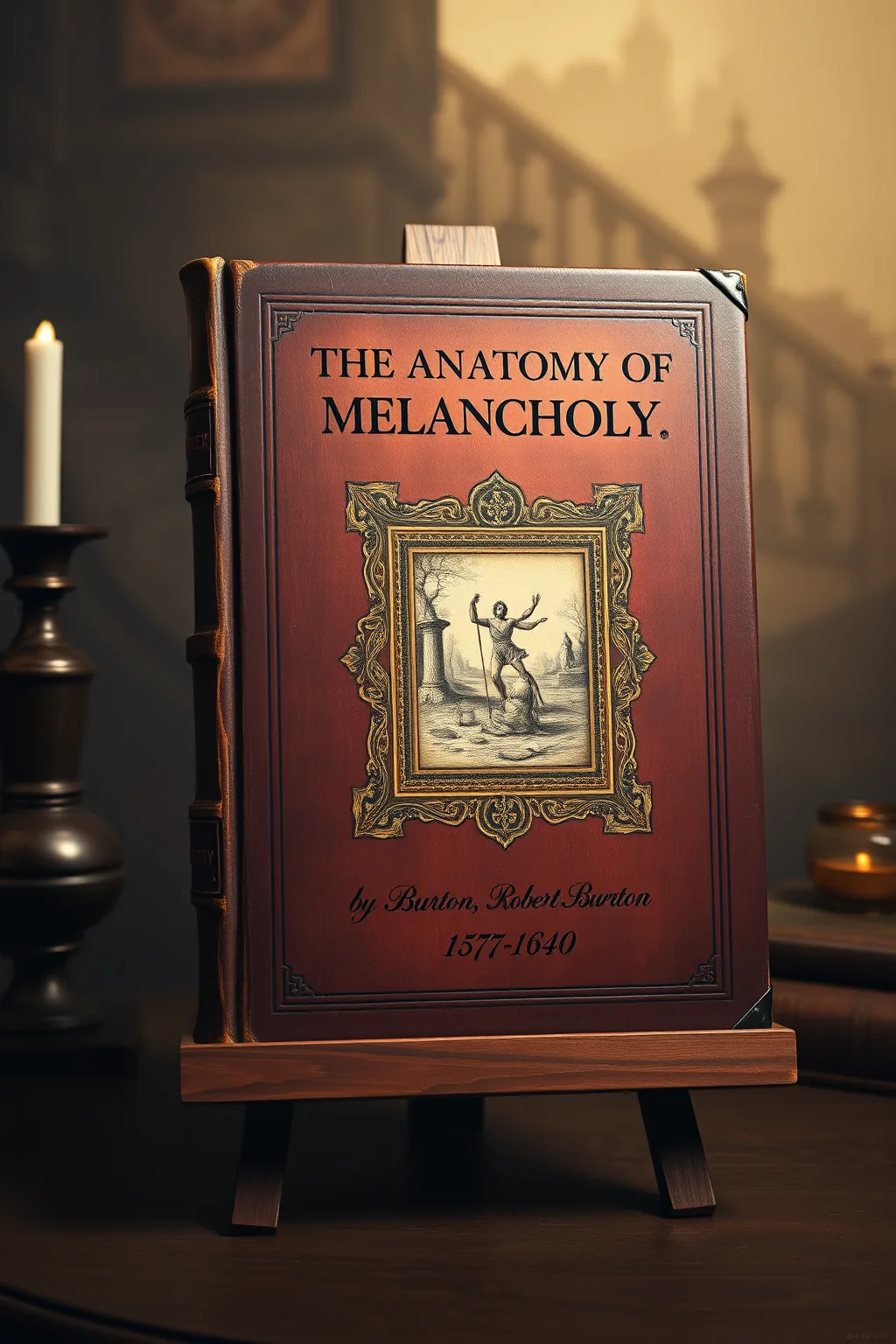
The anatomy of melancholy : what it is, with all the kinds causes, symptomes, prognostickes & seuerall cures of it : in three partitions, with their severall sections, members & subsections, philosophically, medicinally, historically opened & cut-up
 81
81

The anatomy of melancholy : what it is, with all the kinds causes, symptomes, prognostickes & seuerall cures of it : in three partitions, with their severall sections, members & subsections, philosophically, medicinally, historically opened & cut-up



'The Anatomy of Melancholy' by Robert Burton is a monumental work that stands as a testament to the enduring fascination with the esoteric and occult. Burton's exploration of melancholy is not just a medical or psychological study but a deep dive into the mystical and spiritual underpinnings of human emotion. For modern esoteric seekers, this book offers a wealth of information and insights that can be applied to contemporary understandings of mental health and spirituality. Burton's meticulous research and philosophical approach make this text a valuable resource for anyone interested in the intersection of the occult and psychology. The book's historical context adds another layer of richness, providing a glimpse into the intellectual and spiritual climate of 17th-century England. Despite its age, 'The Anatomy of Melancholy' remains relevant and thought-provoking, making it a must-read for those seeking to explore the deeper, often hidden, aspects of the human experience.
📝 Description
81
Robert Burton published 'The Anatomy of Melancholy' in 1621, a vast study of sadness.
Published in 1621, Robert Burton's 'The Anatomy of Melancholy' is a sprawling examination of sadness, its many forms, causes, symptoms, and remedies. Burton structured his work into three partitions, each further divided into sections and subsections, creating a detailed, almost encyclopedic, approach to his subject. He drew upon a wide array of sources, from classical philosophy and medicine to contemporary accounts and even popular proverbs. The book is not merely a medical treatise; it is a rich cultural document that reflects the intellectual currents of its time, blending humor, learning, and observation.
Burton's approach is exhaustive, cataloging not only the physical and psychological aspects of melancholy but also its supposed spiritual and cosmic connections. He considered it a pervasive ailment affecting all levels of society, from the common man to the prince. The work is notable for its extensive citations and its digressions, which offer glimpses into the author's own mind and the wider intellectual world he inhabited. It remains a significant work for understanding early modern thought on the human mind and its ailments.
While not strictly an esoteric text in the modern sense, 'The Anatomy of Melancholy' engages with concepts that resonated within esoteric traditions of the 17th century. Burton references Hermeticism and alchemy, viewing melancholy as potentially linked to imbalances in the humors, a concept with roots in ancient Greek medicine that had long been interpreted through various philosophical and mystical lenses. His cataloging of symptoms and cures touches upon the mind-body connection, a persistent theme in many early modern magical and alchemical writings that sought to understand the microcosm of the human being in relation to the macrocosm.
💡 Why Read This Book?
Reading 'The Anatomy of Melancholy' today offers a unique opportunity to explore the esoteric and occult dimensions of human emotions. Burton's work provides valuable insights into the mystical and spiritual underpinnings of melancholy, making it a valuable resource for modern esoteric seekers. Whether you are a scholar of the occult, a historian, or someone interested in the mysteries of the human mind, this book offers profound insights and a unique perspective on the deeper aspects of human emotions. By delving into Burton's exploration of melancholy, readers can gain a deeper understanding of the intersection of the occult and psychology, enriching their spiritual and intellectual journeys.
⭐ Reader Reviews
Honest opinions from readers who have explored this book.
❓ Frequently Asked Questions
What is the main focus of 'The Anatomy of Melancholy'?
The main focus of 'The Anatomy of Melancholy' is the exploration of melancholy from philosophical, medicinal, and historical perspectives, with a particular emphasis on its esoteric and occult dimensions.
Who should read this book?
This book is ideal for scholars of the occult, historians, and anyone interested in the deeper aspects of human emotions and the intersection of the esoteric and psychology.
What makes 'The Anatomy of Melancholy' unique?
The book's unique structure, which includes three partitions with sections and subsections, and its deep dive into the mystical and spiritual underpinnings of melancholy make it a standout work in the field of esoteric literature.
🔮 Key Themes & Symbolism
The Mystical Dimensions of Melancholy
Burton's work looks at the esoteric aspects of melancholy, exploring its connection to ancient wisdom and the human spirit. The book reveals hidden layers of symbolism and mystical knowledge, making it a must-read for those interested in the occult and hermeticism.
Philosophical Inquiry
The Anatomy of Melancholy is a profound philosophical journey through the human psyche, offering readers a comprehensive understanding of melancholy's causes, symptoms, and cures. Burton's insights are grounded in a wealth of hermetic and alchemical knowledge, providing a unique perspective on the human experience.
Symbolism and Ancient Wisdom
The book is rich in symbolism and ancient wisdom, drawing on a variety of esoteric traditions to illuminate the darker aspects of the human psyche. Burton's use of symbolism and mythological references adds depth and layers of meaning to his exploration of melancholy.
💬 Memorable Quotes
Direct passages from the work, attributed to the author.
“Melancholy, the nurse of endless imagination”
— Burton highlights melancholy's role in fostering deep, introspective thought and creativity.
“In the depths of despair, one finds the seeds of enlightenment”
— Burton suggests that through melancholy, one can uncover profound spiritual insights and growth.
“The soul's journey is a labyrinth of shadows and light”
— This reflects Burton's belief in the duality of human experience and the quest for understanding.
“Wisdom is hidden in the darkest recesses of the mind”
— Burton encourages readers to examine the depths of their psyche to uncover hidden truths and knowledge.
💡 Key Ideas
Editorial paraphrase of the work's core concepts — not direct quotes.
The mind is a chaotic area of conflicting emotions
This quote underscores the complexity and turmoil of the human psyche, as explored in the book.
🌙 Esoteric Significance
Tradition
Belonging to the Hermetic tradition, 'The Anatomy of Melancholy' draws on alchemical and mystical principles to explore the human psyche. Burton's work is a evidence of the enduring quest for understanding the divine and the hidden dimensions of the human experience.
Symbolism
Key symbols include the alchemical process of transformation, the labyrinth representing the journey of the soul, and the duality of light and darkness. These symbols are used to illuminate the deeper, esoteric aspects of melancholy and the human psyche.
Modern Relevance
Today, 'The Anatomy of Melancholy' remains relevant for modern practitioners of the mystical arts, offering insights into the human psyche and the quest for spiritual enlightenment. It is a valuable resource for those seeking to understand the esoteric dimensions of melancholy and the human experience.
👥 Who Should Read This Book
Beginners interested in the mystical and occult will find 'The Anatomy of Melancholy' an enlightening introduction to the esoteric dimensions of melancholy. Scholars of the arcane will appreciate Burton's clear insights and the depth of his research. Spiritual seekers will benefit from the book's exploration of the human psyche and the quest for spiritual enlightenment. Practitioners of the mystical arts will find valuable tools and techniques for understanding and reading through the complexities of melancholy.
📜 Historical Context
Written in the 17th century, 'The Anatomy of Melancholy' emerged during a time of significant intellectual and spiritual ferment. Burton's work was groundbreaking for its exploration of melancholy from philosophical, medicinal, and historical perspectives. It reflected the era's fascination with the human psyche and the quest for understanding the deeper aspects of existence. The book's influence can be seen in its enduring relevance, as it continues to inspire scholars and seekers of hidden knowledge.
📔 Journal Prompts
How does Burton's exploration of melancholy resonate with your own experiences?
What symbols and themes in the book stand out to you and why?
How does the book's philosophical inquiry influence your understanding of the human psyche?
In what ways does 'The Anatomy of Melancholy' challenge or affirm your beliefs about the mystical dimensions of melancholy?
What insights or revelations have you gained from Burton's exploration of the human spirit?
🗂️ Glossary
Melancholy
A state of deep, often prolonged sadness or depression, explored through esoteric and mystical lenses.
Hermeticism
An esoteric tradition based on the writings of Hermes Trismegistus, focusing on spiritual transformation and the pursuit of hidden knowledge.
Alchemy
An ancient practice combining elements of chemistry, physics, and mysticism, aiming to transform base materials into gold and achieve spiritual enlightenment.
Symbolism
The use of symbols to represent abstract ideas or qualities, often employed in esoteric literature to convey hidden meanings.
Human Psyche
The totality of the mind, including the conscious and unconscious aspects, explored in depth by Burton.
This book appears in 4 collections
🔮 Readers Also Liked
Browse all →









From the “Gnosticism” Collection
View all →







More Free Sacred Texts & Gnosticism Books
View all →