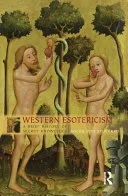
Western Esotericism
 81
81

Western Esotericism
Kocku von Stuckrad's "Western Esotericism" provides a much-needed, expansive historical overview that successfully charts the complex terrain of hidden traditions. The work excels in its broad chronological sweep, connecting disparate movements from ancient Hermeticism to modern occultism with scholarly rigor. A particular strength lies in its nuanced portrayal of the constant dialogue and conflict between esoteric currents and mainstream religious institutions. The section detailing the influence of Gnosticism and its subsequent suppression, for instance, is particularly illuminating, highlighting the precarious existence of alternative spiritualities. If there is a limitation, it is that the sheer scope can sometimes lead to a brisk pace, leaving less room for deep dives into specific practices. However, the book's clear argumentation and extensive bibliography make it an indispensable resource for serious students of the subject.
📝 Description
81
Kocku von Stuckrad's Western Esotericism surveys esoteric thought from antiquity to the present.
This volume offers a historical survey of the various currents of thought and practice known as esotericism in the West. It defines esotericism not by fixed doctrines but as a dynamic pursuit of hidden knowledge, often gained through mystical insight, angelic mediation, or personal experience. The book traces the history of these ideas from ancient times up to the present day. It shows how these traditions have consistently interacted with, and sometimes stood against, mainstream religious and philosophical systems.
The work is aimed at scholars of religious studies, history, and philosophy, and at serious students of esoteric traditions. It presents a solid academic overview for those wanting a detailed understanding of the historical development and intellectual background of Western esotericism. Readers interested in figures like Hermes Trismegistus, the Gnostics, Kabbalists, alchemists, and occult revival movements will find substantial coverage.
Von Stuckrad places Western Esotericism within the broader context of Western intellectual and religious history. It points out how esoteric traditions often existed on the fringes, sometimes directly opposing established religious authorities and dominant philosophical ideas. The narrative covers the Hellenistic period, the Middle Ages, the Renaissance, the Enlightenment, and modern occult movements, revealing a continuous line of alternative spiritual inquiry.
Kocku von Stuckrad's work engages with the academic study of Western esotericism, a field that seeks to understand diverse spiritual and philosophical traditions outside mainstream religious and intellectual history. This book contributes to that study by mapping the historical trajectory of esoteric currents, from ancient Mediterranean traditions and medieval mystical movements to Renaissance Hermeticism, Kabbalah, alchemy, and the occult revivals of the modern era. It highlights the ongoing dialogue and tension between these alternative paths and dominant cultural frameworks, positioning esotericism as a persistent feature of Western intellectual life.
💡 Why Read This Book?
• Gain a structured understanding of "Western Esotericism" as a field of study, moving beyond popular misconceptions by examining its historical evolution from antiquity to the 21st century. • Learn about the key figures and intellectual movements, such as the impact of the Corpus Hermeticum and the development of Kabbalistic thought, providing concrete historical anchors. • Understand the ongoing tension between esoteric traditions and established religious or philosophical systems, as explored through historical conflicts and societal reception.
⭐ Reader Reviews
Honest opinions from readers who have explored this book.
❓ Frequently Asked Questions
What is the primary definition of esotericism presented in Kocku von Stuckrad's work?
The book defines esotericism as a search for hidden knowledge, accessed through mystical vision, the mediation of higher beings, or personal experience, often existing in tension with established religious and cultural norms.
Which historical periods are covered in 'Western Esotericism'?
The work spans from antiquity, including Hellenistic traditions, through the Middle Ages, Renaissance, Enlightenment, and into modern occult revival movements up to the present day.
Does the book focus on specific esoteric traditions like Kabbalah or Hermeticism?
Yes, it provides historical context and explores the development of various traditions, including Hermeticism, Gnosticism, Kabbalah, alchemy, and later occult movements, illustrating their interconnectedness and divergence.
Who is the intended audience for 'Western Esotericism'?
The book is primarily aimed at academics, scholars of religious studies, and dedicated students of esoteric traditions seeking a comprehensive historical and intellectual overview.
How does the book address the relationship between esotericism and mainstream religion?
It highlights the frequent conflict and tension between esoteric approaches and established forms of religious belief and practice, examining how esoteric ideas often developed on the margins.
What is the significance of the publication date 2016-04-15 for this book?
The 2016 publication date places it within contemporary scholarship on Western Esotericism, allowing it to engage with and synthesize recent academic discourse on the subject.
🔮 Key Themes & Symbolism
The Search for Hidden Knowledge
Fundamentally, Western Esotericism is characterized by the pursuit of gnosis or hidden truths often concealed from the uninitiated. This quest manifests through various channels: deciphering ancient texts like the Corpus Hermeticum, interpreting symbolic languages in alchemy, or seeking direct revelation through mystical states. Von Stuckrad illustrates how this continuous search has shaped intellectual and spiritual landscapes, often challenging orthodoxies and fostering alternative communities of knowledge seekers across centuries.
Esotericism vs. Orthodoxy
A central theme is the historical dynamic between esoteric traditions and dominant religious or philosophical systems. The book details how esoteric ideas, from Gnosticism in the early centuries to the occult revivals of the 19th century, frequently found themselves in opposition to, or suppressed by, mainstream institutions. This conflict shaped the development, dissemination, and sometimes clandestine nature of esoteric practices and beliefs throughout Western history.
Diverse Historical Expressions
The work emphasizes the heterogeneity of Western Esotericism, moving beyond monolithic interpretations. It traces the evolution and interplay of distinct currents, including Hermeticism, Kabbalah, alchemy, Rosicrucianism, Freemasonry, and various forms of magic and spiritualism. By examining these diverse manifestations, von Stuckrad provides a nuanced understanding of how esoteric thought has adapted and transformed over time.
Personal Experience and Transformation
Beyond intellectual pursuit, the book highlights the importance of direct experience, spiritual transformation, and altered states of consciousness within esoteric traditions. Whether through alchemical processes aiming for spiritual purification or Kabbalistic meditations seeking divine union, the emphasis is often on a personal, experiential path to higher knowledge or enlightenment, distinct from creedal faith.
💬 Memorable Quotes
Direct passages from the work, attributed to the author.
“Esotericism is the search for an absolute but hidden knowledge accessed through mystical vision, the mediation of higher beings, or personal experience.”
— This foundational statement defines the essence of esoteric pursuits as a quest for concealed truths, achievable through non-ordinary means like intuition, spiritual intermediaries, or profound inner states, setting it apart from exoteric or conventional knowledge systems.
“In Western cultural history esoteric approaches to religion have often been in conflict with - and suffered at the hands of - more established forms of religious belief and practice.”
— This highlights the recurring theme of marginalization and persecution faced by esoteric traditions. It underscores that their historical development was often shaped by opposition from dominant religious and societal structures, leading to clandestine practices and intellectual defenses.
“Western Esotericism presents a very broad and engaging history of the people and ideas which have shaped occult history from antiquity to today.”
— This speaks to the book's ambitious scope, promising a comprehensive overview that connects diverse individuals and intellectual currents across millennia. It positions the work as a key resource for understanding the continuous, evolving narrative of occult traditions.
“Throughout the history of Western Esotericism, there has been a constant negotiation between the desire for secrecy and the need for dissemination.”
— This interpretation points to the inherent tension within esoteric movements: the need to protect their hidden knowledge from misuse or misunderstanding versus the drive to share it with initiates or even a wider audience, influencing how traditions are transmitted.
“The study of Western Esotericism requires attention to both the specific historical context and the underlying symbolic language employed.”
— This emphasizes a dual approach necessary for understanding esoteric traditions. It suggests that grasping their meaning involves understanding the historical circumstances in which they arose alongside their unique symbolic systems and hermeneutics.
🌙 Esoteric Significance
Tradition
This work primarily engages with the broad umbrella tradition of Western Esotericism, encompassing Hermeticism, Gnosticism, Kabbalah, alchemy, and later occult revivals. It positions these as distinct yet often overlapping currents seeking direct access to divine or hidden realities, differentiating them from exoteric religious doctrines. Von Stuckrad emphasizes the historical development and internal diversity within this broad tradition, charting its evolution from antiquity through modern manifestations.
Symbolism
Key symbols explored include the figure of Hermes Trismegistus, representing ancient wisdom and esoteric revelation, and the Tree of Life in Kabbalah, a complex symbolic map of creation and divine emanation. Alchemy's symbolism, representing spiritual transformation through material processes, is also central. These symbols function not merely as decorative elements but as crucial vehicles for transmitting complex cosmological and soteriological ideas within their respective traditions.
Modern Relevance
Contemporary thinkers and practitioners in fields like comparative religion, depth psychology (drawing on Jungian archetypes linked to alchemical symbolism), and various New Age spiritualities often engage with the historical currents detailed in this book. The academic study of Western Esotericism itself, as a discipline, continues to draw upon and expand the foundational research presented here, influencing how modern spiritual seekers understand historical antecedents to their own practices.
👥 Who Should Read This Book
• Academic researchers in religious studies and history of Western thought seeking a comprehensive overview of esoteric traditions and their historical contexts. • Students of comparative religion interested in understanding the development and interplay of diverse spiritual and philosophical currents outside mainstream religious structures. • Dedicated practitioners of occult or esoteric disciplines looking for a scholarly grounding in the historical origins and intellectual frameworks of their chosen paths.
📜 Historical Context
Kocku von Stuckrad's "Western Esotericism" emerged in 2016, a period of significant academic maturation in the study of esoteric traditions. The field had moved beyond earlier, often sensationalist, approaches to embrace rigorous historical and philological methods. This work contributes to a landscape increasingly populated by scholars who analyze esoteric phenomena not as fringe oddities but as integral, albeit often contested, components of Western intellectual and religious history. It engages with currents of thought that frequently stood in opposition to established Christian theology and Aristotelian philosophy, particularly during the Renaissance and Enlightenment. Contemporaries like Antoine Faivre had already laid crucial groundwork in defining the field, and Stuckrad builds upon this, offering a broad synthesis that situates figures like Paracelsus and the Hermetic Kabbalists within their complex historical milieux. The work implicitly addresses the reception of esoteric ideas, showing how they were often relegated to occultism or banned by religious authorities, thus shaping their transmission.
📔 Journal Prompts
The concept of hidden knowledge as described in the opening definition.
The historical conflict between esoteric approaches and established religious beliefs.
The role of mystical vision versus textual interpretation in accessing esoteric truths.
The specific historical period or movement that most intrigues you.
The significance of figures like Hermes Trismegistus or the Kabbalists.
🗂️ Glossary
Esotericism
A broad category of traditions and practices focused on the pursuit of hidden knowledge, often involving mystical experience, symbolic interpretation, and spiritual transformation, typically distinct from exoteric or public religious doctrines.
Gnosticism
Ancient religious movements characterized by a belief in salvation through esoteric knowledge (gnosis), often positing a dualistic cosmology and a divine spark within humanity trapped in the material world.
Hermeticism
A philosophical and religious tradition based on writings attributed to Hermes Trismegistus, emphasizing cosmology, divine principles, and the interconnectedness of the macrocosm and microcosm.
Kabbalah
A system of Jewish mysticism that explores the nature of God and the universe through esoteric interpretations of the Torah, often employing symbolic diagrams like the Tree of Life.
Alchemy
An ancient tradition that sought to transmute base metals into gold, often understood as a symbolic representation of spiritual purification and transformation of the soul.
Occultism
A term often used to describe esoteric practices and beliefs, particularly those that gained prominence during the 19th-century occult revivals, encompassing magic, spiritualism, and divination.
Mystical Vision
A direct, intuitive, or ecstatic experience of divine or ultimate reality, considered a primary means of acquiring esoteric knowledge within many traditions.