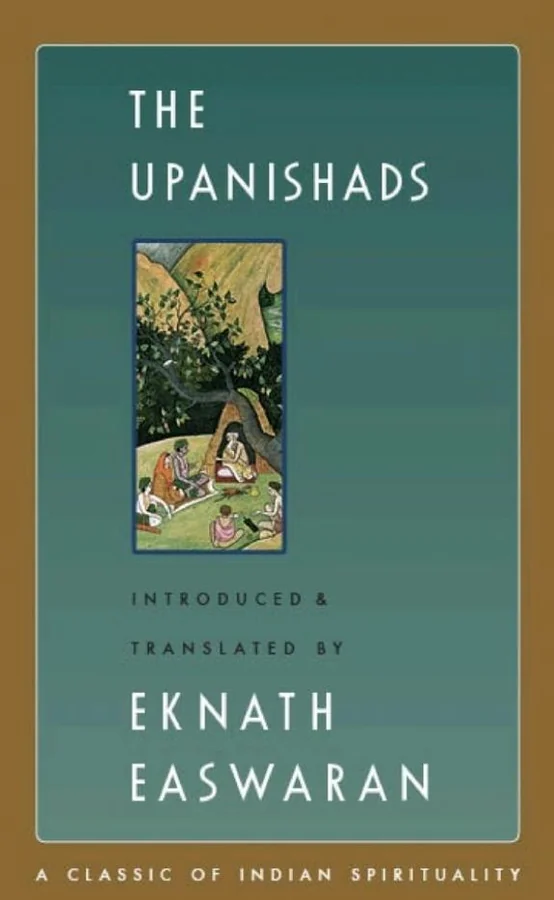
The Upanishads
 78
78

The Upanishads
Eknath Easwaran’s translation of the Upanishads offers a welcome clarity to these ancient philosophical dialogues. He has a particular talent for distilling complex ideas into digestible passages, making the often-opaque language of the original Sanskrit more approachable for a contemporary audience. The selection of texts, focusing on what Easwaran deems most relevant for modern seekers, is a strength, providing a curated entry point. However, this curation also means that a comprehensive understanding of the full breadth of Upanishadic thought might require consulting other, more exhaustive translations. The foreword, while lively, sometimes leans towards an oversimplification of the intellectual challenges these texts present. The passage discussing the relationship between Atman and Brahman, for instance, is rendered with commendable lucidity but perhaps sacrifices some of the profound ambiguity that invites deeper contemplation. Ultimately, Easwaran’s Upanishads serve as an excellent primer for newcomers, though seasoned scholars may find it a simplified overview.
📝 Description
78
The Upanishads, composed between 800 and 500 BCE, shift Vedic thought from ritual to philosophical inquiry.
This collection of Sanskrit texts marks a significant turn in ancient Indian religious thought, moving beyond the emphasis on ritual found in earlier Vedic traditions. Instead, the Upanishads focus on philosophical discussions and dialogues concerning the nature of reality, consciousness, and the self. These writings are credited with forming the philosophical basis of Vedanta, a major school of Hindu thought. Eknath Easwaran's translation aims to make these complex ideas accessible, presenting the core concepts without the dense commentary often found in scholarly editions. This approach allows readers to engage directly with the material.
The Upanishads are particularly relevant for anyone interested in the philosophical foundations of Hinduism and its widespread impact on global spiritual practices. They address fundamental questions about existence, the individual soul, and the ultimate nature of the universe. Those who appreciate a clear, direct presentation of ancient spiritual ideas, as well as readers interested in comparative religion and meditation, will find this edition valuable. The text offers a path toward understanding deeper spiritual principles through contemplation and self-inquiry.
Emerging from the late Vedic period in India, the Upanishads represent a move towards introspective spirituality. They explore concepts like the unity of the individual self (Atman) with the ultimate reality (Brahman), the cycle of rebirth, and the path to liberation. These ideas laid the groundwork for major Indian philosophical systems such as Vedanta and Yoga. Their influence extended beyond India, attracting attention from Western thinkers like Arthur Schopenhauer, who saw them as a profound source of wisdom.
💡 Why Read This Book?
• Gain a foundational understanding of Brahman and Atman, the core metaphysical concepts that underpin much of Eastern philosophy, as explored in the Mandukya Upanishad section. • Grasp the essence of the path to moksha, the ultimate liberation from the cycle of samsara, as described in the Katha Upanishad’s teachings on desire and self-mastery. • Appreciate the Upanishads' early exploration of consciousness as the fundamental reality of existence, a concept that predates many modern philosophical inquiries into the mind.
⭐ Reader Reviews
Honest opinions from readers who have explored this book.
❓ Frequently Asked Questions
What is the primary focus of Eknath Easwaran's translation of the Upanishads?
Easwaran's translation prioritizes accessibility, selecting passages most relevant to contemporary readers seeking spiritual truths. It aims to clarify the core concepts of Brahman, Atman, and moksha for those new to these ancient Indian texts.
When were the Upanishads originally composed?
The Upanishads were composed in ancient India, with the earliest texts dating from approximately 800 to 500 BCE, during the late Vedic period.
What is the philosophical lineage of the Upanishads?
They form the philosophical culmination of the Vedas and are the foundational texts for Vedanta, a major school of Hindu philosophy, influencing subsequent traditions like Yoga.
Who were some notable figures influenced by the Upanishads?
Throughout history, thinkers like Arthur Schopenhauer and poets such as W.B. Yeats engaged with Upanishadic philosophy, demonstrating its cross-cultural intellectual impact.
What are the central concepts discussed in the Upanishads?
Key concepts include Brahman (ultimate reality), Atman (the individual self), the identity of Brahman and Atman, samsara (cycle of rebirth), and moksha (liberation).
Is Eknath Easwaran's version the complete Upanishads?
No, Easwaran's edition is a curated selection, focusing on passages he identified as most pertinent for modern spiritual seekers, rather than a comprehensive scholarly compilation.
🔮 Key Themes & Symbolism
The Identity of Atman and Brahman
A central tenet explored throughout the Upanishads is the profound unity between Atman, the individual soul or self, and Brahman, the absolute, unchanging reality underlying the universe. This concept posits that the perceived separation between the individual and the cosmos is an illusion. Easwaran's selection highlights passages, particularly from the Brihadaranyaka Upanishad, that articulate this non-dualistic perspective, suggesting that self-knowledge leads to the realization of this fundamental oneness. Understanding this relationship is presented as key to transcending suffering and achieving liberation.
The Path to Moksha
The Upanishads detail the ultimate goal of spiritual life: moksha, liberation from samsara, the endless cycle of birth, death, and rebirth. This liberation is achieved not through external rituals, but through inner realization and wisdom. Easwaran emphasizes passages from texts like the Katha Upanishad, which speak of overcoming desire, cultivating detachment, and attaining self-awareness. The journey involves understanding the impermanence of the material world and the eternal nature of the true Self (Atman).
Consciousness as Ultimate Reality
Rather than viewing the physical universe as primary, the Upanishads propose consciousness as the fundamental substance of existence. The Mandukya Upanishad, for example, is dedicated to exploring the states of consciousness and the transcendent fourth state (Turiya), which represents pure awareness beyond waking, dreaming, and deep sleep. This perspective has significant implications for understanding the nature of reality and the mind's role in shaping our experience, influencing later contemplative traditions.
The Teacher-Student Dialogue
The format of the Upanishads themselves, often structured as dialogues between illumined sages (gurus) and their earnest students, is a crucial element. This pedagogical approach underscores the importance of direct transmission of knowledge and the necessity of sincere inquiry. Easwaran retains this dynamic, presenting the profound teachings as revelations unfolding through questioning and instruction, mirroring the traditional Indian method of spiritual learning passed down through generations.
💬 Memorable Quotes
Direct passages from the work, attributed to the author.
“That thou art.”
— This concise phrase, central to Upanishadic teaching, expresses the identity between Atman (the individual self) and Brahman (the ultimate reality). It asserts that the essence of your being is identical to the fundamental ground of all existence.
“As a spider spins its web, from itself, so the universe springs forth from this infinite.”
— This analogy illustrates the concept of Brahman as the immanent source of creation. The universe arises from the absolute, not from an external force, highlighting the interconnectedness and self-generating nature of reality.
“Let the seeker first try to understand himself.”
— This emphasizes the introspective nature of the Upanishadic path. True wisdom and liberation are not found by looking outward, but through deep self-inquiry and the realization of one's true nature.
“Where there is ignorance, there is fear.”
— This links spiritual ignorance directly to the experience of fear and suffering. The Upanishads suggest that by dispelling ignorance through knowledge of the Self, fear is overcome, leading to inner peace.
“The wise man does not think, 'I will do this'; he knows that all things happen in dependence on the supreme spirit.”
— This reflects a sophisticated understanding of karma and divine will, suggesting that true agency lies in aligning oneself with the cosmic order rather than asserting ego-driven intentions.
🌙 Esoteric Significance
Tradition
The Upanishads are considered the philosophical culmination of the Vedic tradition, forming the bedrock of Vedanta philosophy, which itself has numerous esoteric interpretations. Within broader esoteric studies, they are often seen as a primary source for understanding the nature of consciousness, the self, and the relationship between the microcosm and macrocosm, aligning with perennialist philosophies that seek universal spiritual truths across traditions.
Symbolism
Key symbols include the syllable 'Om' (AUM), representing the totality of existence and the underlying reality of Brahman; the sun, often symbolizing divine consciousness or knowledge; and fire, frequently associated with purification, transformation, and the divine messenger. The dialogue format itself symbolizes the transmission of esoteric knowledge from guru to disciple, emphasizing the importance of lineage and direct experience.
Modern Relevance
Contemporary thinkers and practitioners in fields ranging from psychology to New Age spirituality draw heavily on Upanishadic concepts. Mindfulness and meditation practices often incorporate Upanishadic ideas about the nature of awareness and the self. Philosophers and theologians continue to engage with its non-dualistic ontology, and it remains a vital text for those exploring consciousness studies and comparative mysticism.
👥 Who Should Read This Book
• Students of comparative religion and philosophy seeking the roots of Hindu thought and its influence on global spiritual traditions. • Individuals interested in meditation and contemplative practices who wish to understand the philosophical underpinnings of self-inquiry and consciousness exploration. • Seekers of wisdom drawn to ancient texts exploring fundamental questions about existence, the self, and the nature of reality, presented in a clear, accessible manner.
📜 Historical Context
The Upanishads emerged in India during a period of intense philosophical ferment, roughly between 800 and 500 BCE. This era, known as the late Vedic period, saw a shift from the ritualistic focus of the earlier Vedas towards introspective speculation. As Brahmanical orthodoxy emphasized sacrificial rites, a counter-current of thinkers began exploring the nature of consciousness and the self. These sages, often living in forest hermitages, engaged in deep contemplation and dialogue, laying the groundwork for the Vedanta philosophical system. Their ideas provided a significant contrast to the emerging traditions of early Buddhism and Jainism, which also questioned Vedic authority and ritualism, though from different perspectives. While not widely known in the West until the 19th century, the Upanishads profoundly shaped Indian thought and spirituality, influencing figures like the German philosopher Arthur Schopenhauer, who found in them a resonance with his own philosophical inquiries.
📔 Journal Prompts
The concept of Atman, reflecting on its presence in your daily experiences.
The relationship between Brahman and Atman, considering moments of profound connection.
The pursuit of moksha, identifying personal obstacles to liberation.
The Upanishads' view of consciousness, how it shapes your perception of reality.
The teacher-student dialogue format, reflecting on your own learning experiences.
🗂️ Glossary
Atman
The individual self or soul; the inner essence of a being. In Upanishadic thought, it is ultimately identical with Brahman.
Brahman
The ultimate, unchanging reality or absolute consciousness that is the source and ground of all existence. It is the underlying substance of the universe.
Moksha
Liberation or release from samsara, the cycle of birth, death, and rebirth. It signifies spiritual freedom and union with Brahman.
Samsara
The continuous cycle of birth, death, and rebirth, driven by karma and ignorance. It is the state from which liberation (moksha) is sought.
Om (AUM)
A sacred syllable considered the sound of the universe and a representation of Brahman. It encompasses all states of consciousness and existence.
Jnana
Knowledge, particularly spiritual knowledge or wisdom, attained through inquiry and direct realization, as opposed to mere intellectual understanding.
Maya
Illusion or cosmic deception; the power that makes the transient world appear real and conceals the true nature of Brahman.