The Inner Guide to Egypt
 71
71

The Inner Guide to Egypt
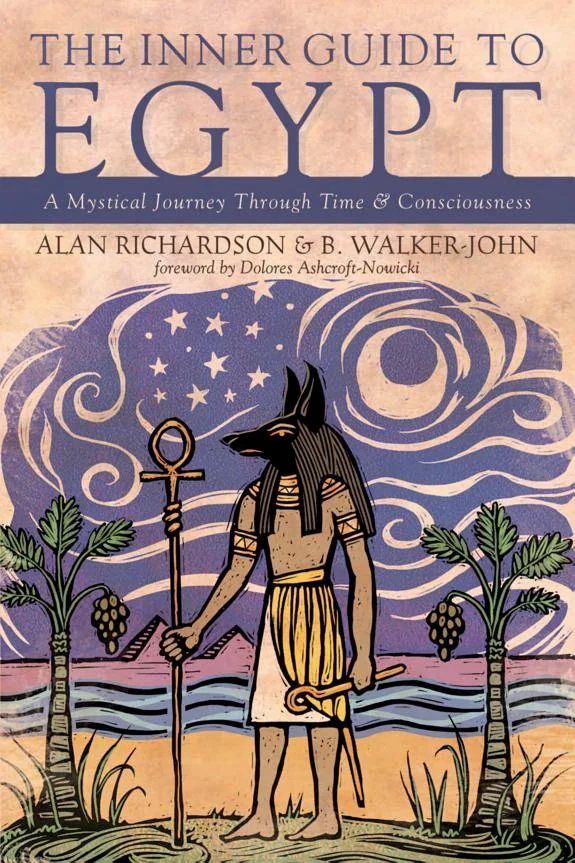
Alan Richardson and B Walker-John's "The Inner Guide to Egypt" offers a compelling alternative to conventional Egyptology by framing the ancient land as a psychospiritual map. The strength of this work lies in its detailed guidance for astral projection, specifically tailored to the Egyptian milieu. The Henu Boat metaphor is particularly effective, providing a tangible anchor for the non-physical exploration. However, the book occasionally leans into an overly familiar esoteric lexicon, which might alienate readers not already steeped in such terminology. A passage detailing the symbolic correspondence between the Temple of Karnak and specific chakras, for instance, is vividly rendered but assumes a pre-existing understanding of both Egyptian architecture and yogic physiology. Despite this, the book succeeds in its ambitious goal: to provide a practical framework for a personal initiation into the Egyptian Mysteries through consciousness itself.
📝 Description
71
Published in 2010, The Inner Guide to Egypt offers a non-physical approach to ancient Egyptian spirituality.
This book proposes a method for engaging with ancient Egypt through consciousness, utilizing astral projection to reach an "Inner Egypt." It presents this exploration as a personal initiation into the Egyptian Mysteries, likening the process to the Nile's flow as a current of inner awareness. Readers are directed to sacred sites, not as physical locations, but as symbols for internal psychological and physiological states. The objective is to revive ancient Egyptian traditions and connect with the energies of its deities.
"The Inner Guide to Egypt" targets individuals interested in esoteric studies and ancient Egyptian wisdom, especially those drawn to non-physical exploration. It suits those pursuing a self-directed spiritual initiation, who accept the potential of astral travel and inner consciousness. The book is for practitioners of meditation, energy work, or similar disciplines that highlight the mind and spirit's capacity for accessing hidden knowledge and personal transformation. It is for the seeker aiming to experience the Egyptian Mysteries directly, without depending on external dogma or formal groups.
Published in 2010, this book reflects a sustained interest in ancient Egyptian spirituality within esoteric thought, a trend notable since the late 19th century. Its roots can be seen in the work of figures like Helena Blavatsky and the Theosophical Society, who helped popularize Western and Eastern mystical traditions. The book engages with the enduring influence of Egyptian religion and its pantheon, a subject long explored in Western occultism and esoteric circles. It draws on a continuous fascination with Egyptian cosmology, magic, and beliefs about the afterlife.
💡 Why Read This Book?
• You will learn a specific technique for astral projection, using the symbolic geography of Egypt as a guide, as detailed in the methods for navigating "Inner Egypt." • You will discover how ancient Egyptian deities are presented as psychological archetypes and energetic forces, offering a unique framework for self-understanding beyond their mythological narratives. • You will gain practical methods for self-initiation into the Egyptian Mysteries, moving beyond academic study to a direct, experiential connection with ancient energies and traditions.
⭐ Reader Reviews
Honest opinions from readers who have explored this book.
❓ Frequently Asked Questions
What is "Inner Egypt" as described in the book?
"Inner Egypt" refers to a psycho-spiritual landscape accessed through astral travel and consciousness exploration, where sacred sites and the Nile River symbolize internal psychological and physiological states.
What are the primary techniques used in "The Inner Guide to Egypt"?
The book primarily utilizes astral travel techniques, guiding the reader's consciousness to explore symbolic representations of Egypt and its sacred sites for spiritual initiation.
Who are the authors of "The Inner Guide to Egypt"?
The authors are Alan Richardson and B Walker-John. The book was first published on September 8, 2010.
What is the significance of the Henu Boat in the book?
The Henu Boat is presented as a symbolic vessel for the inner journey, representing the vehicle of consciousness used during astral projection into "Inner Egypt."
Does the book require prior knowledge of ancient Egyptian history?
While prior knowledge can enhance the experience, the book is designed as a self-initiation. It explains concepts within its own esoteric framework, making it accessible to those new to Egyptian lore but open to metaphysical exploration.
How does this book relate to traditional Egyptology?
This book diverges from traditional Egyptology by focusing on the spiritual and psychological interpretations of ancient Egypt, utilizing astral travel rather than archaeological or historical analysis.
🔮 Key Themes & Symbolism
Astral Travel as Initiation
The book posits astral projection as the primary means for a "self-initiation" into the Egyptian Mysteries. It moves beyond mere theoretical study, advocating for direct, conscious experience of these ancient teachings. The Henu Boat serves as a metaphor for the astral body or consciousness vehicle, enabling navigation through the subtle realms that mirror the geography of Egypt. This approach emphasizes personal sovereignty in spiritual development, allowing individuals to engage with Egyptian cosmology and deities on a deeply personal, internal level.
Psychic Geography of Egypt
Rather than a literal travelogue, the book presents Egypt as a symbolic map of the human psyche. The Nile River is interpreted as a current of consciousness, and sacred sites like temples and tombs are seen as representations of psychological states, energetic centers, or spiritual thresholds. This "Inner Egypt" allows for exploration of the self by engaging with these symbolic landscapes, linking the external mythology and monuments to internal psychological processes and spiritual development.
The Gods as Archetypal Energies
The Egyptian pantheon is reinterpreted within an esoteric framework, where gods like Ra, Isis, and Osiris are viewed not just as mythological figures but as potent archetypal energies or psychological forces. The book guides readers to encounter and integrate these energies within their own consciousness. This perspective transforms the deities into active components of the inner landscape, offering tools for personal transformation and a deeper understanding of universal principles through the lens of ancient Egyptian symbolism.
Revitalizing Ancient Traditions
The work aims to breathe new life into ancient Egyptian traditions by offering a contemporary, experiential approach. It seeks to connect modern seekers with the potent energies and wisdom of this ancient civilization, moving beyond historical study to a living, dynamic practice. By engaging with the "Inner Egypt," readers are encouraged to infuse their souls with the perceived power of the gods and the foundational myths, fostering a personal connection to a lineage of spiritual exploration.
💬 Memorable Quotes
Direct passages from the work, attributed to the author.
“Begin a spiritual journey into Inner Egypt through astral travel techniques.”
— This opening concept establishes the book's core premise: accessing the spiritual essence of Egypt not physically, but via consciousness projection, serving as a direct pathway to self-initiation.
“As you travel along a river of inner consciousness symbolized by the Nile, you will visit sacred sites...”
— This illustrates the central metaphor, equating the Nile with the flow of awareness and its sacred locations with internal psychological or spiritual landmarks to be explored.
“Bring Ancient Egyptian traditions to life and infuse your soul with the potent energies of the gods.”
— This articulates the book's ultimate goal: to reanimate ancient Egyptian spirituality, enabling readers to directly experience and internalize the energies attributed to the Egyptian deities.
“This unique book guides you on a powerful self-initiation into the Egyptian Mysteries.”
— The text positions itself as a distinct guide for personal spiritual awakening, specifically focused on unlocking the profound secrets and transformative potential of the ancient Egyptian Mystery traditions.
“See how each is linked to psychological and physiological aspects within.”
— This highlights the psycho-somatic approach, suggesting that the symbolic sites within "Inner Egypt" correspond directly to specific aspects of the reader's own mind and body.
🌙 Esoteric Significance
Tradition
This work aligns strongly with the Western Esoteric Tradition, particularly its branches focused on Hermeticism and Neo-Platonism, which historically sought wisdom from ancient Egypt. It fits within the broader Theosophical and New Age movements that reinterpret ancient mythologies through psychological and spiritual lenses. The book departs from purely historical or religious studies by emphasizing direct, subjective experience and astral projection as valid methods for accessing esoteric truths, rather than relying solely on textual exegesis.
Symbolism
Key symbols include the Nile, representing the flow of consciousness and life force, and sacred sites (temples, tombs) which function as symbolic anchors for specific psychological states or spiritual energies. The Henu Boat is a potent symbol of the vehicle of consciousness used in astral travel, facilitating the journey through the inner landscape. The Egyptian gods are presented as archetypal forces, embodying specific energies or aspects of the divine that can be consciously interacted with and integrated by the practitioner.
Modern Relevance
The book's approach appeals to contemporary practices in modern occultism, consciousness studies, and depth psychology, particularly those influenced by Jungian archetypes. Thinkers and practitioners exploring shamanic journeying, energy healing, and lucid dreaming may find parallels in its methods. Its focus on self-initiation and inner exploration aligns with the individualistic spiritual seeking prevalent today, offering a specific framework for those interested in the metaphysical dimensions of ancient Egyptian culture beyond academic discourse.
👥 Who Should Read This Book
• Individuals interested in esoteric interpretations of ancient Egypt: Those seeking to understand Egyptian spirituality through a metaphysical lens, beyond historical or archaeological perspectives. • Practitioners of astral projection and consciousness exploration: Readers who already engage in or wish to learn techniques for non-physical travel and inner exploration will find specific applications here. • Seekers of self-initiation: Those desiring a personal, non-dogmatic path to spiritual growth and connection with ancient wisdom traditions will find the book’s self-guided approach appealing.
📜 Historical Context
Published in 2010, "The Inner Guide to Egypt" emerged during a period of sustained interest in esoteric interpretations of ancient Egypt, a fascination that has ebbed and flowed since the rise of Theosophy in the late 19th century. Figures like Helena Blavatsky and later occultists such as Aleister Crowley drew heavily on Egyptian symbolism and mythology, integrating them into their respective systems. This book continues that thread, offering a modern application of astral travel to these ancient mysteries. While not directly engaging with academic Egyptology, it implicitly responds to the ongoing popular appeal of Egyptian spirituality, often presented in contrast to more rationalist or archaeological perspectives. The esoteric tradition itself, particularly Western Hermeticism, has long viewed ancient Egypt as a foundational source of occult knowledge, making works like this a continuation of a specific intellectual lineage.
📔 Journal Prompts
Reflect on the symbolic meaning of the Nile as a river of inner consciousness in your own life.
Describe your envisioned journey aboard the Henu Boat as you approach a sacred site within Inner Egypt.
Identify an Egyptian deity and explore how its archetypal energy might manifest within your psychological landscape.
Consider the connection between a specific Egyptian sacred site and a personal psychological or physiological state.
How can the concept of "Inner Egypt" inform your daily spiritual practices?
🗂️ Glossary
Inner Egypt
A psycho-spiritual landscape accessed through consciousness and astral travel, where the external geography of Egypt symbolizes internal states and potentials.
Henu Boat
A symbolic vessel used in the book to represent the vehicle of consciousness during astral journeys, facilitating exploration of "Inner Egypt."
Astral Travel
The practice of projecting consciousness beyond the physical body to explore subtle realms or other planes of existence, as described in the book.
Self-Initiation
A personal process of spiritual development and awakening, guided by inner exploration and esoteric principles, rather than through formal external organizations.
Egyptian Mysteries
The esoteric teachings, rituals, and spiritual knowledge associated with ancient Egyptian religion, often interpreted as holding profound secrets for spiritual transformation.
Psychological Aspects
Refers to the inner workings of the mind, emotions, and consciousness, which the book correlates with symbolic locations within "Inner Egypt."
Physiological Aspects
Relates to the body's functions and physical constitution, which the book also links to specific symbolic elements within the "Inner Egypt" framework.
This book appears in 1 collection
🔮 Readers Also Liked
Browse all →









From the “Egyptian Mysteries” Collection
View all →



More Free Occult Philosophy Books
View all →