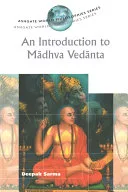
An Introduction to Madhva Vedanta
 81
81

An Introduction to Madhva Vedanta
Deepak Sarma's An Introduction to Madhva Vedanta offers a clear exposition of a complex philosophical system, notably by including translated polemical exchanges. The direct presentation of debates between Madhva and Advaita proponents, a significant feature of the book, effectively demonstrates the live philosophical disagreements. Sarma's scholarly approach provides necessary context for these exchanges, illuminating the specific points of contention. A strength lies in this direct engagement with source material, allowing the reader to confront the arguments head-on. However, the sheer density of philosophical terminology, while necessary, may present a hurdle for absolute beginners in Indian thought. The section detailing Madhvacarya's original texts, though crucial, could benefit from more extensive annotation for those unfamiliar with Sanskrit philosophical conventions. Nevertheless, the book succeeds in placing the reader at the heart of a profound theological discussion, offering a valuable perspective on a major Indian philosophical tradition.
📝 Description
81
Deepak Sarma's 2012 introduction to Madhva Vedanta translates actual debates from the 13th century.
This book introduces the philosophical basis of Madhva Vedanta, a significant Hindu tradition. It moves beyond theoretical discussions by including translated excerpts from debates between Madhva and Advaita Vedanta scholars. This method places the reader directly into a long-standing intellectual argument, showing the school's points and counterpoints. The volume is for those interested in Hinduism, Indian philosophy, and comparative religious ideas. It is especially useful for people who want to understand complex theological systems by looking at primary source material. Readers aiming to grasp the specific ideas of Madhva Vedanta, particularly when compared to the Advaita school, will find this book valuable. Madhvacarya founded the Madhva school of Vedanta in the 13th century. It stands as a distinct philosophical path within Hindu thought. Emerging during a time of considerable intellectual growth in India, it questioned common monistic views with its dualistic structure. The inclusion of debates shows the active philosophical discussion of the period. This work covers core Madhva Vedanta ideas like the difference between God (Vishnu) and the individual soul, the idea of independent and dependent realities, and the need for divine grace to achieve liberation. It contrasts these with Advaita Vedanta's non-dual views, concentrating on different understandings of Brahman, Maya, and the self.
Madhva Vedanta is a devotional and dualistic school within the broader Vedanta tradition of Hinduism. Founded in the 13th century by Madhvacarya, it specifically contrasts with the influential monistic Advaita Vedanta of Shankara. Madhva's philosophy emphasizes a fundamental difference between God, the individual soul, and the material world, asserting that liberation comes through divine grace and devotion to Vishnu. This tradition offers a distinct path of contemplation and practice centered on the worship of a personal God, diverging from interpretations that see ultimate reality as entirely non-dual. The book situates these ideas within their historical and philosophical context.
💡 Why Read This Book?
• Gain direct exposure to the 700-year-old philosophical controversy between Madhva and Advaita Vedanta through translated debates, offering a unique window into the core disagreements of these schools. • Understand the foundational principles of Madhva Vedanta, including its dualistic ontology and emphasis on divine grace, directly from discussions that shaped its intellectual history. • Appreciate the critical role of textual analysis in understanding religious philosophy by examining excerpts of Madhvacarya's original writings and their interpretation within the school.
⭐ Reader Reviews
Honest opinions from readers who have explored this book.
❓ Frequently Asked Questions
What is the main philosophical difference between Madhva Vedanta and Advaita Vedanta?
The primary distinction lies in their ontology. Madhva Vedanta posits an essential and eternal difference between God (Vishnu), individual souls, and the material world, emphasizing dualism. Advaita Vedanta, conversely, asserts the ultimate non-duality of reality, viewing God (Brahman) and the individual soul (Atman) as identical.
Who was Madhvacarya and when did he live?
Madhvacarya was a Hindu philosopher and the founder of the Dvaita (dualistic) school of Vedanta. He lived in the 13th century, with his birth year traditionally placed around 1238 CE.
Does this book include original texts by Madhvacarya?
Yes, the book includes original texts by Madhvacarya. These selections are presented to illustrate the philosophical foundations and arguments of the Madhva school of Vedanta.
Is An Introduction to Madhva Vedanta suitable for someone new to Indian philosophy?
The book is designed to be accessible to a wide audience interested in Hinduism and Indian thought. It provides philosophical foundations and translations of debates, making it a good entry point for those willing to engage with complex ideas.
What does 'Vedanta' mean in this context?
Vedanta literally means 'the end of the Vedas' or 'essence of the Vedas.' It refers to a body of Upanishadic thought and the subsequent philosophical schools, like Madhva and Advaita, that interpret these texts.
What are the key concepts explored in the Madhva tradition?
Key concepts include the absolute supremacy of Vishnu, the eternal distinction between God, souls, and matter, and the necessity of devotion and divine grace for liberation (moksha).
🔮 Key Themes & Symbolism
Dualism vs. Non-Dualism
The central tension explored is the fundamental difference between Madhva's dualistic ontology and Advaita's monism. This involves contrasting views on the nature of reality, the self, and the divine. The book highlights how Madhva Vedanta asserts an eternal distinction between God (Vishnu), individual souls, and the material world, while Advaita posits the ultimate identity of Brahman and Atman. This core disagreement frames much of the philosophical discourse presented.
The Role of Divine Grace
A crucial element of Madhva Vedanta is its emphasis on the necessity of divine grace (prasada) for liberation. Unlike schools that might emphasize self-effort or knowledge alone, the Madhva tradition posits that the soul's ultimate release is contingent upon the will and favor of Vishnu. This concept is explored through its implications for spiritual practice and understanding the divine-human relationship.
Epistemology and Authority
The work touches upon how knowledge is acquired and what constitutes valid sources of authority within these traditions. Debates often revolve around the interpretation of Vedic texts, the role of logic (tarka), and the testimony of realized souls. Understanding these epistemological differences is key to grasping why the two schools arrive at such divergent conclusions about reality.
The Nature of the Soul
Central to the Madhva-Advaita debate is the understanding of the soul (Atman/Jiva). Madhva Vedanta views souls as eternally dependent on God and distinct from Him, possessing consciousness but not identical to divine consciousness. This contrasts sharply with Advaita's assertion that the individual soul is, in its true nature, identical to Brahman. The book presents these differing views through translated arguments.
💬 Memorable Quotes
Direct passages from the work, attributed to the author.
“The Madhva school asserts the fundamental difference between God and the individual soul.”
— This statement captures the core dualistic tenet of Madhva Vedanta. It signifies that, unlike some other Indian philosophical systems, Madhva's followers believe the soul and the divine are ontologically distinct entities, not identical.
“Advaita Vedanta emphasizes the non-dual nature of Brahman, the ultimate reality.”
— This highlights the foundational principle of Advaita, a major school of Vedanta. It posits that there is only one ultimate reality, Brahman, and that the apparent multiplicity of the world is an illusion (maya).
“Debates between Madhva and Advaita schools are central to understanding their philosophical divergence.”
— This points to the methodological approach of the book itself. By presenting actual arguments and counter-arguments, it allows readers to witness the intellectual clash that defines the relationship and differences between these two major Vedanta traditions.
“Liberation in Madhva Vedanta is ultimately dependent on divine grace.”
— This emphasizes a key soteriological difference. While knowledge and devotion are important, the Madhva perspective stresses that the soul's release from the cycle of rebirth is ultimately an act granted by God's will.
“The translation of actual debates places readers at the center of a 700-year-old controversy.”
— This speaks to the immersive quality of the book's presentation. It aims to move beyond mere description by offering direct engagement with the historical philosophical conflict, allowing for a more visceral understanding of the stakes involved.
🌙 Esoteric Significance
Tradition
While Madhva Vedanta is a mainstream Hindu philosophical tradition, its rigorous dualism, emphasis on a personal God (Vishnu), and specific cosmology can be approached from an esoteric perspective. It offers a framework for understanding divine sovereignty and the soul's subservient but potentially liberated state, which appeals to certain devotional or mystical paths within Hinduism that seek direct communion with the divine.
Symbolism
Key symbols in Madhva Vedanta include the conch (shankha), discus (chakra), mace (gada), and lotus (padma), often associated with Vishnu. These represent divine power, cosmic order, and purity. The concept of Vishnu's omnipresence and immanence, while distinct from the soul, also functions symbolically, representing the ultimate goal of devotion and the pervasive divine influence in the cosmos.
Modern Relevance
Contemporary thinkers and practitioners interested in non-dualistic or pantheistic interpretations of spirituality may find Madhva Vedanta's contrasting dualism a valuable point of comparison. Its emphasis on a distinct, personal God and the soul's dependence offers an alternative theological structure to explore, influencing some modern Hindu movements that prioritize Bhakti (devotion) to a supreme personal deity.
👥 Who Should Read This Book
• Students of comparative religion and Indian philosophy seeking to understand the major schools of Vedanta beyond Advaita, especially those interested in dualistic theological systems. • Researchers in the history of philosophy who want to examine primary source debates and understand the intellectual controversies that shaped Hindu thought in medieval India. • Individuals exploring devotional traditions (Bhakti) within Hinduism who wish to grasp the theological underpinnings of a school that places supreme emphasis on Vishnu and divine grace.
📜 Historical Context
Madhva Vedanta emerged in 13th-century India, a period rich with philosophical inquiry and diverse interpretations of Vedic scriptures. Founded by Madhvacarya, it presented a strong dualistic counterpoint to the increasingly influential monistic Advaita Vedanta, championed by Adi Shankara centuries earlier. This era saw vigorous intellectual exchange across various Indian philosophical systems. The inclusion of translated debates in An Introduction to Madhva Vedanta highlights this dynamic intellectual climate, showcasing how Madhva's followers actively engaged with and critiqued the prevailing Advaita interpretations. While specific reception events for Madhva's work are complex, his school became one of the major orthodox traditions of Vedanta, alongside Vishishtadvaita (Ramanuja) and Advaita (Shankara), solidifying its place in the field of Indian thought and continuing to be studied by scholars like Surendranath Dasgupta.
📔 Journal Prompts
The ontological distinction between God and the soul in Madhva Vedanta.
The concept of divine grace as presented in the Madhva-Advaita debates.
How does Madhvacarya's dualism offer a different path to liberation than Advaita's non-dualism?
Reflect on the role of textual authority in resolving philosophical disagreements.
The significance of translated polemical texts for understanding religious traditions.
🗂️ Glossary
Vedanta
Literally 'end of the Vedas,' referring to the Upanishads and the philosophical systems that interpret them. Major schools include Advaita, Vishishtadvaita, and Dvaita (Madhva).
Madhva Vedanta (Dvaita)
A school of Vedanta founded by Madhvacarya, emphasizing dualism: an essential and eternal difference between God (Vishnu), individual souls, and the material world.
Advaita Vedanta
A non-dualistic school of Vedanta, primarily associated with Adi Shankara, teaching that Brahman is the sole reality and the individual soul (Atman) is identical to Brahman.
Brahman
In Hinduism, the ultimate, unchanging reality; the supreme cosmic spirit. In Advaita, it is identical to Atman; in Madhva, it is Vishnu, distinct from souls.
Atman
The individual soul or self. Advaita posits Atman is Brahman; Madhva views Atman as eternally distinct from and dependent on God.
Moksha
Liberation or release from the cycle of birth, death, and rebirth (samsara). Different Vedanta schools propose different paths and understandings of moksha.
Prasada
Divine grace or favor. In Madhva Vedanta, it is considered essential for achieving liberation, emphasizing God's will.